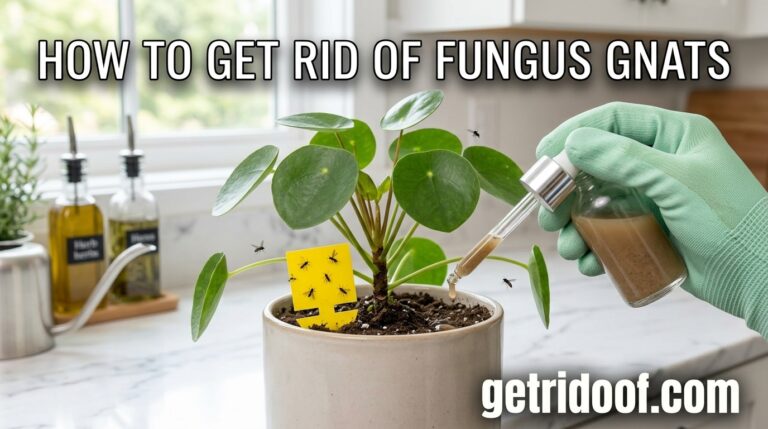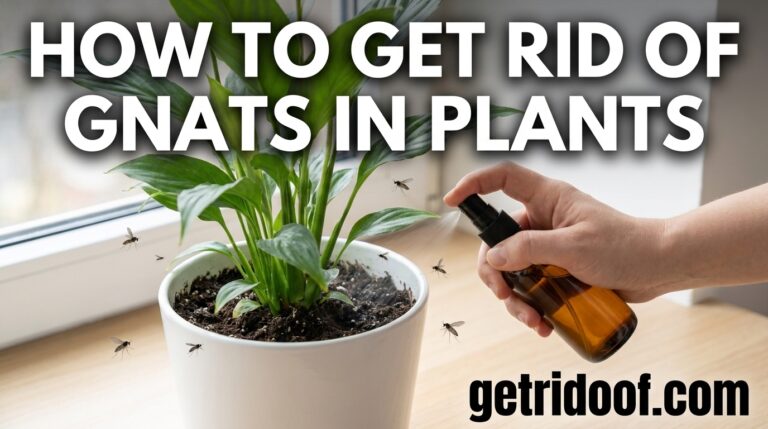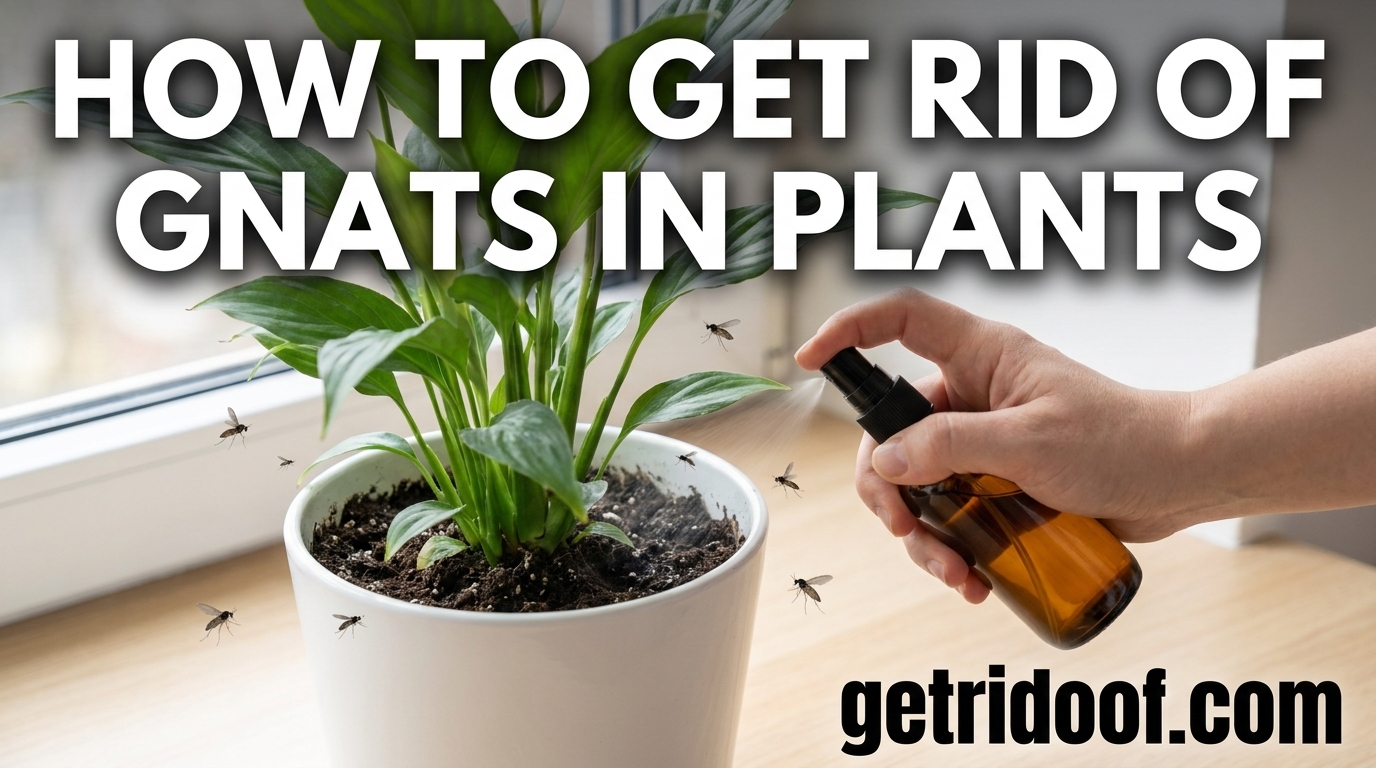
You’re watering your favorite houseplant. Suddenly, tiny black flies swarm out of the soil. Sound familiar? If so, you already know how frustrating it is dealing with gnats in plants. The good news? You don’t need expensive chemicals or a green thumb to fix this problem. With the right approach, you can get rid of gnats in plants quickly — and keep them from coming back.
In this guide (How to Get Rid of Gnats in Plants), you’ll discover what causes them, how to spot them, and the best ways to get rid of them for good.
What Are Gnats in Plants?
Most of the small flies around your houseplants are fungus gnats (Bradysia species). They are small, dark, mosquito-like insects about 1/8 inch long. They don’t bite, and adult gnats don’t actually harm your plants directly.
Here’s the problem: the larvae do.
Fungus gnat larvae live in the top 2–3 inches of soil and feed on:
- Plant roots and root hairs
- Fungi and algae in the soil
- Decaying organic matter
This root damage weakens plants over time. Young seedlings and newly repotted plants are especially vulnerable. Signs of a larval infestation include:
- Yellowing leaves
- Sudden wilting
- Stunted or slow growth
- Poor plant vigor despite proper care
A single female gnat can lay 100–300 eggs in her short 7–10 day lifespan. With a life cycle that completes in as little as 3 weeks, populations explode fast. That’s why catching the problem early matters.
Fungus Gnats vs. Fruit Flies: How to Tell the Difference
Many plant owners confuse fungus gnats with fruit flies. They look similar, but they are two completely different insects.
| Feature | Fungus Gnats | Fruit Flies |
| Size | ~1/8 inch | ~1/8 inch |
| Color | Dark black/gray | Tan or brownish |
| Attracted to | Moist soil | Overripe fruit |
| Wing pattern | Y-shaped vein | No distinct pattern |
| Found near | Plant pots | Kitchen, fruit bowls |
If you see tiny flies buzzing around your plant soil, especially after watering, those are fungus gnats. If they’re hovering around your fruit bowl or trash can, those are fruit flies.
What Causes Gnats in Plants?
Before you can get rid of gnats in plants, you need to understand why they showed up in the first place.
Overwatering Is the #1 Cause
Fungus gnats thrive in moist, soggy soil. Wet soil for too long invites fungus to grow. Gnat larvae thrive on this fungus. Overwatering is almost always the root cause of an infestation.
Other Common Causes Include:
- Organic-rich potting mix — Peat and compost-heavy mixes retain moisture and attract gnats
- Poor drainage — Pots without drainage holes trap water, keeping soil permanently damp
- Contaminated potting soil — Even fresh, unopened bags can harbor eggs or larvae
- New plants indoors — Plants that were outside in summer often bring gnats inside in fall.
- Dead leaves and debris — Fallen plant material on top of soil provides a food source for larvae
How to Get Rid of Gnats in Plants: 9 Proven Methods
The best strategy is to use different methods. Target both adult gnats and larvae at once. Treating only the adults without addressing the larvae in the soil is a losing battle.
1. Let the Soil Dry Out
This is the single most important step. Fungus gnat larvae cannot survive in dry soil.
- Wait until the top 1–2 inches of soil are completely dry before watering again
- Stick your finger into the soil to check — if it feels moist, wait a few more days
- This alone disrupts the gnat life cycle and starves the larvae
Plant owners often discover that adjusting their watering habits can eliminate a mild infestation in just weeks.
2. Yellow Sticky Traps
Yellow sticky traps are one of the easiest and most affordable tools to get rid of gnats in plants.
- Fungus gnats are strongly attracted to the color yellow
- Place traps at soil level, just above the surface of the soil
- Replace traps every 1–2 weeks or when full
- They catch adult gnats and prevent them from laying more eggs
Sticky traps won’t eliminate larvae, so always pair them with a soil treatment.
3. Hydrogen Peroxide Soil Drench
This is one of the most effective ways to kill larvae directly in the soil.
How to use it:
- Mix 1 part 3% hydrogen peroxide with 4 parts water
- Water the plant with this solution as you normally would
- It fizzes briefly on contact, killing larvae and eggs on contact
- After about 30 seconds, it breaks down into water and oxygen — completely safe for plants
Use this drench once or twice a week until the infestation clears. Always apply to dry soil for best results.
4. Neem Oil Spray
Neem oil is a natural pesticide derived from the neem tree. It works as both a soil drench and a foliar spray.
- Mix a few drops of pure neem oil with water and a drop of dish soap (as an emulsifier)
- Apply to the soil surface and the underside of leaves
- Neem oil disrupts the gnat’s growth and reproduction cycle
- Repeat every 7 days for 3–4 weeks
It smells strong but is safe for pets and people once dry.
5. Diatomaceous Earth (DE)
Diatomaceous earth is a fine powder made from fossilized algae. Its microscopic sharp edges physically kill gnats and larvae on contact.
- Always use food-grade diatomaceous earth, not pool grade
- Sprinkle a thin layer (about ¼ inch) on top of the soil
- Reapply after watering, as moisture reduces its effectiveness
- Wear a mask when applying — the fine dust can irritate lungs
DE works well and is drug-free, so it’s great for homes with pets and kids.
6. BTi (Bacillus thuringiensis var. israelensis)
BTi is a natural bacteria. It targets and kills fungus gnat larvae. It’s found in products like Mosquito Dunks and Gnatrol.
- Dissolve a piece of a Mosquito Dunk in your watering can
- Water your plants with this solution as normal
- BTi is completely safe for plants, pets, people, and beneficial insects
- Repeat every 1–2 weeks until gnats are gone
Many university extension programs and professional gardeners highly recommend this method.
7. Sand or Gravel Top Dressing
Adding a layer of coarse material to the top of your soil acts as a physical barrier.
- Apply ¼ to ½ inch of horticultural sand, coarse gravel, or perlite to the top of the potting mix
- The sand dries out quickly and makes it difficult for female gnats to reach the soil and lay eggs
- This method works best as a prevention step after controlling an active infestation.
Note: Use horticultural sand, not play sand, which can compact and make drainage worse.
8. Bottom Watering
Bottom watering is an easy method. It keeps the soil surface dry, which gnats dislike.
- Place your pot in a tray or sink filled with a few inches of water
- Let the plant soak up moisture through the drainage holes for 15–30 minutes
- Remove and let any excess water drain away
- The top of the soil stays dry, discouraging egg-laying
This is a great long-term habit for plants that attract gnats, like ferns, pothos, and peace lilies.
9. Beneficial Nematodes
For serious or persistent infestations, beneficial nematodes are a powerful biological control.
- Nematodes are microscopic worms that seek out and kill fungus gnat larvae in the soil
- Look for Steinernema feltiae species, specifically effective against fungus gnats
- Mix with water and apply to moist soil
- They’re safe for plants, pets, and humans
Nematodes are best ordered online and used fresh, as they are living organisms.
How to Get Rid of Gnats in Plants Naturally Without Chemicals
If you want to skip commercial pesticides, here are some great natural options:
- Chamomile tea drench — Chamomile is a natural fungicide. Brew a strong batch, cool it, dilute with water, and use it to water your plants. It kills off the fungus that gnats feed on.
- Cinnamon powder — Sprinkle cinnamon on top of the soil. Like chamomile, it has antifungal properties and disrupts the food source for larvae.
- Apple cider vinegar trap — Fill a small bowl with apple cider vinegar and a few drops of dish soap. Adult gnats are attracted to the smell and drown in the liquid. This won’t eliminate an infestation but helps reduce adult numbers.
- Potato slices — Press a few slices of raw potato into the soil. Larvae migrate to the surface to feed on it. Check after 3–4 days, remove the slices along with the larvae, and replace.
These methods work best for mild infestations or as part of a combined approach.
How to Get Rid of Gnats in Outdoor Plants
Gnats in outdoor plants are rare, but they can still appear. This is especially true for container gardens that have poor drainage. The approach is similar:
- Improve soil drainage and reduce watering frequency
- Remove dead leaves and organic debris from the soil surface
- Use yellow sticky traps near affected containers
- Apply a BTi or neem oil drench to potted outdoor plants
- Don’t use beneficial nematodes in outdoor garden beds. They can harm other soil organisms.
Open garden beds tend to dry out faster than pots, which naturally limits gnat activity.
What to Do If Gnats Keep Coming Back
If you’ve treated your plants but the gnats return within a few weeks, here’s what to check:
Check your potting soil. Opened bags of potting mix stored in garages or sheds can harbor gnats. Always store potting soil in a sealed container.
Look for root rot. If roots are brown, mushy, and smell foul, root rot may be feeding an ongoing infestation. Take the plant out of its pot. Trim any rotten roots. Clean the pot with hot, soapy water. Then, repot it using fresh, well-draining soil.
Isolate affected plants. Keeping infested plants separate from healthy ones prevents the problem from spreading.
Be patient. Since gnats have several life cycle stages, it usually takes 2–4 weeks of steady treatment to completely eliminate an infestation.
How to Prevent Gnats in Houseplants
Once you’ve dealt with an infestation, the last thing you want is a repeat. Here’s how to prevent gnats in plants long-term:
- Water only when the soil needs it — Check moisture with your finger before every watering
- Use well-draining potting mix — Look for peat- or coir-based mixes that dry faster
- Choose pots with drainage holes — Always empty water from saucers after watering
- Quarantine new plants. Keep new purchases or outdoor plants apart for 2–3 weeks. Then, you can place them with your other houseplants.
- Clean up fallen leaves — Remove dead plant material from the surface of the soil promptly
- Add perlite to your mix — Perlite improves aeration and helps soil dry faster between waterings
- Monitor with sticky traps year-round — Low-level trapping lets you catch a new infestation before it grows
FAQ’s
How long does it take to get rid of gnats in plants?
With consistent treatment, most infestations clear up within 2–4 weeks. Combining methods (like sticky traps + hydrogen peroxide drench) speeds up the process significantly.
Can gnats kill my plants?
Adult gnats are mostly a nuisance and don’t directly harm plants. But when there are many larvae, they can harm roots, slow growth, and weaken plants over time. Seedlings and young plants are most at risk.
Why do I have gnats in my plant soil even though I don’t overwater?
Even well-watered plants can attract gnats. This can happen if they came from contaminated potting soil, were kept outdoors, or were bought from a nursery with an infestation.
Are gnats in plants harmful to humans?
No. Fungus gnats do not bite, sting, or transmit disease to humans. They are purely a plant and nuisance pest.
What plants are most prone to gnats?
Moisture-loving plants like pothos, ferns, African violets, peace lilies, and geraniums often have problems. Succulents and cacti, which need dry soil, rarely have gnat problems.
Conclusion
Getting rid of gnats in plants doesn’t have to be overwhelming. Adjust your watering first. Let the soil dry out. Then, add targeted treatments like sticky traps, a hydrogen peroxide drench, or BTi. Within a few weeks, you’ll notice a dramatic difference.
Remember: gnats are a symptom of soggy soil. Fix the moisture problem, and the gnats lose their reason to stay. With the prevention habits in this guide, you can keep your indoor garden gnat-free all year long.
If you found this guide helpful, share it with a fellow plant lover who’s battling the same tiny invaders!
About the Author