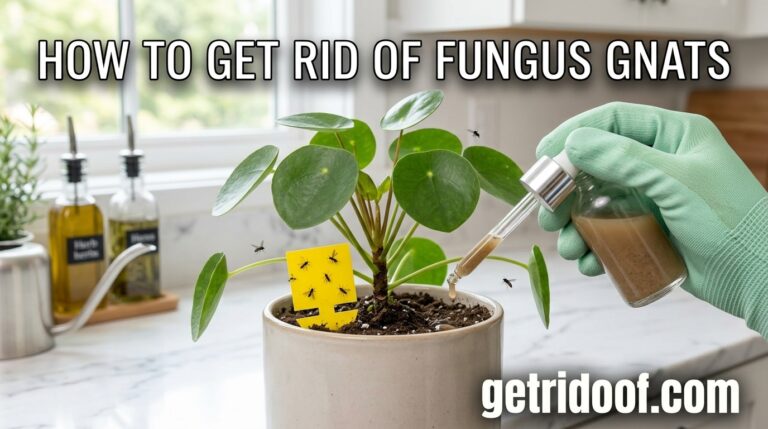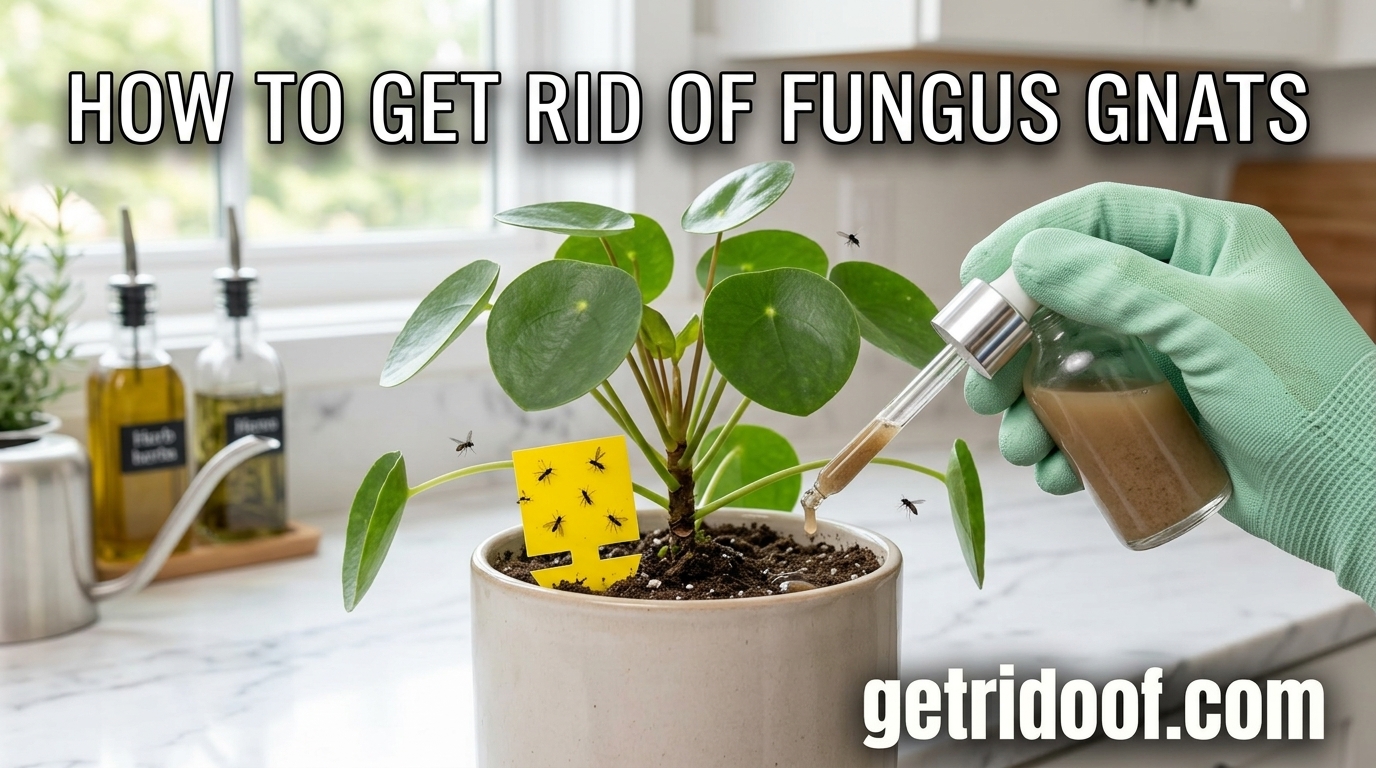
Fungus gnats can turn your peaceful indoor garden into a constant annoyance. Those tiny flies around your houseplants are more than annoying. They show that the soil is too wet, which is where they thrive.
The good news? You can get rid of fungus gnats effectively with the right steps. This guide (How to Get Rid of Fungus Gnats includes identification and a full action plan for both adults and larvae. Follow these methods, and you can enjoy your plants gnat-free.
What Are Fungus Gnats and Why Do They Appear?
Fungus gnats are small, dark-colored flies that look like tiny mosquitoes. They love damp potting soil rich in organic matter. Adults lay eggs in the top layers of moist soil. The larvae then feed on fungi and decaying material — and sometimes nibble on tender roots.
You usually notice them first as adults flying weakly near the soil or windows. They thrive in overwatered houseplants. This is especially true in humid indoor areas or during cooler months. In these times, soil dries slowly. New plants from stores or nurseries often introduce them too.
Fungus gnats vs fruit flies: Many people mix them up. Fruit flies are attracted to ripe produce and have red eyes. Fungus gnats are darker, have longer legs and antennae, and stay close to plant soil. They do not bite humans, but large numbers can stress plants.
Signs of a Fungus Gnat Infestation
Look for these common clues:
- Tiny flies hovering low over potting mix
- Small white or translucent larvae with black heads in the top inch of soil
- Yellow sticky traps covered with caught adults
- Slow plant growth or wilting in severe cases due to root damage
Catching the problem early makes it much easier to solve.
The Life Cycle of Fungus Gnats
Understanding their life cycle helps you break it permanently. Adults live about one week but lay hundreds of eggs in moist soil. Eggs hatch in a few days into larvae that feed for 1-2 weeks. They then pupate in the soil before emerging as new adults.
This cycle repeats quickly in consistently wet conditions. That is why simply swatting adults does not work. You must target the hidden larvae in the soil to stop new generations.
How to Get Rid of Fungus Gnats: Prevention First
The best defense is stopping them before they start. Prevention focuses on one main factor: soil moisture.
- Let the top 1-2 inches of soil dry out completely between waterings. Stick your finger in the soil to check.
- Use pots with good drainage holes and well-draining potting mixes.
- Water from the bottom when possible so the soil surface stays drier.
- Cover the soil surface with a ½ to 1-inch layer of coarse sand, gravel, or diatomaceous earth. This blocks egg-laying.
- Quarantine new plants for a few weeks and inspect their soil.
- Avoid over-fertilizing with organic products that add extra decaying matter.
Good watering habits alone solve many mild cases.
Effective Ways to Kill Fungus Gnat Larvae
Larvae cause most plant stress, so treat the soil directly.
Bacillus thuringiensis israelensis (Bti) — This is one of the most recommended natural solutions. Products like Mosquito Bits or Mosquito Dunks contain this beneficial bacteria. It specifically kills fungus gnat larvae without harming plants, pets, or people.
Soak the bits in water to make a “tea,” then use it to water your plants. Apply every 5-7 days for a few weeks to catch new hatchlings. Many gardeners see great results within 1-2 weeks.
Hydrogen Peroxide Solution — Mix 1 part 3% hydrogen peroxide with 3-4 parts water. Pour it through the dry soil until it drains out. The solution kills larvae on contact and aerates the soil. Repeat weekly for 2-3 weeks. It also helps prevent fungal issues.
Beneficial Nematodes — These microscopic worms hunt larvae in the soil. They provide longer-lasting control and work well in combination with other methods.
Other Natural Options:
- Sprinkle cinnamon or chamomile tea on the soil. They work as natural fungicides.
- Top-dress with diatomaceous earth (food-grade).
- Replace the top 1-2 inches of soil if the infestation is light.
How to Trap and Kill Adult Fungus Gnats
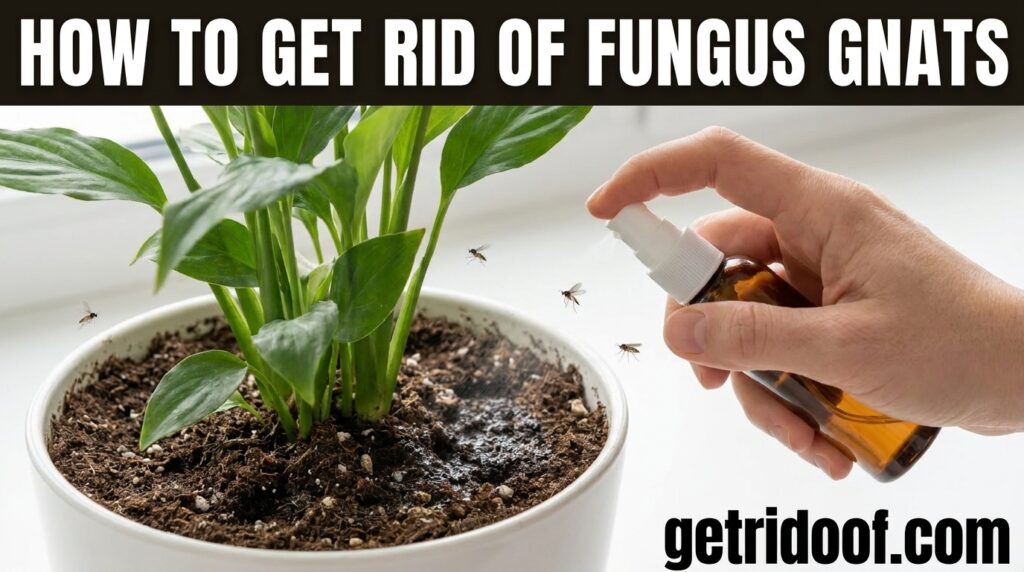
Reducing adults stops new egg-laying.
Yellow Sticky Traps are highly effective. Place them horizontally or on stakes right at soil level. The bright yellow color attracts the gnats, and they get stuck. Replace traps as they fill up.
Apple Cider Vinegar Traps — Fill small bowls with apple cider vinegar plus a drop of dish soap. Cover with plastic wrap poked with holes. Gnats fly in but cannot escape.
You can also use plug-in traps or simple flypaper near affected plants.
Step-by-Step Action Plan to Get Rid of Fungus Gnats
Follow this integrated approach for fast, lasting results:
- Day 1: Identify all affected plants. Place yellow sticky traps in every pot.
- Dry Out the Soil: Stop watering until the top 2 inches are dry. Remove any saucers holding water.
- Apply Larva Treatment: Use Bti solution or hydrogen peroxide drench on all plants.
- Repeat Treatments: Apply Bti or peroxide every 5-7 days for 3 weeks.
- Monitor Daily: Check traps and soil. Reduce watering strictly.
- Improve Conditions: Add sand or gravel top-dressing. Improve air circulation.
- Repot if Needed: If you have a heavy infestation, repot in fresh, sterile soil after treating the roots.
Most people see a big drop in gnats within 7-14 days. Full control often takes 3-4 weeks because of the life cycle.
Common Mistakes to Avoid When Dealing with Fungus Gnats
- Only killing adults while ignoring soil larvae.
- Continuing to overwater during treatment.
- Using chemical sprays that do not reach larvae.
- Forgetting to treat all plants (gnats move easily).
- Giving up too soon — patience is key.
Stay consistent, and the problem will not return.
Natural vs Chemical Methods: Which Should You Choose?
Choosing the right method depends on how bad your fungus gnat issue is, safety concerns, and what you prefer. Here’s a clear comparison:
| Aspect | Natural Methods | Chemical Methods |
| Effectiveness | Excellent for most home cases | Faster results in heavy infestations |
| Safety | Very safe for kids, pets, and beneficial insects | May harm beneficial soil life and pets |
| Best Options | Bti (Mosquito Bits), Hydrogen Peroxide, Sticky Traps, Beneficial Nematodes | Pyrethrin sprays, Insecticidal soaps, Systemic insecticides |
| Speed | Takes 7–21 days for full control | Works within a few days |
| Long-term Impact | Improves soil health | Can damage soil microbiome |
| Cost | Low to medium | Medium to high |
| Recommended For | Beginners, most households | Severe infestations only |
Recommendation: Always start with natural methods. They are highly effective, safer, and more sustainable. Only use chemical solutions if natural methods don’t work after 3–4 weeks of trying.
How to Get Rid of Fungus Gnats in Specific Situations
In propagation stations or seedlings, be careful with bottom watering and sand covering. Seedlings have delicate roots.
In large collections: Treat everything at once to prevent spread.
In terrariums or closed systems: Focus heavily on prevention and Bti since drying is harder.
Outdoor patio plants: Similar methods apply, but watch for re-infestation from outdoors.
Long-Term Prevention Tips for Houseplant Lovers
Develop these habits for gnat-free plants forever:
- Always check soil moisture before watering.
- Choose pest-resistant plants and quality potting mixes.
- Clean tools and pots between uses.
- Maintain good airflow and avoid overcrowding plants.
- Inspect plants regularly during watering routines.
A clean, dry-surface routine makes fungus gnats rare visitors.
When to Consider Professional Help
Most cases resolve with DIY methods. If your plants show severe root damage or face heavy infestations, reach out to a local extension service or a professional. This is especially important if you have valuable specimens. They can help identify underlying issues like poor drainage.
(FAQs)
Q: How long does it take to get rid of fungus gnats?
Most people see major improvement in 7–14 days and full control in 3–4 weeks.
Q: Are fungus gnats harmful to humans?
A: No, they do not bite or spread diseases.
Q: Can fungus gnats damage my plants?
Yes, larvae can harm roots in large numbers, especially in seedlings.
Q: Do sticky traps really work for fungus gnats?
A: Yes, they are very effective at catching and reducing adult gnats.
Q: Is hydrogen peroxide safe for houseplants?
A: Yes, when properly diluted (1:3 or 1:4 ratio), it kills larvae and aerates soil.
Q: How do I prevent fungus gnats from coming back?
A: Let the top 1–2 inches of soil dry out between waterings and use sand or gravel top-dressing.
Q: Can I use Mosquito Bits for fungus gnats?
A: Yes, it is one of the most effective and popular natural treatments.
Q: Are fungus gnats the same as fruit flies?
A: No. Fungus gnats stay near soil while fruit flies are attracted to ripe fruit.
Conclusion on How to Get Rid of Fungus Gnats
Fungus gnats are frustrating but completely manageable. The key is to mix soil drying with larva-killing treatments. Use Bti or hydrogen peroxide, and set up adult traps. Focus on prevention through smart watering, and you will rarely face this issue again.
Your houseplants need a healthy space, and you need relief from those pesky flies. Start with the steps today. Within a few weeks, you should see clear results and happier plants.
Have you tried any of these methods? Share your experiences in the comments. For more houseplant care tips, explore our other guides on indoor gardening.
About the Author