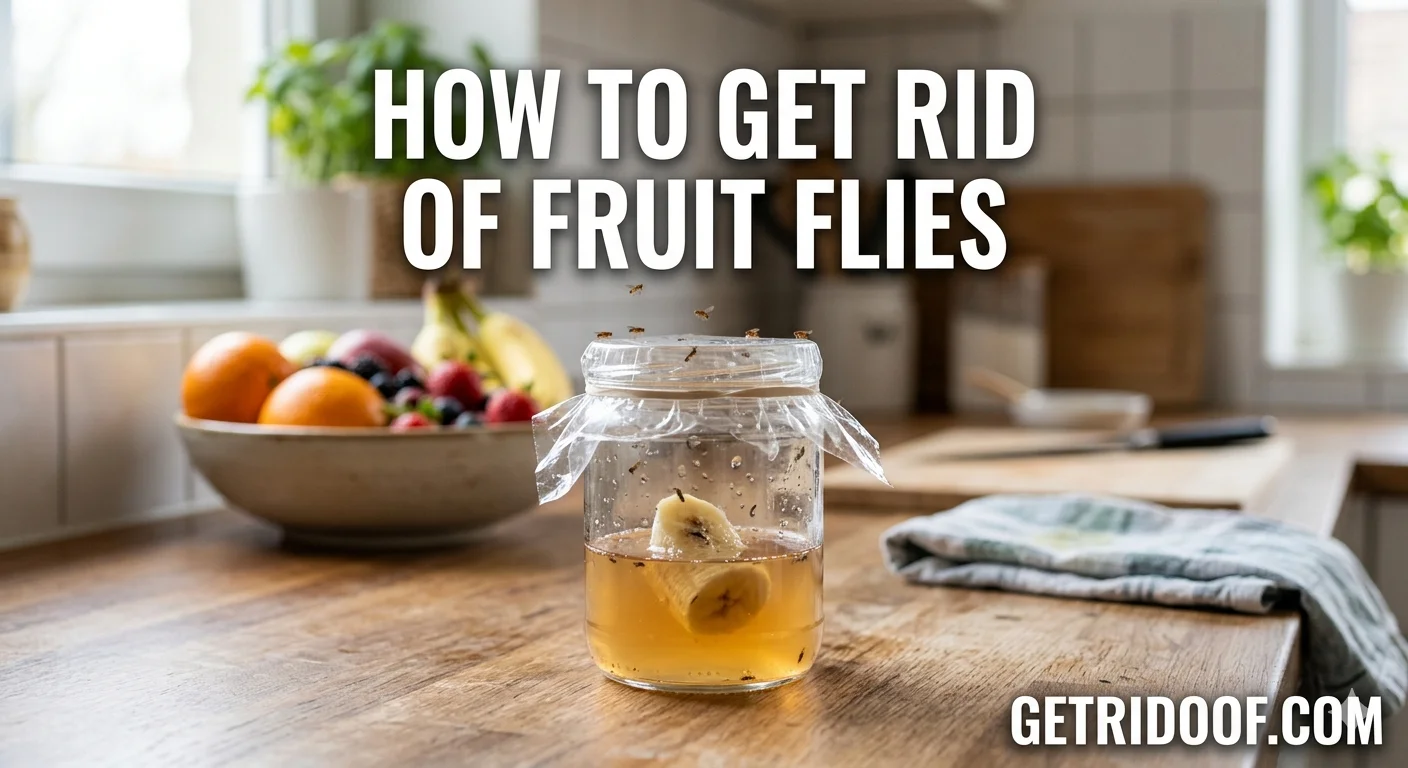
Fruit flies are tiny, but they can take over your kitchen in just a few days. One day, a bowl of bananas sits on your counter. The next, you’re swatting at tiny bugs buzzing around your food. If you want to know how to get rid of fruit flies quickly and without harsh chemicals, you are in the right place.
This guide has everything: what draws them in, how to trap them, how to clean their breeding areas, and how to keep them away for good.
What Are Fruit Flies and Why Are They in Your Home?
Fruit flies (Drosophila melanogaster) are small flying insects about 1/8 inch long. They have tan or yellowish bodies and are often recognized by their distinctive red eyes.
They do not appear out of thin air. Fruit flies love fermenting and overripe fruits. They’re also drawn to spilled juice, wine, beer, and damp drains. Pests can sneak into your home on the produce you buy. Their eggs can be on the skin of the fruit.
The bad news is they reproduce fast. A single female fruit fly can lay up to 500 eggs in one lifecycle, and those eggs hatch into adults in as little as 8 to 10 days. That is why a small problem can turn into a full fruit fly infestation within a week.
How to Get Rid of Fruit Flies: Step-by-Step
Step 1 — Remove the Source
The most important step to getting rid of fruit flies is removing what is attracting them. Without a food source, they cannot survive or breed.
- Throw out any overripe, bruised, or rotting fruit immediately
- Store all fresh produce in the refrigerator until the infestation is gone
- Wipe down counters, stovetops, and tables after every meal
- Empty your trash can daily and use a bin with a tight-fitting lid
- Rinse out bottles, cans, and recyclables before placing them in the bin
Even a small spill of juice or wine can feed a colony. Clean up spills as soon as they happen.
Step 2 — Set Up a DIY Fruit Fly Trap
Once the source is removed, trap the adults that are still flying around. The good news is you probably have everything you need in your kitchen right now.
The Apple Cider Vinegar Trap (Most Effective)
This is the most popular and proven method to get rid of fruit flies at home.
What you need:
- A small jar or bowl
- Apple cider vinegar (ACV)
- A few drops of liquid dish soap
- Plastic wrap and a toothpick (optional)
How to make it:
- Pour about ½ cup of apple cider vinegar into the jar
- Add 2–3 drops of dish soap and stir gently
- Cover with plastic wrap and poke a few small holes with a toothpick
- Place the trap near your fruit bowl, sink, or trash can
The fermentation smell of the vinegar lures the flies in. The dish soap breaks the surface tension so they sink and cannot escape. Replace the mixture every 2–3 days.
Pro tip: Tests from The Kitchn and Young House Love found that jars with punched metal lids or plastic wrap trap the most flies. They outperformed the paper funnel and wine bottle methods.
The Overripe Fruit Trap
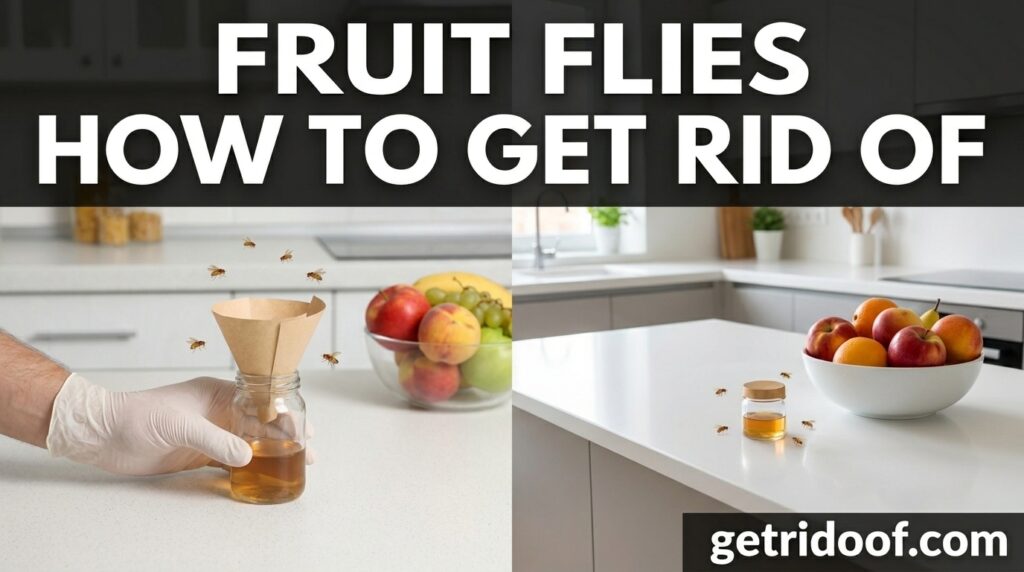
If you don’t have apple cider vinegar, try using very ripe or rotting fruit. A banana peel or a soft strawberry works best.
- Place the fruit in a bowl or jar
- Cover tightly with plastic wrap
- Poke several small holes so flies can enter but cannot easily leave
In tests side by side, banana peels and strawberries outperformed vinegar in the first 24 hours. This is because their rotting scent is much stronger.
The Wine Bottle Trap
Have a nearly empty bottle of red or white wine? Do not throw it out just yet.
- Add a few drops of dish soap to the leftover wine
- Leave the bottle on the counter near the infestation
Fruit flies are strongly attracted to fermented beverages. This method is effortless — just a bit of sacrifice.
Step 3 — Clean Your Kitchen Drains
Your kitchen sink drain is a top spot for fruit fly breeding that often goes unnoticed. The moist layer of organic buildup inside the pipe is a perfect place for them to lay eggs.
Here is how to clean it properly:
- Use a small bottle brush to scrub the inside of the drain
- Pour ½ cup of baking soda down the drain. Then add ½ cup of white vinegar. Let it fizz for 20 minutes. Finally, flush the drain with hot water.
- Alternatively, pour a pot of boiling water down the drain once a week
- Do not use bleach — it runs past the buildup without cleaning it and is harmful to the environment
If you notice tiny flies by your sink that resemble small moths, you might have drain flies, not fruit flies. The cleaning method is the same, but it helps to know the difference.
Step 4 — Use Store-Bought Solutions (When Needed)
Sometimes the infestation is large enough that DIY traps alone are not enough. There are several effective store-bought options:
| Type | How it works | Best for |
| Sticky yellow traps | Adhesive surface catches flies | Mild infestations |
| UV light traps | Blue light lures and captures | Hands-free solution |
| Aerosol sprays | Direct contact kill | Quick knockdown |
| Drain gel cleaners | Dissolves organic drain buildup | Drain-based infestations |
Use aerosol sprays or insecticides indoors that are safe for food areas, kids, and pets. Always follow label instructions.
Natural Ways to Get Rid of Fruit Flies Without Chemicals
If you prefer a fully chemical-free approach, here are natural remedies that work:
- Essential oils: Lemongrass, peppermint, lavender, and clove oil all repel fruit flies. Mix 15 drops of essential oil with 2 cups of water and 1 teaspoon of dish soap in a spray bottle. Spray near windows, the fruit bowl, and the sink area.
- Cucumber slices: Put fresh cucumber slices in your garbage disposal or next to your fruit bowl. The scent acts as a mild deterrent — best used after you have removed the main source.
- Herbs: Fresh basil, mint, and lavender in your kitchen can help keep fruit flies away.
- Reduce humidity: Fruit flies thrive in damp environments. Run a dehumidifier, let sponges dry out completely, and use a range hood fan when cooking.
These methods work best as prevention once the main infestation is under control.
Fruit Flies vs. Gnats vs. Drain Flies — What Is the Difference?
Many people confuse these three common kitchen pests. Here is a quick guide:
| Pest | Appearance | Where found | Main lure |
| Fruit fly | Tan/yellowish, red eyes | Near fruit, counters | Fermenting fruit, vinegar |
| Fungus gnat | Dark/black, slender | Near houseplant soil | Moist soil, fungi |
| Drain fly | Gray, fuzzy, moth-like wings | Near sink drains | Organic drain buildup |
If the bugs on your houseplants are mostly black, you probably have fungus gnats, not fruit flies. Avoid overwatering your plants to reduce their food source.
How to Prevent a Fruit Fly Infestation for Good
Once you have gotten rid of fruit flies, the goal is to make sure they never come back. Prevention is far easier than dealing with an infestation.
Daily Habits That Keep Fruit Flies Away
- Wash your produce as soon as you get home. But remember, don’t wash berries right away. They mold faster when wet.
- Store ripe fruit in the refrigerator — fruit flies cannot thrive in cold temperatures
- Empty the trash daily and use bags with tight closures
- Wipe your counters after each meal. Don’t forget to focus on fruit bowls and stovetops.
- Keep sponges dry — a wet kitchen sponge is a breeding ground
- Clean the garbage disposal weekly with baking soda and vinegar
Food Storage Tips
- Use airtight containers for all fruits and vegetables left on the counter
- Check your produce regularly and discard anything that is softening or bruised
- If buying in bulk, freeze fruit scraps before adding them to compost — this kills any eggs or larvae
The Fridge Rule
If fruit flies keep coming back, try this simple fix: put any ripe or cut fruit in the fridge right away. Hard-skinned fruits like avocados and unripe mangoes can stay on the counter. But when they soften, put them in the fridge.
How Long Does It Take to Get Rid of Fruit Flies?
Most people notice fewer fruit flies in 2 to 4 days. This happens after they remove food sources and set traps. Complete elimination usually takes 1 to 2 weeks. This is especially true if there was a breeding spot, such as a drain or compost bin.
Be patient and keep refreshing your traps every 2–3 days. If no new flies show up in your traps for 48 hours, you probably got rid of the infestation.
Frequently Asked Questions
Can fruit flies make you sick?
Fruit flies don’t bite. However, they can carry bacteria on their legs. This means they might contaminate food surfaces when they land and feed. While the risk is generally low, it is another good reason to act quickly when you notice them.
Does bleach kill fruit flies in drains?
Bleach is not effective for drain fruit flies. It runs past the organic buildup without cleaning it and can damage your pipes over time. Baking soda and vinegar, or boiling water, are much more effective options.
Why do I keep getting fruit flies even though my kitchen is clean?
There may be a hidden breeding source you have not found yet.
Common culprits are:
- the drip tray under your refrigerator
- a forgotten piece of fruit at the bottom of a bag
- a compost bin in the kitchen
- a leaking pipe with organic buildup under the sink
Do fruit flies go away on their own?
Eventually, yes — but it can take weeks or months if you do nothing. New adults keep hatching as long as the food source and breeding grounds stay. If they aren’t removed, the cycle continues. Taking action shortens the process dramatically.
Conclusion on How to Get Rid of Fruit Flies Starts With the Source
To get rid of fruit flies for good, don’t just trap the adults. You also need to cut off their food and breeding supply. Remove overripe fruit, clean your drains, wipe down your counters, and set a simple apple cider vinegar trap. Within a week, your kitchen will be clear.
Keep up those prevention habits, and fruit flies won’t take hold in your home again. A few minutes of cleaning each day is all it takes to stay fruit fly-free for good.
About the Author





1 thought on “How to Get Rid of Fruit Flies”