Have you seen tiny, fuzzy, moth-like bugs near your kitchen sink or bathroom mirror? You are likely dealing with Psychodidae, commonly known as drain flies. These pests are more than just a nuisance; they are a sign that your pipes need attention.
In this comprehensive guide, we will show you exactly how to get rid of drain flies using proven natural and professional methods. We will dive deep into their life cycle, how to find their hiding spots, and how to keep them from coming back.
What are Drain Flies?
Before learning how to get rid of drain flies, you must identify them correctly. They are often called moth flies, sewer flies, or filter flies. They are tiny, measuring only 2 to 5 millimeters long.
Their bodies and wings are covered in fine hairs, giving them a fuzzy appearance. Unlike fruit flies, they are poor fliers and usually stay close to the drain they live in. They thrive in moist areas rich in organic matter.
Why Do I Have These Pests?
Drain flies do not just appear out of nowhere. They are attracted to the “biofilm” or “slime” that builds up inside your pipes. This slime consists of hair, soap scum, and food particles.
The flies lay their eggs in this organic sludge. Once the larvae hatch, they feed on the gunk until they become adults. If you have them, it means there is a “nursery” inside your plumbing that needs cleaning.
The First Step: The Overnight Tape Test
You cannot learn how to get rid of drain flies effectively until you find the exact source. Often, homeowners treat the wrong drain.
To perform the tape test, take a piece of clear packing tape. Place it over the drain opening with the sticky side facing down. Do not cover the drain completely; leave some room for air to flow.
Check the tape the next morning. If you see flies stuck to it, you have found your source. Repeat this for every drain in your house, including floor drains and laundry tubs.
How to Get Rid of Drain Flies Naturally
Many people prefer eco-friendly solutions before turning to chemicals. Here are the most effective natural methods to clear your pipes.
1. The Boiling Water Flush
This is the simplest way to start. Boil a large pot of water and slowly pour it down the drain twice a day for a week.
The heat helps loosen the biofilm and can kill some larvae on contact. This rarely solves the problem completely. It doesn’t clean the pipes thoroughly.
2. Baking Soda, Vinegar, and Salt
This simple DIY trick works well to get rid of drain flies naturally.
- Mix 1/2 cup of salt with 1/2 cup of baking soda.
- Pour the dry mixture down the drain.
- Follow it with 1 cup of white vinegar.
- Let it fizz and sit overnight.
- Flush with boiling water in the morning.
3. The Apple Cider Vinegar Trap
While you treat the drain, you still need to catch the adults flying around.
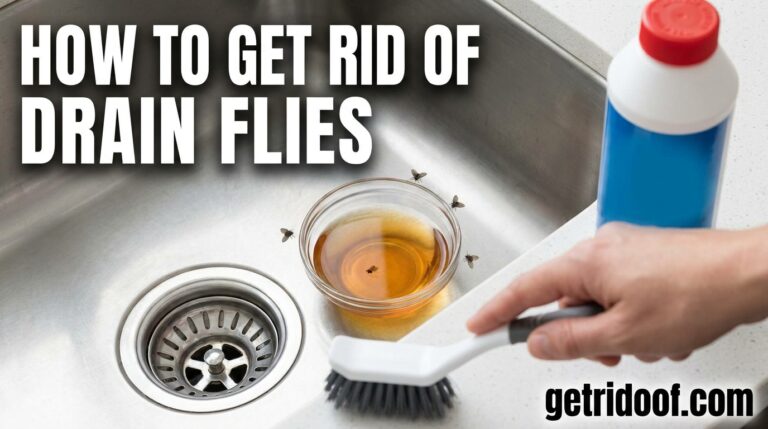
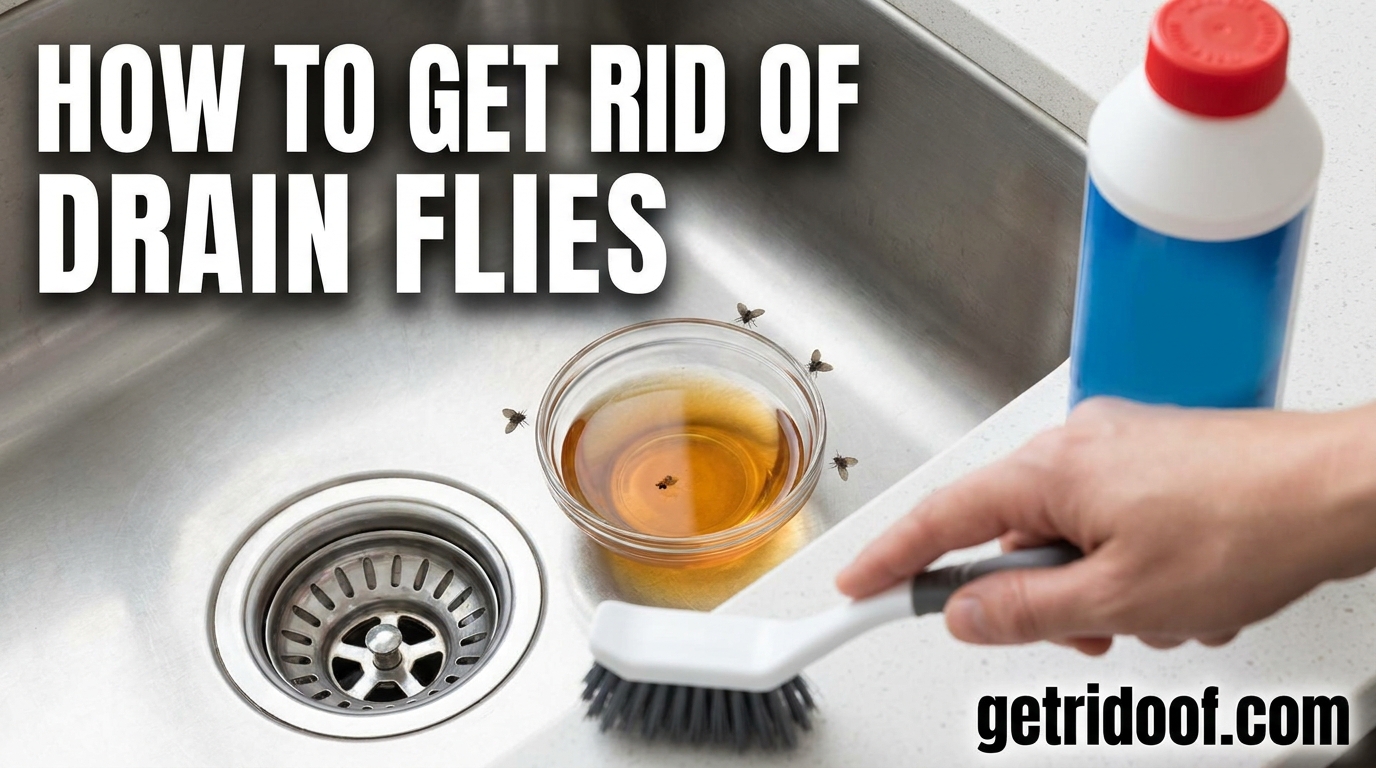
Fill a small bowl with apple cider vinegar and a few drops of liquid dish soap. Cover the bowl with plastic wrap and poke small holes in it. The flies are attracted to the vinegar, but the soap breaks the surface tension, causing them to sink.
Mechanical Cleaning: The Most Important Step
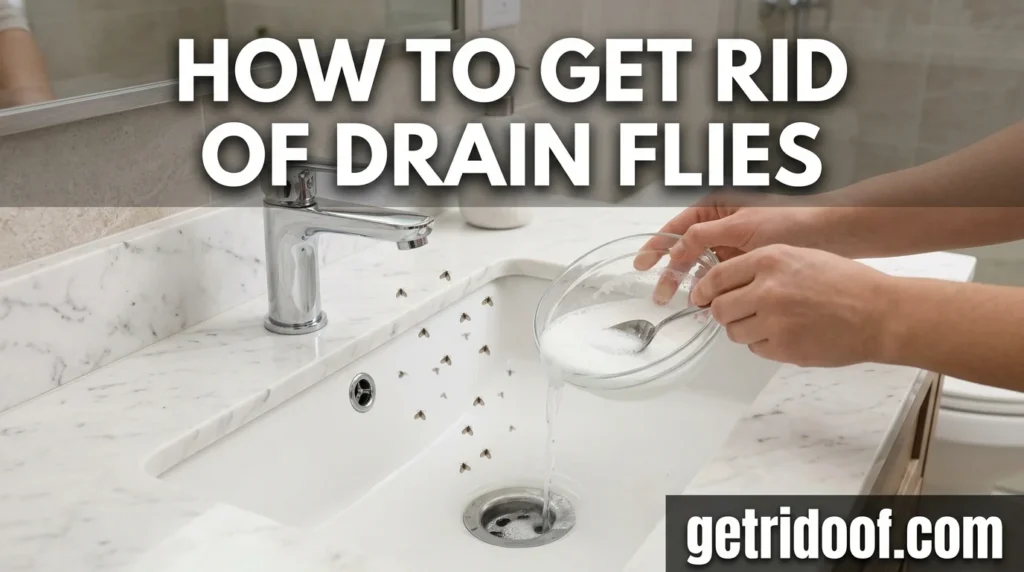
If you want to know how to get rid of drain flies permanently, you must remove their food source. Chemical or natural liquids often flow right past the thick slime where larvae hide.
You need a metal pipe brush or a plumbing snake. Manually scrub the inside of the drain to break up the gelatinous grime. This physical removal is the only way to ensure the eggs and larvae are gone for good.
Commercial Solutions: How to Get Rid of Drain Flies Fast
Sometimes, DIY methods aren’t enough for a heavy infestation. In these cases, you should look for specific products.
Use Bio-Enzymatic Cleaners
Traditional drain cleaners like bleach or lye are often ineffective against drain flies. Bleach is too thin and washes away quickly without killing the larvae.
Instead, use a thick gel bio-enzymatic cleaner. These products contain living bacteria that “eat” the organic biofilm. The gel coats the pipes and works over several hours to dissolve the fly habitat.
Avoiding Harsh Chemicals
Try to avoid using caustic acids. Not only can they damage your pipes over time, but they are also harmful to the environment. Enzyme-based solutions are much safer for septic systems and older plumbing.
You Can Also Read
- How to Get Rid of Fruit Flies
- How to Get Rid of Fruit Flies in House
- How to Get Rid of Carpet Beetles
How to Get Rid of Drain Flies in the Bathroom
The bathroom is the most common place for these pests. Soap scum and hair create the perfect environment for them.
- Check the P-Trap: This is the U-shaped pipe under your sink. If it’s clogged, it becomes a breeding ground.
- Clean the Overflow: Most sinks have a small hole near the top to prevent flooding. People often forget to clean this area, but flies love it.
- Scrub the Shower Grate: Hair often gets trapped just under the metal grate. Remove the grate and clean it thoroughly with a brush.
How to Get Rid of Drain Flies in the Kitchen
In the kitchen, the garbage disposal is the primary culprit. Food particles get trapped in the splash guard and along the sides of the unit.
To clean the disposal, drop in ice cubes and lemon peels while running the unit. The ice acts as an abrasive to scrub the blades, while the lemon provides a fresh scent. Follow this with the baking soda and vinegar method mentioned above.
Managing Other Potential Breeding Sites
Drain flies don’t just live in sinks. If you still see them after cleaning your drains, check these areas:
- Sump Pumps: Stagnant water in the pit is a major attractant.
- Refrigerator Drip Pans: Moisture and dust create a slime they love.
- Air Conditioner Condensate Lines: Check that these lines drain well. Make sure they aren’t blocked by algae.
- Potted Plants: Overwatering your plants can lead to fungus gnats. These pests look a lot like drain flies.
Long-Term Prevention Strategies
Once you know how to get rid of drain flies, your goal is to make sure they never return.
- Weekly Flushes: Pour a gallon of hot water down less-used drains each week. This keeps the water in the P-trap from drying out.
- Keep Surfaces Dry: Wipe down sinks and tubs after use. Flies need moisture to survive.
- Fix Leaks: A leaky pipe under the sink causes damp wood and mold. This can attract flies outside the drain.
- Use Drain Covers: Fine mesh covers can prevent adults from entering the pipes to lay eggs.
Common Myths About Drain Flies
There is a lot of misinformation regarding how to get rid of drain flies. Let’s clear up a few common myths.
Myth 1: Bleach is the best solution. As mentioned, bleach doesn’t stick to the pipes. It might kill a few adults, but it won’t penetrate the thick biofilm where the eggs are protected.
Myth 2: They only live in “dirty” houses. Even a very clean house can have a build-up of biofilm inside the pipes. It’s a natural process, not a sign of your cleaning habits.
Myth 3: They bite humans. Fortunately, drain flies do not bite. They are mainly a bother. Still, they can carry bacteria from the sewer to your surfaces.
Frequently Asked Questions (FAQ)
How long does it take to get rid of them?
If you are diligent, you can see a massive reduction in 2 to 3 days. It usually takes about 14 days to break the life cycle completely. This helps ensure all larvae are gone.
Can drain flies come from the toilet?
Yes, if a toilet is rarely used, the water in the bowl can become stagnant. Scrubbing under the rim and flushing regularly will solve this.
Are drain flies the same as fruit flies?
No. Fruit flies are attracted to fermenting sugar and fruit. Drain flies are attracted to sewage and decaying organic matter in pipes.
Conclusion: Take Action Today
Learning how to get rid of drain flies is all about consistency. You cannot simply pour one pot of water down the sink and expect them to vanish. You must be aggressive in removing the biofilm and breaking their life cycle.
Start with the tape test tonight to find the source. Once you find them, scrub with a machine and use enzyme cleaners. With a little bit of work, your home will be fly-free in no time.
Remember, a clean drain is a fly-free drain. Keep those pipes clear, and you will never have to worry about these fuzzy pests again.
About the Author