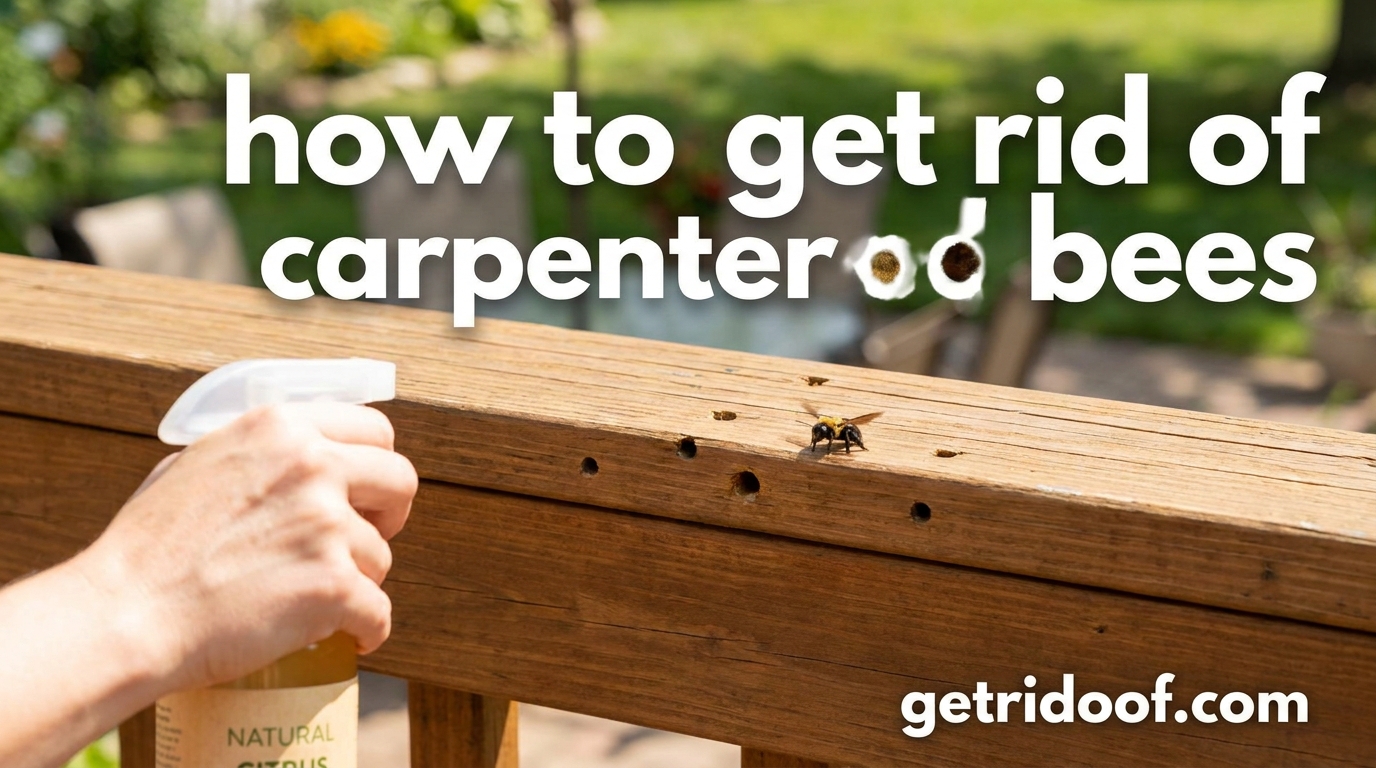
Have you noticed perfectly round holes in your deck, fence, or porch ceiling? If yes, you likely have a carpenter bee problem. Learning how to get rid of carpenter bees quickly can save you hundreds — or even thousands — of dollars in wood damage. This guide covers everything you need to know, from spotting the signs to fixing the damage for good.
What Are Carpenter Bees?
Carpenter bees are large, black-and-yellow bees that look almost identical to bumblebees. But there is one big difference. Bumblebees are fuzzy all over. In contrast, carpenter bees have a large, shiny, solid black abdomen.
They are part of the Xylocopa family and are found across the United States. Unlike honeybees or bumblebees, they do not live in colonies. Instead, each female drills her own tunnel into wood to lay her eggs.
Here is why this is a problem for homeowners:
- A single tunnel can extend up to 10 feet deep after several seasons of reuse
- After 3–5 years of damage, wood beams can lose 5–10% of their structural strength
- Moisture enters through the holes, causing rot and mold within two years
- Woodpeckers follow the bees, making the damage even worse by pecking into the wood
The financial damage is real. In 2026, hiring a pro for carpenter bee removal costs between $150 and $2,500. The price varies based on how bad the infestation is. The longer you wait, the more expensive the fix.
How to Identify Carpenter Bees vs. Bumblebees
Before you treat the problem, make sure you are actually dealing with carpenter bees. Many people confuse them with bumblebees, but the treatment is completely different.
| Feature | Carpenter Bee | Bumblebee |
| Abdomen | Shiny, black, hairless | Fuzzy and yellow |
| Nesting | Drills into wood | Nests underground |
| Colony | Solitary (alone) | Lives in groups |
| Sting risk | Female can sting (rarely) | Both can sting |
| Size | Large (up to 1 inch) | Medium to large |
Male carpenter bees often hover aggressively around your porch. Here is the surprising part — males cannot sting. They are just putting on a show. The females can sting, but they almost never do unless you grab them or squeeze them.
Signs You Have a Carpenter Bee Infestation
Knowing the signs early is the key to stopping the damage before it gets out of hand. Here is what to look for:
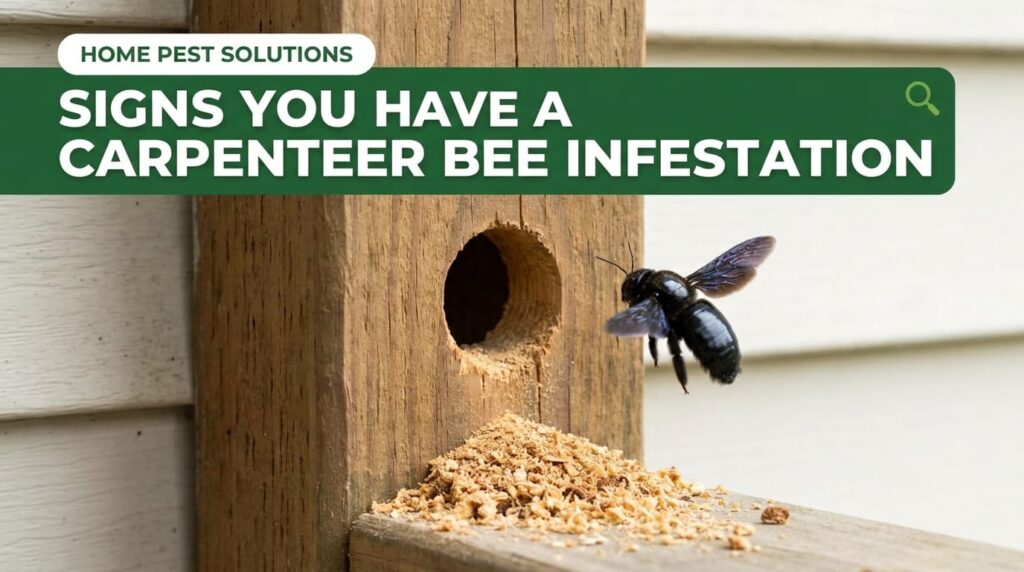
1. Perfectly Round Holes in Wood
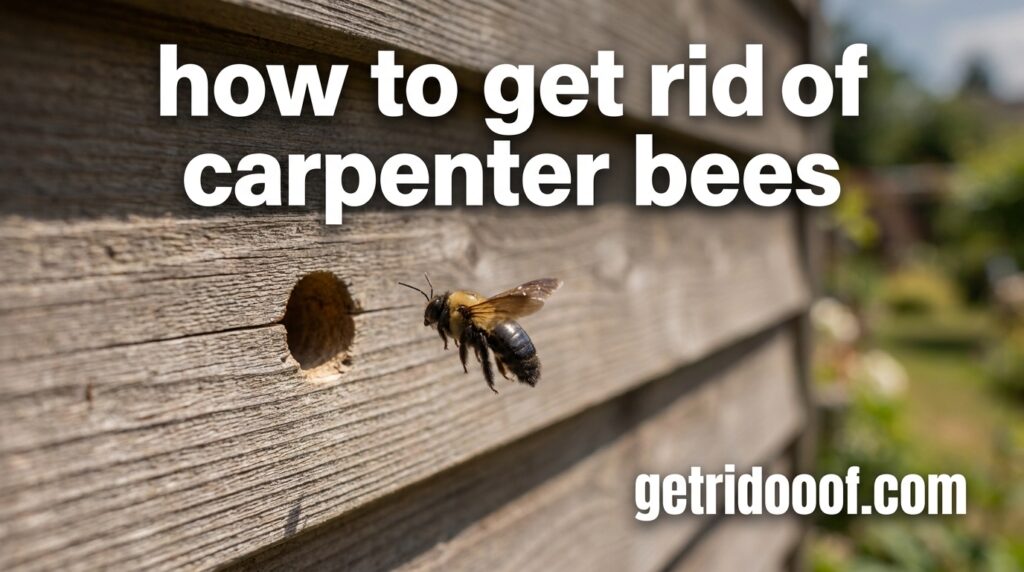
You’ll notice round, smooth holes about ½ inch wide in wood surfaces. They look like someone used a drill bit. These holes are typically found on:
- Deck railings and posts
- Fascia boards and soffits
- Window and door trim
- Porch ceilings
- Wooden fences and pergolas
- Unpainted outdoor furniture
2. Piles of Sawdust Below the Holes
Fresh sawdust, known as frass, under a hole means active drilling is happening. This is wood that the female bee has chewed through to build her tunnel.
3. Yellow Staining Around the Entry Point
You may notice yellowish-brown staining near the holes. This is a mix of bee droppings and pollen waste. It is unsightly and gets worse over time.
4. Aggressive Hovering Bees
If you see a big bee flying nearby and diving toward your head, it’s probably a male carpenter bee protecting its nest.
5. Woodpecker Activity
Woodpeckers love to eat carpenter bee larvae. If woodpeckers are pecking at your wood, carpenter bees might be nesting inside.
How to Get Rid of Carpenter Bees: 6 Proven Methods for 2026
Here’s how to get rid of carpenter bees using the best methods in 2026.
Method 1: Use Insecticidal Dust (Most Effective)
Pest control experts often say that insecticidal dust is the fastest and best way to eliminate carpenter bees. Powder pesticides, like Tempo Dust or D-Fense Dust, work better than liquid sprays. This is because powders don’t soak into the wood. They stick around longer and reach deep into the tunnel.
How to apply:
- Fill a hand duster halfway with insecticidal dust
- Insert the tip of the duster directly into the carpenter bee hole
- Squeeze to send a puff of dust deep into the tunnel
- Leave the hole open for 2–3 days so returning bees contact the dust
- Seal the hole with wood putty or a wooden cork after the bees are dead
Apply in early morning or late evening when bees are inside the tunnel for the best results.
Method 2: Apply a Residual Liquid Insecticide
If you have an active infestation on a large surface area, a residual liquid spray is a good starting point. Products containing cypermethrin or deltamethrin are highly effective.
Spray directly on wooden surfaces. Focus on the underside of decks, eaves, fascia boards, and soffits. These areas are where carpenter bees are most active. One application can last 2–3 months if protected from rain.
Pro tip: Spray twice in spring at 3–4 week intervals for the best protection during peak bee season.
Method 3: Natural DIY Repellent Sprays
If you want a chemical-free option, some natural scents can keep carpenter bees away. These work best as preventative measures or for mild infestations.
Citrus Spray (Most Popular Natural Method):
- Slice lemons, oranges, or grapefruits
- Boil the rinds in water for 10–15 minutes
- Let the mixture cool, then pour into a spray bottle
- Spray directly into and around carpenter bee holes every few days
Essential Oils That Repel Carpenter Bees:
- Almond oil
- Lavender oil
- Tea tree oil
- Citronella oil
- Eucalyptus oil
Mix 10–15 drops of any of these oils with water in a spray bottle. Apply regularly to wooden surfaces. Do this especially in spring, before bees get active.
Method 4: Use Carpenter Bee Traps
Carpenter bee traps are a top choice in 2026. They catch bees without using any chemicals. These traps mimic the look and feel of a natural nesting hole. The bee enters, gets trapped in the collection chamber, and cannot escape.
Best placement tips:
- Hang traps directly over or next to existing carpenter bee holes
- Place them near eaves, deck railings, and porch ceilings
- For the best results, place dead bees inside the trap to attract more bees
- Check and empty traps regularly throughout spring and summer
Traps work best as part of a larger plan, not as a standalone solution for severe infestations.
Method 5: Loud Noise and Vibration
This method sounds unusual, but it actually works — at least temporarily. Carpenter bees are highly sensitive to sound and vibration. Playing loud music with heavy bass near an active nest for several hours can cause them to leave the area.
This gives you a window of opportunity to seal the holes before they return. Always hang a carpenter bee trap nearby to catch the fleeing bees after this method.
Method 6: Seal the Carpenter Bee Holes
Sealing holes is a critical final step — but timing matters enormously. Seal too early and you trap live bees inside. They will simply chew through to a new exit, making the damage worse.
The correct process:
- Treat the holes with insecticidal dust first
- Wait 2–3 days for all bees to contact the treatment
- In early fall (September–October), seal all holes with:
- Wood putty (recommended — paintable)
- Wooden corks or plugs
- Caulking compound
Do not seal in spring or summer when bees may still be active inside.
You Can Also Read
- How to Get Rid of Carpet Beetles
- How to Get Rid of Fruit Flies in House
- How to Get Rid of Fruit Flies
How to Get Rid of Carpenter Bees in Wood: Step-by-Step Plan
Here’s a simple action plan to eliminate carpenter bees from wood structures:
Step 1 — Inspect (Early Spring) Walk around all wooden structures and mark every hole you find with chalk or tape.
Step 2 — Spray (March–April) Apply a residual liquid insecticide to all wood surfaces where bees are active. Repeat after 3–4 weeks.
Step 3 — Dust (April–June) Apply insecticidal dust into every hole. Leave the holes open for a few days.
Step 4 — Trap (Spring through Summer) Hang carpenter bee traps near active areas. Check and empty them weekly.
Step 5 — Seal (September–October) Once bee season ends, fill all holes with wood putty. Sand smooth and repaint.
Step 6 — Protect (Ongoing) Paint or stain all exposed wood surfaces. Repaint every 2–3 years.
How to Prevent Carpenter Bees from Coming Back
Getting rid of carpenter bees is only half the battle. The bigger challenge is making sure they do not return next spring. Here are the most effective prevention strategies:
Paint or Stain All Exposed Wood
This is the single most important thing you can do. Carpenter bees strongly prefer bare, untreated, unpainted wood. A fresh coat of paint or exterior-grade stain makes your wood far less attractive to them.
- Paint is more effective than stain
- Repaint every 2–3 years before the coating fades
- Pay special attention to the underside of decks and eaves
Choose the Right Wood for New Structures
If you are building anything new — a deck, pergola, fence, or shed — choose your wood wisely.
- Avoid: Pine, cedar, redwood, and cypress (favorite targets)
- Choose: Pressure-treated lumber, composite materials, hardwoods like oak and maple
- Vinyl and aluminum siding are basically immune to carpenter bees
Install Preventative Bee Traps
Hanging a carpenter bee trap in spring is smart. Even if you don’t have a current problem, it helps catch scout bees early. This way, they won’t set up nests.
Inspect Your Wood Every Spring
Walk around all wooden structures in early spring — before bees become active. Look for:
- Old holes from previous years (bees return to the same sites)
- Cracked or peeling paint
- Any new unpainted wood that may have been added
When to Call a Professional for Carpenter Bee Removal
DIY methods work well for mild to moderate infestations. But some situations call for a professional pest control service.
Call a professional if you notice:
- More than 10–15 holes across your property
- Wood that is sagging, cracking, or showing structural weakness
- Bees returning year after year despite treatment
- Extensive staining or woodpecker damage alongside bee holes
- Holes in hard-to-reach places like high rooflines or inside wall cavities
2026 Professional Treatment Costs:
- Minor infestation: $150–$350
- Moderate infestation: $350–$600
- Severe infestation with repairs: $600–$2,500
Professional exterminators use higher-strength insecticides and provide follow-up treatments with guarantees. For severe cases, it is often more cost-effective in the long run than repeated DIY attempts.
Do Carpenter Bees Sting? (And Are They Dangerous?)
This is one of the most common questions people have when dealing with these insects. Here is the honest answer:
- Male carpenter bees may seem fierce and dive-bomb aggressively, but they can’t sting. They lack a stinger.
- Female carpenter bees have a stinger, but they are gentle. They almost never sting unless handled or threatened.
- Carpenter bees are not aggressive the way wasps or hornets are
The real danger is not the sting — it is the structural damage to your home. The longer they are left untreated, the more costly the repairs become.
Are Carpenter Bees Beneficial? (The Pollinator Debate)
Here is something most pest control articles skip over. Carpenter bees are actually valuable pollinators. They pollinate many types of flowering plants, vegetables, and fruit trees. This includes blueberries, tomatoes, and eggplants.
This is why many experts recommend humane removal whenever possible:
- Use traps that capture rather than kill
- Try natural repellents before turning to insecticides
- Seal old holes in fall to prevent reinfestation without harming current occupants
You can protect your home and support local pollinators at the same time with the right approach.
Quick Summary: Your 2026 Carpenter Bee Action Plan
| Situation | Best Action |
| Just noticed a few holes | Natural spray + traps |
| Active infestation this spring | Insecticidal dust + liquid spray |
| Want to prevent future visits | Paint all wood + install traps |
| Holes from last year (empty) | Seal with wood putty in fall |
| Large or recurring infestation | Call a professional |
Frequently Asked Questions About Getting Rid of Carpenter Bees
How do you get rid of carpenter bees naturally?
The most effective natural methods are citrus oil spray, almond oil spray, essential oil repellents, and carpenter bee traps. Apply repellent sprays every few days during spring and summer. For best results, combine natural sprays with physical traps.
What is the fastest way to get rid of carpenter bees?
Insecticidal dust applied directly into nesting holes works quickly and reliably. It reaches deep into the tunnel and remains effective for weeks. Always follow up by sealing the holes in fall.
How do I fill carpenter bee holes?
Wait until early fall after all bees have vacated or been treated. Then fill holes with wood putty, wooden corks, or caulk. Sand smooth and repaint the surface to prevent reinfestation.
Do carpenter bees come back to the same holes?
Yes — this is one of the most important facts about carpenter bees. They are highly likely to return to the same nesting sites year after year. This is why sealing the holes after treatment and painting wood surfaces is so important.
Will vinegar get rid of carpenter bees?
A 50/50 mixture of white vinegar and water sprayed around bee holes can deter carpenter bees. Vinegar isn’t as strong as citrus sprays or essential oils. Also, it doesn’t get rid of an existing infestation.
What time of year is best for carpenter bee treatment?
Early spring (March–April) is the best time to spray insecticides and hang traps. Early fall (September–October) is the best time to seal all holes after the bees have left for the season.
How much does it cost to get rid of carpenter bees professionally?
In 2026, hiring a pro for carpenter bee treatment typically costs between $150 and $500 for standard infestations. Severe cases requiring structural repairs can reach $2,500 or more.
Conclusion
Knowing how to get rid of carpenter bees is one of the most valuable home maintenance skills you can have. These insects seem harmless, but they can cause costly structural damage.
The good news is that you can protect your home and save money. Treat early in spring. Use insecticidal dust, set traps, and seal holes in fall. This also helps protect important pollinators.
Do not wait until the damage gets worse. Start with a thorough inspection of your wooden structures this spring. The earlier you act, the easier and cheaper it is to get rid of carpenter bees for good.
About the Author