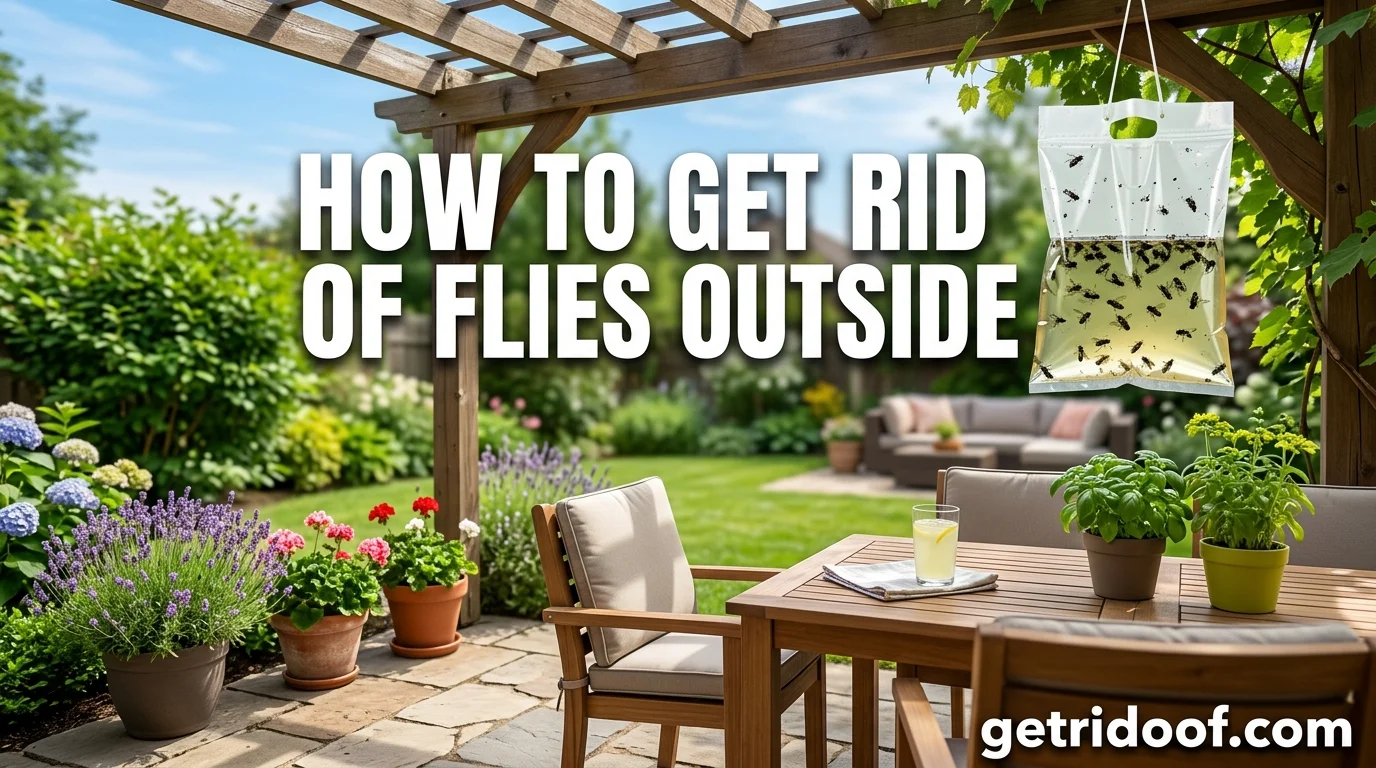
Nobody wants flies ruining a backyard barbecue or hovering over their patio furniture. Learning how to get rid of flies outside is easier than most people think — and you don’t always need harsh chemicals to do it. This guide covers everything from quick fixes to long-term solutions that actually work.
Why Are There So Many Flies Outside?
Before you can fight flies, you need to understand what draws them in. Flies are not random — they show up where conditions are right.
Common outdoor fly attractants include:
- Garbage and food waste left in open bins
- Pet droppings in the yard
- Standing water in pots, buckets, or puddles
- Compost piles that are not properly managed
- Rotting fruit or vegetables in the garden
House flies, fruit flies, blow flies, and gnats all behave a little differently. But they all share one thing: they need food, moisture, and a breeding spot. Remove those, and fly numbers drop fast.
How to Get Rid of Flies Outside: Start With Prevention
The best way to eliminate flies outside is to remove their food and breeding spots. No trap or spray works as well as removing what attracts them in the first place.
Clean Up Food and Waste Immediately
- Always cover food during outdoor meals
- Use trash bins with tight-fitting lids
- Rinse bins weekly with soapy water to remove odor
- Pick up pet waste daily — this is one of the top fly breeding sites
Eliminate Standing Water
Flies, especially gnats and drain flies, breed in moisture. Check your yard for:
- Clogged gutters holding water
- Flower pots with no drainage
- Bird baths that aren’t refreshed regularly
- Low spots in the lawn that collect rainwater
Emptying these weekly can greatly lower the number of flies in your outdoor area.
Manage Compost Properly
Compost is a magnet for flies if not managed well. Bury food scraps under a layer of dry material like leaves or cardboard. Keep the pile covered with a lid or tarp. Turn it regularly to speed up decomposition and reduce odor.
Natural Ways to Get Rid of Flies Outside
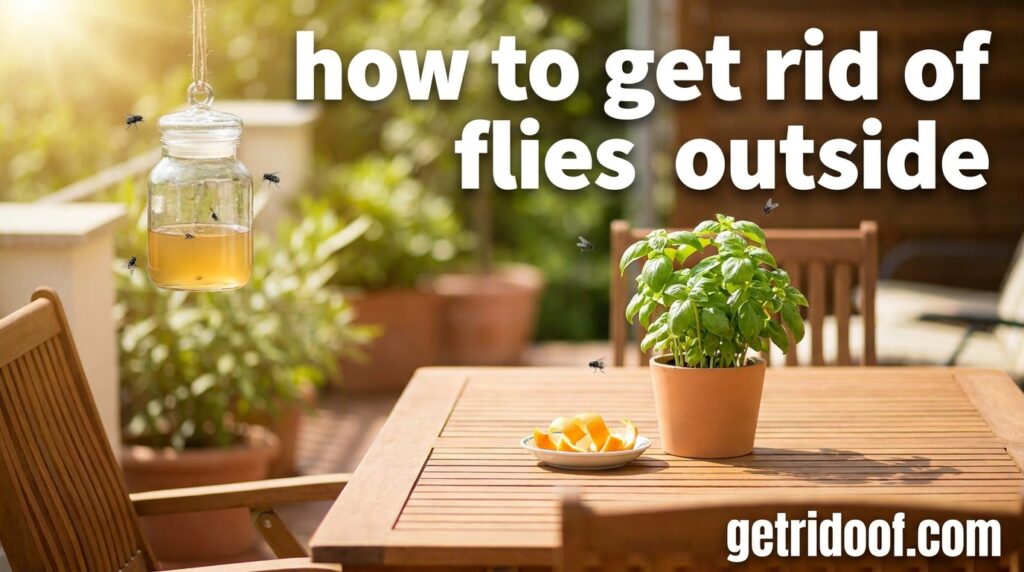
Many homeowners like chemical-free options. The good news is that several natural methods work great outdoors.
Plant Fly-Repelling Herbs and Flowers
Certain plants produce scents that flies find offensive. Adding these to your patio or garden is a beautiful, low-effort repellent:
- Basil — highly effective near outdoor dining areas
- Lavender — repels flies and smells amazing
- Marigolds — a classic garden insect deterrent
- Rosemary — works well in pots near entrances
- Mint — keep it in containers as it spreads fast
Use Essential Oils as a Fly Repellent Outside
Essential oils like citronella, eucalyptus, peppermint, and clove are natural fly deterrents. Mix 10–15 drops with water in a spray bottle and apply around seating areas, trash cans, and doorways.
You can also soak cotton balls in these oils and place them in small dishes around the patio. Refresh every few days for best results.
Make a DIY Fly Trap
Apple cider vinegar traps are one of the most popular homemade solutions to get rid of flies outside.
How to make one:
- Fill a jar halfway with apple cider vinegar
- Add a few drops of dish soap
- Cover with plastic wrap and poke small holes in it
- Place near fly-prone areas like trash cans or compost
The vinegar attracts flies, the soap breaks the surface tension, and they sink. Replace the mixture every 3–4 days.
Physical Methods to Keep Flies Away Outside
When natural options fall short, physical tools can effectively lower outdoor fly populations.
Install Outdoor Fans
Flies are weak fliers. A simple oscillating fan aimed at your patio or dining area makes it very difficult for flies to land. This is one of the easiest and most underrated tricks to get rid of flies outside during gatherings.
Use Fly Traps and Sticky Strips
Sticky fly strips work well when hung near garbage areas or compost bins. Outdoor fly traps with bait, like protein attractants, are more effective. They can trap thousands of flies in just a few weeks.
Look for bag-style outdoor fly traps available at most garden centers. Hang them away from seating areas since the bait can smell strong.
Set Up a Bug Zapper
UV bug zappers attract and kill flies using light. They work best at dusk and dawn when flies are most active. Place them away from seating areas so dead insects don’t land on food or furniture.
How to Get Rid of Flies Outside Using Chemical Solutions
Sometimes a heavy infestation calls for stronger action. Chemical methods should be used carefully, especially around children, pets, and food.
Outdoor Fly Sprays
Residual insecticide sprays can be applied to:
- Fence lines
- Garbage can areas
- The perimeter of patios and decks
Choose products with permethrin or pyrethrin. They work well and break down quickly in sunlight.
Fly Bait Stations
Fly bait granules attract and poison flies. They are highly effective and work over several weeks. Place them in spots flies frequent but keep them well away from children and pets.
Always read labels closely. Follow safety instructions when using chemical products outside.
You Can Also Read
Seasonal Tips: When Are Flies Worst Outside?
Fly activity peaks during warm months — typically late spring through early fall. In hot, humid climates like South Asia and parts of the Middle East, flies can be a year-round challenge.
Here’s a simple seasonal approach:
| Season | Action |
| Spring | Deep-clean yard, empty standing water, start planting repellent herbs |
| Summer | Use traps, fans, and sprays; cover food at all outdoor events |
| Fall | Remove rotting fruit/leaves, clean compost, seal garbage bins |
| Winter | Clear debris that could become breeding sites come spring |
Staying proactive each season keeps fly numbers low. This helps prevent big infestations from building up.
How to Get Rid of Flies Outside for Good: A Long-Term Plan
Short-term fixes work now, but a steady routine keeps flies away for good.
Your weekly checklist:
- [ ] Empty and rinse trash bins
- [ ] Remove pet waste from the yard
- [ ] Check for and drain standing water
- [ ] Refresh DIY traps or bait stations
- [ ] Turn the compost pile
Monthly tasks:
- [ ] Deep-clean outdoor bins with disinfectant
- [ ] Check gutters for blockages
- [ ] Inspect the yard for new breeding spots
Sticking to this routine — even for just a few minutes a week — makes a dramatic difference over time.
FAQ’s
What smell do flies hate the most outside?
Flies strongly dislike the smell of lavender, peppermint, eucalyptus, clove, and citronella. Using these as sprays or planting them around your yard helps keep flies away naturally.
Does vinegar keep flies away outside?
Apple cider vinegar attracts flies rather than repels them — making it ideal for traps. White vinegar, however, can act as a mild deterrent when sprayed around bins and surfaces.
Why are there so many flies in my backyard?
Large numbers of flies usually point to a food or breeding source nearby. Common causes include uncovered garbage, pet waste, standing water, or a neglected compost pile.
Do fans really help keep flies away?
Yes. Fans are very effective at deterring flies from landing, especially during outdoor meals. Flies cannot easily navigate strong airflows, so even a moderate breeze keeps them at bay.
Is it possible to get rid of flies outside permanently?
Complete elimination is unlikely since flies come from surrounding areas. You can cut outdoor fly numbers by 80–90% with consistent prevention, natural repellents, and the right traps. This stops them from becoming a serious issue.
Conclusion
Getting rid of flies outside doesn’t require expensive treatments or constant effort. The best approach combines prevention with several strategies. First, remove attractants. Then, use natural repellents like plants and oils. You can also create DIY traps. Finally, employ physical tools like fans, traps, and zappers. Use chemical solutions only when necessary.
Start with the basics: clean up food waste, cover your bins, and eliminate standing water. Add a few fly-repelling plants around your patio. Set out a vinegar trap near problem areas. You’ll notice a real difference within days.
By adopting the right habits, you can enjoy your outdoor space free from the buzz of flies. Start with one or two methods this week and build from there — your fly-free backyard is closer than you think.
About the Author