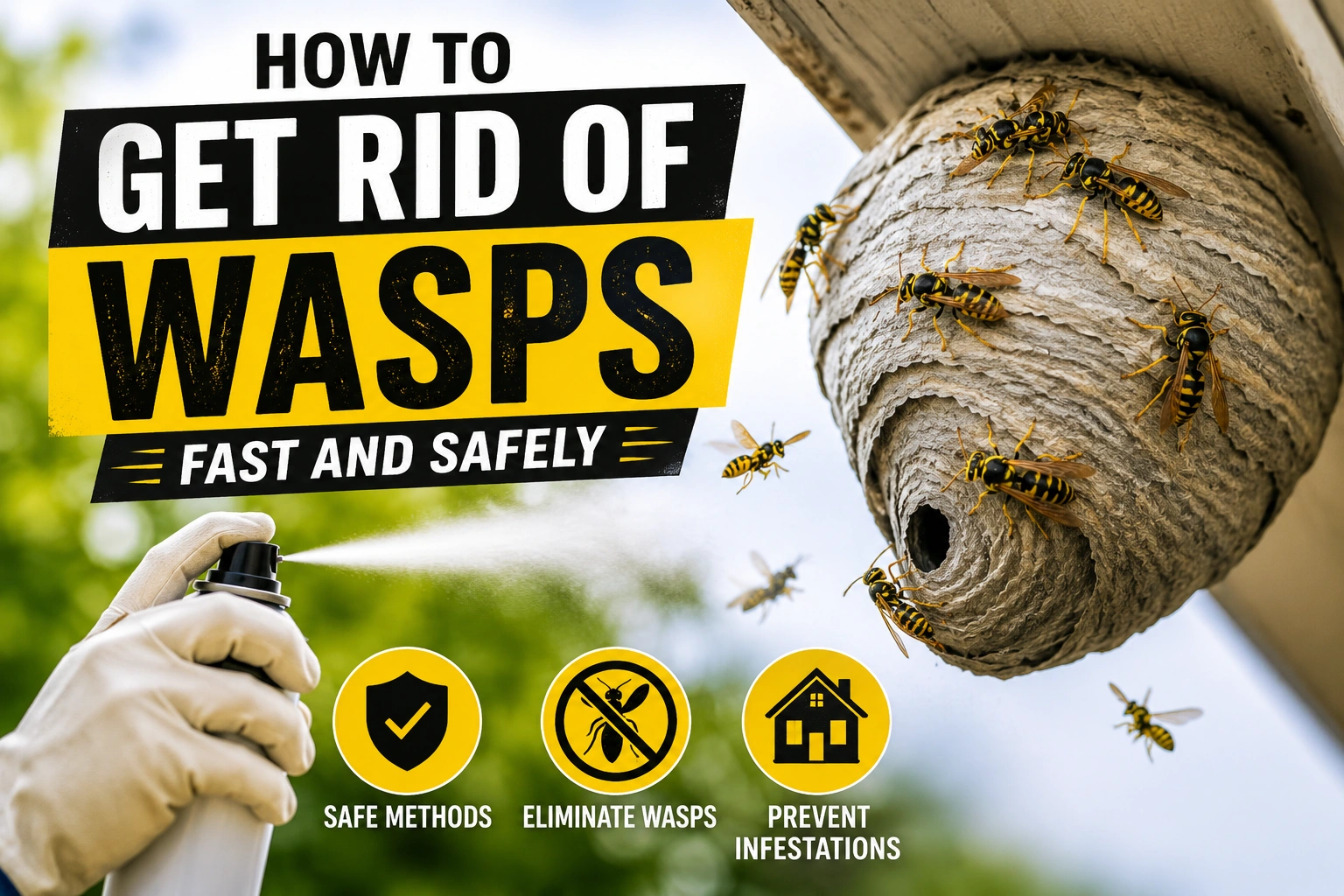
Wasps can turn a peaceful backyard into a no-go zone in a matter of days. Whether you have spotted a nest under your eaves or noticed wasps buzzing around your grill every evening, knowing how to get rid of wasps quickly and safely can save you a lot of pain — literally. This guide shows you everything you need. It covers finding the problem and getting rid of it for good.
What Kind of Wasp Are You Dealing With?
Before you grab a spray can, take a moment to identify what you are up against. Not all stinging insects are the same, and the removal method can vary.
Yellow Jackets
Yellow jackets are among the most aggressive wasps you will encounter. They are small, black and yellow, and love to nest underground or inside wall voids. They are most dangerous in late summer. That’s when their colonies grow big and food gets scarce.
Paper Wasps
Paper wasps build open, umbrella-shaped nests that look like honeycomb. You will often find them under roof eaves, porch ceilings, or window frames. They are less aggressive than yellow jackets but will sting if their nest is disturbed.
Hornets
Hornets are bigger than most wasps. They create large, enclosed nests from paper. These nests are found in trees, shrubs, or on buildings. A bald-faced hornet nest can house hundreds of workers by the end of summer.
Wasps vs. Bees — Know the Difference
Wasps have smooth, shiny bodies and a very narrow waist. Bees are fuzzier and rounder. If you have honeybees, do not kill them — contact a local beekeeper instead. Honeybees are vital pollinators and are protected in many areas.
Why You Have Wasps in the First Place
Understanding what attracts wasps is the first step in keeping them away. Wasps are drawn to:
- Sweet foods and sugary drinks — open soda cans, fruit juice, and ripe or fallen fruit
- Protein-rich foods — leftover meat, pet food, open garbage cans
- Standing water — bird baths, clogged gutters, or puddles in your yard
- Sheltered spots — gaps in walls, roof eaves, unused garden sheds, and hollow trees
- Floral scents — bright flowers and even some perfumes can attract foraging wasps
Late summer is when wasp activity peaks. When their colonies grow large and food gets scarce, they become aggressive. This makes them more likely to ruin your outdoor meals.
How to Get Rid of Wasps Safely: Step-by-Step
Step 1 — Protect Yourself First
Safety comes before everything else. Before approaching any nest, take these precautions:
- Wear thick, long-sleeved clothing, gloves, and close-toed shoes
- Cover your face and neck with a scarf or balaclava if you do not have a veil
- Always act at dusk or dawn when wasps are slower, less active, and most workers are inside the nest
- Have an exit route planned before you start — never trap yourself in a corner
- If anyone in your home has a known sting allergy, do not attempt DIY removal. Call a pest control professional immediately.
Step 2 — Locate the Nest
Carefully watch where the wasps fly to and from. They usually follow the same flight path to and from their nest. Common hiding spots include:
- Under roof eaves and overhangs
- Inside wall cavities or cracks in brickwork
- Underground (usually yellow jackets)
- Inside garden sheds, loft spaces, or hollow fence posts
Do not poke or disturb the nest during this stage. You are just observing.
Step 3 — Choose Your Removal Method
Best DIY Methods to Get Rid of Wasps
1. Dish Soap and Water Spray
This is one of the most popular and effective natural wasp killers. Soap works by breaking water’s surface tension. This lets the water seep into the wasp’s exoskeleton, suffocating it.
How to make it:
- Add 2 tablespoons of dish soap to a spray bottle filled with water
- Shake gently to mix
- Spray directly onto the nest or individual wasps
For best results, use a hose-end sprayer so you can stand further away from the nest. Spray the entire nest at dusk in one go. If any wasps survive, the colony can rebuild fast.
2. Peppermint Oil Spray
Wasps strongly dislike the scent of peppermint. Peppermint oil mixed with water is a great natural repellent. It can also kill wasps on contact.
How to make it:
- Add 10–15 drops of pure peppermint oil to a spray bottle of water
- Spray around window frames, eaves, and entry points
- Reapply every few days, especially after rain
You can also use lemongrass oil, eucalyptus oil, or clove oil in the same way. These scents do not just repel wasps — they also deter many other common garden insects.
3. DIY Wasp Trap
A homemade wasp trap is a safe and natural way to cut down wasps near your patio or garden.
How to make it:
- Cut the top off a large plastic bottle and invert it inside the bottle to form a funnel
- Fill the base with a mixture of sugar water, apple cider vinegar, and a few drops of dish soap
- Hang the trap near problem areas
The sweet smell lures the wasps in. The soap coats their wings and the funnel shape makes it nearly impossible to escape. Empty and refill the trap every few days.
4. Apple Cider Vinegar Trap
Mix two cups of apple cider vinegar, two cups of sugar, and one cup of water in a bowl or container. Place it near the nest or anywhere wasps congregate. The mixture attracts and kills wasps without the need for any chemicals.
5. Store-Bought Wasp Spray
Commercial wasp sprays are fast-acting and most can reach 15 to 20 feet — a safe distance from an active nest. Look for sprays that list wasps, yellow jackets, and hornets on the label.
- Spray at dusk and aim directly into the nest opening
- Repeat for two or three evenings until activity stops
- Wait 48 hours after the last sighting before removing the empty nest
Important: Always remove old nests after treatment. An empty nest left in place can attract a new colony the following season.
How to Get Rid of Wasps in Specific Locations
How to Get Rid of Wasps in the House
If wasps are getting inside your home, they are finding a gap somewhere.
Common entry points are:
- Torn window screens
- Gaps around pipes
- Cracks in door frames
- Openings near roof vents
- Seal every crack and gap with caulk or expanding foam
- Fit tight mesh over air vents
If wasps are nesting in a wall, don’t seal the entry point until after treatment. Trapping them inside can make them more aggressive.
How to Get Rid of Ground Wasps (Yellow Jackets Underground)
Ground-nesting yellow jackets are particularly tricky. Approaching the nest disturbs the colony and can trigger a mass attack.
Method:
- Wait until after dark when all the wasps have returned to the nest
- Pour a generous amount of soapy water slowly down the nest entrance
- Cover the entrance loosely with a shovelful of soil
- Repeat the next evening if needed
Don’t pour boiling water or use gasoline or fire. These methods are dangerous and can lead to serious injuries. They might also make the wasps more aggressive.
How to Get Rid of Wasps in the Garden
- Hang a fake wasp nest in your garden early in spring. Many wasp species are territorial. They often avoid areas that seem to have an existing colony.
- Plant mint, lemongrass, or wormwood near outdoor seating. Wasps really dislike these strong-smelling herbs.
- Keep your compost bin sealed and clean up fallen fruit regularly
- Remove standing water from your garden
Natural Ways to Keep Wasps Away (Prevention)
The best way to deal with wasps is to stop them from moving in at all. Here are the most effective prevention tips:
- Seal entry points — inspect your home each spring for gaps, torn screens, and open vents
- Keep food covered outside. Wasps love proteins in early summer and sweets later on.
- Seal rubbish bins. Use bins with tight lids. Keep them away from your main outdoor areas.
- Remove old nests — an unused nest from last year can attract new wasps the following season
- Change outdoor lights. Yellow or sodium vapor bulbs attract fewer insects than regular white bulbs.
- Use citronella candles. Placing them near outdoor seating can keep wasps and mosquitoes away.
What Kills Wasps Instantly?
Several methods kill wasps on contact:
- Dish soap spray — suffocates wasps within seconds by blocking their breathing pores
- Commercial wasp spray — fast-acting knockdown formula, effective from a safe distance
- Boiling water (for small ground nests only) — poured slowly into the entrance at night. Use with extreme caution.
For a big or hidden nest, no DIY method is as fast or reliable as professional treatment.
You Can Also Read
- Rat Tailed Maggot
- How to Get Rid of Pantry Moths
- How to Get Rid of Squash Bugs
- How to Get Rid of Boxelder Bugs
When to Call a Professional to Get Rid of Wasps
Some wasp situations should always be handled by a licensed pest control expert. Call a professional if:
- The nest is huge. A nest larger than a grapefruit holds hundreds of workers. This creates a serious sting risk.
- The nest is in a wall or ceiling. You can’t treat what you can’t reach. Sealing them in will only make things worse.
- Someone in your home is allergic to stings — anaphylaxis can be life-threatening
- You can’t find the nest. Wasps coming in through a vent might have a hidden nest inside the structure.
- You have been stung more than once — this signals the colony is in full defensive mode
A pest control technician will find the nest. They will use the proper treatment and safely remove and dispose of it. Many services provide follow-up visits. They check if the colony is gone and give advice on preventing future issues.
Signs You Have a Wasp Infestation
Not sure if you have a full infestation or just a few wandering wasps? Look for these warning signs:
- Visible nest in a sheltered spot on your property
- Chewed wood or paper-like material near garden furniture or fences shows wasp activity. Wasps chew wood pulp to make their nests.
- Increased wasp activity near one particular area of your home or garden
- Wasps entering and exiting a gap in a wall, roof, or floor
A few wasps foraging in your garden is normal and not a cause for alarm. A nest on your property — especially near a door, window, or play area — needs to be dealt with.
Wasp Sting First Aid
Even with all the right precautions, stings happen. Here is what to do if you are stung:
- Move away from the area calmly — avoid swatting, which signals alarm to nearby wasps
- Wash the sting site with soap and water
- Apply a cold pack to reduce swelling
- Take an antihistamine to ease itching and inflammation
- Seek emergency medical help immediately if you experience shortness of breath, swelling of the face or throat, dizziness, or rapid heartbeat — these are signs of anaphylaxis
FAQ’s About Getting Rid of Wasps
Does killing a wasp attract more wasps?
Yes. When a wasp dies, it releases an alarm pheromone. This can attract nearby wasps and make them aggressive. Avoid swatting wasps near a nest.
Do wasps come back to the same spot every year?
Wasps do not reuse old nests, but they may build new ones in the same location if conditions are favourable. Always remove old nests after treatment.
Are wasps beneficial?
Yes — wasps prey on caterpillars, flies, aphids, and other garden pests. If a small nest is away from foot traffic and safe, it might be best to leave it. The colony will likely die off naturally in autumn.
What time of year is worst for wasps?
Late summer, in August and September, is when wasp colonies grow big. Workers also get more aggressive as food sources run low.
Does peppermint oil really work on wasps?
Peppermint oil is an effective deterrent and can kill wasps on direct contact. It works best as a preventative spray rather than a treatment for an established nest.
Conclusion: How to Get Rid of Wasps for Good
Getting rid of wasps does not have to mean reaching for harsh chemicals straight away. You can use dish soap spray, a DIY trap, or cotton balls soaked in peppermint oil. These methods handle small problems fast and naturally. For big nests, using a commercial spray or hiring a pest control expert is the safest choice.
The key is to act early, stay protected, and always tackle the nest — not just the individual wasps. You can reclaim your outdoor space and stop wasps from returning each season with the right approach.
Check local rules before using chemical pesticides. This is especially important near vegetable gardens or water sources.
About the Author