Many people have thick, rough, hardened skin on their heels or toes. If you’ve noticed it, you’re not alone. Millions of people struggle to get rid of callus feet every single day. The good news? With the right routine and the right tools, you can have softer, smoother feet — starting this week.
This guide explains everything: what causes calluses, how to safely remove them at home, when to see a doctor, and tips to prevent them from coming back.
What Are Foot Calluses?
A callus is a thick, hard spot on your skin. It forms when your body protects itself from rubbing or pressure. Think of it as your skin putting on armor.
Calluses on feet are most commonly found on:
- The ball of the foot
- The heel
- The outer edge of the big toe
- The top or side of smaller toes
They usually feel hard, dry, and rough to the touch. Calluses aren’t usually painful at first, unlike open wounds. But if you ignore them, they can crack, bleed, and make walking very uncomfortable.
Callus vs Corn: What’s the Difference?
People often confuse calluses with corns, but they’re different. Here’s how to tell them apart:
| Callus | Corn | |
| Size | Larger, spread out | Smaller, concentrated |
| Shape | Flat, wide | Round with a hard center |
| Location | Ball of foot, heel | Between or on top of toes |
| Pain level | Usually painless | Often painful when pressed |
If what you have is small, round, and causes sharp pain when you press it — it’s likely a corn, not a callus. Both can be treated at home, but knowing the difference helps you choose the right treatment.
7 Common Causes of Callus Feet
Understanding why calluses form is the first step toward getting rid of them for good. Calluses are a pressure and friction problem first, and a skin problem second.
1. Ill-fitting shoes — Shoes that are too tight create pressure points. Shoes that are too loose let your foot slide around, causing friction. Both lead to callus formation over time.
2. High heels — Wearing high heels shifts your body weight onto the balls of your feet. This concentrated pressure is a leading cause of painful forefoot calluses.
3. Going barefoot means walking without shoes. This causes friction between your skin and hard surfaces. Your body responds by building thicker skin.
4. Repetitive activities can cause calluses. Runners, hikers, retail workers, nurses, and chefs spend long hours on their feet, leading to this issue. If your job keeps you standing all day, you’re at higher risk.
5. Dry skin — When skin lacks moisture, it becomes stiff and cracks more easily. Dry feet are much more prone to callus buildup than properly moisturized feet.
6. Foot structure affects pressure on your foot. Bunions, hammertoes, high arches, and flat feet all play a role. These structural issues often lead to calluses forming in specific, recurring spots.
7. Aging — As we get older, the fat pads on the soles of our feet naturally thin out. This reduces cushioning and increases the chance of developing hard skin and calluses.
How to Get Rid of Callus Feet at Home: 7 Safe Methods
To remove calluses from your feet, follow these three steps:
- Exfoliate physically.
- Soften with chemicals.
- Moisturize daily.
Here’s your complete step-by-step toolkit.
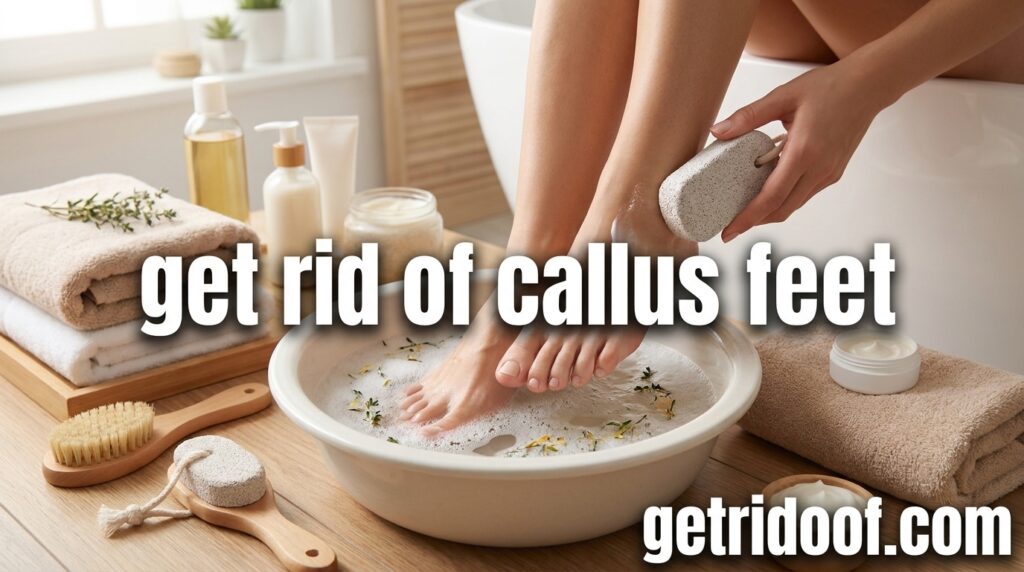
Method 1: Warm Water Soaking
Before you try anything else, soak your feet. This is the key first step. It softens tough skin and boosts the effectiveness of all other treatments.
How to do it:
- Fill a basin with warm (not hot) water
- Add a handful of Epsom salts or a few drops of mild soap
- Soak your feet for 10–15 minutes
- Pat dry with a clean towel — never rub, as wet skin is fragile
Soak your feet 3–4 times per week for best results. Soaking daily can make your skin too soft and cause irritation. So, follow a routine instead of going overboard.
Method 2: Pumice Stone — The Classic Way to Get Rid of Callus Feet
A pumice stone is one of the most effective and safest tools for callus removal at home. It’s a volcanic rock with a naturally rough texture that gently scrapes away dead skin layers.
How to use it:
- Soak your feet first (see above)
- Wet the pumice stone
- Rub the stone gently over the callus in circular or side-to-side motions
- Do 2–3 passes only — don’t try to remove the callus in one session
- Rinse your foot and apply moisturizer immediately after
Use your pumice stone 1–2 times per week. Using it daily can irritate your skin. This irritation may lead to more callus formation as your body tries to compensate.
Pro tip: Never use a pumice stone on dry skin. Always soak first.
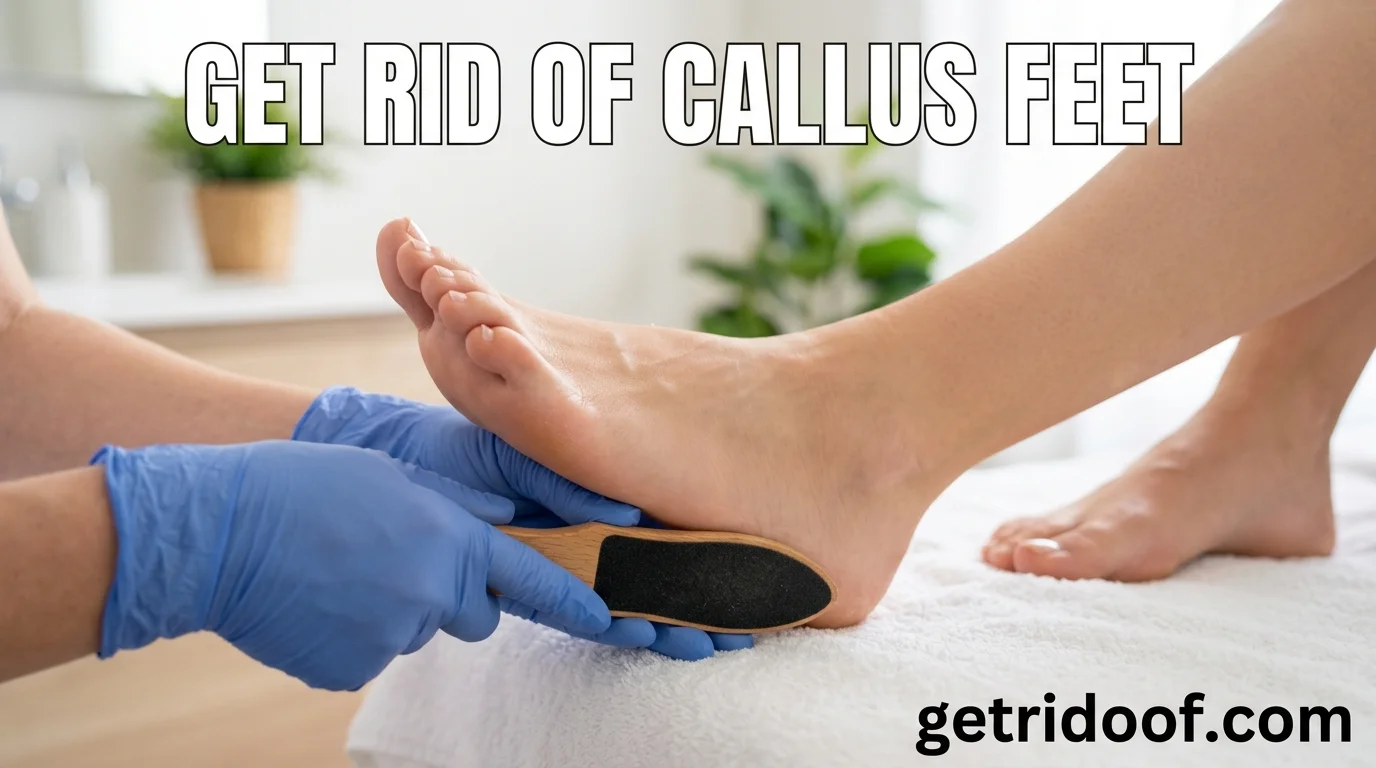
Method 3: Foot File or Callus Rasp
A foot file works like a pumice stone but uses a metal grate. This gives a stronger exfoliation. It’s especially useful for thick heel calluses.
Use it on damp skin after soaking. File in one direction with light pressure — back-and-forth motions can cause irritation. Always follow with a thick moisturizer.
Method 4: Salicylic Acid Pads — A Powerful Chemical Option
Salicylic acid helps by breaking down the bonds between dead skin cells. This allows the tough layers to peel away slowly.
How to use callus pads:
- Look for 40% salicylic acid pads (available OTC from brands like Dr. Scholl’s)
- Apply the pad directly over the callus
- Leave it on for up to 48 hours
- When removed, the callus may appear white — this is normal
- Soak your feet and gently use a pumice stone to remove the softened skin
- Repeat the process for one week
Important: If you have diabetes, poor circulation, or nerve damage in your feet, check with a doctor before using salicylic acid products. These can cause chemical burns in people with reduced skin sensitivity.
Method 5: Urea Cream and Moisturizers
Urea is one of the most effective ingredients for softening thick, hardened skin. It draws moisture into the skin while also gently exfoliating the surface.
Look for foot creams containing 20–40% urea for callused areas. Apply every night before bed and cover with cotton socks to lock in moisture while you sleep. Using it every night for 2–4 weeks can really soften even the toughest calluses.
Other effective moisturizing ingredients to look for:
- Lactic acid — gently exfoliates while hydrating
- Glycerin — pulls moisture from the air into your skin
- Shea butter — seals in moisture and soothes dry skin
- Petroleum jelly — an affordable, effective barrier moisturizer
Method 6: Foot Peel Masks (AHA/BHA Booties)
Foot peel masks are plastic booties filled with alpha and beta hydroxy acids (AHAs and BHAs). They’re a set-it-and-forget-it approach that loosens dead skin across the entire sole.
How they work:
- Slip the booties on and wear for the recommended time (usually 60–90 minutes)
- Rinse your feet thoroughly
- Over the next 3–7 days, the outer layers of skin will begin to peel away naturally
- Daily 20-minute soaks during this period encourage shedding
Don’t pick or force the peeling — let it happen on its own schedule. Results can last several weeks, making this a popular monthly treatment.
Method 7: Protective Pads and Insoles
To get rid of callused feet and prevent new ones, use protective padding. Moleskin pads, gel cushions, and donut-shaped callus pads help reduce friction in high-pressure areas all day.
- Donut pads sit around the callus, taking pressure off it completely
- Gel insoles redistribute pressure across the whole foot
- Metatarsal pads reduce pressure on the ball of the foot — ideal for high heel wearers
When Home Remedies Aren’t Enough: See a Podiatrist
Most calluses respond well to home treatment. But there are situations where professional care is the safer and smarter choice.
See a podiatrist if:
- Your callus is painful when walking or standing
- The callus is cracked and bleeding or shows signs of infection (redness, swelling, warmth, pus)
- Your callus has not improved after 3 weeks of home treatment
- The callus keeps returning in the same spot despite footwear changes
- You’re not sure if it’s a callus, corn, wart, or another lesion
If you have diabetes or circulation problems, always seek professional foot care. A small callus can cause big problems for those with less feeling or slower healing in their feet. This is a non-negotiable rule from podiatrists worldwide.
You Can Also Read
What a Podiatrist Does for Calluses
A podiatrist will do debridement. This means they will gently remove thickened skin with sterile tools. The procedure is not painful and provides immediate relief in most cases.
They may also:
- Recommend custom orthotics to redistribute foot pressure
- Identify underlying structural issues like bunions or hammertoes
- Prescribe stronger topical treatments
- Suggest shoe modifications
How to Get Rid of Callus Feet: Prevention Tips
Treating a callus is only half the battle. To stop them coming back, you need to address what’s causing them in the first place.
1. Wear Properly Fitting Shoes
This is the single most effective prevention strategy. Have your feet measured by a professional. Feet can change size and shape as we age. Don’t just assume you’re still the same size you were 10 years ago.
Look for shoes with:
- A wide, roomy toe box that doesn’t compress your toes
- Low heels (under 2 inches) to reduce forefoot pressure
- Adequate arch support for your foot type
- No tight seams or rubbing inside the shoe
Replace worn-out shoes regularly. Old shoes lose their cushioning and can create new pressure points.
2. Wear the Right Socks
Choose moisture-wicking socks that sit smoothly on your feet without bunching. Thick, cushioned socks provide an extra layer of protection against friction. Avoid thin cotton socks for long periods of walking or standing.
3. Moisturize Your Feet Every Night
Make a 2-minute foot moisturizing routine part of your nightly wind-down. Apply a urea or lactic acid cream to your heels and soles, then put on a pair of cotton socks. Consistent daily moisturizing is one of the best ways to prevent callus formation.
4. Use Insoles and Padding
Over-the-counter gel insoles and cushioned arch supports reduce friction and redistribute pressure. People who stand for work should invest in high-quality insoles from day one.
5. Keep Your Toenails Trimmed
Overgrown toenails can press against your shoes. This changes how your toes sit and creates friction, leading to calluses. Trim nails straight across and keep them at a comfortable length.
6. Address Foot Deformities Early
If calluses keep returning in the same spot, a foot structure issue is likely to blame. A podiatric evaluation can find issues like gait problems, bone deformities, or pressure imbalances. It can also offer long-term solutions.
FAQ’s
How long does it take to get rid of a foot callus?
Mild calluses can soften noticeably within 1–2 weeks of regular home treatment. Thick or old calluses can take 4 to 8 weeks to improve. You need to soak, file, and moisturize them regularly.
Is it safe to cut a callus off your foot?
No. Never cut or shave a callus with a razor blade, knife, or scissors at home. This can lead to serious infection, especially if you nick healthy skin. Use a pumice stone or foot file instead — they remove only the surface layers of dead skin.
Can calluses go away on their own?
Sometimes, removing the source of friction, like switching shoes, can help a callus fade on its own. Without active moisturizing and exfoliation, most calluses will stay or get worse over time.
Does walking barefoot cause calluses?
Yes. Walking barefoot on hard surfaces causes friction between your skin and the floor. This friction leads to callus formation. If you walk barefoot at home, consider wearing indoor slippers or grip socks.
Are calluses dangerous?
For most healthy people, calluses are not dangerous — just uncomfortable and cosmetically bothersome. For people with diabetes or peripheral neuropathy, calluses can become open sores. These sores heal slowly and are easy to infect. Seek professional care in these cases.
Quick-Reference: Your Weekly Callus Care Routine
Here’s a simple weekly plan to get rid of callus feet and keep them gone:
| Day | Action |
| Monday | 15-min Epsom salt soak + pumice stone |
| Tuesday | Apply urea cream + socks overnight |
| Wednesday | Rest (wear cushioned insoles during day) |
| Thursday | 15-min foot soak + foot file |
| Friday | Apply urea cream + socks overnight |
| Saturday | Foot peel mask or salicylic acid pad (if needed) |
| Sunday | Rest + light moisturizer |
Stick to this for 4 weeks and you’ll see a real difference.
Conclusion: You Can Get Rid of Callus Feet
Calluses are one of the most common — and most treatable — foot problems out there. The key is consistency. Soaking, gentle exfoliation, and daily moisturizing will soften tough calluses over time.
Remember: calluses are a pressure problem first. Fix your shoes, add cushioning, and moisturize every day. This will help you get rid of callused feet and prevent them from coming back.
If home treatment doesn’t help after 3 weeks, consult a podiatrist. This is especially important if you have diabetes or circulation issues. Your feet carry you everywhere — they deserve proper care.
Medical Disclaimer:This article is for information only. It is not medical advice. Always check with a qualified healthcare professional for foot issues. This is crucial if you have diabetes, poor circulation, or nerve damage.
About the Author