If you’ve ever noticed red, irritated bumps on your backside, you’re not alone. Millions of people deal with this issue and desperately want to know how to get rid of butt acne fast. The good news? It’s completely treatable — and more common than you think.
In this guide, you’ll discover what causes those stubborn bumps. You’ll also find the best at-home treatments and tips to keep them from returning.
What Is Butt Acne — And Is It Really Acne?
Here’s a surprising fact: most of what people call “butt acne” isn’t actually acne at all. True acne forms when oil glands get clogged with sebum, dead skin cells, and bacteria. But the skin on your buttocks has very few oil glands.
So what are those bumps? In most cases, they fall into one of three categories:
- Folliculitis — Inflammation or infection of hair follicles. This is the most common culprit, responsible for more than 80% of cases. It appears as red, itchy bumps that may have a tiny hair in the center.
- Keratosis Pilaris (KP) — A harmless buildup of keratin protein that blocks hair follicles. It creates small, rough bumps that feel like sandpaper — often called “chicken skin.” It affects 50–70% of adolescents and 40% of adults.
- Carbuncles or boils are painful, deep clusters of infected hair follicles. They can be more serious than regular boils.
Understanding which condition you have is the first step. It helps you pick the right treatment instead of wasting time on products that won’t work.
Common Causes of Pimples on the Buttocks
Knowing the triggers is just as important as knowing the treatments. Here are the most common causes of bumps on the butt:
1. Tight or Synthetic Clothing
Wearing tight leggings, jeans, or underwear made from synthetic fabrics creates friction. This irritates the hair follicles and traps sweat and bacteria against the skin.
2. Sweat and Poor Ventilation
The buttocks are almost always covered, leaving no room for airflow. Sweat accumulates, and if it isn’t washed away quickly, it feeds bacteria and clogs pores.
3. Sitting for Long Periods
Long hours of sitting create constant pressure and friction. Athlete studies reveal that 40–60% experience gluteal folliculitis during intense training. Sitting in sweaty workout clothes makes it even worse.
4. Shaving and Waxing
Hair removal in this area can cause ingrown hairs. When hair grows back into the skin, it causes inflammation. This looks similar to a breakout.
5. Hormonal Changes
Women can have breakouts on their buttocks due to their menstrual cycle, pregnancy, or other hormonal changes. Hormones can trigger increased sebum production and clogged follicles.
6. Hot Tubs and Pools
Bacteria such as Pseudomonas aeruginosa thrive in poorly maintained hot tubs. Soaking in dirty water can lead to “hot tub folliculitis.” This is a real and documented condition.
7. Diet
A diet high in processed foods, sugar, dairy, and spicy foods may worsen breakouts for some people. While research is still evolving, diet plays a supporting role in skin health.
How to Get Rid of Butt Acne: Best Treatments
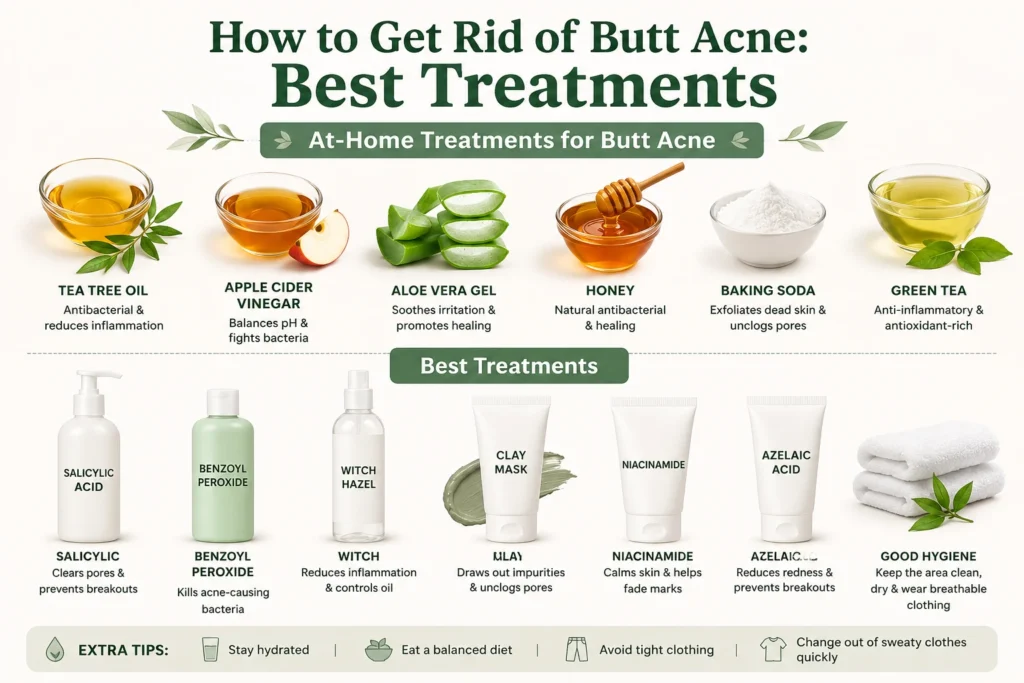
Now for the part you came here for. Here’s a breakdown of the most effective ways to clear up those bumps.
At-Home Treatments for Butt Acne
Salicylic Acid Body Wash Salicylic acid is a beta hydroxy acid (BHA). It gently removes dead skin cells and clears clogged pores.
It’s one of the most effective active ingredients for folliculitis and keratosis pilaris. Use it 2–3 times a week, and let it sit on the skin for a minute before rinsing.
Benzoyl Peroxide Wash Benzoyl peroxide fights acne bacteria. It also removes dead skin cells from hair follicles.
It’s particularly effective when the issue is bacterial folliculitis. Start with a 2.5% or 5% formula to avoid irritation.
Warm Compress Apply a warm, damp cloth to the affected area for 10–15 minutes, three times a day. This helps reduce inflammation and lets infected follicles heal faster.
Gentle Exfoliation Exfoliate 2–3 times a week. This helps remove dead skin cells that can clog your follicles. Use a washcloth with a mild chemical exfoliant rather than a harsh scrub. Glycolic acid and lactic acid are excellent options.
Tea Tree Oil Tea tree oil has natural antimicrobial and anti-inflammatory properties. Dilute a few drops in a carrier oil (like coconut or jojoba) and apply it directly to the bumps. Always do a patch test first since it can irritate sensitive skin.
Apple Cider Vinegar Adding a cup of apple cider vinegar to a warm bath may help control bacteria. The acetic acid has antibacterial and antifungal properties that can reduce folliculitis flare-ups.
Azelaic Acid This ingredient is often overlooked. It fights both bacterial and yeast-driven folliculitis. It also helps lessen post-inflammatory hyperpigmentation. These are the dark spots that stay after a breakout heals.
Niacinamide Niacinamide calms inflammation, regulates oil production, and helps repair the skin barrier. It’s a great ingredient to use every day. It helps, especially if clothing friction causes flare-ups.
Over-the-Counter Products Worth Trying
When shopping for products, look for these key ingredients on the label:
- Salicylic acid (2%) — for exfoliation and unclogging follicles
- Benzoyl peroxide (2.5%–5%) — for killing bacteria
- Glycolic acid or lactic acid — for smoothing keratosis pilaris
- Urea cream (20%) — especially effective for KP
- Niacinamide — for soothing and barrier repair
Tip: Medicated body washes work best if you let them sit on your skin for at least 60 seconds before rinsing. Most people rinse immediately, which means the active ingredient barely penetrates the follicle.
When to See a Doctor
Most cases of butt acne respond well to home treatment. But see a dermatologist if:
- Bumps are growing larger, more painful, or spreading
- You develop boils or carbuncles
- Home treatments haven’t worked after 4–6 weeks
- You have a history of eczema, hidradenitis suppurativa, or chronic skin infections
- You think the bumps might not be folliculitis. They could be herpes simplex, contact dermatitis, or, in rare cases, an STI.
A dermatologist might prescribe:
- Topical antibiotics
- Oral antibiotics
- Antifungal creams
- Retinoids
The choice depends on your specific condition.
The Best Skincare Routine to Clear Up Butt Acne
Consistency beats intensity. Here’s a simple, effective routine:
Step 1 — Cleanse: Use a salicylic acid or benzoyl peroxide body wash. Let it sit for 60 seconds, then rinse thoroughly.
Step 2 — Exfoliate (2–3x per week): Use a gentle chemical exfoliant with glycolic or lactic acid. Avoid physical scrubs that can worsen irritation.
Step 3 — Treat: Apply a leave-on treatment with azelaic acid or niacinamide. These absorb into the skin and continue working after your shower.
Step 4 — Moisturize: Use a lightweight, non-comedogenic moisturizer. Look for lactic acid-based lotions — they hydrate and exfoliate at the same time.
Stick to this routine for at least 4–6 weeks before judging results. Skin turnover takes time.
How to Prevent Butt Acne From Coming Back
Once your skin clears up, keeping it that way is all about daily habits. Here’s what works:
- Wear breathable underwear: Cotton is your best friend. It allows air circulation and reduces moisture buildup.
- Change out of sweaty clothes immediately: This is especially important after workouts. Don’t sit in damp gym shorts.
- Shower after exercise. A quick rinse stops sweat and bacteria from staying on your skin.
- Avoid sitting for too long: Take regular standing breaks if you have a desk job. It reduces friction and improves circulation.
- Use fragrance-free, non-comedogenic products. Scented soaps and lotions can irritate skin and clog pores.
- Shave carefully: Always use a clean razor. Shave in the direction of hair growth. Then, apply a soothing aftershave.
- Stay hydrated and eat well. Drink enough water. Cut back on sugar and processed foods. This helps support clearer skin from the inside out.
You Can Also Read
- How to Get Rid of Back Acne
- How to Get Rid of Sebaceous Filaments
- How Do I Get Rid of a Stye Overnight?
- How Can I Get Rid of Keloids?
Butt Acne vs. Other Conditions: How to Tell the Difference
It’s easy to mistake other skin conditions for butt acne. Here’s a quick comparison:
| Condition | Appearance | Key Signs |
| Folliculitis | Red bumps with a hair in the center | Itchy, clusters along waistband or thighs |
| Keratosis Pilaris | Small, rough, skin-colored bumps | Feels like sandpaper, not painful |
| Boils/Carbuncles | Large, pus-filled, painful lumps | Hot to touch, very swollen |
| Contact Dermatitis | Red, itchy rash | Triggered by new soap, fabric, or lotion |
| Ingrown Hair | Single red bump with a curved hair inside | Common after shaving or waxing |
If you’re ever unsure, it’s worth a visit to your doctor. Getting the right diagnosis means you’ll get the right treatment faster.
Frequently Asked Questions About How to Get Rid of Butt Acne
Is butt acne normal?
Yes, absolutely. Pimples on the buttocks are extremely common and affect people of all ages, body types, and skin tones. There’s nothing to be embarrassed about.
Will butt acne go away on its own?
Mild cases often resolve within a few days to weeks with basic hygiene. Persistent breakouts often require targeted treatment. Use active ingredients like salicylic acid or benzoyl peroxide.
Can butt acne leave dark spots?
Yes. Post-inflammatory hyperpigmentation (dark spots left after breakouts heal) is common. Ingredients like azelaic acid, niacinamide, and vitamin C can slowly reduce these marks.
Does diet affect butt acne?
It can. High-sugar diets, dairy, and processed foods may trigger breakouts in some people. Eating more whole foods and vegetables helps your skin. Drinking plenty of water also supports skin health.
Is butt acne contagious?
Standard folliculitis and keratosis pilaris are not contagious. Bacterial and fungal infections can spread through shared towels, razors, or dirty water.
Can butt acne be a sign of an STI?
In rare cases, bumps on the buttocks can look like herpes simplex blisters or mpox lesions. If bumps are blister-like, burn or tingle, or you’ve had recent sexual contact, get tested to rule out an STI.
Conclusion: How to Get Rid of Butt Acne for Good
Getting rid of butt acne doesn’t have to be complicated.
Start with the basics:
- Shower after sweating.
- Wear breathable fabrics.
- Use body wash with salicylic acid or benzoyl peroxide.
Give it 4–6 weeks of consistency before expecting major results.
If your bumps are stubborn, check if it’s folliculitis, keratosis pilaris, or something else. The right treatment depends on the cause. And if things aren’t improving, don’t hesitate to see a dermatologist.
Clear, smooth skin on your backside is absolutely achievable. The key is understanding what’s causing the problem and treating it the right way.
Always consult a board-certified dermatologist for persistent or severe skin conditions. This article is for informational purposes only and does not constitute medical advice.
About the Author