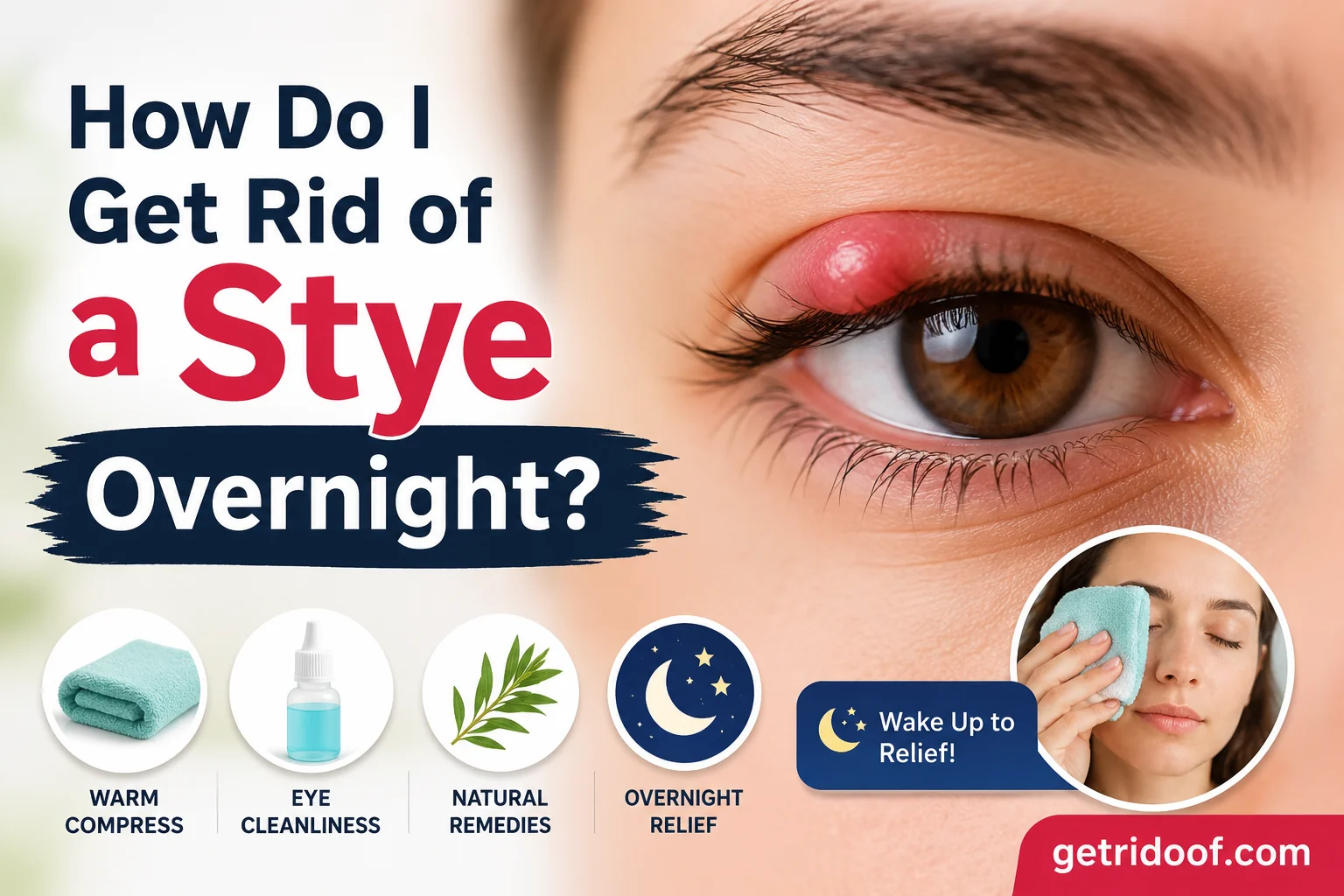
You woke up with a painful, red bump on your eyelid — and you have somewhere important to be tomorrow. Sound familiar? If you are asking how do I get rid of a stye overnight, you are not alone. Many people ask this question daily. The good news? You can take proven steps tonight to ease pain, reduce swelling, and heal quickly.
This guide covers everything you need: what a stye is, why it happens, the best overnight remedies, what to avoid, and when to see a doctor. Let’s get started.
What Is a Stye? (And Why Did You Get One?)
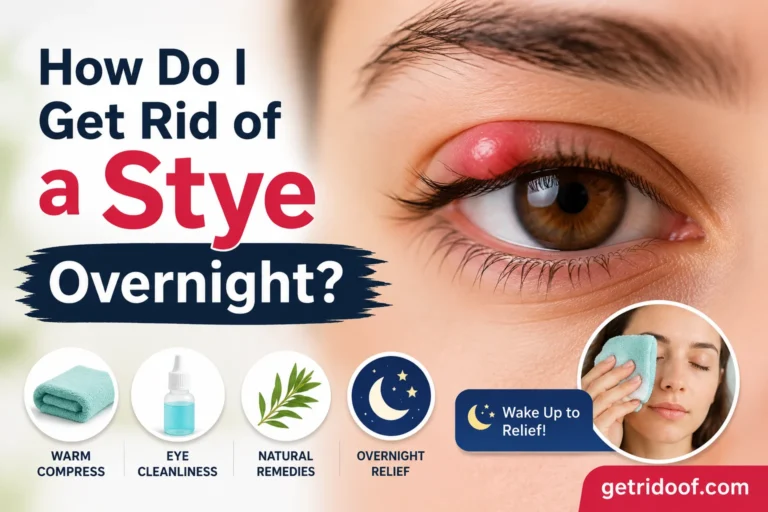
A stye — medically called a hordeolum — is a small, painful lump that forms along the edge of your eyelid. It looks a lot like a pimple and is usually red, swollen, and tender to the touch.
It happens when bacteria, mostly Staphylococcus aureus, infect a blocked oil gland or eyelash follicle in your eyelid. The result is a small abscess that can appear almost overnight.
Two Types of Styes
There are two kinds, and knowing which one you have helps you understand how quickly it will heal:
- External stye — appears on the outside edge of your eyelid, near the base of an eyelash. It looks like a pimple and usually drains and heals faster.
- Internal stye — forms deeper inside the eyelid tissue. It causes more noticeable swelling and takes a bit longer to resolve.
Both types are treated the same way. Neither is contagious.
Common Causes
You are more likely to develop a stye if you:
- Do not remove eye makeup before bed
- Touch your eyes with unwashed hands
- Wear contact lenses without proper cleaning
- Have a history of blepharitis (chronic eyelid inflammation)
- Use old or expired eye makeup
- Experience high stress or hormonal changes
Can You Really Get Rid of a Stye Overnight?
The truth most websites won’t tell you is this: you likely can’t make a stye vanish overnight. A stye is a bacterial infection. Your immune system and any treatment typically need 24–48 hours to begin clearing it.
You can greatly reduce pain, swelling, and redness by morning if you act quickly tonight. Many people wake up the next day feeling much better. Their stye often starts to drain on its own.
If you want to get rid of a stye overnight, the solution is clear: begin the healing process tonight. You’ll see improvement by morning.
How Do I Get Rid of a Stye Overnight: 6 Proven Steps
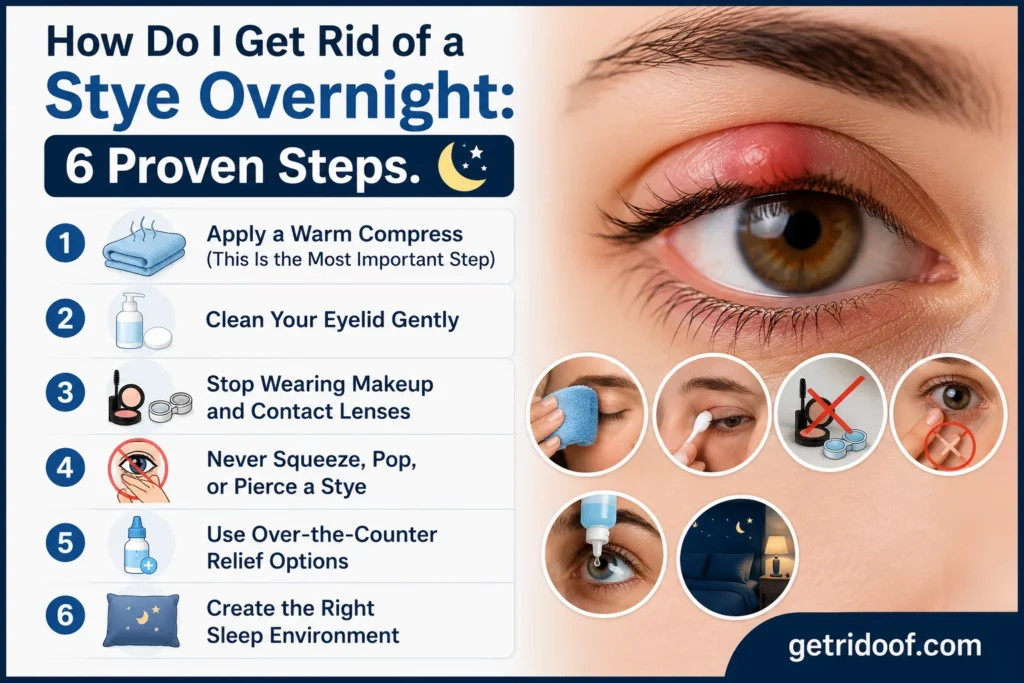
These are the exact steps recommended by ophthalmologists and supported by medical research. Do them tonight before bed.
1. Apply a Warm Compress (This Is the Most Important Step)
A warm compress is the single most effective treatment for a stye. Heat softens the blocked oil in the infected gland. It helps the stye drain naturally and reduces pain and swelling.
How to do it correctly:
- Wash your hands thoroughly with soap and water.
- Soak a clean washcloth in warm (not hot) water.
- Wring it out so it is damp but not dripping.
- Hold it gently over your closed eyelid for 10–15 minutes.
- Reheat the cloth every few minutes as it cools.
- Repeat 3–5 times before bed for the best overnight result.
Pro tip: Do a final warm compress right before you sleep. This gives the heat treatment maximum time to work while your body is in rest and repair mode.
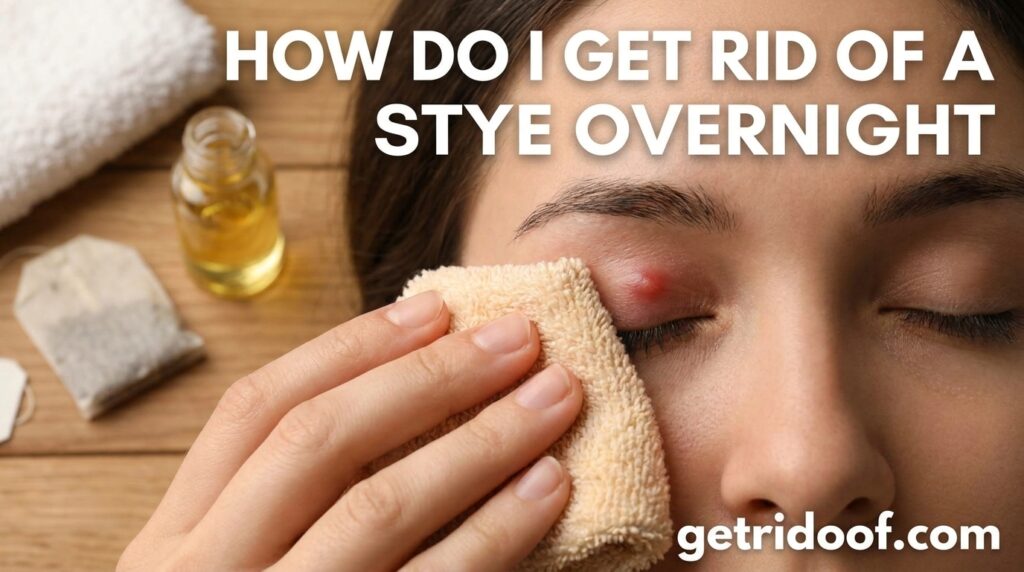
A warm tea bag (green or black tea) can also work as an alternative compress. Green tea has natural antibacterial properties, and both types reduce inflammation. That said, a clean washcloth is generally the safer and more effective choice.
2. Clean Your Eyelid Gently
Keeping the infected area clean is critical. Bacteria thrive in dirty areas. So, a gentle clean can prevent infections from worsening or spreading.
How to clean a stye:
- Mix a few drops of tear-free baby shampoo with warm water.
- Dip a clean cotton swab or soft cloth into the solution.
- Gently wipe along your lash line, removing any crust or discharge.
- Rinse with clean water and pat dry with a fresh towel.
Do this once or twice daily — always after a warm compress. Do not rub or scrub aggressively. The area is already irritated.
You can also use sterile eyelid cleansing wipes available at most pharmacies. These are a quick and convenient option.
3. Stop Wearing Makeup and Contact Lenses
This step is non-negotiable if you want to get rid of a stye overnight as fast as possible.
Eye makeup—like mascara, eyeliner, and eyeshadow—can add new bacteria to an infected area. It also blocks proper drainage. It also delays the healing process significantly.
Contact lenses irritate inflamed eyelid tissue and can trap bacteria against your eye. Switch to glasses until the stye is fully healed.
If you had contacts or makeup on when the stye appeared, toss those products. Use new lenses when you start again. Bacteria can live on makeup and lenses and cause a second infection.
4. Never Squeeze, Pop, or Pierce a Stye
We know it looks like a pimple. We know the urge is real. Do not squeeze it.
A stye is not a regular pimple. Forcing it to drain can:
- Push bacteria deeper into your eyelid tissue
- Spread the infection to nearby glands
- Lead to a more serious condition called preseptal cellulitis, which requires antibiotics
- Cause scarring or damage to your eyelid
Let the warm compress do its job. It will encourage the stye to open and drain safely and naturally on its own.
5. Use Over-the-Counter Relief Options
Several OTC products can reduce discomfort and support healing:
- OTC pain relievers like ibuprofen (Advil) and acetaminophen (Tylenol) ease pain and lower inflammation. Follow package dosage instructions.
- Stye ointments, like “Stye” brand or Bausch + Lomb eye wash, offer targeted relief. You can find them at pharmacies.
- Preservative-free artificial tears soothe irritation. They keep the eye surface lubricated and help with healing.
- OTC antibiotic ointments — Some pharmacies carry topical antibiotic ointments that can help. Ask your pharmacist for advice.
These products won’t cure a stye by themselves. However, they work well with warm compresses and eyelid hygiene.
6. Create the Right Sleep Environment
Your body does its best healing while you sleep. Set up the right conditions:
- Elevate your head a bit while sleeping. This helps reduce fluid buildup around your eyes at night.
- Use a clean pillowcase — bacteria on a dirty pillowcase can worsen the infection.
- Avoid touching or rubbing your eye during the night.
- Do your final warm compress session right before bed for maximum overnight benefit.
What About Home Remedies Like Gold Rings and Potatoes?
You’ve likely seen old folk remedies online. These include rubbing a gold ring on a stye, putting raw potato slices on your eyelid, or using aloe vera.
Here is the reality: there is no scientific evidence that these remedies work. Some may be harmless, but others can be risky. For example, rubbing anything on an infected area might add more bacteria. Stick to the evidence-based steps above.
The only folk remedy with real support is the warm tea bag compress. This works due to the heat, not any special benefit of the tea.
How Long Does a Stye Last?
Most styes resolve on their own within 7–10 days with proper home care. External styes tend to heal faster because they are closer to the surface and drain more easily. Internal styes may take a little longer.
Start warm compress treatment and good eyelid hygiene tonight. Many people see major improvements in 24–48 hours. The swelling goes down, the pain eases, and the stye begins to drain.
If your stye shows no improvement after one week of home treatment, it is time to see a doctor.
Stye vs. Chalazion: What Is the Difference?
It’s important to know the difference between a stye and a chalazion. They look alike, but their treatments are different.
| Feature | Stye (Hordeolum) | Chalazion |
| Cause | Bacterial infection | Blocked oil gland (no infection) |
| Pain level | Painful, tender | Usually painless |
| Location | Edge of eyelid, near lashes | Further back on eyelid |
| Onset | Fast (overnight) | Slow (days to weeks) |
| Treatment | Warm compress, hygiene, antibiotics | Warm compress, sometimes surgery |
A chalazion can develop from an untreated stye. If your bump is not painful and does not improve with home treatment, see an eye doctor to confirm the diagnosis.
You Can Also Read
- How to Get Rid of a Sinus Headache Instantly
- How to Get Rid of Poison Ivy Rash Overnight: 12 Fast Natural Remedies
- How to Get Rid of Neck Hump
When Should You See a Doctor?
Home treatment works well for most styes. However, seek medical attention promptly if:
- The stye does not improve after 7 days of warm compresses
- Pain or swelling gets significantly worse, not better
- Your vision becomes blurry or is affected in any way
- The redness spreads beyond the eyelid to the surrounding skin
- You develop a fever alongside the stye
- Your eyelid swells completely shut
- You have a weakened immune system
A doctor might prescribe antibiotic eye drops or ointment, like azithromycin 1%. For severe cases, they may suggest oral antibiotics. They can also do a minor drainage procedure in the office. Do not delay if you notice any of these warning signs.
How to Prevent Styes From Coming Back
If you keep getting styes, you need to look at your daily habits. The good news is that most styes are preventable.
Daily Prevention Habits
- Always remove eye makeup before bed — this is the number one prevention tip for stye sufferers.
- Wash your hands before touching your eyes or handling contact lenses.
- Replace eye makeup every 2 to 3 months. Mascara and eyeliner can collect bacteria over time.
- Never share eye makeup with anyone.
- Clean contact lenses properly and never sleep in them.
- Wash your eyelids with diluted baby shampoo every few days. This helps prevent oil gland blockages.
If You Have Blepharitis
People with blepharitis have inflamed eyelids. They are more likely to get recurring styes. If you get styes frequently, talk to your eye doctor about managing blepharitis. Consistent eyelid hygiene and sometimes medicated treatments can break the cycle.
Quick Overnight Stye Relief: Step-by-Step Recap
Here is everything you need to do tonight, in order:
- Wash hands thoroughly before touching your eye.
- Apply a warm compress for 10–15 minutes, 3–5 times before bed.
- Clean your eyelid gently with diluted baby shampoo.
- Remove contacts and skip makeup — glasses only until it heals.
- Take ibuprofen if the pain is bothering you.
- Sleep with head elevated on a clean pillowcase.
- Do NOT squeeze the stye — let it drain naturally.
Frequently Asked Questions
Can I go to work or school with a stye?
Yes. A stye is not contagious, so you can go about your normal day. Skip eye makeup and contacts. Use a warm compress during breaks if you can.
Does squeezing a stye make it worse?
Yes — absolutely. Squeezing pushes bacteria deeper into your eyelid tissue. It can spread the infection, cause more swelling, and may lead to a serious skin infection called preseptal cellulitis. Never squeeze a stye.
Can a stye go away in one day?
Rarely. Most styes need 7–10 days to fully resolve. Using warm compresses early and often can lead to clear improvements. You may notice less swelling and pain in just 24 to 48 hours.
Is a warm tea bag good for a stye?
It can help because of the warmth, which is the actual therapeutic element. Some teas have mild antibacterial properties. However, a clean washcloth in warm water is generally safer and equally effective.
What happens if a stye pops on its own?
This is actually a good sign. When a stye drains naturally, the infection clears and healing speeds up significantly. Gently clean the area with a baby shampoo solution. Then, continue warm compresses to help clear the remaining infection.
Conclusion on How Do I Get Rid of a Stye Overnight?
If you’re asking how to get rid of a stye overnight, here’s the deal: you likely can’t make it disappear in 8 hours. But you can significantly ease the pain and swelling by morning. You’ll also be on track for a full recovery in just a few days.
Start your warm compress routine tonight. Keep the area clean. Stay away from makeup and contacts. And whatever you do, resist the urge to squeeze it.
Most styes heal completely within a week with proper care at home. If yours is getting worse instead of better, or if your vision is affected, do not wait — see an eye doctor right away.
Your eyes are precious. Treat them well tonight, and they will thank you tomorrow.
This article is for information only. It does not replace professional medical advice. See a qualified healthcare provider or ophthalmologist if your symptoms are severe or getting worse.
About the Author