If you’ve ever stared into a mirror and noticed tiny, dark dots on your nose or chin, you’ve likely wondered how to get rid of sebaceous filaments. Many confuse them with blackheads and waste months on the wrong treatments. This often makes the problem worse. The good news? Once you understand what they actually are, managing them becomes much easier.
This guide has it all: what sebaceous filaments are, why they show up, and safe ways to minimize them.
What Are Sebaceous Filaments?
Sebaceous filaments are thin, tube-like structures that line the walls of your pores. Their job is to channel sebum — your skin’s natural oil — from the sebaceous glands to the surface of the skin.
They keep your skin hydrated and protected. Everyone has them, but they show up more in people with oily skin, large pores, or thick hair follicles.
Here’s the most important thing to know: sebaceous filaments are not a skin problem. They are a normal, functional part of your skin’s anatomy.
Sebaceous Filaments vs. Blackheads: What’s the Difference?
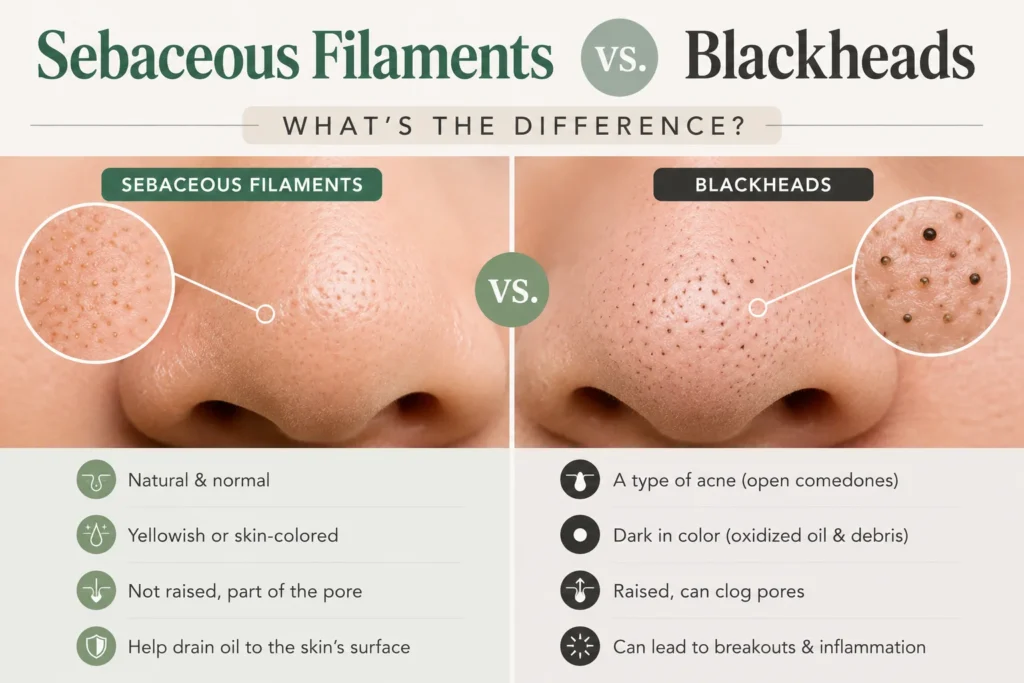
This is one of the most searched questions in skincare — and for good reason. Misidentifying them leads to the wrong treatments, which can actually damage your skin.
| Feature | Sebaceous Filaments | Blackheads |
| Color | Grey, tan, or yellowish | Dark brown or black |
| Texture | Flat, smooth, even | Slightly raised or bumpy |
| Cause | Normal sebum flow | Oxidized, clogged sebum |
| Location | Mostly nose, T-zone | Any pore on the face |
| Removal | Cannot be permanently removed | Can be extracted |
| Skin type | Normal part of all skin | A form of acne |
The key difference: blackheads are a clogged pore where oxidized sebum turns dark. Sebaceous filaments are open channels. Oil flows freely through them, so they aren’t blocked or infected.
If you squeeze a sebaceous filament, a waxy, thread-like substance may come out. But the pore will refill within 30 days — every single time.
What Causes Sebaceous Filaments to Become More Visible?
While everyone has sebaceous filaments, several factors make them more obvious:
- Oily skin produces excess sebum. This makes filaments look larger and darker.
- Enlarged pores can happen due to genetics, age, and sun damage. These factors make filaments more noticeable.
- Dehydrated skin — When skin lacks moisture, sebaceous glands overcompensate by producing more oil
- Hormonal changes — Puberty, pregnancy, and hormonal fluctuations increase sebum output
- Heavy or pore-clogging products can worsen skin appearance. Ingredients like coconut oil, shea butter, and petroleum are common culprits.
- Age — As skin loosens in your 40s and 50s, pores appear larger, making filaments more noticeable
- Sun exposure — UV rays thicken the outer skin layer, making pores look larger over time
How to Get Rid of Sebaceous Filaments: 7 Proven Methods

You can’t get rid of sebaceous filaments completely, but you can reduce how they look. A consistent routine helps a lot. Here’s exactly how:
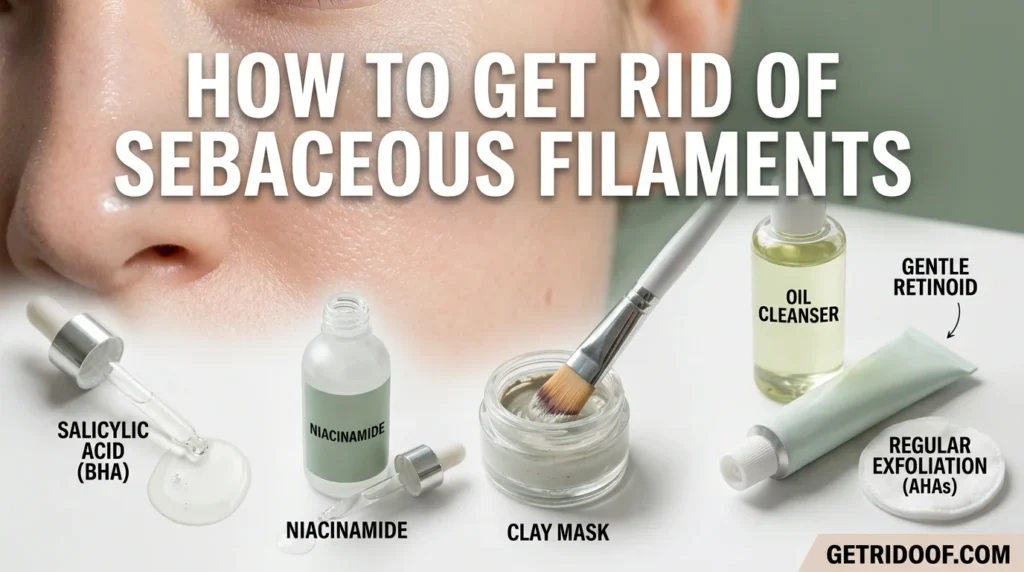
1. Double Cleanse to Dissolve Sebum Buildup
Double cleansing is one of the most effective strategies for managing sebaceous filaments. The method works in two steps:
- Step 1 — Oil cleanser: Oil dissolves oil. An oil-based cleanser helps dissolve excess sebum in pores. This makes filaments less noticeable. Look for lightweight cleansing oils rather than heavy ones like coconut oil.
- Step 2 — Water-based cleanser: Next, use a gentle foaming cleanser. This helps clear away leftover impurities while keeping your skin barrier safe.
Use a mild cleanser that controls oil without causing irritation. Over-washing dries out the skin, triggering even more sebum production.
2. Use Salicylic Acid (BHA) — The Gold Standard Ingredient
Salicylic acid is the best option for treating sebaceous filaments. Dermatologists recommend it widely.
Salicylic acid is a beta-hydroxy acid (BHA). It is oil-soluble, so it can go deep into pores. There, it dissolves sebum and dead skin cells. Unlike physical scrubs, it works from within the pore.
How to use it:
- Start with a 1–2% salicylic acid cleanser, toner, or serum
- Use 3–4 times per week
- Always follow with a moisturizer to protect the skin barrier
- Build frequency gradually — over-exfoliating makes pores worse, not better
Salicylic acid is also available as a leave-on exfoliant, which gives it more time to work inside the pore.
3. Add Niacinamide to Regulate Oil and Minimize Pores
Niacinamide (Vitamin B3) is a strong ingredient that addresses sebaceous filaments in several ways:
- Regulates sebum production so pores produce less oil
- Visibly minimizes the appearance of enlarged pores
- Strengthens the skin barrier
- Reduces redness and inflammation
- Improves overall skin texture and tone
Look for a serum with 5% niacinamide and apply it once or twice daily after cleansing. It pairs well with almost every other ingredient, making it easy to add to any routine.
4. Use Retinoids for Long-Term Pore Management
To effectively get rid of sebaceous filaments long-term, retinoids are your top choice.
Retinoids (including retinol and prescription tretinoin) work by:
- Accelerating skin cell turnover so dead cells don’t build up inside pores
- Reducing overall sebum production over time
- Preventing the buildup that makes filaments more visible
- Gradually shrinking the appearance of pores
Tips for beginners:
- Start slowly — 2 to 3 times per week, at night only
- Use a pea-sized amount across the entire face
- Always apply SPF the next morning — retinoids increase sun sensitivity
- Over-the-counter options like adapalene (Differin) are effective and widely available
Prescription-strength tretinoin offers stronger results and can be discussed with a dermatologist.
5. Apply Clay Masks Weekly
Clay masks are great for oily and combination skin. They help reduce visible sebaceous filaments. Kaolin clay and bentonite clay soak up extra oil. They also pull out impurities from pores, and they do this without rough scrubbing.
How to use a clay mask:
- Apply a thin layer to clean, dry skin
- Leave on for 10–15 minutes (don’t let it fully crack dry)
- Rinse with lukewarm water
- Follow immediately with moisturizer
Use a clay mask 1–2 times per week. Overusing it strips the skin and causes rebound oiliness.
6. Try Azelaic Acid for Sensitive Skin
Azelaic acid is an often-overlooked ingredient. Not many articles talk about it, but it’s great for clogged pores and sebaceous filaments. It:
- Prevents pore buildup and congestion
- Has strong anti-inflammatory properties that reduce redness
- Is very well tolerated, even by sensitive skin
- Is safe to use during pregnancy and breastfeeding
If your skin can’t handle salicylic acid or retinoids, try azelaic acid. It’s a great alternative to consider.
7. Protect with SPF Every Single Day
Sun exposure thickens the skin’s outer layer. It makes pores look larger and speeds up aging. These effects make sebaceous filaments much more noticeable.
Daily sunscreen use helps:
- Prevent pores from enlarging over time
- Maintain smoother, healthier-looking skin
- Protect the skin from the damage that worsens filament visibility
Choose a broad-spectrum SPF 30 or higher. For oily skin, choose lightweight, non-comedogenic products. They won’t clog your pores.
You Can Also Read
- How to Get Rid of Acne Scars
- How to Get Rid of Razor Bumps
- How to Get Rid of Lip Lines: Effective Treatments and Prevention Tips
Ingredients to Add to Your Routine (Quick Reference)
| Ingredient | What It Does | Best Format |
| Salicylic Acid (BHA) | Dissolves sebum inside pores | Toner, serum, cleanser |
| Niacinamide | Regulates oil, minimizes pores | Serum |
| Retinol / Tretinoin | Speeds cell turnover, reduces sebum | Night serum or cream |
| Azelaic Acid | Clears congestion, anti-inflammatory | Serum or gel |
| Kaolin / Bentonite Clay | Absorbs excess oil | Weekly mask |
| Zinc PCA | Limits sebum production | Toner or serum |
| Glycolic Acid (AHA) | Exfoliates surface dead skin | Toner |
| SPF 30+ | Prevents pore enlargement | Daily sunscreen |
What NOT to Do: Common Mistakes to Avoid
Just as important as knowing what works is knowing what to avoid. These mistakes are extremely common — and they make sebaceous filaments worse.
❌ Don’t squeeze or pick at them. Squeezing can lead to micro-tears. It may cause redness and inflammation. Scarring is also a risk. Plus, it can push debris deeper into the pore. The result? A larger pore than you started with.
❌ Don’t overuse pore strips. While pore strips can temporarily remove filaments, they are only a short-term fix. Overuse damages the skin barrier and can make pores permanently larger. Limit use to once a month at most.
❌ Don’t over-exfoliate. Using too many acids or exfoliants at once can harm your skin. It strips the skin barrier, which leads to more oil production and irritation. Less is more — introduce new products one at a time.
❌ Don’t skip moisturizer. Many people with oily skin avoid moisturizer. This is a mistake. Dehydrated skin produces more sebum to compensate, making filaments more visible. Choose a lightweight, non-comedogenic moisturizer.
❌ Don’t use pore-clogging ingredients. Watch out for products with coconut oil, shea butter, petroleum, or heavy silicones. They can make sebaceous filaments more noticeable.
What About the “Skin Gritting” Trend?
A TikTok trend called “skin gritting” claims to get rid of sebaceous filaments. It uses a multi-step process:
- Oil cleansing
- Acid exfoliating
- Applying a clay mask
- Massaging the face with oil again to “grit out” pore contents.
It gives a deeper clean by mixing an acid, a purifying mask, and oil. Most dermatologists believe that what you feel during a massage is mostly extra product, not real pore contents. It is not harmful if done gently, but it’s not a long-term solution either.
Professional Treatments for Sebaceous Filaments
If you’re looking to enhance your at-home skincare, consider these professional options:
- Chemical peels (salicylic acid or glycolic acid) offer deeper exfoliation than at-home products.
- Professional extractions — by a licensed esthetician using proper tools, not fingers
- Laser treatments — can reduce pore size and sebum production over time
- Prescription retinoids — tretinoin (Retin-A) offers stronger results than OTC retinol
Always consult a board-certified dermatologist before starting any professional treatment.
Sample Daily Skincare Routine for Sebaceous Filaments
Here’s a simple, effective routine to follow consistently:
Morning Routine
- Gentle cleanser — mild, sulfate-free
- Niacinamide serum (5%) — apply to damp skin
- Lightweight moisturizer — non-comedogenic
- SPF 30+ — broad-spectrum, daily
Evening Routine
- Oil cleanser — to break down sebum and impurities
- Gentle foaming cleanser — double cleanse
- Salicylic acid toner or serum (2–3x per week) — OR azelaic acid on off nights
- Retinoid (2–3x per week at night) — start slow, build up
- Moisturizer — seal in hydration
Use a clay mask 1–2x per week as an additional step after cleansing.
Frequently Asked Questions
Can sebaceous filaments go away permanently?
No. Sebaceous filaments are a permanent, natural part of your skin anatomy. Even when extracted, they refill within 30 days. The goal is to minimize their appearance consistently with the right routine.
How often should I use salicylic acid?
Start with 3 times per week. If your skin tolerates it well after 4–6 weeks, you can increase to daily use. Always follow with moisturizer.
Does diet affect sebaceous filaments?
Yes — diet can influence sebum production. High-glycemic foods and dairy can boost oil production in some people. This makes filaments more noticeable. Staying well-hydrated also helps keep sebum production balanced.
Are pore strips safe for sebaceous filaments?
They offer a quick fix, but dermatologists usually warn against using them often. Pore strips can damage the skin barrier, cause irritation, and stretch pores over time.
Is it normal to have them on the nose?
Completely normal. The nose and T-zone have the most sebaceous glands and pores. This is why filaments are easiest to see there.
Conclusion
Learning how to get rid of sebaceous filaments starts with one key mindset shift: they are not a flaw to be “fixed” — they are a normal part of your skin doing its job.
The real goal is managing their visibility through a consistent, gentle skincare routine. Use oil-dissolving ingredients like salicylic acid. Include pore-refining ingredients such as niacinamide and retinoids. Don’t forget daily sun protection. With patience and the right approach, you can achieve noticeably clearer, smoother-looking skin.
Start simple, be consistent, and let the ingredients do the work.
Always patch-test new skincare products. If you have skin concerns, consult a dermatologist for personalized advice.
About the Author