If you’ve been struggling with stubborn fat just above your pubic bone, you’re not alone. Millions of people — men and women alike — want to know how to get rid of FUPA and finally feel comfortable in their own skin. The good news? It’s possible. But it takes the right approach.
In this guide, you’ll discover what causes FUPA. You’ll learn about effective exercises, how diet affects results, and when to consider medical options. Let’s break it all down.
What Is FUPA? (And Why Is It So Hard to Lose?)
FUPA stands for Fat Upper Pubic Area. It refers to the pocket of fat that sits just above the pubic bone and below the belly button. The medical term is panniculus. It refers to a layer of fatty tissue. This can be a small soft pouch or a larger overhang.
This area is naturally one of the last places the body lets go of fat. Here’s why:
- Fat cells in the lower abdomen have more alpha receptors, which slow down fat release.
- They have fewer beta receptors, which normally speed up fat burning.
- This makes the pubic mound one of the most stubborn fat zones on the body.
Understanding this biology is the first step. You’re not doing anything wrong — your body is just wired this way.
What Causes FUPA?
Before learning how to get rid of FUPA, it helps to understand why it forms in the first place. Several factors are at play:
Weight Gain and Body Fat Distribution
When you consume more calories than you burn, your body stores the excess as fat. The lower abdomen and pubic region are common storage areas — especially for women.
Hormonal Changes
Estrogen plays a major role in where women store fat. When estrogen levels shift, such as during perimenopause, menopause, or after pregnancy, fat tends to gather in the lower belly and pelvic area.
Pregnancy and C-Sections
Pregnancy stretches the abdominal muscles and skin. After childbirth, especially after a C-section, scar tissue forms a tight band. This pushes fat and loose skin over the pubic area. Many women develop diastasis recti, a separation of abdominal muscles. This condition can cause the lower belly to stick out more.
Genetics
Where your body stores fat is largely determined by genetics. If close family members carry weight in the lower abdomen, you’re more likely to as well.
Stress and Cortisol
High stress raises cortisol levels. High cortisol levels signal the body to store fat, especially around the waist and lower belly. Chronic stress is one of the most overlooked causes of stubborn pubic fat.
Aging
As you age, metabolism slows and fat naturally redistributes toward the stomach area. Men also see a decline in testosterone with age, making lower belly fat harder to burn.
Can You Spot Reduce FUPA Fat?
Here’s one of the most important things to know: No, you cannot spot reduce fat.
No amount of crunches or leg raises will burn fat specifically from your pubic area. Fat loss happens across the whole body. As your overall body fat decreases, the FUPA area will shrink along with everything else.
What targeted exercises can do is strengthen and tone the muscles underneath. It tightens the area and boosts appearance, especially with fat loss from diet and cardio.
How to Get Rid of FUPA with Diet
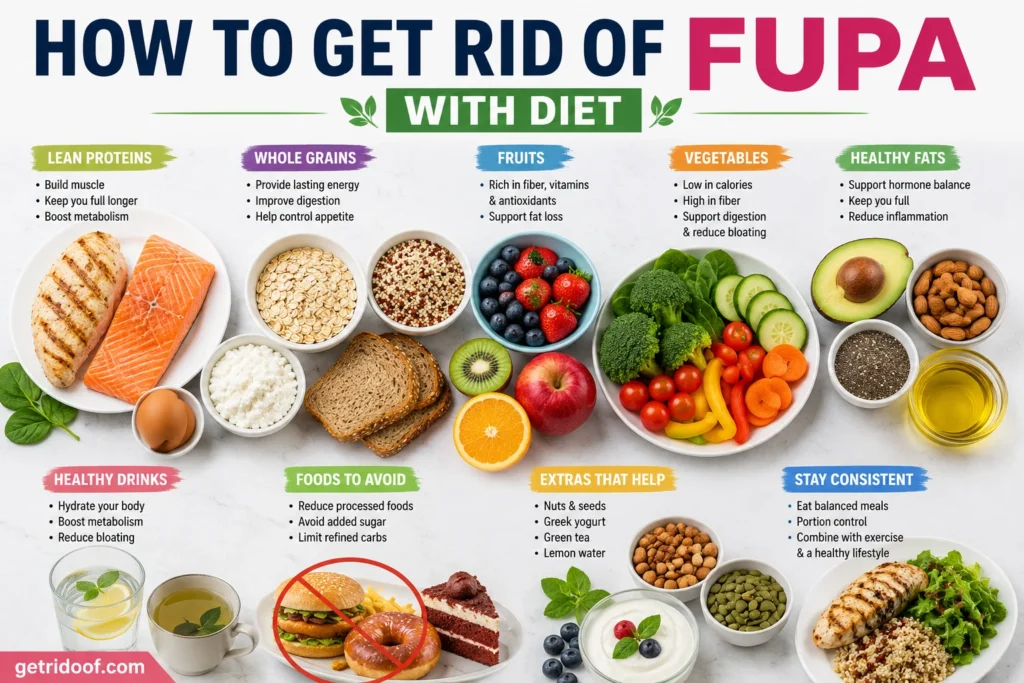
Diet is the most powerful tool for losing fat anywhere on your body, including the upper pubic area.
Create a Calorie Deficit
To lose fat, you must burn more calories than you consume. A daily deficit of 500 calories typically results in about 1 pound of fat loss per week. That’s a safe, sustainable pace.
Eat More of These Foods
- Lean protein — chicken, eggs, fish, Greek yogurt (supports muscle and keeps you full)
- Fiber-rich vegetables — spinach, broccoli, kale (reduce bloating and improve digestion)
- Healthy fats — avocado, nuts, olive oil (support hormonal health)
- Complex carbohydrates — oats, brown rice, sweet potatoes (steady energy, no sugar spikes)
Avoid or Limit These
- Processed foods and fast food
- Sugary drinks including fruit juices
- Refined carbs like white bread and pastries
- Alcohol (disrupts fat metabolism and adds empty calories)
Don’t Skip Hydration
Drinking enough water reduces bloating, supports metabolism, and can lower appetite. Aim for 8–10 glasses per day. Even mild dehydration can make the lower belly appear more pronounced.
How to Get Rid of FUPA with Exercise
Exercise accelerates fat loss and helps tone the lower abdominal muscles. The most effective strategy combines cardio and strength training.
Best Cardio for Burning Lower Belly Fat
A meta-analysis of 43 trials with over 3,500 participants found that aerobic exercise lowered abdominal fat by about 13.05 cm². This reduction was much greater than what resistance training alone achieved.
Good cardio options include:
- Brisk walking — accessible, low-impact, and surprisingly effective
- Cycling — burns calories without stressing the joints
- Swimming — full-body fat burner, especially good post-pregnancy
- HIIT (High-Intensity Interval Training) involves short, intense exercise bursts. This boosts fat burning for hours after your workout.
Aim for 150–300 minutes of moderate cardio per week, or 75–150 minutes of vigorous cardio.
H3: FUPA Exercises to Tone the Lower Abdomen
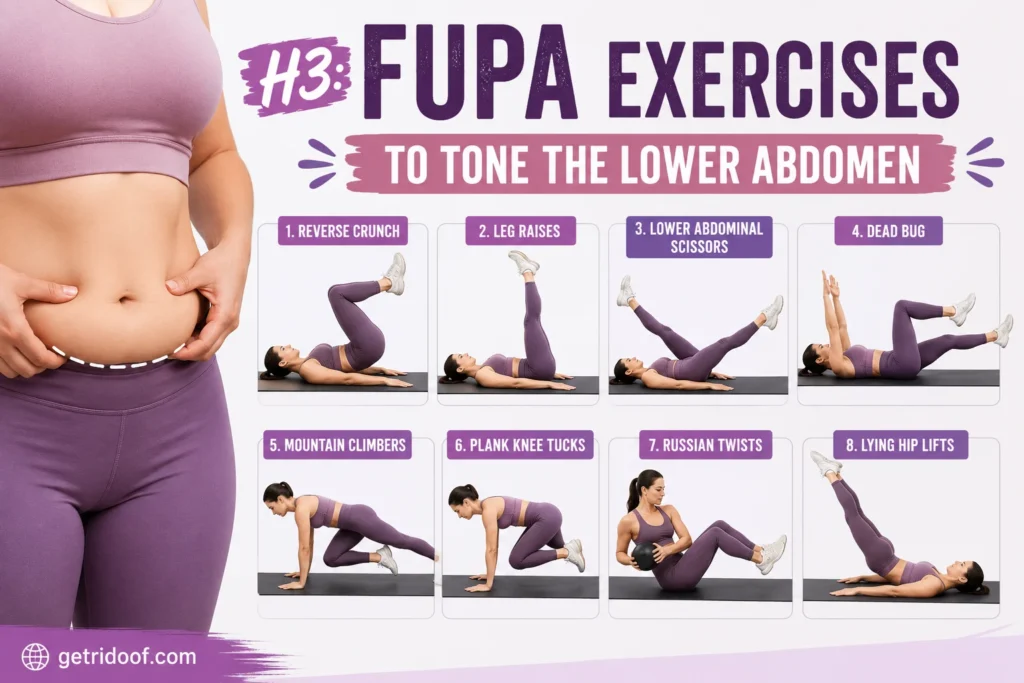
These exercises won’t burn fat directly from the pubic area. But, they do strengthen the core muscles that support and tighten that region.
1. Plank Get into a push-up position and hold with a straight body. Start with 20–30 seconds and work up to 60+ seconds.
2. Reverse Crunches Lie on your back, lift your legs to 90 degrees, and use your lower abs to curl your hips off the floor. Do 3 sets of 12–15 reps.
3. Leg Raises Lie flat, keep legs straight, and lift them to 90 degrees before lowering slowly. This targets the deep core muscles.
4. Bicycle Crunches Lie on your back. Alternate touching your elbow to the opposite knee, like pedaling a bike.
Great for the full core.
5. Squats and Lunges Squats are great compound movements. They work your legs, glutes, and core. This helps you burn more calories overall.
Combine Strength Training with Cardio
Research shows that using both types of training helps with fat loss more than either one alone. Aim for 2–3 strength sessions per week alongside your cardio routine.
How to Get Rid of FUPA After Pregnancy
Postpartum FUPA is incredibly common and completely normal. Your body just grew a human — give it grace and time.
What Makes Post-Pregnancy FUPA Different?
- Stretched abdominal skin that doesn’t immediately retract
- Weakened core muscles, sometimes including diastasis recti
- Hormonal shifts that encourage fat retention
- A C-section scar that creates a “shelf” appearance by pulling the skin tight underneath
Safe Exercises After Pregnancy
Always get clearance from your doctor before starting exercise postpartum. Safe early options include:
- Pelvic floor exercises (Kegels)
- Pelvic tilts
- Heel slides
- Diaphragmatic (deep belly) breathing — helps reconnect the brain to core muscles
Once you’re ready for more activity, start with walking. Then, add gentle strength exercises. Finally, include low-impact cardio.
Breastfeeding and Fat Loss
Breastfeeding burns approximately 400–500 extra calories per day. Women who breastfeed often lose postpartum weight more quickly in the first 3 to 6 months than those who do not.
How to Get Rid of FUPA for Men
FUPA in men is less discussed but equally real. Male FUPA is typically caused by:
- Excess weight gain around the lower abdomen
- Declining testosterone with age, which promotes fat storage
- Genetics — some men are simply predisposed to storing fat in the pubic area
Men can follow a similar plan: eat fewer calories, do cardio, and focus on compound strength training. Exercises like deadlifts, squats, and pull-ups are great for men. They boost testosterone and growth hormone release the most.
Men with a noticeable FUPA, especially if it causes discomfort or lowers confidence, might explore medical options. Liposuction and tummy tucks are popular choices.
Lifestyle Habits That Help Reduce FUPA
Diet and exercise are the foundation, but these lifestyle factors also matter:
Manage Stress
High cortisol is a fat-gain trigger. Proven stress-reduction strategies include:
- Meditation or mindfulness (even 10 minutes per day)
- Yoga or stretching routines
- Walking in nature
- Limiting news and screen time before bed
Prioritize Sleep
Poor sleep boosts cortisol and messes with hunger hormones, like ghrelin and leptin. This makes you feel hungrier and more likely to overeat. Aim for 7–9 hours per night.
Improve Your Posture
Stand tall and engage your core all day. This can help make a pubic mound look smaller. Strengthening your glutes and lower back helps position the pelvis better.
Compression Garments
Shapewear or compression clothing won’t burn fat. They can temporarily smooth your shape and boost your confidence while you pursue lasting change.
You Can Also Read
- How to Get Rid of Double Chin
- How to Get Rid of Man Boobs: Exercises, Diet, and Treatment Options
- How to Get Rid of Double Chin Naturally: 10 Proven Methods
Medical and Surgical Options for FUPA Removal
If lifestyle changes don’t work for you, or if loose skin is a big worry, medical options could help.
Non-Surgical Options
- CoolSculpting — FDA-approved treatment that freezes and destroys fat cells. Best for people with small, isolated fat deposits and good skin elasticity.
- Radiofrequency treatments — Stimulate collagen and tighten skin. Results are mild and gradual.
- Laser lipolysis — Uses laser energy to break down fat cells without surgery.
Surgical Options
- Liposuction — Removes fat through a small cannula. Ideal for good skin tone with stubborn fat deposits. Recovery is usually quick.
- Monsplasty (pubic lift) — Specifically targets the mons pubis area to remove fat and tighten skin. Often combined with a tummy tuck.
- Abdominoplasty (tummy tuck) — Removes excess skin and fat from the entire lower abdomen. Best for those with significant loose skin or muscle separation.
- Panniculectomy — A medically focused procedure that removes a hanging panniculus. Sometimes covered by insurance when skin infections or mobility issues are present.
Always consult a board-certified plastic surgeon before pursuing any procedure. These options can’t replace a healthy lifestyle. You need to maintain them to keep results.
Realistic Expectations: How Long Does It Take?
There’s no honest answer that includes the phrase “in 7 days.” Here’s what research and reality suggest:
| Approach | Typical Timeline |
| Diet + cardio | Visible changes in 8–12 weeks |
| Strength + cardio combined | 6–10 weeks for noticeable toning |
| Post-pregnancy recovery | 6 months to 1+ year |
| Surgical results | Visible immediately, full healing in 3–6 months |
Progress depends on your starting body fat, genetics, and consistency. Also, loose skin can play a role. Weight loss of 1–2 pounds per week is the safest and most sustainable pace.
FAQs About How to Get Rid of FUPA
Can I lose FUPA without surgery?
Yes — for most people, consistent diet and exercise will reduce the fat upper pubic area over time. Surgery can help people with a lot of loose skin or fat that won’t go away with diet and exercise.
Why does my FUPA seem to get worse with age?
As you age, your metabolism slows down. Hormonal changes and less skin elasticity also play a role. Together, these factors can make pubic fat more noticeable. Regular exercise and strength training can slow this process significantly.
Is FUPA only a women’s issue?
No. Men develop FUPA too — particularly with weight gain, declining testosterone, or genetic predisposition. The approach to reducing it is the same.
What foods specifically help reduce FUPA?
No single food targets the pubic area. High-protein, high-fiber, anti-inflammatory foods can help with fat loss. When paired with a calorie deficit, they support fat loss all over the body, including the mons pubis.
Does FUPA come back after liposuction?
Fat can return to the area if you regain weight. Maintaining results requires ongoing healthy habits after any procedure.
Conclusion
Learning how to get rid of FUPA is really about learning how to lose fat the right way. No magic exercises, crash diets, or shortcuts can target your upper pubic area. You can achieve real change with a steady calorie deficit, regular cardio, strength training, and smart habits. Just be patient.
Want to fit better in your clothes, feel stronger after pregnancy, or boost your confidence? The answer is simple: focus on the basics, stay consistent, and let your body adapt.
About the Author