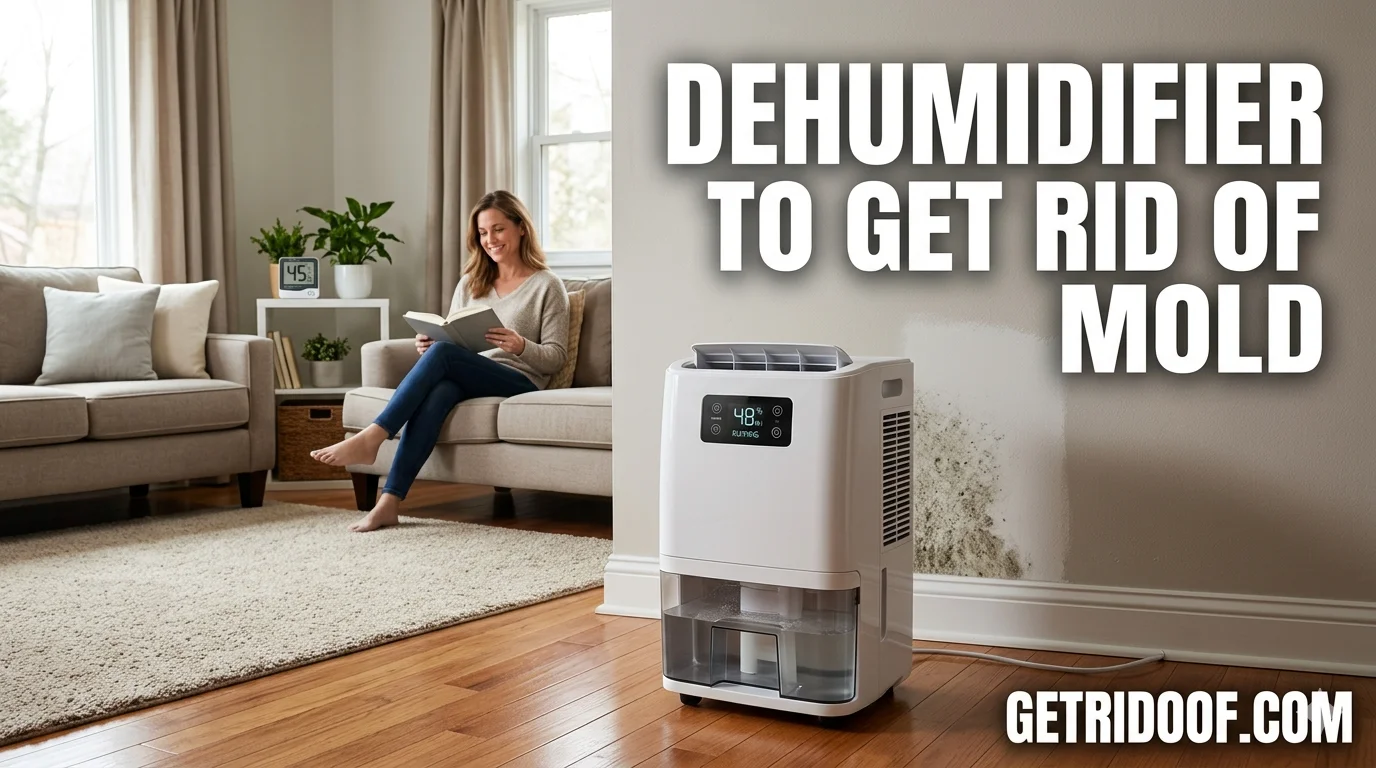
If you see dark spots on your walls, smell something musty, or feel worse allergy symptoms, mold might be the cause. The good news? Using a dehumidifier to get rid of mold is one of the most effective, affordable, and practical solutions available to homeowners today. In this guide, you’ll discover how dehumidifiers fight mold. You’ll also learn how to pick the right one and use it properly for lasting results.
What Is Mold and Why Does It Grow Indoors?
Mold is a type of fungus that thrives in warm, damp environments. It reproduces using tiny spores. These spores float in the air, both inside and outside.
The problem starts when those spores land on a moist surface. Once they get enough moisture, warmth, and food (like drywall or wood), they grow quickly.
Here are the most common reasons mold grows inside a home:
- High indoor humidity (above 60% relative humidity)
- Poor ventilation in bathrooms, kitchens, or basements
- Leaking pipes or roof damage
- Condensation on cold walls and windows
- Water damage from flooding or heavy rain
The EPA says that indoor humidity over 60% is ideal for mold, mildew, and dust mites. Keeping it between 30% and 50% is the gold standard for mold prevention.
Can a Dehumidifier Get Rid of Mold?
This is one of the most common questions homeowners ask — and it deserves an honest answer.
A dehumidifier does NOT kill existing mold. If you see mold on walls, ceilings, or floors, clean or remove it first. A dehumidifier alone won’t erase what’s already there.
However, a dehumidifier to get rid of mold works powerfully as a prevention and control tool. Here’s what it actually does:
- Removes excess moisture from the air
- Drops indoor humidity below the 50–60% threshold mold needs to grow
- Causes existing mold to go dormant and stop spreading
- Prevents new mold colonies from forming
- Reduces that musty, damp smell caused by high humidity
Think of it this way: mold is like a fire, and moisture is the fuel. A dehumidifier cuts off the fuel supply.
Key fact: Below 50% relative humidity, mold becomes dormant. Below 60%, new mold cannot establish growth. (Source: EPA & CDC)
How Does a Dehumidifier Work?
Understanding the process helps you use it more effectively. A dehumidifier works in three simple steps:
- Air Intake — A fan pulls in humid air from the room
- Moisture Extraction — Air moves over cold coils, which makes water vapor turn into liquid droplets.
- Dry Air Release — The now-dry air is reheated and released back into the room
The collected water drips into a tank (which you empty) or drains continuously through a hose. This cycle keeps repeating. It slowly lowers the room’s humidity to a safe level that resists mold.
Signs Your Home Needs a Dehumidifier for Mold Control
Not sure if you need one? Watch for these warning signs:
- ✅ Condensation on windows or glass surfaces
- ✅ Visible mold spots on ceilings, walls, or grout
- ✅ Persistent musty or earthy odor
- ✅ Soft or rotting wooden window sills
- ✅ Water stains on walls or ceilings
- ✅ Clothes smell damp even after washing
- ✅ Recurring respiratory problems or allergy flare-ups
- ✅ Unwanted pests like silverfish or cockroaches (they love damp areas)
If you have two or more of these issues, high indoor humidity might be the cause. A dehumidifier can help solve this problem.
Types of Dehumidifiers: Which One Should You Choose?

Not all dehumidifiers are built the same. Here are the three main types and where each works best:
1. Refrigerant (Compressor) Dehumidifiers
- Best for: Large rooms, basements, warm climates
- Works like an air conditioner — uses cold coils to condense moisture
- Most powerful and energy-efficient for everyday home use
- Ideal for spaces above 60°F (15°C)
2. Desiccant Dehumidifiers
- Best for: Cold climates, garages, small spaces
- Uses a moisture-absorbing material (like silica gel) instead of coils
- Works better in low temperatures where compressor models struggle
- Quieter but less energy-efficient for large spaces
3. Whole-House Dehumidifiers
- Best for: Homes with persistent humidity problems throughout
- Installed directly into your HVAC system
- Controls humidity in every room simultaneously
- Higher upfront cost but very effective long-term
How to Choose the Right Dehumidifier to Get Rid of Mold
Picking the wrong size is one of the most common mistakes. Here’s how to get it right:
Capacity (Pints Per Day)
Dehumidifier size is measured in pints of water removed per day (PPD):
| Room Size | Recommended Capacity |
| Up to 1,000 sq ft (small/bathroom) | 20–35 pints/day |
| 1,000–2,000 sq ft (bedroom/living room) | 35–50 pints/day |
| 2,000+ sq ft (large basement) | 50+ pints/day |
For very damp or flooded areas, pick a unit that’s a bit larger than needed.
Key Features to Look For
- Built-in humidistat — Lets you set a target humidity level (aim for 45%)
- Auto shut-off — Stops the unit when the tank is full
- Continuous drain option — Connects a hose to a floor drain so you never manually empty it
- Energy Star certification — Saves electricity and reduces long-term costs
- Auto-restart — Resumes operation after a power outage
Step-by-Step: How to Use a Dehumidifier to Get Rid of Mold
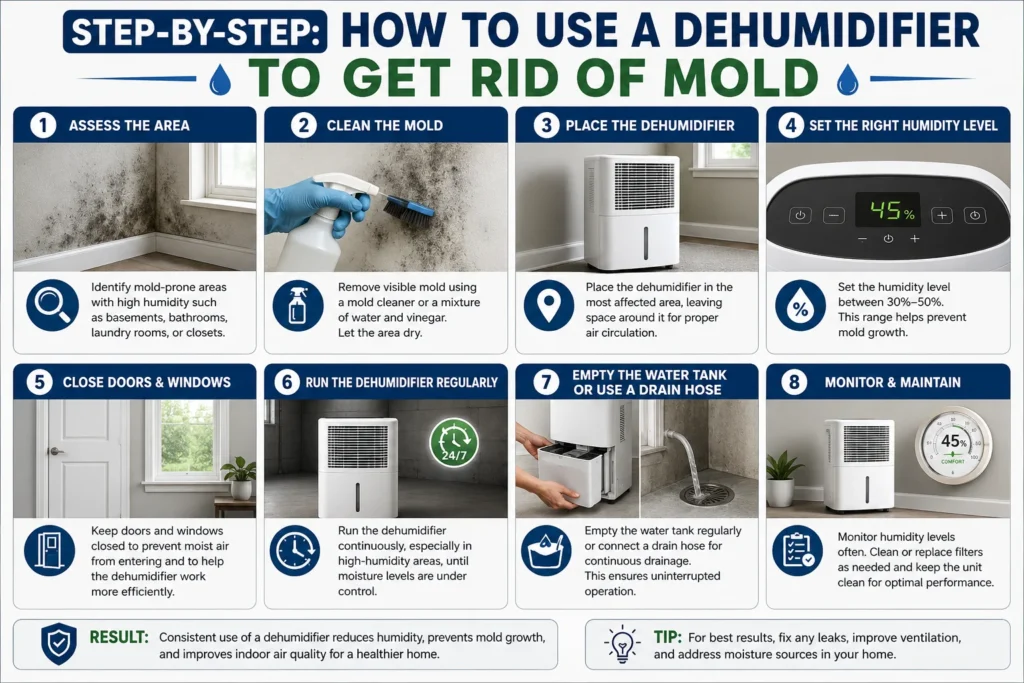
Follow these steps for the best results:
Step 1: Remove Existing Mold First
Before turning on your dehumidifier, clean up any visible mold. Use a solution of water and detergent for small patches (under 10 sq ft). For larger infestations, call a professional mold remediation specialist.
Step 2: Find the Moisture Source
A dehumidifier won’t fix the problem for long if there’s a leak or drainage issue. Fix leaking pipes, seal cracks, and improve ventilation. Do this before or while running your unit.
Step 3: Position the Dehumidifier Correctly
Place the unit:
- Near the center of the room for even coverage
- At least 8–12 inches away from walls and furniture
- In the dampest area of your home (basement, bathroom, laundry room)
Step 4: Set the Right Humidity Level
Set your humidistat to 45–50% relative humidity. This is the sweet spot — low enough to stop mold, but not so dry it causes cracked wood or skin irritation.
Step 5: Run It Consistently
During humid months, run your dehumidifier 8–12 hours per day minimum. In extremely humid climates or post-flood situations, run it continuously until humidity stabilizes.
Step 6: Close Windows and Doors
You’re drying indoor air. Leaving windows open lets humidity come in. This makes the unit work harder and less effective.
Step 7: Monitor with a Hygrometer
A digital hygrometer (available for $10–$20) measures the exact humidity level in your room. Use it to verify your dehumidifier is actually hitting your target range.
Dehumidifier Maintenance: Don’t Let Your Solution Become a Problem
Mold can grow in your dehumidifier if you don’t keep it clean. This fact is important but often ignored. The water tank and coils make a cool, dark, and damp space. Mold thrives in this environment.
To keep your unit working properly and mold-free:
- Empty the water tank daily during heavy use
- Clean the filter every 2 weeks — rinse and let it dry fully
- Wipe down the coils and tank monthly with white vinegar or mild soap
- Disinfect with hydrogen peroxide (3%) every 4–6 weeks to kill any biofilm
- Inspect for musty smells — if the unit starts smelling, clean it immediately
A well-maintained dehumidifier lasts 5–10 years and saves you far more in mold damage costs.
Dehumidifier vs. Air Purifier for Mold: Do You Need Both?
This is a great question — and the honest answer is: they do different things, and ideally you use both.
| Tool | What It Does |
| Dehumidifier | Removes moisture from air → stops mold growth |
| Air Purifier (HEPA) | Captures airborne mold spores → reduces symptoms |
A dehumidifier addresses the root cause (moisture). An air purifier reduces airborne spores. These spores can trigger allergies and respiratory issues.
Many people who buy a dehumidifier still have allergy symptoms. This happens because mold spores can stay in the air for hours or even days. Adding a HEPA air purifier alongside your dehumidifier gives you complete protection.
Best Areas in Your Home to Use a Dehumidifier for Mold
Basement Mold
Basements are the number one problem area. They are underground, have bad airflow, and gather moisture from the soil around them. A 50-pint dehumidifier with a continuous drain is the best choice for basements.
Bathroom Mold
Bathrooms generate steam constantly. Use a compact dehumidifier after every shower. Pair it with an exhaust fan. This keeps surfaces dry and helps prevent mold on tiles, grout, and ceilings.
Bedroom and Living Room Mold
These areas are usually less severe. A 20–35 pint unit placed in the center keeps humidity safe and is not disruptive.
Kitchen Mold
Cooking releases significant moisture. Use exhaust fans when cooking. If your kitchen is usually over 55% humidity, consider a small dehumidifier.
You Can Also Read
- How to Get Rid of Stink Bugs How to Get Rid of Stink Bugs
- How to Get Rid of Flies: Natural Remedies and Chemical Solutions
- How to Get Rid of Mice
Additional Tips to Prevent Mold Beyond a Dehumidifier
Using a dehumidifier to get rid of mold works best when paired with these additional habits:
- Fix leaks promptly — even a small drip creates enough moisture for mold within 24–48 hours
- Ventilate well. Use exhaust fans in kitchens and bathrooms whenever you cook or shower.
- Dry wet areas fast — towels, floors, and surfaces should be dried within 24 hours of getting wet
- **Insulate cold surfaces.** Condensation on cold pipes and walls causes mold. Foam insulation helps prevent this.
- Don’t dry clothes indoors — this releases significant moisture into the air
- Keep gutters clean — blocked gutters cause water to seep into walls and foundations
When a Dehumidifier Isn’t Enough: Time to Call a Professional
In some cases, mold goes beyond what a dehumidifier can manage. Call a certified mold remediation specialist when:
- Mold covers an area larger than 10 square feet
- Mold is growing inside walls, under floors, or in your HVAC system
- You or your family may still have health issues. This can include coughing, headaches, or sinus infections, even after you lower humidity.
- There’s structural water damage — flooding, roof leaks, or burst pipes
- Mold keeps coming back despite controlling humidity
Professional remediation uses HEPA filters, negative air pressure, and moisture detection tools. These methods safely and permanently remove mold. After remediation, a dehumidifier becomes your ongoing defense to prevent it from returning.
How Much Does It Cost to Run a Dehumidifier?
Running costs are lower than most people expect. A typical 50-pint Energy Star dehumidifier uses 500 to 700 watts when the compressor is on. The average monthly electricity cost is around $5 to $20. This depends on your local electricity rate and the humidity in your space.
That’s a small cost compared to the thousands for mold removal or repairs.
Frequently Asked Questions
Q: Will a dehumidifier get rid of the musty smell from mold?
Yes—when humidity drops and mold goes dormant, the musty smell gets much better. Combine it with an air purifier for faster results.
Q: How long does it take for a dehumidifier to reduce mold?
You’ll typically notice humidity dropping within 24–48 hours. Mold growth stops quickly after that. However, drying out a damp space, like a flooded basement, can take days or even weeks.
Q: Should I run a dehumidifier all the time?
Not necessarily. Units with a humidistat turn on and off by themselves. They help keep your desired humidity level steady. Set it to 45–50% and let it do the work.
Q: Can I put something in my dehumidifier to prevent mold inside the unit?
Yes — adding a few drops of white vinegar when cleaning the tank helps disinfect it. Avoid essential oils or harsh chemicals, as these can damage internal components.
Q: Does a dehumidifier help with black mold?
It helps control it by removing the moisture black mold needs to grow. Black mold (Stachybotrys chartarum) needs professional removal. Don’t try to clean large infestations on your own.
Conclusion
Using a dehumidifier to get rid of mold is one of the smartest investments a homeowner can make. It won’t remove existing mold on its own. However, it does get rid of moisture, which mold needs to survive.
Clean up any existing mold, fix the source of the moisture problem, and then let your dehumidifier do its job. Keep the humidity at 45–50%. Check it often. If mold has been an issue, use a HEPA air purifier too. Follow these steps for a cleaner, healthier home. You’ll enjoy a mold-resistant space for years.
About the Author