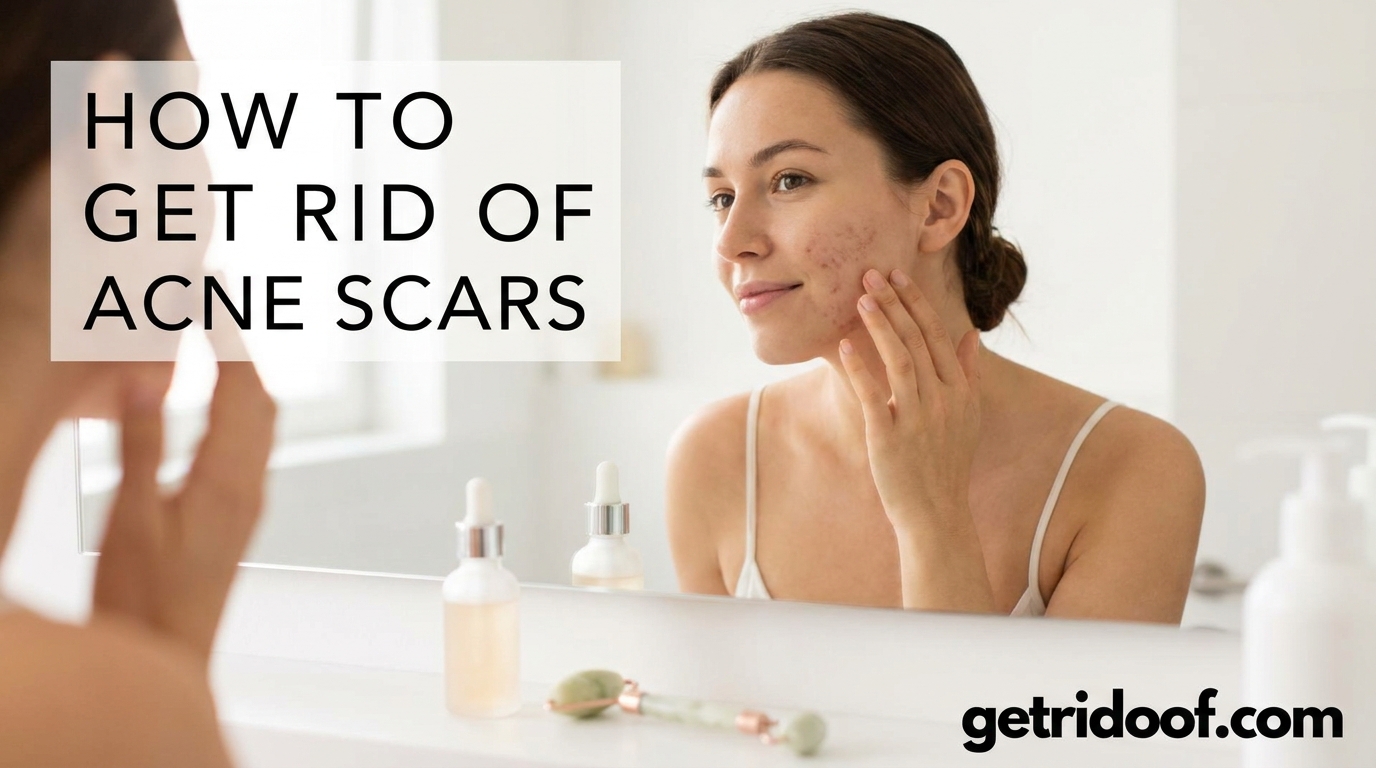
Acne scars can feel like a cruel reminder long after your breakouts have cleared. You get your skin under control, but now you see dark spots, pitted skin, or raised bumps that won’t go away. If you’re searching for how to get rid of acne scars, you’re not alone.
Studies show that nearly 95% of people with acne develop some form of scarring. The good news? You have more choices than ever. There are simple drugstore products and advanced clinical treatments that really work.
This guide covers everything: causes of acne scars, types, top at-home treatments, professional options, and tips to prevent new scars.
What Causes Acne Scars? (And Why They’re So Hard to Remove)
Before diving into treatments, it’s important to understand why acne scars form. Knowing the cause helps you choose the right solution.
When a pimple develops, it creates inflammation deep inside the skin. Your body rushes to heal the damaged tissue — but the repair process isn’t always perfect. The result? Too little collagen leads to depressed scars. Too much collagen causes raised scars.
Several factors make scarring more likely:
- Severe or cystic acne — deeper inflammation means deeper damage
- Picking or popping pimples — forces bacteria deeper and worsens inflammation
- Delayed treatment — the longer acne goes untreated, the higher the scarring risk
- Genetics — some people are simply more prone to scarring
- Skin tone — darker skin tones are more susceptible to post-inflammatory hyperpigmentation
The Different Types of Acne Scars (And Why It Matters)
Not all acne scars are the same. Identifying your scar type is key. Different scars need different treatments.
Atrophic Scars (Depressed Scars)
These are the most common type, appearing as indentations or pits in the skin. There are three subtypes:
Ice Pick Scars
- Deep, narrow holes that look like tiny puncture marks
- The most difficult type to treat
- Best responded to TCA Cross treatment or punch excision
Boxcar Scars
- Wider, shallow depressions with sharp, defined edges
- Similar in appearance to chickenpox scars
- Respond well to laser resurfacing and subcision
Rolling Scars
- Wide depressions with soft, uneven edges that give skin a wavy texture
- Caused by fibrous tissue pulling the skin downward
- Best treated with microneedling or radiofrequency (RF) treatments
Hypertrophic and Keloid Scars (Raised Scars)
These form when the body produces too much collagen during healing. They appear as firm, raised bumps above the skin’s surface. Keloids are more severe and can grow beyond the original wound. Corticosteroid injections and BroadBand Light (BBL) therapy work well for these.
Post-Inflammatory Hyperpigmentation (PIH)
Technically not a scar — but often confused as one. PIH refers to dark spots or discoloration left behind after a breakout heals. These are flat and affect only the skin’s color, not its texture. The good news? PIH almost always fades on its own, though it can take months to years.
How to Get Rid of Acne Scars at Home
If your scarring is mild to moderate, try at-home treatments first. They are smart and cost-effective. Stay consistent. Most topical treatments need 8 to 12 weeks for real results.
Retinoids: The Gold Standard for Acne Scars
Retinoids are Vitamin A derivatives. They are some of the most researched treatments for acne scars. They work by:
- Speeding up cell turnover
- Stimulating collagen production
- Reducing inflammation and discoloration
How to use: Start with a low-strength OTC retinol (0.025%–0.05%) 2–3 nights per week. Increase frequency as your skin adjusts. Prescription-strength retinoids (tretinoin) are significantly more effective and available through a dermatologist.
Important: Always wear sunscreen during the day when using retinoids. They increase sun sensitivity.
Vitamin C Serum for Brightening and Hyperpigmentation
Vitamin C is a strong brightening ingredient you can get without a prescription. It works by:
- Inhibiting melanin production (which causes dark spots)
- Neutralizing free radicals that worsen inflammation
- Stimulating collagen synthesis for smoother skin texture
Look for serums with L-ascorbic acid (the most bioavailable form) at a concentration of 10–20%. Apply every morning before your SPF.
Niacinamide: The All-Rounder Ingredient
Niacinamide, or Vitamin B3, is a gentle and versatile ingredient. It suits nearly all skin types. For acne scars, it:
- Reduces post-inflammatory hyperpigmentation
- Strengthens the skin barrier
- Controls excess oil (which prevents new breakouts)
Recommended concentration: 5–10%. It pairs well with retinoids, AHAs, and vitamin C.
AHAs and BHAs: Chemical Exfoliation
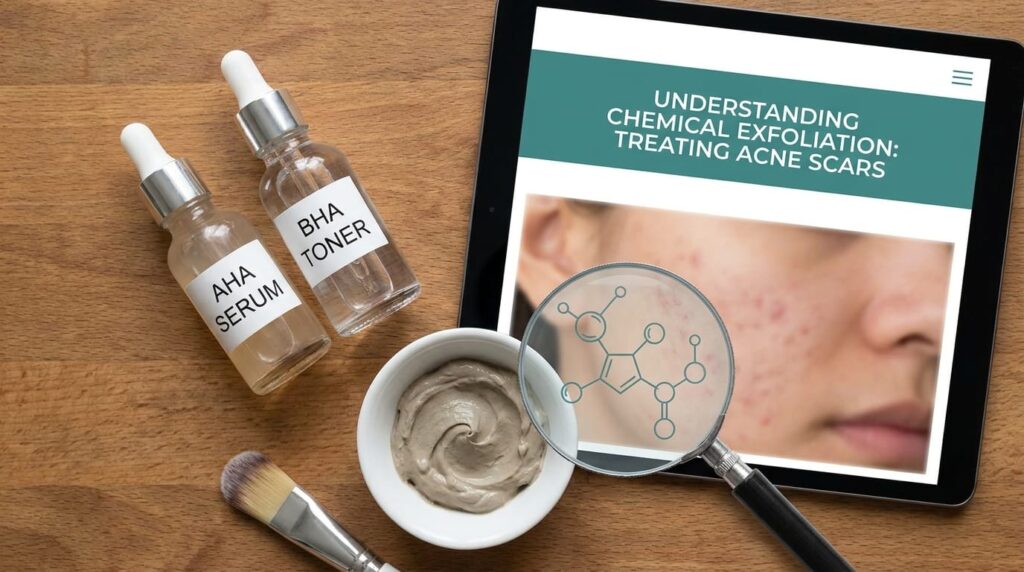
AHAs and BHAs work by breaking the bonds that hold dead skin cells together. This process uncovers fresher skin beneath.
| Acid | Best For | How to Use |
| Glycolic Acid (AHA) | Surface-level dark spots, uneven texture | 2–3x per week |
| Lactic Acid (AHA) | Sensitive skin, mild hyperpigmentation | 2–3x per week |
| Salicylic Acid (BHA) | Oily/acne-prone skin, clogged pores | Daily in low concentrations |
| Mandelic Acid (AHA) | Darker skin tones, gentle exfoliation | 2–3x per week |
Important: Never layer multiple acids in the same routine without building tolerance first.
Sunscreen: The Most Underrated Acne Scar Treatment
Sunscreen isn’t glamorous — but skipping it can undo all your scar-fading progress. UV exposure darkens post-inflammatory hyperpigmentation and slows the skin’s natural healing process.
Use a broad-spectrum SPF 30 or higher every single morning, even on cloudy days. This single habit can cut your scar-fading timeline in half.
Professional Treatments: How to Get Rid of Acne Scars Faster
If at-home products aren’t working, professional treatments can offer better results. These should always be performed by a licensed dermatologist or skincare professional.
Chemical Peels
Chemical peels use acid solutions to strip away the skin’s top layers. This process speeds up cell renewal and boosts collagen production.
- Superficial peels (glycolic acid, lactic acid): Minimal downtime, good for mild PIH
- Medium peels (TCA 20–35%): Addresses deeper discoloration and mild textural scarring
- Deep peels (phenol): Significant downtime, used for severe scarring
Most patients need 3–6 sessions spaced 4 weeks apart for best results.
Microneedling for Acne Scars
Microneedling uses small needles to make tiny injuries in the skin. This process triggers a natural healing response, leading to new collagen production.
Why it works well for acne scars:
- Breaks down old scar tissue
- Stimulates collagen in depressed scars
- Works on all skin types and tones
- Relatively affordable compared to laser
RF Microneedling uses radiofrequency energy along with needling. This combination boosts collagen remodeling. It’s especially good for treating rolling and boxcar scars.
Recovery: 1–3 days of redness. Typically 3–6 sessions required.
Laser Treatment for Acne Scars
Laser therapy is widely considered the most effective clinical treatment for acne scars. There are two main types:
Ablative Lasers (CO2 Fractional, Er:YAG)
- Remove the outer skin layers
- Dramatic results for deep boxcar and rolling scars
- Requires 5–7 days downtime
- CO2 fractional lasers are among the most powerful options available
Non-Ablative Lasers (Pico Laser, Fraxel)
- Stimulate collagen without removing skin
- Less downtime (1–2 days of redness)
- Multiple sessions needed, but gentler on darker skin tones
Note: Always consult a dermatologist to choose the right laser for your skin tone. Some ablative lasers carry a higher risk of hyperpigmentation in melanin-rich skin.
Dermal Fillers for Depressed Scars
Dermal fillers physically plump up depressed acne scars from below the skin’s surface. This is a fast, effective option for rolling and boxcar scars.
- Hyaluronic acid fillers (Restylane, Juvederm): Last 6–12 months
- Bellafill (PMMA): Longer-lasting results (up to 5 years)
Results are immediate, though touch-up sessions may be needed as fillers dissolve.
Subcision
Subcision is a minor surgery. A small needle goes under a depressed scar. This breaks the fibrous tissue that pulls the skin down.
It’s particularly effective for rolling scars. Often combined with microneedling or fillers for best results. Minimal downtime, but some bruising is expected.
TCA Cross for Ice Pick Scars
The CROSS technique (Chemical Reconstruction of Skin Scars) treats ice pick scars. It uses high-concentration trichloroacetic acid (TCA). This causes a controlled chemical injury that stimulates collagen production inside the scar.
It’s a top choice for treating this tough type of scar.
How to Get Rid of Acne Scars on Dark Skin Tones
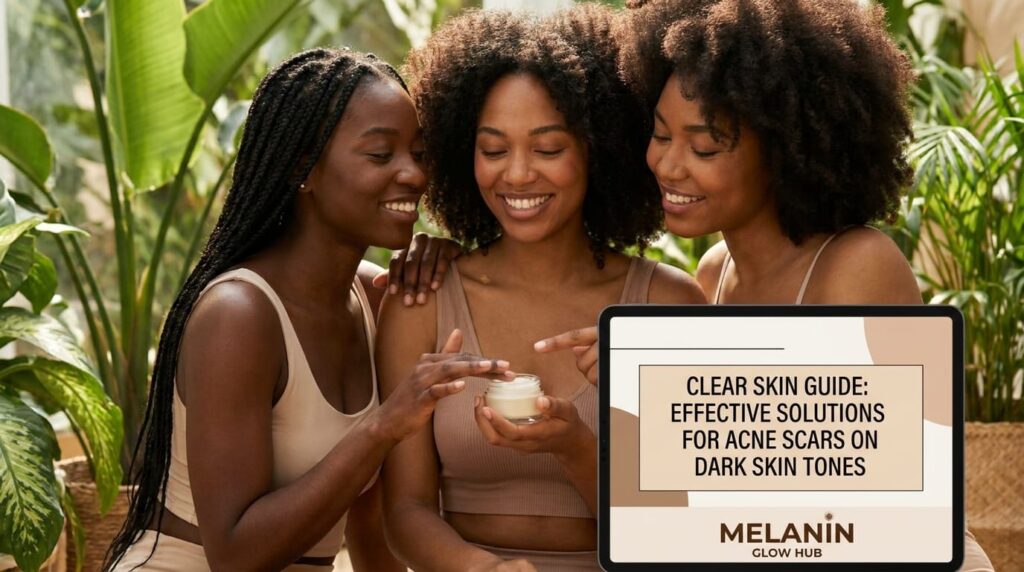
Treating acne scars on darker skin tones requires extra care. Some strong treatments, like specific lasers and deep chemical peels, can cause post-inflammatory hyperpigmentation. This can make dark spots even worse.
Safer options for darker skin tones include:
- Niacinamide (5–10%) — gentle and effective for PIH
- Azelaic acid — brightening without the irritation risk
- Mandelic acid — a gentler AHA with larger molecules that don’t penetrate as deeply
- Microneedling — generally safe for all skin tones
- Non-ablative lasers (Pico laser) — lower risk than ablative options
- Salicylic acid peels — well-tolerated and less likely to cause hyperpigmentation
Always patch-test new treatments and introduce ingredients slowly.
Natural Remedies: What Actually Works (And What Doesn’t)
You’ve probably heard about natural remedies for acne scars. Here’s an honest breakdown:
May Have Some Benefit:
- Aloe vera — contains aloesin, which may reduce hyperpigmentation
- Rosehip oil — rich in vitamin A and C, may support skin regeneration
- Vitamin E oil — antioxidant properties may support healing (results are mixed)
Popular But NOT Proven (Avoid These):
- Lemon juice — highly acidic and photosensitizing; can cause burns and worsen PIH
- Toothpaste — no evidence it helps scars; can cause irritation
- Baking soda — disrupts skin’s pH balance; damages the barrier
- Apple cider vinegar — anecdotal only; may irritate skin
The bottom line: Natural remedies might help with mild discoloration. However, they can’t fix textural scarring. For anything beyond minor dark spots, proven ingredients or professional treatments are needed.
How Long Does It Take to Get Rid of Acne Scars?
This is one of the most common questions — and the honest answer is: it depends.
| Scar Type | At-Home Timeline | With Professional Treatment |
| PIH (dark spots) | 3–24 months | 4–12 weeks |
| Mild surface scars | 6–12 months | 1–3 months |
| Atrophic scars (boxcar, rolling) | May not resolve alone | 3–6 months with multiple sessions |
| Ice pick scars | Will not resolve alone | 6–12+ months |
| Keloid/hypertrophic | May worsen without treatment | Ongoing management |
Key factors that affect timeline:
- Your skin tone and genetics
- How consistently you use treatments
- Whether you’re still breaking out (active acne slows healing)
- The severity and depth of your scars
Does Acne Scarring Go Away on Its Own?
Some marks do fade on their own — but not all.
Post-inflammatory hyperpigmentation (PIH) fades on its own. It can take a few months to several years. Consistent SPF use speeds up this process considerably.
Atrophic and hypertrophic scars change the skin’s texture. They won’t disappear by themselves. These involve structural changes to the skin that require active treatment to improve.
The Best Skincare Routine for Acne Scars
Here’s a simple, effective daily routine designed around scar treatment:
Morning Routine:
- Gentle cleanser (avoid harsh scrubs)
- Vitamin C serum (10–20% L-ascorbic acid)
- Niacinamide moisturizer
- Broad-spectrum SPF 30+
Evening Routine:
- Double cleanse (especially if wearing SPF/makeup)
- AHA/BHA exfoliant (2–3x per week, not nightly)
- Retinol or retinoid (start 2–3x per week)
- Hydrating moisturizer (ceramides or hyaluronic acid)
Pro tip: Don’t use retinoids and AHAs on the same night. Alternate to avoid irritation.
When to See a Dermatologist
At-home treatments are helpful, but sometimes you need professional help. Here are some situations where that’s the best choice:
- Your scars are deep, pitted, or raised
- You’ve used topical treatments consistently for 3+ months without improvement
- Your acne is still active and causing new scars
- You’re unsure which type of scar you have
- You have darker skin and want to avoid triggering hyperpigmentation
A dermatologist can check your skin. They will identify your scar types and make a personalized treatment plan. Many scar treatments are more effective together. For instance, use subcision with microneedling and several chemical peels.
You Can Also Read
How to Prevent Acne Scars from Forming
The most effective approach to acne scars is preventing them in the first place. Here’s how:
Stop picking and popping. This is the single most impactful thing you can do. Picking forces bacteria deeper into the skin and dramatically increases scarring risk.
Treat active acne early. Don’t wait for breakouts to become severe. Use targeted treatments at the first sign of a pimple. Try salicylic acid, benzoyl peroxide, or sulfur spot treatments.
Keep inflammation under control. The more inflamed a pimple, the higher the scar risk. Anti-inflammatory ingredients like niacinamide and azelaic acid can help calm breakouts.
Wear sunscreen daily. Even existing marks will heal faster with consistent SPF use. Sun exposure darkens PIH and slows the skin’s natural repair process.
Don’t over-strip your skin. Over-exfoliating and using harsh cleansers can damage the skin barrier and worsen inflammation.
Frequently Asked Questions About Getting Rid of Acne Scars
Can acne scars be removed permanently?
You can see big changes with the right treatments. Options include laser resurfacing, subcision, or TCA Cross. However, the word “permanent” is tricky. Most treatments can improve scars by 50% to 90%. Results vary based on scar type, skin type, and how well aftercare is followed. Maintenance is often needed.
Is microneedling or laser better for acne scars?
Both are highly effective, but for different reasons. Microneedling is safe for all skin tones. It’s also affordable and effective for rolling and boxcar scars. Laser treatments are more powerful. However, they carry a higher risk of hyperpigmentation for darker skin tones. A dermatologist can help you choose based on your specific scars and skin type.
What is the fastest way to get rid of acne scars?
Professional treatments, such as fractional CO2 laser and Pico laser, provide quick visible results. A combination of subcision and filler also works well. For dark spots, prescription retinoids and professional chemical peels can work well together. You might see results in just 4 to 6 weeks.
Do acne scars get worse with age?
Atrophic scars can look more noticeable as we age. This happens because our skin loses collagen, which makes the depressions appear deeper. This is another reason early intervention is worthwhile. Starting treatment sooner rather than later generally produces better long-term outcomes.
What’s the difference between acne scars and acne marks?
An acne scar involves a change in skin texture — either a depression or raised bump. An acne mark (PIH) is flat discoloration with no texture change. Marks are temporary; scars are structural and require more targeted treatment.
Conclusion: The Best Approach to Getting Rid of Acne Scars
Learning how to get rid of acne scars takes time, patience, and the right strategy. There’s no one magic answer. However, a mix of strategies works for nearly everyone.
Start with the basics: daily SPF, vitamin C, niacinamide, and a retinoid. Be consistent for at least 3 months before evaluating your results. For deep textural scars, see a dermatologist. They can help you explore options like microneedling, laser treatment, or subcision.
The most important thing? Don’t give up. Acne scars are one of the most treatable skin concerns in modern dermatology. With the right plan, clearer skin is completely within reach.
Medical Disclaimer: This article is for information only and isn’t medical advice. Talk to a licensed dermatologist or healthcare provider before starting any new skincare treatment. This is important, especially for clinical procedures.
About the Author



1 thought on “How to Get Rid of Acne Scars”