That annoying tickle at the back of your throat. The constant urge to clear it. The nagging cough that just will not go away. If this sounds familiar, you are not alone.
Post nasal drip affects millions of people every single day. The good news? It is one of the most treatable conditions around. Whether triggered by allergies, a cold, dry air, or acid reflux — learning how to get rid of post nasal drip can bring real, lasting relief.
This guide covers it all: the causes, key signs to notice, and the best home remedies and medical treatments. Let us get into it.
What Exactly Is Post Nasal Drip?
Your nose and throat produce mucus constantly — about one to two quarts every single day. Normally, you swallow it without even noticing. It mixes with saliva and passes harmlessly down your throat.
When something goes wrong, your glands produce far more mucus than usual. Or the mucus becomes thicker and harder to clear. Either way, it starts to build up and drip down the back of your throat — that is post nasal drip.
This condition is a common cause of chronic cough, sore throat, and throat clearing. It is rarely dangerous, but it is incredibly disruptive to daily life.
Common Causes of Post Nasal Drip You Should Know
Before figuring out how to get rid of post nasal drip, you need to identify what is causing yours. Treatment depends heavily on the root cause.
Allergies (Allergic Rhinitis)
Allergies are the single most frequent trigger. Pollen, dust mites, pet dander, and mold can make the nasal lining swell. This leads to too much mucus.
If your symptoms get worse in spring or fall, or after being near animals, allergies are probably to blame. This is commonly called allergic rhinitis or allergic post nasal drip.
Sinus Infections and Sinusitis
Bacterial and viral sinus infections inflame the nasal passages and sinuses. The result is thick, discolored mucus that drips persistently into the throat.
Acute sinusitis clears within 10 days. Chronic sinusitis — lasting 12 weeks or longer — requires medical attention.
Colds and the Flu
Viral infections, such as the common cold, irritate the nasal lining. They increase mucus production and cause that familiar stuffy, drippy feeling.
This type of post nasal drip usually resolves on its own within 7 to 10 days.
GERD and Acid Reflux
This one surprises many people. Gastroesophageal reflux disease (GERD) happens when stomach acid moves up into the throat. This irritates the tissue and causes mucus to form as a protective response.
If symptoms worsen after meals or when lying down, GERD could be the hidden cause of your drip.
Cold and Dry Air
Winter air is low in moisture. When you breathe it in, your nasal passages work hard to stay moist. They produce more mucus than normal. Indoor heating strips even more humidity from the air.
Certain Medications
Some medications thicken nasal secretions as a side effect:
- Blood pressure medications — especially ACE inhibitors
- Birth control pills
- Some antidepressants
If mucus buildup started after a new prescription, talk to your doctor.
Pregnancy Rhinitis
Hormonal shifts in early pregnancy increase mucus production in many women, especially in the first two trimesters. It typically clears after delivery.
Deviated Septum
A crooked nasal septum blocks proper mucus drainage. Mucus pools rather than flowing normally, leading to persistent drip. This structural issue sometimes needs surgical correction for lasting relief.
Spicy Foods and Weather Changes
Eating spicy food or shifting from hot to cold can cause thin, watery nasal secretions. This harmless condition is called gustatory rhinitis, and it goes away quickly.
Recognizing the Symptoms of Post Nasal Drip
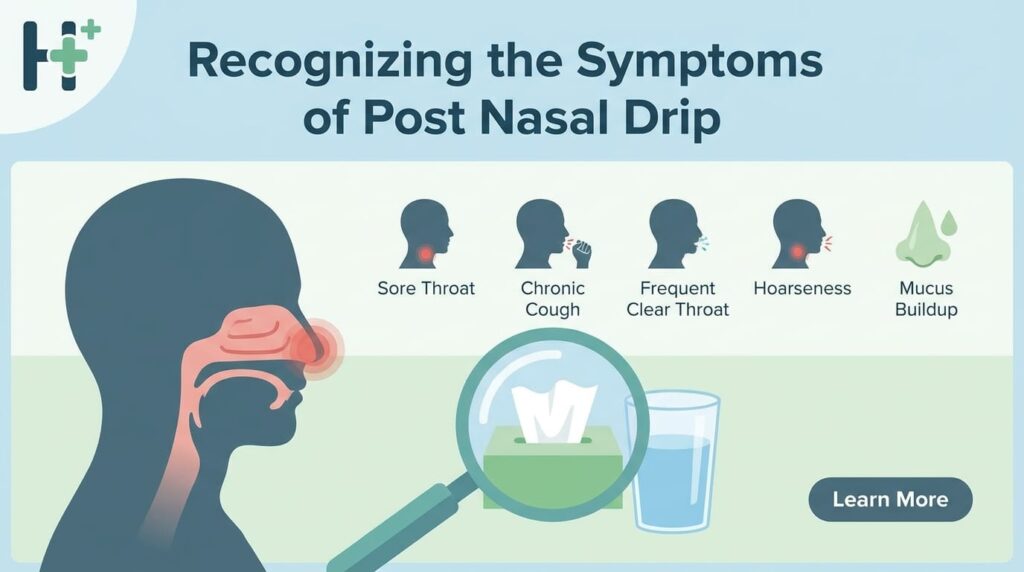
How do you know post nasal drip is your problem? Here are the most common signs:
- Constant urge to clear your throat — the number one symptom
- Chronic cough — especially worse at night or first thing in the morning
- Sore or scratchy throat — caused by mucus irritating the lining
- Feeling of a lump in the throat — mucus pooling creates this sensation
- Bad breath (halitosis) — bacteria thrive in stagnant mucus
- Nausea — swallowing large amounts of mucus upsets the stomach
- Hoarse or rough voice — mucus coats the vocal cords
- Nasal congestion — one or both nasal passages feel blocked
Experiencing several of these together? Post nasal drip is very likely the cause.
How to Get Rid of Post Nasal Drip at Home: 8 Proven Remedies
The most effective starting point is always home care. Here is how to get rid of post nasal drip naturally before reaching for prescription drugs.
1. Saline Nasal Rinse (The Gold Standard)
A saline nasal rinse clears out mucus, allergens, and irritants from your nose. It is the most research-supported home remedy available.
How to use it:
- Mix 1 teaspoon of non-iodized salt in 2 cups of distilled or previously boiled water
- Use a neti pot or squeeze bottle to rinse each nostril
- Allow the solution to drain out naturally
- Repeat once or twice daily
Important: Never use tap water directly. Always use sterile, distilled, or boiled-and-cooled water to avoid infection risk.
Research shows that nasal irrigation helps lower mucus buildup. This is particularly true for people with chronic sinusitis and allergic rhinitis. Daily use is safe and highly effective.
2. Steam Inhalation
Steam thins thick mucus and opens congested nasal passages within minutes. It is one of the fastest forms of natural relief.
How to do it:
- Fill a large heat-safe bowl with hot water
- Drape a towel over your head
- Hold your face 8 to 12 inches above the water
- Inhale slowly and deeply for 5 to 10 minutes
- Repeat twice daily for best results
Adding a few drops of eucalyptus oil boosts the effect. Eucalyptus has a compound named 1,8-cineole. This compound helps reduce mucus and fight inflammation.
3. Stay Hydrated — Especially With Warm Drinks
Drinking enough fluids keeps mucus thin and easy to clear. Dehydration makes mucus thick and sticky.
Best options:
- Warm water with honey and lemon
- Ginger tea
- Chamomile or peppermint herbal teas
- Warm chicken soup or broth
Avoid: Caffeine and alcohol. Both have a diuretic effect and thicken mucus further.
4. Elevate Your Head During Sleep
Lying flat at night allows mucus to pool at the back of your throat. That is why symptoms are almost always worst overnight.
Propping your head up by 6 to 8 inches uses gravity to keep mucus draining away from the throat. Stack two pillows or use a wedge pillow for better support.
This single change can dramatically reduce nighttime coughing and morning throat discomfort.
5. Use a Humidifier
Cold, dry winter air can dry out your nasal passages. In response, they produce extra mucus. A humidifier restores moisture to the air and breaks this cycle.
Keep indoor humidity between 40% and 50%. Clean your humidifier every few days — a dirty unit can harbor mold and bacteria.
6. Honey and Ginger Tea
Both honey and ginger are well-supported for respiratory health. Ginger reduces nasal inflammation. Raw honey soothes throat irritation and has natural antimicrobial properties.
Simple recipe:
- Grate 1 teaspoon of fresh ginger into a cup of hot water
- Steep for 5 minutes, then strain
- Add 1 tablespoon of raw honey and a squeeze of lemon
- Drink 2 to 3 times daily
7. Gargle With Warm Salt Water
Gargling with salt water helps remove extra fluid from an inflamed throat. It also loosens mucus and kills bacteria.
How to do it:
- Dissolve half a teaspoon of salt in a glass of warm water
- Gargle for 30 to 60 seconds
- Spit — do not swallow
- Repeat several times a day
8. Identify and Avoid Your Triggers
If allergies cause your post-nasal drip, cutting down on allergens is key. It’s as vital as any treatment.
- Keep windows closed during high-pollen seasons
- Use HEPA air purifiers in your bedroom and living area
- Cover pillows and mattresses with allergen-proof covers
- Vacuum with a HEPA-filter vacuum at least twice a week
- Shower after spending time outdoors to remove pollen from hair and skin
- Keep pets out of the bedroom
You Can Also Read
Medical Treatments to Get Rid of Post Nasal Drip Faster

When home remedies are not enough, over-the-counter and prescription medications can step in.
Nasal Steroid Sprays (First-Line Medical Treatment)
Nasal corticosteroid sprays reduce inflammation in the nasal passages and sinuses. They are the best choice for treating both allergic and non-allergic post-nasal drip.
Popular OTC options:
- Fluticasone (Flonase)
- Budesonide (Rhinocort)
- Triamcinolone (Nasacort)
They begin working within hours but reach full effectiveness with regular use over 1 to 2 weeks. Use them consistently rather than only when symptoms spike.
Note: Older steroid sprays like beclomethasone are absorbed more into the bloodstream. Newer options like fluticasone are generally preferred.
Antihistamines
Antihistamines block the chemical signals that trigger mucus overproduction during allergic reactions.
Two main types:
- First-generation (older): Diphenhydramine (Benadryl) — effective but causes drowsiness. Can also dry and thicken secretions.
- Second-generation (newer) antihistamines include:
- Loratadine (Claritin)
- Cetirizine (Zyrtec)
- Fexofenadine (Allegra)
- These are non-drowsy, long-lasting, and won’t thicken mucus.
Second-generation antihistamines are the preferred choice for most people.
Decongestants
Decongestants shrink swollen nasal tissue and reduce congestion quickly.
- Oral: Pseudoephedrine (Sudafed) — effective but raises blood pressure. Not suitable for people with hypertension.
- Nasal spray: Oxymetazoline (Afrin) — works quickly. But, don’t use it for over 3 days in a row. This can cause rebound congestion.
Mucolytics
Guaifenesin — found in Mucinex and Robitussin — thins and loosens mucus without stopping production. It helps clear mucus naturally. It works best with plenty of water during the day.
Ipratropium Nasal Spray
Ipratropium (Atrovent) nasal spray helps reduce thin, watery mucus from non-allergic rhinitis or a cold. It works by blocking nerve signals that cause mucus production. It is a prescription medication.
Antibiotics
Only prescribed when a confirmed bacterial sinus infection is present. Antibiotics have no effect on viral infections. They should only be used when clearly indicated by a physician.
Treating GERD-Related Drip
If acid reflux is the root cause, treating the GERD resolves the mucus issue:
- Antacids (Tums, Rolaids) for quick relief
- H2 blockers (Pepcid) to reduce acid production
- Proton pump inhibitors (Omeprazole) for chronic cases
Lifestyle changes for GERD:
- Don’t eat within 3 hours of bedtime.
- Cut down on alcohol and caffeine.
- Lose extra weight.
- Sleep on your left side.
How to Get Rid of Post Nasal Drip at Night: A Complete Bedtime Routine
Nighttime is when symptoms peak for most people. Here is a targeted routine for better sleep:
- Saline nasal rinse — 30 to 45 minutes before bed
- Nasal steroid spray — as directed, used consistently
- Gargle with warm salt water — clears pooled mucus before sleep
- Warm herbal tea — ginger or chamomile with honey
- Avoid eating — nothing for at least 3 hours before bed
- Run a humidifier in your bedroom overnight
- Elevate your head — 6 to 8 inches, sleep on your side
- Keep the bedroom allergen-free — wash bedding weekly, no pets
Follow this consistently for one week and notice the difference.
How to Get Rid of Post Nasal Drip Caused by Allergies
Allergy-driven post nasal drip needs a targeted approach:
- Get tested — see an allergist for a skin prick or blood test to identify exact triggers
- Start antihistamines early — begin before allergy season, not after symptoms appear
- Use nasal steroids daily — consistent use outperforms occasional use significantly
- Consider immunotherapy — allergy shots or sublingual drops offer long-term desensitization
- Run a HEPA air purifier in your bedroom around the clock
- Check daily pollen counts and limit outdoor time on high-count days
How to Get Rid of Post Nasal Drip in Children

Children often have this condition due to their smaller nasal passages and frequent colds. Signs in children:
- Persistent nighttime cough that worsens when lying down
- Frequent sniffling or throat clearing
- Mouth breathing during sleep
- Complaining of a “tickle” that will not go away
Safe approaches for children:
- Saline nasal drops or sprays — safe from birth
- Bedroom humidifier at night
- Honey in warm water — only for children over 12 months; never for infants
- Keep them well-hydrated with water and warm soups
Always consult a pediatrician before giving any OTC medication to a child under 6.
Lifestyle Changes That Prevent Post Nasal Drip From Coming Back
Building smart habits into your daily routine can help prevent mucus issues before they begin.
Diet Adjustments
- Reduce dairy — it can thicken existing mucus for some people
- Limit alcohol — dehydrates and inflames nasal tissue
- Avoid spicy food at night — triggers thin secretions that worsen overnight drip
- Eat anti-inflammatory foods. Ginger, turmeric, garlic, leafy greens, and berries help your immune system stay healthy.
Exercise Regularly
Even a 20-minute daily walk improves circulation and temporarily relieves nasal congestion. Regular exercise also reduces stress — a significant but underappreciated driver of immune health.
Quit Smoking
Cigarette smoke irritates mucous membranes. It boosts secretion and damages the cilia that clear mucus from your passages. Avoiding secondhand smoke matters too.
Prioritize Sleep and Stress Management
Chronic stress weakens the immune system. Quality sleep (7 to 9 hours), mindfulness, and exercise help your body combat inflammation effectively.
When to See a Doctor About Post Nasal Drip
Most cases clear with home care or OTC medications. But some situations need professional evaluation. See a doctor if:
- Symptoms persist for more than 10 days without improvement
- You have a fever above 101°F (38.3°C) with nasal symptoms
- There is blood in your mucus
- You experience severe facial pain or pressure
- Breathing is difficult or there is noticeable shortness of breath
- Mucus remains green or yellow beyond 10 days
- Symptoms recur repeatedly throughout the year
A doctor may perform a physical exam, nasal endoscopy, or imaging. For a deviated septum, nasal polyps, or chronic sinusitis, doctors may recommend a specialist or surgery.
Quick-Reference Checklist
At-home remedies:
- Saline nasal rinse — once or twice daily
- Steam inhalation — twice daily for 10 minutes
- Warm fluids — at least 8 glasses per day
- Head elevated 6 to 8 inches during sleep
- Humidifier running overnight in the bedroom
- Gargle with warm salt water several times daily
- Honey and ginger tea 2 to 3 times per day
- Avoid known allergens and irritants
OTC medications:
- Nasal steroid spray (Flonase or Rhinocort) — used consistently
- Non-drowsy antihistamines (Claritin or Zyrtec) — for allergy-related cases
- Guaifenesin (Mucinex) — to thin stubborn mucus
- Decongestants — short-term use only
See a doctor when:
- Symptoms do not improve after 10 days
- Fever, facial pain, or blood in mucus appears
- Symptoms repeatedly interfere with sleep and daily life
Frequently Asked Questions
How long does post nasal drip last?
It depends on the cause. Cold-related cases clear in 7 to 10 days. Allergy-related drip can last weeks or an entire season. Chronic sinusitis may cause symptoms for 12 weeks or longer without treatment.
Can post nasal drip cause nausea?
Yes. Swallowing thick mucus, especially in the morning, can upset your stomach. This may make you feel nauseous. A saline rinse before bed reduces overnight buildup and helps with this.
Is post nasal drip contagious?
Post nasal drip itself is not contagious. However, if it is caused by a cold or flu, those infections can spread through contact.
What is the fastest way to get relief?
A saline nasal rinse and a short-term decongestant spray give quick relief, often in just 30 minutes. Steam inhalation also delivers near-immediate temporary comfort.
Does dairy make post nasal drip worse?
For some people, yes. Dairy does not increase mucus production, but it can thicken existing mucus. If you notice a pattern after dairy consumption, try eliminating it for a week and observe the change.
Can post nasal drip go away on its own?
Mild cases from a cold or brief allergy exposure often resolve in one to two weeks. Chronic or recurring post-nasal drip usually needs active treatment to go away completely.
Conclusion
Knowing how to get rid of post nasal drip puts you back in control of your comfort and your daily life. Seasonal allergies, sinus infections, GERD, or dry winter air? There’s a targeted solution that works.
Start simple: saline rinse, steam, and hydration resolve the majority of mild cases. Add the right medication if needed. Build smart daily habits. Also, protect yourself from triggers that keep coming back.
With steady effort, that constant throat-clearing and nightly coughing can fade away. You deserve to breathe freely and sleep well — and now you have everything you need to make that happen.
Disclaimer: This article is for information only. It does not replace professional medical advice, diagnosis, or treatment. Always consult a qualified healthcare provider before beginning any new treatment.
About the Author