Have you ever opened a flour bag and found tiny worms? Or seen little moths flying around your kitchen? If so, you are not alone. Learning how to get rid of pantry moths is one of the most common home pest problems people face. These sneaky insects can quietly infest your dry goods for weeks before you even notice them.
The good news? You can eliminate them completely — without calling a pest control company. This guide helps you at every step. It starts with spotting the first signs and ends with ensuring they don’t return.
What Are Pantry Moths — and Why Are They in Your Kitchen?
Pantry moths are tiny bugs that invade dry foods. They like flour, grains, cereals, nuts, and dried fruit. The Indian meal moth (Plodia interpunctella) is the most common pest in homes in the US and Europe. You might also see the Mediterranean flour moth, known as the flour moth or food moth.
These pests do not fly in through your window looking for trouble. You usually bring them home from the store. They hide in a bag of birdseed, a box of cereal, or a packet of rice.
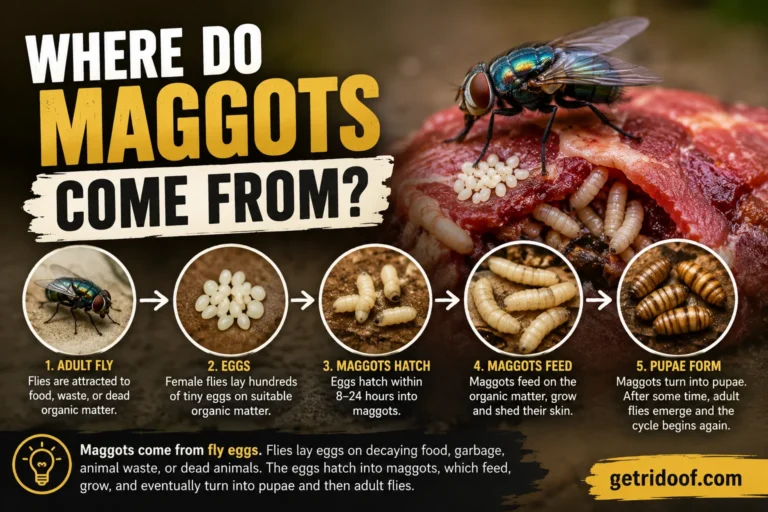
Once inside, they reproduce fast. A single female can lay up to 400 eggs at a time. Those eggs hatch in as little as 7 days.
How to Identify a Pantry Moth Infestation
Before you start treating the problem, you need to confirm what you are dealing with. Here is what to look for.
Signs You Have a Pantry Moth Problem
- Webbing or silk threads inside food bags, jars, or around corners of shelves
- Clumped or sticky flour or grains — a sign of larvae tunneling through
- Small cream-colored worms (larvae) crawling inside food packages
- Tiny moths fluttering near your pantry, ceiling, or kitchen lights
- Cocoons tucked into shelf corners, hinges, or door frames
The larvae are the real culprits — they are the ones eating your food. Adult meal moths do not feed at all. Their only job is to mate and lay more eggs.
Understanding the Pantry Moth Life Cycle
Knowing the life cycle helps you tackle the infestation at the right stage.
| Stage | Duration | What Happens |
| Egg | 2–7 days | Laid directly on food sources |
| Larva | 14–40 days | Feeds on dry goods, spins silk webbing |
| Pupa | 15–30 days | Hides in crevices, corners, or packaging |
| Adult | 5–25 days | Flies, mates, lays eggs — does not eat |
The full cycle can complete in as little as 30 days. In warm conditions, up to 8 generations can hatch in a single year. This is why acting fast matters.
How to Get Rid of Pantry Moths: Step-by-Step
Here is the complete process for eliminating a kitchen moth infestation. Follow every step — skipping one can let the problem come back.
Step 1: Empty Your Pantry Completely

Pull everything out — every jar, box, bag, and tin. Do not leave a single item behind. This includes items that look unopened and undamaged.
Inspect each product carefully. Look for webbing, larvae, holes in packaging, or clumped contents. When in doubt, throw it out.
Items most likely to be infested:
- Flour, oats, cornmeal
- Rice, pasta, quinoa
- Nuts, seeds, dried fruit
- Spices and herbs
- Pet food and birdseed
- Chocolate and candy
Seal infested items in a plastic bag immediately and take them outside to the trash. Do not leave them sitting in your kitchen bin.
Step 2: Deep Clean Every Inch of the Pantry

This step is the most important — and the most overlooked. Simply removing infested food is not enough. Eggs and larvae hide in cracks, shelf corners, door hinges, and even behind wall brackets.
How to clean your pantry thoroughly:
- Vacuum everything — shelves, walls, floor, ceiling, corners, door hinges, and shelf brackets. Use a crevice attachment.
- Empty the vacuum immediately — seal the bag or empty the canister into an outdoor bin. Larvae can survive inside a vacuum.
- Wipe down all surfaces with a solution of equal parts white vinegar and warm water. Add a few drops of peppermint essential oil — moths hate the smell.
- Remove and wash shelf liners — or replace them entirely.
- Mop the floor using the same vinegar solution.
- Leave the pantry open to air dry completely before restocking.
Pay extra attention to the undersides of shelves and around mounting hardware. These are the spots where pupae like to hide.
Step 3: Use Pantry Moth Traps
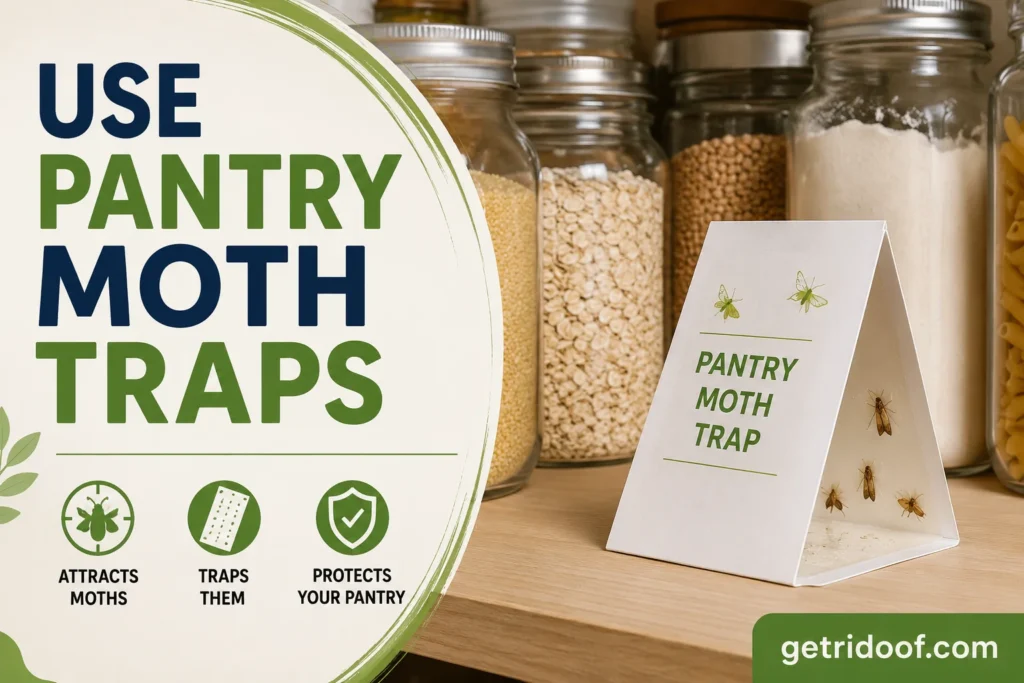
Once the pantry is clean, set up pheromone-based pantry moth traps. These are non-toxic, sticky glue boards. They attract adult male moths with synthetic female pheromones.
Trapping male moths stops them from mating. This breaks the reproductive cycle and keeps the next generation from hatching.
How to use moth traps effectively:
- Place at least 2 traps per shelf — moths fly higher and crawl lower, so vary the height
- Replace traps every 8 weeks or when they fill up
- Use traps made for Indian meal moths. Clothes moth traps use different pheromones, so they won’t work.
Pheromone traps are a reliable way to control active infestations. They are also safe to use around food, children, and pets.
Step 4: Use Natural Repellents

Traps catch adult moths, but natural repellents keep new ones away from your clean pantry.
Effective natural options:
- Bay leaves — tuck a dried bay leaf into every container and food package. Their strong scent repels meal moths and other pantry pests.
- Cedar blocks — place a few cedar wood blocks on shelves. Cedar naturally deters a wide range of insects.
- Peppermint oil: Wipe shelves with a diluted peppermint solution. You can also place a cotton ball soaked in the oil in corners.
- Lavender sachets — hang or place near food storage areas for a mild deterrent effect.
- Cloves and thyme — both have strong aromatic compounds that repel moths naturally.
These methods work best when included in a larger prevention strategy, not on their own.
Step 5: Store Food Properly
This step is the single biggest change you can make. Most pantry moth infestations occur when food is stored in thin plastic bags or cardboard boxes. Larvae can chew through these materials in minutes.
Switch to airtight containers:
- Glass jars with sealed lids (mason jars or kilner jars are ideal)
- Thick, airtight plastic containers
- Metal tins with tight-fitting lids
Store grains, flour, nuts, seeds, rice, cereals, dried fruit, spices, and pet food in sealed containers. If you’re not sure an item is safe after an infestation, freeze it for at least 4 days. This will kill any eggs or larvae.
How to Get Rid of Pantry Moths Naturally (Without Chemicals)
Many people prefer to avoid chemical pesticides, especially in food storage areas. The good news is that you can get rid of a pantry moth infestation completely using only natural methods.
The natural approach combines:
- Thorough cleaning with vinegar and peppermint
- Pheromone traps (non-toxic)
- Freezing suspect food items
- Airtight storage to cut off the food supply
- Natural repellents like bay leaves and cedar
According to pest control experts, this combination is effective for most household infestations. Avoid chemical sprays in pantry areas. They can contaminate food.
Do Pantry Moths Come Back? How to Prevent a Re-Infestation
Getting rid of the infestation is only half the battle. Preventing moths from returning requires building a few simple habits.
Long-Term Prevention Tips
At the grocery store:
- Check packaging for small holes or tears before buying
- Avoid buying bulk dry goods in poor-quality packaging
- Be cautious with birdseed and pet food — these are common sources of moth eggs
At home:
- Inspect new groceries before putting them away
- Transfer dry goods into airtight containers immediately after purchase
- Do a quick pantry check every 4–6 weeks
- Keep pheromone traps out in warm weather. Moths are more active from spring to early autumn.
In the pantry:
- Avoid letting old food sit at the back of shelves for months
- Rotate stock — use older items first
- Keep the pantry cool and dry; warmth accelerates the moth life cycle
A consistent routine is your best defence. Infestations almost always begin with one overlooked package.
You Can Also Read
- How to Get Rid of Mice
- How to Get Rid of Gnats
- How to Get Rid of Stink Bugs
- How to Get Rid of Ants Permanently
Pantry Moths vs. Clothes Moths: What’s the Difference?
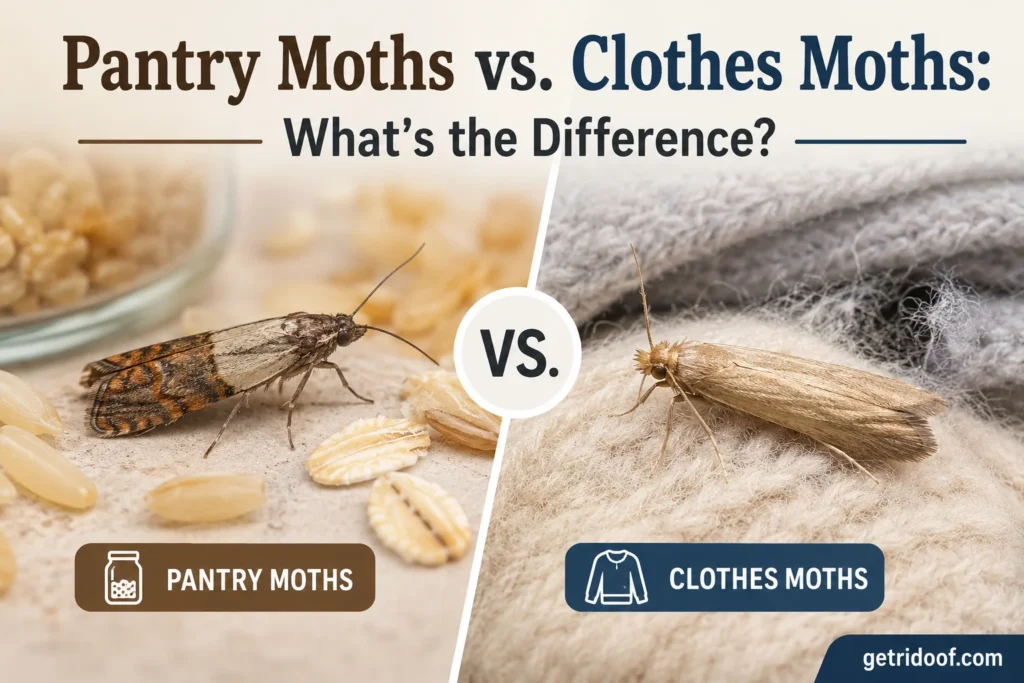
It is worth knowing that not all moths in your home are pantry moths. Clothes moths are a different species. They infest fabrics, wool, and carpets, but not food.
| Pantry Moths | Clothes Moths | |
| Also known as | Indian meal moth, flour moth, meal moth | Webbing moth, casemaking moth |
| What they eat | Dry foods, grains, nuts, pet food | Natural fibres — wool, silk, cashmere |
| Where found | Kitchen, pantry, cabinets | Wardrobes, carpets, drawers |
| Trap type | Food moth pheromone trap | Clothes moth pheromone trap |
Using the wrong trap will not work — the pheromones are species-specific. Always confirm which type you have before treating.
When to Call a Pest Control Professional
Most pantry moth infestations can be handled at home. However, there are situations where professional help makes sense.
Consider calling a pest controller if:
- The infestation has spread to multiple rooms or across the whole house
- You have treated the pantry twice and moths keep returning
- You see larvae or webbing outside the kitchen. This could be in the walls, on carpets, or in storage areas.
- The infestation has been ongoing for several months
A licensed pest control expert can treat hard-to-reach spots. They can also find hidden breeding sites you might have missed.
Frequently Asked Questions
How long does it take to get rid of pantry moths?
Most infestations can be controlled within 2–4 weeks with regular cleaning and traps. However, you may continue to catch a few adult moths in traps for up to 6 weeks as remaining pupae hatch.
Can I eat food that has been near pantry moths?
Pantry moths don’t spread disease. So, food tainted by adult moths isn’t really harmful. However, food that contains larvae, webbing, or frass (waste) should be discarded. If in doubt, freeze the food for 4 days or throw it away.
Where do pantry moths come from?
Pantry moths usually enter homes via infested grocery items. Common sources include flour, grains, birdseed, and pet food. They are rarely the result of poor hygiene. Even clean, well-kept kitchens can get them.
Do pantry moths bite humans?
No. Pantry moths do not bite humans or pets. They are a food pest only, not a physical threat to people.
What kills pantry moth eggs?
Freezing food at 0°F (-18°C) for at least 4 days kills eggs and larvae. High heat (above 140°F / 60°C) also kills them. Vacuuming shelf surfaces well gets rid of eggs laid outside food packaging.
Conclusion: Take Action Early
The key to dealing with kitchen moth infestations is speed. The moment you spot a small moth near your food cupboard or webbing inside a package, act. Waiting a few weeks can turn a minor problem into a full-blown infestation.
Here’s how to eliminate pantry moths:
- Empty and deep-clean your pantry.
- Set up pheromone traps.
- Use airtight containers for food.
- Add natural repellents for extra protection.
Keep up a monthly check routine and you will likely never deal with a serious infestation again.
A clean, well-organised pantry is your best defence — and it only takes one afternoon to set up properly.
About the Author