Maggots seem to appear out of nowhere. One moment your trash bin is fine, and the next it’s crawling with tiny white worms. So where do maggots come from, exactly?
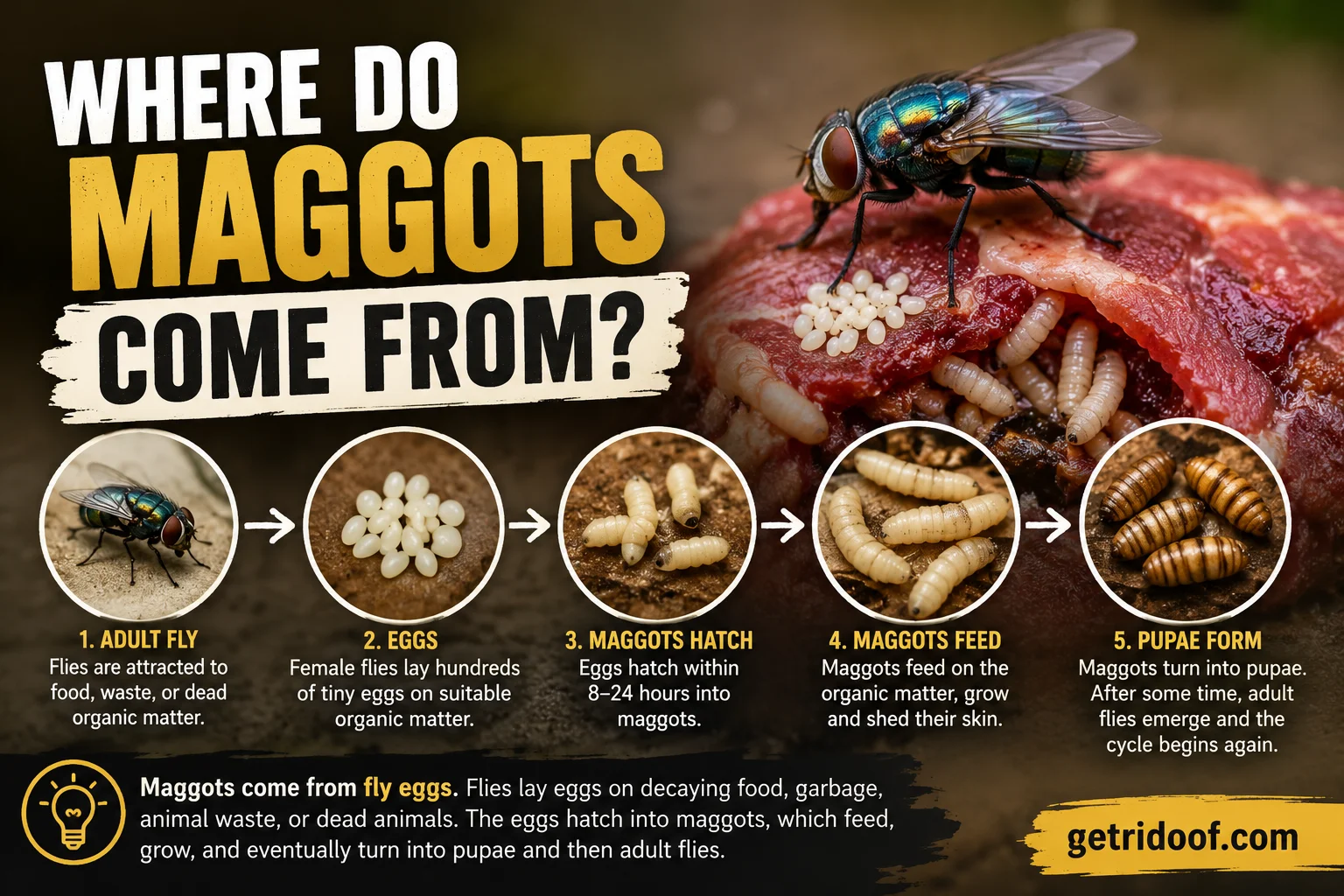
The short answer: maggots come from fly eggs. A fly lands on rotting food, waste, or decaying matter and lays eggs. Within 8–20 hours, those eggs hatch into maggots. Understanding this cycle is the key to getting rid of them — and keeping them away for good.
✅ Quick Answer
Where do maggots come from? Maggots come from fly eggs. Female flies, such as houseflies and blowflies, lay eggs on rotting food, garbage, animal waste, or decaying matter. The eggs hatch in as little as 8 hours, releasing tiny larvae we call maggots.
What Are Maggots?
Maggots are the larval stage of flies. They are not a separate insect — they are baby flies in their worm-like form. Before a fly can grow wings and buzz around your kitchen, it must first go through this larval stage.
They are nature’s decomposers. In the wild, maggots break down dead animals and organic waste. In your home, though, they are a sign of a hygiene problem you need to address fast.
The scientific term for maggots is fly larvae. The main flies that cause maggot infestations in homes are houseflies (Musca domestica) and blowflies (Calliphora species).
What Do Maggots Look Like?
Maggots are small, soft, and pale. Here is what to look for:
- Color: Creamy white, off-white, or pale yellow
- Size: 3–12 mm long (about the size of a grain of rice to a small fingernail)
- Shape: Cylindrical, tapered at one end, legless
- Movement: They wriggle and squirm, especially when disturbed
- Texture: Soft and squishy with a moist surface
Fresh maggots are nearly translucent. Older ones become more opaque and yellowish. If you see small white worms in your trash, food, or on meat — those are almost certainly maggots.
Types of Maggots
Not all maggots are the same. Different fly species produce larvae with slightly different habits:
1. Housefly Maggots The most common type found in homes. They target garbage, food scraps, and animal feces. They are typically 10–12 mm at full size.
2. Blowfly / Bottle Fly Maggots These are larger and often found on raw meat or dead animals. Blowflies are attracted to the smell of decomposition from long distances.
3. Fruit Fly Maggots Tiny maggots found inside overripe fruit. They are almost invisible to the naked eye. Fruit flies lay eggs directly in soft, fermenting produce.
4. Flesh fly maggots skip the egg stage. They lay live larvae directly on wounds, meat, or garbage. They are less common indoors but do appear.
The Reality: No Maggots Without Flies
Here is the most important thing to understand: maggots do not appear by magic. For centuries, people thought in “spontaneous generation.” This meant that maggots just appeared from rotting meat by themselves. Science has long disproved this.
Every single maggot comes from a fly egg. If you have maggots, a fly has been in or near that spot and laid eggs. The fly may have slipped in through a tiny gap in a window screen, an open door, or a crack in the wall.
No flies = no eggs = no maggots. This is the golden rule of maggot prevention.
The Complete Fly Life Cycle
Understanding where maggots come from means understanding the full fly life cycle:
Stage 1: Egg
A female fly lays 75–150 eggs at a time in a single batch. She targets warm, moist, protein-rich environments — rotting meat, garbage, feces, or fermenting food. The eggs are tiny, white, and look like grains of rice.
Stage 2: Larva (Maggot)
Eggs hatch in 8–20 hours (faster in warm weather). The larvae — maggots — emerge and immediately begin feeding. They molt twice over 5–14 days, growing larger each time. This is the feeding stage. Maggots consume decaying organic material rapidly.
Stage 3: Pupa
After feeding, maggots dig into dry soil or find a safe spot. There, they form a hard brown shell known as a puparium. Inside, the larva transforms into an adult fly. This stage lasts 3–6 days.
Stage 4: Adult Fly
The adult fly emerges, mates within a few days, and the cycle begins again. A housefly lives only 15–30 days but can produce hundreds of offspring.
Key Stat: In warm summer conditions, a fly can complete its entire life cycle in as little as 7–10 days.
Where Do Maggots Live?
Maggots need three things: warmth, moisture, and a food source. You will find them in:
- Trash cans and garbage bins
- Compost piles
- Pet food left out overnight
- Underneath dead animals (birds, rodents, etc.)
- Soil near decomposing organic matter
- Kitchen drains and sink traps
- Outdoor recycling bins
They thrive in temperatures between 50°F–95°F (10°C–35°C). In hot summer weather, infestations can develop very quickly — sometimes overnight.
Common Breeding Areas Where Flies Lay Eggs
Outdoor Breeding Sites
- Garbage bins with meat scraps, food waste, or soiled diapers
- Pet waste in the yard not cleaned regularly
- Animal carcasses—like a dead bird or rodent—can lead to a blowfly infestation in just hours.
- Compost bins that are not properly managed
Indoor Breeding Sites
- Kitchen trash cans — especially after disposing of raw meat packaging
- Drain pipes and sink traps — food residue builds up and ferments
- Forgotten food — a piece of fruit behind an appliance, a spilled juice spot
- Pet feeding areas — wet dog or cat food left out too long
Fly Infestation in Kitchen or Home
Finding maggots in your kitchen is alarming — but it means flies have been accessing your home. Here is how it typically happens:
- A fly enters through an open window, door gap, or torn screen
- It detects the smell of food waste, raw meat, or garbage
- It lays a batch of eggs, often in hidden spots inside a trash can or behind appliances
- Within hours, maggots hatch and begin feeding
Signs of a fly infestation at home:
- More adult flies than usual buzzing around
- Small white worms in garbage, drains, or on food
- A foul smell coming from a trash can or drain
- Fly eggs (tiny white clusters) in moist areas
Maggots in Raw Meat
Raw meat is one of the most common places people find maggots — and it is one of the most unsettling discoveries. Here is why it happens:
Flies are highly sensitive to the smell of raw or decaying protein. A piece of uncovered meat left on the counter for even a few hours can attract a housefly or blowfly. The fly lays eggs almost immediately upon landing. In warm indoor temperatures, those eggs can hatch into visible maggots in as little as 8–12 hours.
To prevent maggots in meat:
- Always refrigerate raw meat immediately
- Never leave uncovered meat on the counter
- Dispose of meat packaging in a sealed bag
- Clean up any meat juices or blood drips immediately
If you find maggots on raw meat intended for cooking — throw it away. Do not attempt to cook or salvage it.
You Can Also Read
How to Kill Maggots
If you already have a maggot infestation, act quickly. Here are proven methods:
1. Boiling Water
Pour boiling water directly over maggots. This kills them instantly. It works best in trash cans or on hard surfaces.
2. Salt
Generously cover maggots with salt. Salt dehydrates them and kills them within minutes. This is safe to use near drains and in bins.
3. Bleach Solution
Mix one part bleach with ten parts water. Pour it over the affected area. It kills maggots and disinfects the surface.
4. White Vinegar
Pour undiluted white vinegar over maggots. It is slightly less effective than bleach but safer for use around pets and food prep areas.
5. Diatomaceous Earth
Sprinkle food-grade diatomaceous earth over the area. It damages the outer shell of maggots and dehydrates them within 24–48 hours.
6. Insecticide Sprays
Permethrin-based sprays or products labeled for fly larvae work effectively. Always follow label instructions and ventilate the area.
Clean and disinfect the area well after killing the maggots. This helps remove the smell that draws more flies.
Stop the Maggot Cycle Before It Starts Again
Getting rid of maggots once is not enough. You need to break the fly life cycle to prevent them from coming back. Here is how:
Seal Your Garbage
- Use trash cans with tight-fitting lids
- Tie bags securely before disposal
- Rinse bins weekly with hot water and disinfectant
Eliminate Food Sources
- Do not leave food — especially meat or fruit — uncovered
- Clean up spills immediately
- Wash dishes promptly; do not leave food-soiled dishes overnight
Block Fly Entry Points
- Repair torn window screens
- Install door draft excluders
- Keep doors and windows closed during peak fly hours (dawn and dusk)
Clean Drains Regularly
- Flush drains weekly with boiling water or a baking soda and vinegar solution
- Use enzyme-based drain cleaners monthly to remove organic buildup
Manage Pet Waste
- Pick up pet feces daily from the yard
- Store pet food in airtight containers
- Wash pet bowls daily
FAQ’s
Can maggots appear overnight?
Yes, absolutely. In warm weather, fly eggs can hatch in as little as 8 hours. If a fly lays eggs in your garbage or on exposed food in the evening, you may wake up to maggots the next morning. This is why covered bins and sealed food storage are so important.
Do maggots come from dirt or spoiled food?
Maggots come from fly eggs, not from dirt or food itself. However, flies are attracted to spoiled food, so the two are closely connected. Spoiled food draws flies, flies lay eggs, and eggs hatch into maggots. The food doesn’t make maggots. Instead, it creates a place that attracts flies to lay eggs.
How long does it take for fly eggs to become maggots?
Fly eggs hatch into maggots in 8 to 20 hours under normal room temperature conditions. In very hot weather (above 95°F / 35°C), hatching can happen even faster — sometimes in as little as 6–8 hours. Cooler temperatures slow the process significantly.
Are maggots dangerous to humans?
Maggots themselves are not venomous or directly harmful to healthy adults. They can carry and spread bacteria from decaying material. This includes Salmonella and E. coli. Eating maggots by mistake can lead to intestinal myiasis. This is when larvae live in the digestive system, but it doesn’t happen often. People with open wounds should be especially careful, as flies can lay eggs in wounds.
Why do I keep finding maggots in my kitchen?
If you keep seeing maggots in your kitchen, flies are getting to food inside your home.
Common causes are:
- A leaky drain pipe with food buildup
- A trash can that isn’t sealed well
- Food residue hiding under appliances
- A forgotten piece of fruit
- Inspect every corner.
- Check under the fridge and stove.
- Deep clean your trash can with bleach each week.
Conclusion
So, where do maggots come from? They come from fly eggs — no exceptions. Every maggot you see began as a tiny egg. A female fly lays these eggs in warm, moist, and decaying areas.
The fly life cycle is fast and relentless. In summer, a full cycle from egg to adult can complete in under two weeks. That is why prevention matters more than reaction. Keep your home clean, seal your garbage, block fly entry points, and you will rarely have to deal with maggots at all.
If you do find them, act fast — boiling water, salt, or bleach will kill them quickly. Then track down and eliminate the source to make sure they do not come back. Understanding where maggots come from gives you the power to stop the cycle before it starts.
Related topics: how to get rid of flies indoors, signs of a fly infestation, natural fly repellents, how to clean a maggot-infested trash can
About the Author