Termites are one of the biggest threats to any home. These small, quiet pests cause billions in damage each year. Most homeowners don’t realize they have a problem until it’s too late. If you want to know how to get rid of termites before they eat through your walls, floors, and foundation, you’re in the right place.
This guide covers it all: how to spot an infestation early, the best DIY and pro treatments, effective natural remedies, and tips for long-term prevention.
What Are Termites and Why Are They So Dangerous?
Termites are tiny insects. They eat cellulose, which is in wood, paper, and other plant materials. They live in large colonies with thousands (sometimes millions) of members. Workers eat your home. Soldiers protect the colony. Reproductives, or swarmers, start new nests.
The real danger? Termites work silently and from the inside out. By the time visible damage appears, the colony has often been active for years. The U.S. EPA reports that property owners spend more than $2 billion each year on termite treatments and repairs. That number does not include the hidden structural damage left behind.
Types of Termites You Need to Know
Not all termites behave the same way. Knowing which type you have helps you choose the right treatment.
- Subterranean termites are the most common and damaging type in the U.S. They live underground and build thin mud tubes to access wood. They need constant moisture to survive.
- Drywood termites — These live entirely inside dry wood. No soil contact needed. Common in attics, wooden furniture, and roof beams. More common in coastal southern states.
- Dampwood termites — Found in high-humidity areas and rotting wood. Less likely to infest dry structures but dangerous near leaky pipes.
- Formosan termites — An invasive subterranean species with massive colonies. Extremely aggressive and found mostly in the southern U.S.
How to Identify a Termite Infestation Early
Early detection is the single most important thing you can do to keep repair costs low. Here are the warning signs to watch for.
7 Signs You Have Termites
1. Mud tubes on your foundation walls: Subterranean termites create thin tunnels. These tunnels are made of soil, saliva, and droppings. These tubes protect them as they travel between the ground and your home’s wood. Finding them on foundation walls or crawl spaces is a clear red flag.
2. Hollow-sounding wood Knock on wooden surfaces — doors, trim, floors, windowsills. If the wood sounds thin or hollow, termites have probably eaten through it.
3. Discarded Wings Near Windows and Doors When reproductive termites, known as swarmers, leave their colony to start a new one, they shed their wings right after mating. Piles of tiny, equal-length wings near light sources or entry points are a telltale sign.
4. Termite droppings (frass) Drywood termites push small, pellet-shaped droppings out of their tunnels. Look for tiny piles near baseboards, windowsills, or wooden furniture.
5. Blistered or Bubbling Paint Termites tunneling under painted surfaces create moisture. This moisture causes paint to bubble or blister, much like water damage.
6. Sagging floors or sticking doors and windows can happen. This occurs as termites eat wood, which weakens the structure. Floors may sag. Doors and windows may warp and become hard to open or close.
7. Seeing winged termites indoors, especially in spring, often means a mature colony is close by. Subterranean termites typically swarm between March and June, following warm, rainy days.
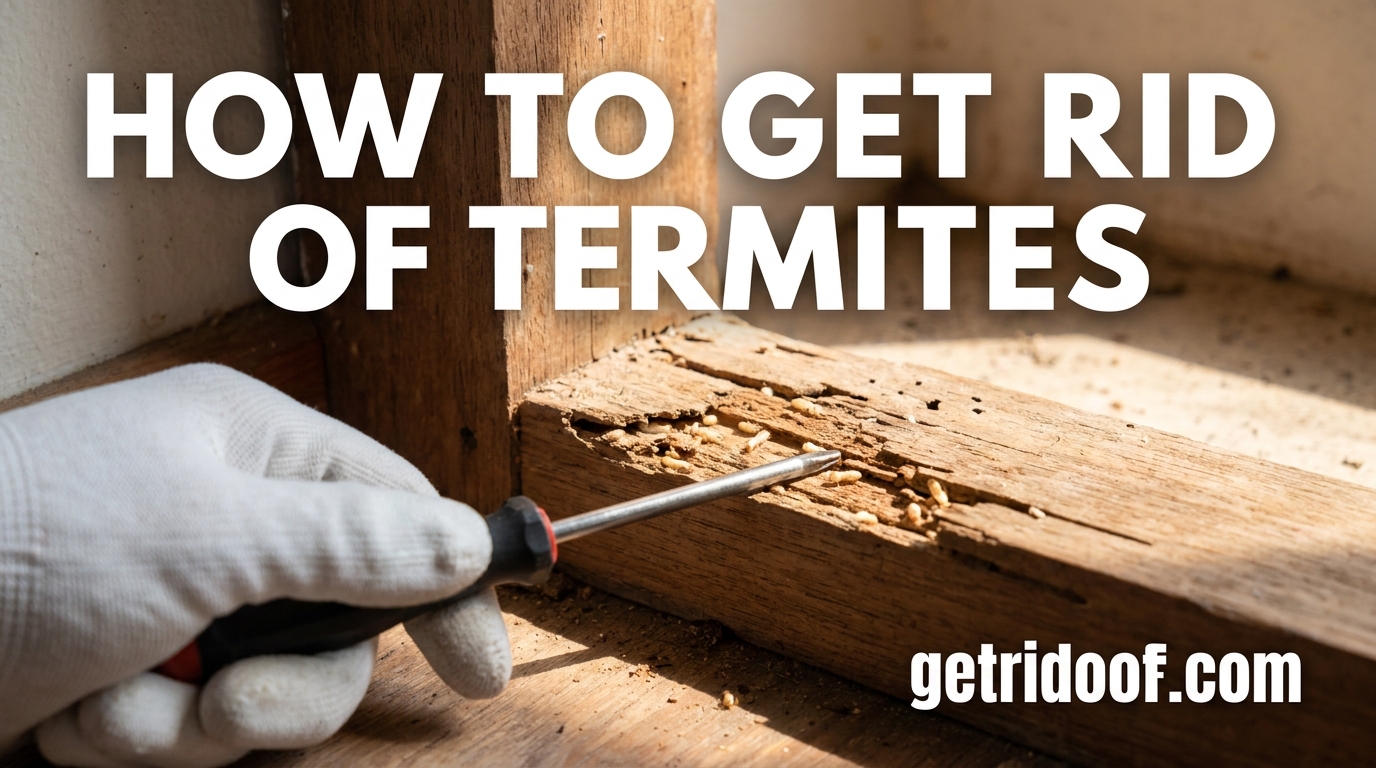
Pro Tip: Use a flathead screwdriver to probe wooden surfaces. Soft, crumbling wood is a strong indicator of termite activity even before you see visible damage.
How to Get Rid of Termites: DIY Methods That Work
Catch a small or local infestation early, and DIY treatments can help cut down termite activity. These are best for minor problems. For large or established colonies, professional help is almost always necessary.
1. Boric Acid
Boric acid is one of the most effective and widely used natural termite killers. It disrupts the termites’ digestive system, stopping them from absorbing nutrients. Over time, it kills them.
How to use it:
- Mix 1 teaspoon of boric acid with 1 cup of warm water in a spray bottle
- Shake until dissolved and apply directly to affected wood or entry points
- Repeat daily for about a week and check for results
- Always wear gloves, goggles, and a dust mask when applying
Best used for drywood termites or as a supplement to other treatments.
2. Termite Bait Stations
Bait stations are one of the smartest DIY tools available. You put them around your property. Termites discover the bait, which has cellulose. They then take the slow-acting poison back to their colony. Over time, the entire colony is eliminated.
DIY bait station kits are available at hardware stores. Place them every 10 feet around your home. Focus on spots with known activity.
3. Diatomaceous Earth (DE)
This fine powder is made from fossilized algae. Its sharp microscopic edges cut through a termite’s shell. This causes dehydration and death. It is non-toxic to humans and pets.
Sprinkle it in areas with pests, at entry points, and in wall voids where you think they might be active.
4. Orange Oil
Orange oil has d-limonene. This compound dissolves termite exoskeletons on contact, killing them. It works well for small, localized drywood termite infestations — particularly in furniture.
It is not effective for large or subterranean termite colonies.
5. Beneficial Nematodes
Beneficial nematodes are microscopic roundworms that attack and kill termites by injecting lethal bacteria into their bodies. They are completely natural and safe for plants, humans, and pets.
Mix them with water and apply to soil around infested areas. Best used for outdoor or subterranean termite problems in the yard.
6. Cardboard Traps
Termites are irresistibly attracted to cellulose. Dampen a piece of cardboard and place it near active termite areas. Once termites have infested the trap, remove and burn it. This works as a monitoring tool more than a complete solution.
Professional Termite Treatment Options
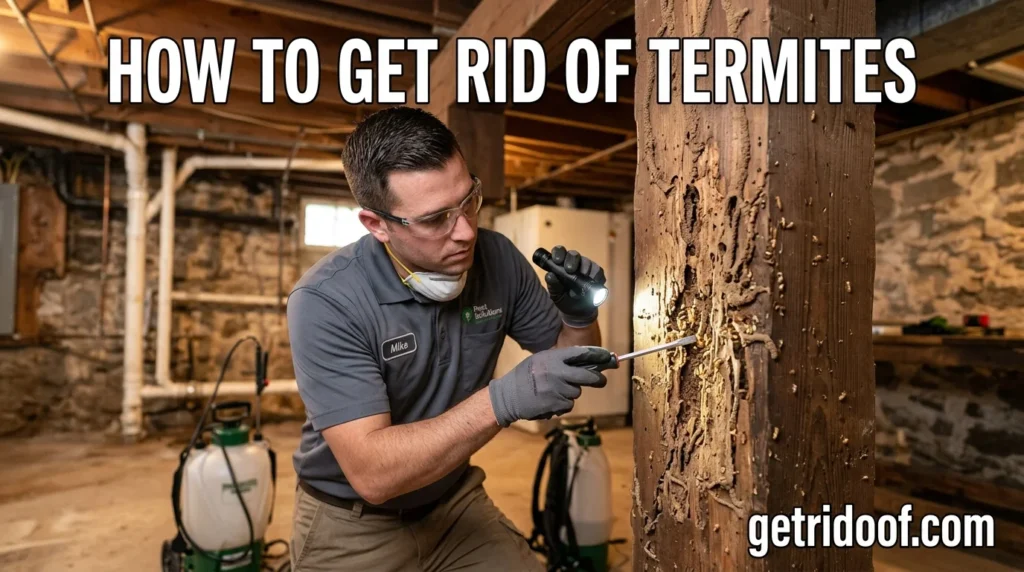
For big infestations, structural damage, or established colonies, hiring pest control is the best option. Here is a breakdown of the main professional treatments.
Liquid Termiticide Barrier Treatment
This is the most common professional treatment for subterranean termites. A licensed technician will dig a trench around your home’s foundation. Then, they apply a liquid termiticide to the soil. Some products, like fipronil or imidacloprid, create an undetectable chemical barrier.
- Termites that contact the barrier die and carry the chemical back to the colony
- Protection can last up to 13 years depending on the product used
- Best applied by a trained professional. This helps avoid contaminating nearby water sources.
Professional Bait Stations (Sentricon System)
Professional-grade bait systems like Sentricon are more powerful than retail versions. Stations are installed around the property and monitored regularly. The slow poison spreads through the colony over weeks and months. In the end, it causes the colony to collapse completely.
Ideal for long-term subterranean termite control and ongoing monitoring.
Fumigation (Tent Treatment)
For severe drywood termite infestations, whole-house fumigation is the most thorough solution. A tent covers the whole structure. It is filled with gas, usually sulfuryl fluoride. This gas seeps into every crack, wall void, and piece of wood.
- Kills 100% of termites inside the structure when done correctly
- Requires you to vacate the home for 2–3 days
- Does not prevent future infestations — a barrier treatment is typically added afterward
- Cost can range from $1,200 to $8,000+ depending on home size
Spot Treatment and Wood Injection
For small infestations, technicians drill into the wood. They then inject termiticide foam or liquid right into the termite galleries. This is less invasive and less expensive than fumigation. It works well when the exact location of the infestation is known.
Heat Treatment
Heat treatment raises the temperature in a structure or area above 120°F (49°C). This process kills all termites present. No chemicals are used. It’s a great choice for those who like chemical-free solutions. However, it needs professional equipment.
You Can Also Read
- How to Get Rid of Carpenter Ants: Elimination and Prevention
- How to Get Rid of Weeds: Weed-Free Garden
- How to Get Rid of Flies: Natural Remedies and Chemical Solutions
DIY vs. Professional Treatment: Which Should You Choose?
| DIY Treatment | Professional Treatment | |
| Best for | Small, localized infestations | Established colonies, structural damage |
| Cost | $20–$150 | $250–$8,000+ depending on method |
| Effectiveness | Moderate | High |
| Time to results | Weeks | Days to weeks |
| Colony elimination | Rarely complete | Usually complete |
| Prevention included | No | Often yes |
Bottom line: DIY methods can help with minor surface-level activity. If you see mud tubes, hollow wood, swarmers, or sagging structures, call a licensed pest control expert. The harm termites do while you try home remedies is much worse than the cost of expert help.
How to Get Rid of Termites Naturally: Eco-Friendly Options
If you want to skip harsh chemicals, especially in homes with kids or pets, try these natural methods. They can help lower termite numbers in mild infestations:
- Boric acid — Safe when used carefully; disrupts termite digestion
- Nematodes — Completely natural, parasitic roundworms that kill termites in soil
- Diatomaceous earth — Non-toxic powder that dehydrates termites physically
- Orange oil — Natural compound that dissolves termite exoskeletons on contact
- **Sunlight Exposure** — Putting termite-infested furniture in direct sunlight can kill termites in smaller items. They can’t handle heat or UV light.
Natural methods work best with other treatments. Don’t rely on them alone for a serious infestation.
How to Prevent Termites From Coming Back
Getting rid of an active infestation is only half the job. Prevention is what keeps them from returning.
Top Termite Prevention Tips
Fix moisture problems first. Termites thrive in damp conditions. Fix leaky pipes immediately. Clean your gutters regularly. Make sure water drains away from your foundation, not toward it.
Eliminate wood-to-soil contact. Keep wooden structures at least 6–12 inches above soil. This removes the direct pathway subterranean termites use to enter your home.
Store firewood away from the house. Firewood piled against your exterior wall is an open invitation. Keep it at least 20 feet away and elevated off the ground.
Reduce mulch near the foundation. Mulch holds moisture and contains cellulose — two things termites love. Keep mulch at least 6 inches away from your home’s foundation.
Seal cracks in your foundation. Seal gaps around utility pipes, windows, and foundation walls with caulk or cement grout. These are entry points for subterranean termites.
Get a professional inspection every year. Annual termite inspections help a trained expert spot early signs of activity. This way, they can prevent a colony from becoming established. Most pest control companies offer free inspections.
Use termite-resistant materials during construction or renovation. You can use steel mesh, treated lumber, and sand with specific particle sizes to block termites. Install these during construction for the best protection.
How Much Does Termite Treatment Cost?
Costs can change a lot. They depend on the treatment type, the size of your home, and how severe the infestation is.
| Treatment Type | Typical Cost Range |
| Spot treatment / localized injection | $75–$300 |
| Bait station system (professional) | $250–$900 |
| Liquid termiticide barrier | $400–$1,500 |
| Heat treatment | $800–$2,500 |
| Whole-house fumigation | $1,200–$8,000+ |
Getting at least two to three quotes from licensed pest control companies is always a smart move. Many companies provide free inspections. They can also suggest the best and most affordable option for you.
Frequently Asked Questions About Getting Rid of Termites
How long does termite treatment take?
Spot treatments and injections can be done in a few hours. Fumigation requires 2–3 days for the gas to work and the home to air out. Bait station systems take weeks to months to work. The poison spreads slowly through the colony.
Can I stay in my home during termite treatment?
For most liquid and bait station treatments, yes. For fumigation (tenting), you must vacate the home — along with all pets and plants — for at least 24–72 hours.
Does homeowner’s insurance cover termite damage?
In most cases, no. Termite damage is usually seen as a preventable problem. So, it’s not covered by standard homeowner’s insurance policies. This makes early detection and regular inspections even more important.
Can termites come back after treatment?
Yes, they can—especially subterranean termites. These termites live in soil across much of the country. Treatment removes the active colony. However, new termites from nearby colonies might try to come back. Ongoing monitoring and annual inspections are essential for long-term protection.
What is the fastest way to kill termites?
Liquid termiticides applied to infested areas kill termites quickly. They work on contact and can eliminate termites within minutes. Bait systems like Sentricon are very effective for colony-wide elimination. However, they can take several weeks to completely collapse a colony.
Are termites more active in certain seasons?
Yes. Subterranean termites usually swarm in spring, from March to June. They come out on warm, sunny days after it rains. Drywood termites are more active in late summer and fall (August–November). However, termites feed year-round, even in cooler months.
Conclusion: Act Fast to Get Rid of Termites Before They Get to You
Termites are relentless, quiet, and incredibly expensive to ignore. The good news is you can get rid of termites effectively. You can choose a DIY method for small issues or hire a pro for full colony removal. Quick action and the right information make all the difference.
Watch for these signs: mud tubes, hollow wood, discarded wings, and frass. They are your early warnings. Then act. Act quickly, whether you use boric acid, diatomaceous earth, or call a pest control expert. Don’t delay. Every day a termite colony goes untreated, the damage grows deeper and the cost gets higher.
To get rid of termites for good, start with prevention. Fix moisture issues, seal entry points, and schedule annual inspections. Protect your home now, and you will save yourself thousands of dollars down the road.
About the Author