How to Get Rid of Carpenter Ants? Carpenter ants are one of the most destructive pests a homeowner can face. If you see large black ants on your walls or find piles of sawdust near your floorboards, act quickly. Getting rid of carpenter ants early can save you a lot on repairs.
This guide includes all key topics: biology, nesting habits, fumigation, physical control methods, and long-term prevention. No matter if it’s a small infestation or a big colony, you’ll find the right solution here.
What Are Carpenter Ants? (Biology)
To get rid of carpenter ants, first, understand what they are.
Physical Characteristics
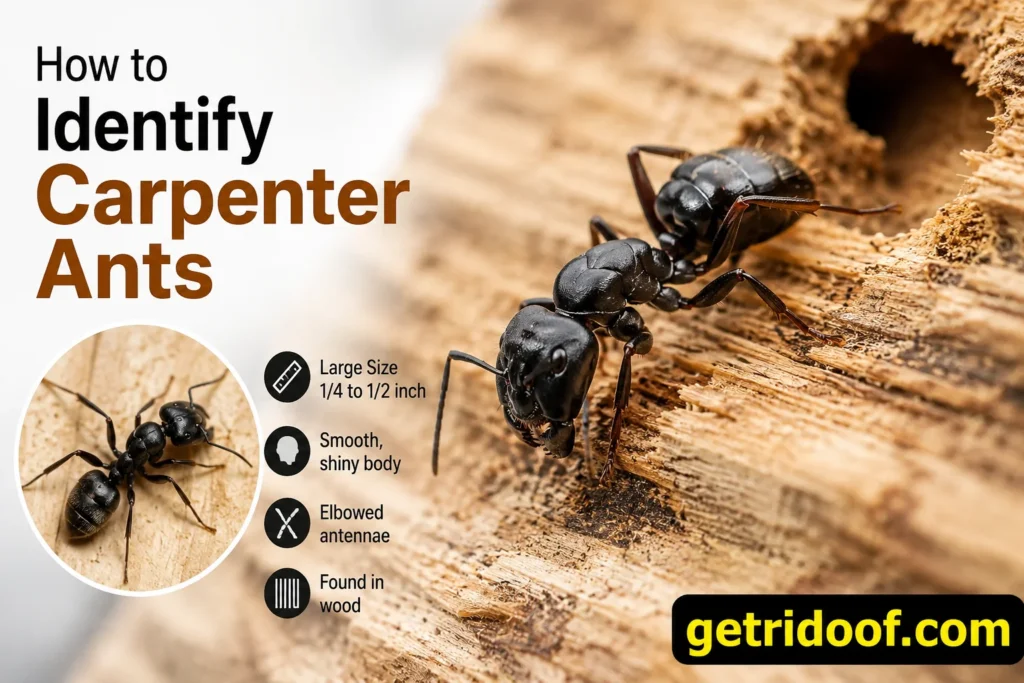
Carpenter ants (Camponotus species) are among the largest ants in North America. Here’s how to identify them:
- Size: Workers range from ¼ to ½ inch long; queens can reach up to 1 inch
- Color: Typically black, though some species have a reddish-brown thorax and black abdomen
- Antennae: Bent (elbowed), unlike the straight antennae of termites
- Waist: Narrow, with a single rounded node between the thorax and abdomen
- Wings: Swarmers (reproductive ants) have longer front wings and shorter hind wings
How They Live and Feed
Carpenter ants are primarily nocturnal. They forage for food at night and are most active between 10 PM and 2 AM.
They do not eat wood — a common misconception. Instead, they excavate it to create smooth, sandpapered galleries for nesting. Their real diet includes:
- Sugary foods (honey, syrup, jelly)
- Proteins (meats, dead insects, pet food)
- Honeydew secreted by aphids outdoors
Colony Structure
A mature carpenter ant colony contains:
- One queen (lives up to 25 years)
- Workers in varying sizes (major and minor workers)
- Swarmers — winged males and females responsible for starting new colonies
- Satellite colonies — secondary nests connected to the main parent colony
Key Fact: A single mature colony can house 3,000 to 10,000 workers. It typically takes 3–6 years for a colony to reach reproductive size.
Carpenter Ant Reproduction
Carpenter ant colonies grow when winged swarmers emerge. These male and female ants leave the nest each spring. They mate and then start new colonies. After mating, the female sheds her wings and becomes a queen, laying her first batch of 9 to 16 eggs.
A queen can live for up to 25 years. During her life, she builds a colony that may grow to thousands of workers.
Understanding Carpenter Ant Nest Habits
Finding the nest is the most crucial step to eliminate a carpenter ant infestation. Treating ants without finding their nest is like bailing water while the leak keeps flowing.
Where Carpenter Ants Build Nests
Carpenter ants strongly prefer moist, softened, or decaying wood. Common nesting locations include:
Indoors:
- Wall voids near leaking pipes or windows
- Attic beams with moisture damage
- Hollow doors and foam insulation panels
- Beneath kitchen or bathroom cabinets
- Behind dishwashers and refrigerators
Outdoors:
- Dead or dying trees within 50 feet of your home
- Tree stumps and rotting logs
- Fence posts and deck boards
- Firewood stacked against the house
- Tree branches touching the roof or siding
Parent Colony vs. Satellite Colony
Carpenter ants build two types of nests:
| Nest Type | Contents | Location |
|---|---|---|
| Parent Colony | Queen, eggs, young larvae, workers | Often outdoors in moist wood |
| Satellite Colony | Workers, older larvae, pupae | Often indoors, no queen |
It’s important to know that the ants in your home usually come from a satellite colony. The main nest is outside. Killing interior ants won’t fix the problem. You also need to get rid of the parent colony.
Signs of a Carpenter Ant Infestation
Watch for these warning signs:
- Frass — coarse, sawdust-like debris mixed with insect body parts near wooden surfaces
- Rustling sounds in walls, especially at night
- Winged swarmers appearing indoors (a sign of a well-established colony)
- Small kickout holes on wood surfaces where frass is expelled
- Worker ants foraging inside, especially in kitchens or along baseboards
Pro Tip: If you spot carpenter ants indoors in winter, it means their nest is likely in your home. They’re not just visiting from outside.
You Can Also Read
How to Get Rid of Carpenter Ants: Physical Control Methods
Physical control is the safest and most targeted approach. It works best for early-stage or localized infestations.
Step 1 — Find the Nest
- Follow ant trails at night with a flashlight
- Tap on wooden beams and listen for a hollow sound
- Use a moisture meter to detect damp wood (carpenter ants follow moisture)
- Look for frass deposits, which often appear directly below the nest opening
Step 2 — Remove the Source
Once you find the nest:
- Remove and replace any rotting or moisture-damaged wood
- Repair leaking pipes, roof issues, or poor drainage contributing to wet wood
- Cut back tree branches that touch the house — ants use them as highways
Step 3 — Apply Targeted Treatments
Boric Acid Boric acid is a slow-acting poison that workers carry back to the colony. It’s one of the most effective natural treatments available.
- Apply as a powder inside wall voids, under appliances, and along ant trails
- Results take 3–7 days as it spreads through the colony
Diatomaceous Earth (DE) A fine, non-toxic powder made from fossilized algae. It damages the ant’s exoskeleton, causing dehydration and death.
- Dust it into wall voids, cracks, and entry points
- Safe for use around pets and children when food-grade DE is used
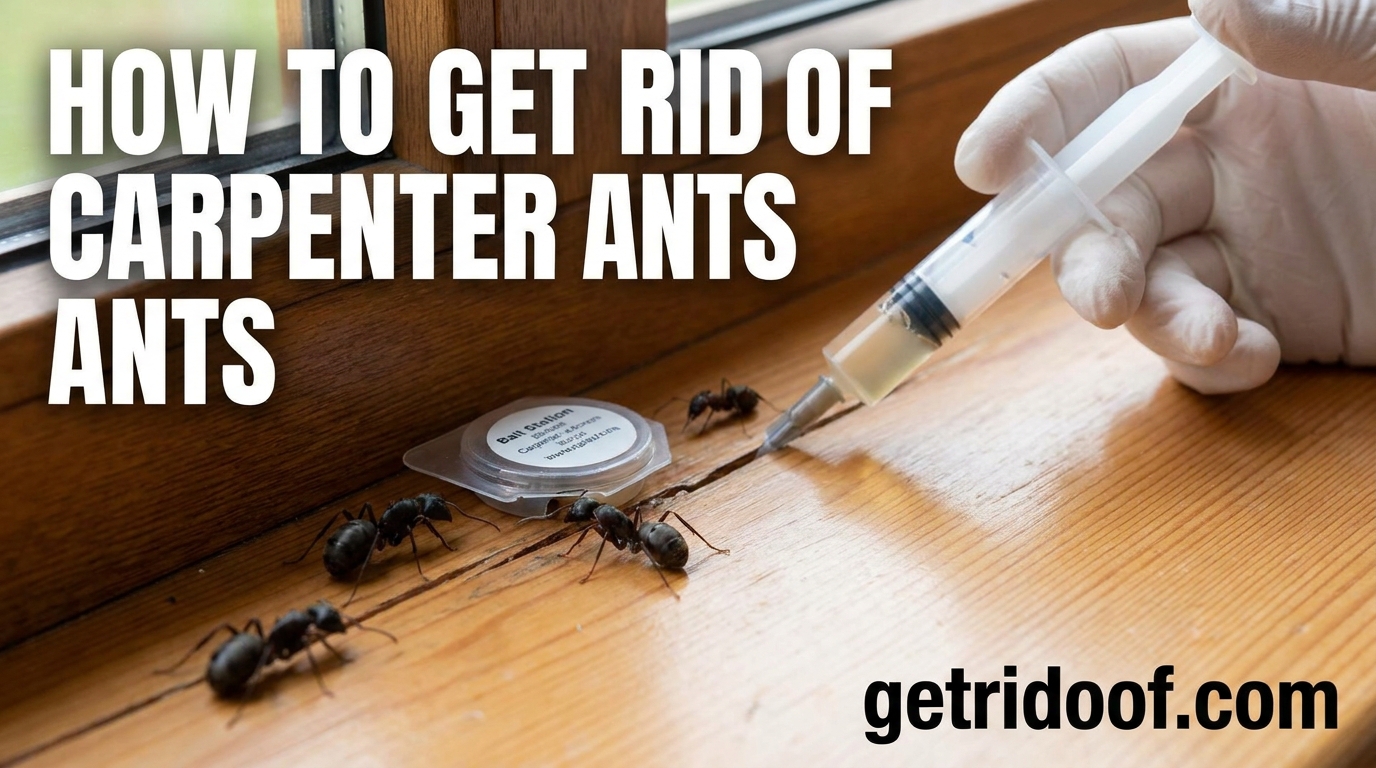
Bait Stations Bait stations combine a sweet attractant with a slow-acting insecticide.
- Place near ant trails, entry points, or where activity is highest
- Workers carry the bait back to the colony, poisoning the queen and larvae
- Be patient — bait can take 1–2 weeks to eliminate the colony
Insecticidal Dust Professional-grade insecticidal dust like Delta Dust works well for indoor satellite colonies.
Inject it directly into wall voids for best results.
- Drill small access holes into walls if necessary
- The dust clings to ants passing through and is carried back to the nest
Essential Oils (Natural Repellent) Some essential oils can help keep ants away from specific areas. They won’t remove entire colonies, but they can be effective.
- Peppermint oil
- Tea tree oil
- Clove oil
Mix with water in a spray bottle and apply along baseboards, window sills, and entry points.
Step 4— Inject Insecticide Dust Into Wall Voids
If the nest is in a wall, you can use insecticidal dust. Products like delta dust or other pyrethrins-based powders work well. Simply inject the dust into the voids through small drilled holes or gaps.
- This is one of the most targeted and effective indoor treatments
- The dust clings to surfaces and kills ants for weeks
- Plug holes with caulk after treatment
Step 5 — Apply Perimeter Spray Barrier
A chemical barrier around your home stops new ants from getting in.
- Use a non-repellent spray or residual insecticide
- Apply around door and window casings, foundation edges, and along baseboards
- Reapply after heavy rain
- Non-repellent formulas are more effective. Ants unknowingly walk through the treatment, spreading it back to the colony.
Fumigation: When and How to Use It
Fumigation is the most aggressive treatment option. It’s usually saved for major infestations that targeted methods can’t control.
What Is Fumigation?
Fumigation means sealing a building and using a gas pesticide, usually sulfuryl fluoride. This gas seeps into every crack, void, and surface in the home. It kills carpenter ants at all life stages — eggs, larvae, pupae, and adults.
When to Consider Fumigation
Consider fumigation if:
- Multiple satellite colonies are confirmed throughout the structure
- DIY treatments and targeted sprays have failed after several weeks
- There is evidence of severe structural damage spanning multiple rooms
- A licensed pest control inspector recommends it based on their assessment
What to Expect During the Process
- Inspection — A licensed professional assesses the full extent of the infestation
- Preparation — Food, plants, and pets must be removed; the home is sealed with tarps
- Fumigation — Gas is introduced and left for 24–72 hours
- Aeration — The home is ventilated and certified safe before re-entry
- Post-treatment inspection — Technicians confirm the infestation has been eliminated
Important: Fumigation does not prevent re-infestation. Fix the moisture problem and seal all entry points. This will stop ants from coming back.
Cost of Fumigation
Professional carpenter ant fumigation typically costs between $250 and $1,500, depending on:
- Size of the home
- Severity of the infestation
- Number of nests identified
- Local pest control rates
How to Get Rid of Carpenter Ants for Good: Prevention Tips
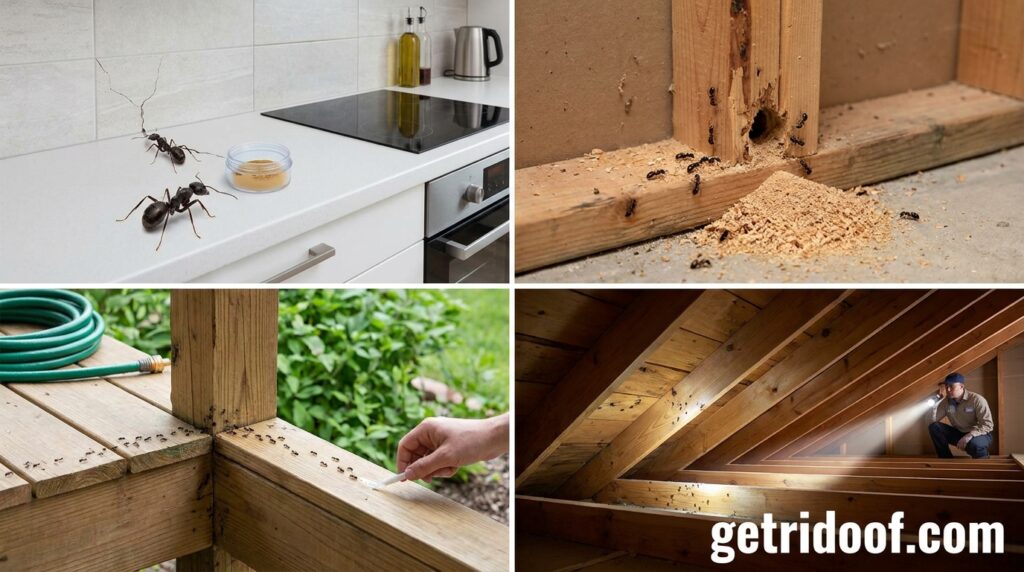
Eliminating the current infestation is only half the battle. To prevent carpenter ants from coming back, you need to make your home an unattractive target.
Fix Moisture Problems First
Moisture is the number one reason carpenter ants invade homes.
- Fix leaking pipes under sinks, in bathrooms, and around appliances
- Improve attic and crawlspace ventilation to reduce humidity
- Clean gutters before rainy seasons to prevent water intrusion
- Redirect downspouts away from the foundation
- Replace any rotting wood — even small areas attract new colonies
Seal Entry Points
Carpenter ants enter through surprisingly small gaps.
- Seal cracks in the foundation with silicone caulk
- Install door sweeps and repair torn window screens
- Seal gaps around utility lines, pipes, and cable entries
- Apply a perimeter insecticide spray around the base of the home each season
Corn Flour Method — Does It Really Work?
Corn flour (cornmeal) is a common home remedy. It’s said to kill carpenter ants by expanding in their stomachs. However, pest control experts say this is mostly a myth. Ants can digest corn flour like any other food.
Mixing 9 parts cornmeal with 1 part boric acid and some soybean oil makes a great DIY bait. Worker ants take it back to their colony. This method helps eliminate carpenter ants at the source more naturally.
Eliminate Outdoor Attractants
- Store firewood off the ground and at least 20 feet from the home
- Remove tree stumps and dead trees within 50 feet of the structure
- Trim branches, shrubs, and vines that touch the roof, siding, or utility lines
- Use inorganic mulch (gravel or stone) near the foundation instead of wood chips
Keep a Clean Kitchen
- Store sweets like honey, syrup, and sugar in sealed containers
- Clean up spills and crumbs immediately
- Empty pet food bowls overnight — ants forage heavily after dark
- Take out garbage regularly and use tightly lidded bins
Carpenter Ants vs. Termites: How to Tell the Difference
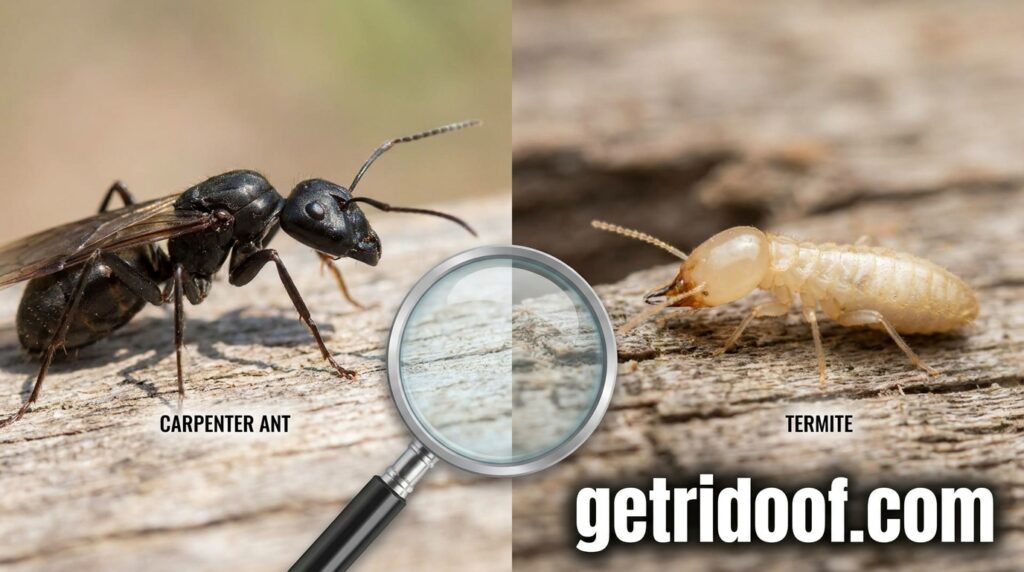
Many homeowners confuse carpenter ants with termites since both damage wood. Here’s a quick comparison:
| Feature | Carpenter Ants | Termites |
|---|---|---|
| Waist | Narrow, pinched | Broad, uniform |
| Antennae | Bent/elbowed | Straight, beaded |
| Wings (swarmers) | Front wings longer than hind | All wings equal length |
| Color | Black or reddish-black | Cream to dark brown |
| Wood damage | Smooth, clean galleries | Rough, mud-lined tunnels |
| Frass | Coarse sawdust + insect parts | Fine powder, no insect parts |
| Wood consumption | No — excavate only | Yes — eat wood for food |
When to Call a Professional
Some infestations go beyond DIY solutions. Call a licensed pest control professional if:
- You’ve tried bait, sprays, and physical methods with no improvement after 3–4 weeks
- You hear persistent rustling sounds in multiple walls
- You find winged swarmers indoors (signals a large, mature colony)
- There is visible structural wood damage in beams, joists, or framing
- You think there might be nests in hard-to-reach places. These could be inside concrete block walls or under the slab.
A professional uses special detection tools like moisture meters, thermal cameras, and acoustic devices. They also use high-quality products that consumers can’t get. They can locate and treat both parent and satellite nests at the same time
Natural Remedies to Get Rid of Carpenter Ants
Prefer a chemical-free approach? These natural methods can reduce or eliminate smaller infestations:
- Peppermint oil — Mix 10–15 drops with water and spray along entry points and trails. Ants strongly dislike the scent.
- Tea tree oil — Similar effect; dilute before applying to surfaces
- White vinegar — Disrupts scent trails. Spray directly on ants and wipe down surfaces to erase pheromone paths
- Cinnamon powder — Sprinkle near entry points as a deterrent
- Boiling water — Pour directly into an outdoor nest opening for immediate knockdown
Important: Natural remedies are best for prevention or very small infestations. For established colonies inside walls, chemical or professional treatment is usually necessary.
When Should You Call a Professional Exterminator?
DIY methods work well for small or early-stage infestations. But professional pest control is the smarter choice when:
- You have multiple active nests (parent + satellite colonies)
- The infestation has been going on for more than a few months
- You notice structural softness, sagging floors, or serious wood damage
- DIY treatments have failed after 2–3 weeks
- You cannot locate the nest despite searching
Frequently Asked Questions
How long does it take to get rid of carpenter ants?
With bait stations, expect 1 to 3 weeks for the colony to collapse. Using insecticidal dust directly on nests can stop visible activity in a few days. However, you often need follow-up treatments.
Can carpenter ants cause structural damage?
Yes. Damage can be slow, often taking years to develop. However, large, long-established colonies can significantly weaken structural timbers, floors, and ceilings.
Are carpenter ants active year-round?
In warmer climates, yes. In colder regions, they slow down in winter. If you spot them indoors in winter, they’re nesting and staying active due to the warmth.
Do carpenter ants bite?
They can. Carpenter ants have strong jaws and will bite if disturbed. The bite can be painful but is not venomous. They do not sting.
What attracts carpenter ants to my home?
Primarily moisture and decayed wood. They are also drawn to sweet foods, proteins, and other insects. Eliminating moisture sources is the most important step in prevention.
Conclusion: Take Action Before the Damage Gets Worse
Now you know how to get rid of carpenter ants. You can spot signs of an infestation, pick the right treatment, and protect your home from future colonies.
The most important thing to remember: act early. The longer a carpenter ant colony is ignored, the more damage it causes. This makes it harder to get rid of. Take action now. You can use DIY bait stations and diatomaceous earth, or hire a pro. Either way, you’ll protect your home and save money.
Check your home tonight. Look for frass, listen for rustling in the walls, and check for moisture damage. The sooner you find the nest, the sooner you can eliminate it for good.
About the Author