Have you ever left the dental clinic with a droopy lip and a swollen cheek? Did you feel like you couldn’t control your smile? You are not alone. Almost every patient who receives local anesthesia asks the same question: how to get rid of numbness after dentist visits as fast as possible?
The good news is that dental numbness is completely temporary. In this guide, you’ll discover why it happens, how long it lasts, and safe ways to speed up the process.
What Causes Numbness After a Dental Procedure?
Before diving into solutions, it helps to understand why your mouth goes numb in the first place.
Your dentist gives a local anesthetic near certain nerves. This blocks pain signals during the procedure. The most common anesthetic is lidocaine. It’s often mixed with epinephrine, which is a vasoconstrictor. This combination keeps the drug in one area and makes its effect last longer.
Other anesthetics include:
- Articaine — fast-acting, deep numbness, lasts 3–5 hours
- Bupivacaine — long-lasting, used for complex procedures, lasts 4–9 hours
- Mepivacaine — used when epinephrine is not suitable, lasts 2–4 hours
- Lidocaine with epinephrine — the most common choice, lasts 2–4 hours
The anesthetic does not disappear the moment your procedure ends. It stays active in the tissue until your body fully metabolizes and absorbs it — which takes time.
How Long Does Dental Numbness Last?
This is one of the most searched questions after any dental visit. The honest answer: it depends on several factors.
General Duration by Anesthetic Type
| Anesthetic | Typical Duration |
|---|---|
| Plain lidocaine | 30–60 minutes |
| Lidocaine + epinephrine | 2–4 hours |
| Articaine | 3–5 hours |
| Mepivacaine | 2–4 hours |
| Bupivacaine | 4–9 hours |
Factors That Affect How Long Numbness Lasts
- Type and amount of anesthetic used
- Location of the injection — lower jaw injections last longer than upper jaw
- Your age and metabolism — older adults process anesthetics more slowly
- Body weight and circulation
- Complexity of the procedure
For most routine procedures like cavity fillings, numbness clears within 2 to 4 hours. For complex treatments, it may linger up to 8 to 12 hours — especially in the lower jaw area.
Which Parts of Your Face Go Numb?
After an injection, numbness typically affects:
- Lips (most noticeable)
- Tongue (can affect speech and swallowing)
- Cheeks and gums
- Chin and lower jaw
- Occasionally the nose (with certain nerve blocks)
Your teeth usually feel normal first. The soft tissues, like your lips, tongue, and cheeks, take longer to heal.
How to Get Rid of Numbness After Dentist: 7 Proven Methods
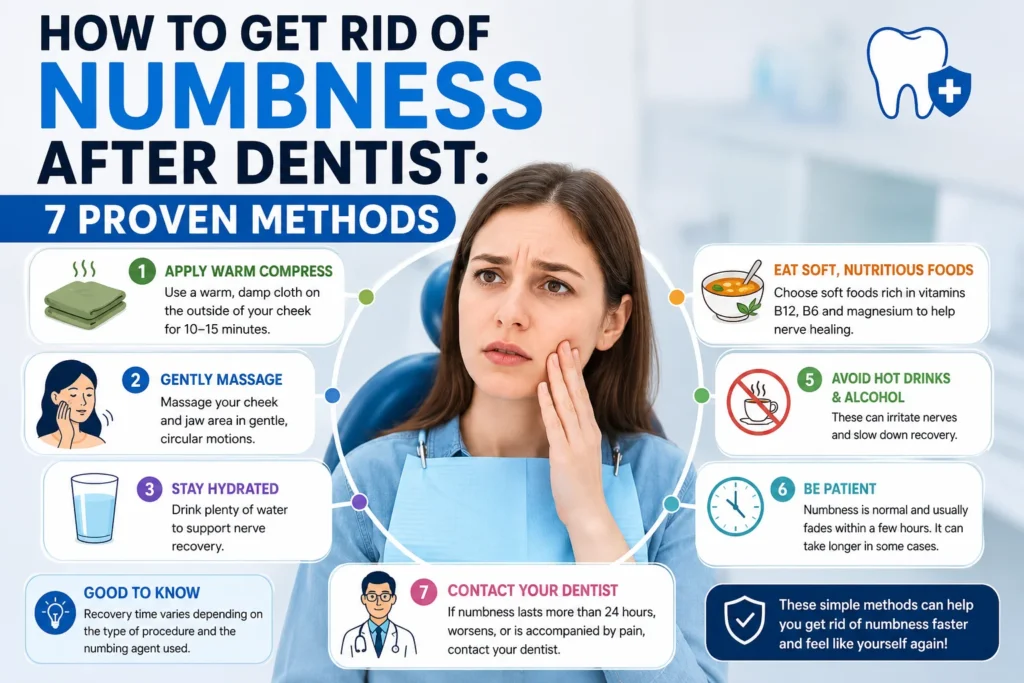
Here are the most effective and safe ways to help your mouth return to normal faster.
1. Ask Your Dentist About OraVerse
OraVerse (phentolamine mesylate) is the only FDA-approved reversal agent for dental anesthesia. It’s an injection given right after your procedure. It helps counteract the numbing effect.
OraVerse can reduce numbness duration by half, compared to waiting for it to wear off naturally. If you have a big meeting, meal, or event after your appointment, ask your dentist about OraVerse.
Not every clinic offers it, so it is worth asking ahead of time.
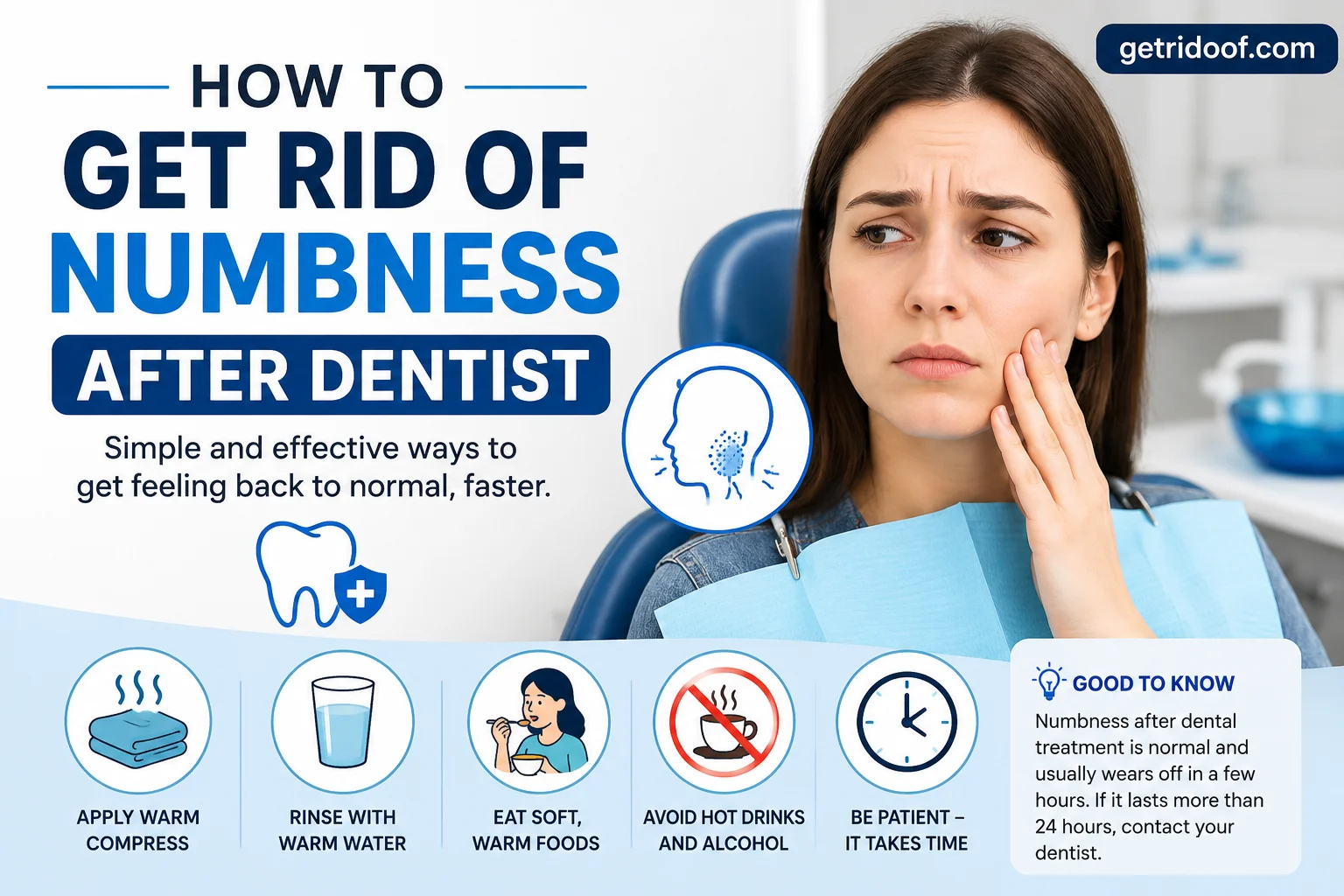
2. Apply a Warm Compress
A warm (not hot) compress on your face is a simple and effective technique.
Heat makes your blood vessels widen. This boosts circulation to the numb area. Better blood flow means the anesthetic is metabolized and cleared faster.
How to do it:
- Soak a clean cloth in warm water or use a heating pad on a low setting
- Apply gently to the affected cheek or jaw
- Keep it on for 15 to 20 minutes
- Repeat as needed
Don’t use anything too hot. When you’re numb, you can’t feel temperature well, so you might get burned.
3. Go for a Gentle Walk
Light physical activity boosts circulation. This helps your body process the anesthetic faster.
A 15–20 minute walk after your appointment is ideal. You don’t need intense exercise. In fact, avoid strenuous activity for at least 24 hours after dental work. This is due to other effects from the procedure.
Think of it as a circulation boost, not a workout.
4. Massage the Numb Area Gently
Gently use your fingertips to massage your cheeks, jaw, or lips. Move in slow, circular motions.
This boosts blood flow right where you feel numb. It helps bring back sensation faster. Be gentle — pressing too hard near a recent injection site can cause irritation.
Tip: Combine the massage with the warm compress for a stronger effect.
5. Stay Hydrated
Drinking water helps your kidneys filter out the anesthetic more quickly.
Hydration also supports healthy circulation throughout your body. Sip water steadily instead of gulping it down. Your swallowing reflex might be a bit off while numb.
Avoid very hot drinks, cold drinks with ice, or alcohol until the numbness wears off fully.
6. Try Simple Oral Exercises
Gentle movement of the affected muscles can stimulate nerves and promote recovery.
Exercises to try:
- Move your tongue side to side and in circular motions
- Purse and relax your lips repeatedly
- Open and close your mouth slowly
- Lightly bite and chew a soft food like a banana or plain bread
These movements activate nearby muscles and nerves. This helps restore normal sensation more quickly.
7. Stay Upright — Avoid Lying Down
Lying flat slows blood flow to the head and face, which can actually extend the duration of numbness.
Keeping your head elevated — sitting or standing — helps maintain better circulation. If you need to rest, prop yourself up with extra pillows rather than lying completely flat.
What NOT to Do While Your Mouth Is Numb
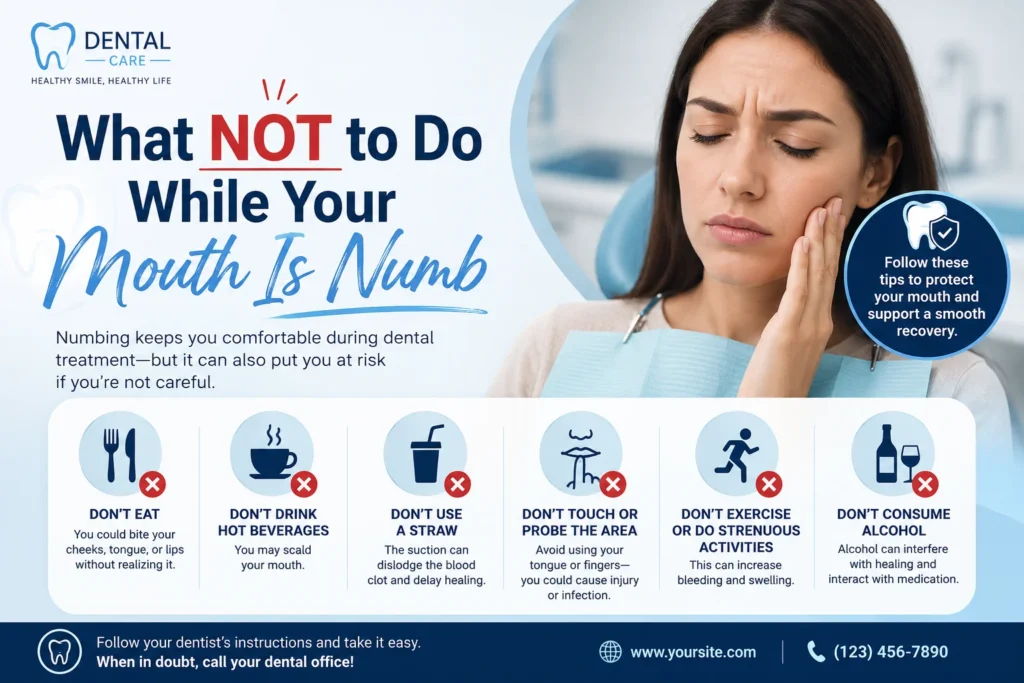
Just as important as the tips above is knowing what to avoid during the numb period.
- ❌ Do not eat hard, crunchy, or chewy food — you can bite your cheek or tongue without realizing it
- ❌ Do not drink hot liquids — you cannot feel heat properly and may scald yourself
- ❌ Do not chew gum
- ❌ Do not probe or poke the numb area excessively
- ❌ Don’t drive if sedation from local anesthesia makes you feel disoriented.
- ❌ Do not consume alcohol — it interferes with healing and circulation
If you must eat, stick to soft, cool foods — yogurt, smoothies, mashed potatoes, or a soft fruit. Always check the temperature of food carefully before eating.
How to Get Rid of Numbness After Dentist: Special Cases
For Children
Children have a harder time with dental numbness than adults. They often don’t understand why they can’t feel part of their face. This can lead to accidentally biting their cheek, lip, or tongue.
Tips for parents:
- Watch your child closely for 1–2 hours after the procedure
- Remind them not to bite or chew the numb area
- Avoid giving them food until full sensation returns
- Distract them with a favorite show or activity
- In children, numbness typically lasts 2 to 6 hours
Accidental biting injuries are the top complaint kids have after dental visits. But with supervision, they can be completely prevented.
For Elderly Patients
Older adults tend to experience longer-lasting numbness after dental procedures. This is due to:
- Slower metabolism
- Reduced circulation
- Age-related changes in nerve sensitivity
Elderly patients should be cautious with eating and drinking hot beverages. They should also take care when moving around until their sensation returns completely. Tell the dentist ahead of time about any medications you take. Some, like beta-blockers, can interact with the epinephrine in the anesthetic.
For Patients on Certain Medications
Some medications can affect how local anesthetics work:
- Beta-blockers — can interact with epinephrine, increasing blood pressure
- MAO inhibitors — can intensify anesthetic effects
- Blood thinners — may affect injection site healing
Always tell your dentist about all medications you take before any procedure.
When Is Dental Numbness NOT Normal?
Most post-dental numbness is perfectly normal. However, there are warning signs that require a call to your dentist.
Contact Your Dentist If:
- Numbness lasts more than 8–10 hours after a routine procedure
- You experience numbness the following day
- The numb area spreads instead of shrinking
- Numbness is accompanied by severe pain, swelling, or fever
- You have difficulty swallowing or breathing
What Is Paresthesia?
In rare cases, a patient might feel paresthesia. This means a lasting tingling or numbness. It can last for days, weeks, or even longer. This can result from:
- Accidental nerve trauma during injection
- Hematoma (blood pooling near a nerve)
- Inflammation pressing on a nerve
Permanent nerve damage from dental anesthesia is extremely rare. Most cases of prolonged numbness resolve on their own with time. However, early professional evaluation is important if symptoms persist beyond 24 hours.
Does the Type of Dental Procedure Affect Numbness?
Yes — the procedure affects how much anesthetic is used and where it is injected.
| Procedure | Typical Numbness Duration |
|---|---|
| Simple filling | 1–3 hours |
| Crown preparation | 2–4 hours |
| Root canal | 3–5 hours |
| Tooth extraction | 3–6 hours |
| Dental implant surgery | 4–8 hours |
| Wisdom tooth removal | 4–12 hours |
More complex procedures need stronger or longer-lasting anesthetics. This leads to longer numbness periods.
How to Manage Daily Activities While Numb
Life does not pause after a dental visit. Here is how to handle common activities safely while waiting for the numbness to wear off.
Eating: Wait if possible. If you must eat, choose cool, soft foods and chew very slowly on the non-numb side.
Drinking: Use a straw for liquids. Avoid hot drinks entirely. Check the temperature of anything you consume carefully.
Talking: Speech may sound slightly slurred — this is normal. The numbness does not affect your vocal cords, only the muscles around your mouth.
Working: Most people can return to desk-based work immediately. Avoid jobs that need precise facial movements, speaking to large groups, or doing physical labor.
Driving: Avoid driving if you received sedation alongside local anesthesia. Local anesthetic alone typically does not impair driving ability.
Frequently Asked Questions
Why is my lip still numb 5 hours after the dentist?
This is common, especially after lower jaw procedures. The inferior alveolar nerve block — used for lower teeth — affects a larger area and often lasts 4–6 hours. If it extends beyond 8–10 hours, contact your dentist.
Can I speed up how fast the numbness wears off?
Yes — warm compress, gentle massage, light activity, and staying hydrated all help. OraVerse from your dentist is the fastest clinical option.
Is it normal for my tongue to be numb after the dentist?
Yes. Lower jaw injections can numb the tongue. This happens because the lingual nerve is near the injection site. It should return to normal within a few hours.
Can I sleep while my mouth is still numb?
You can, but be careful. Sleeping on your side where the numb area is located can increase swelling. Try to sleep slightly elevated and avoid eating before sleeping if you are still numb.
Will the numbness affect my speech?
Temporarily yes — you may notice slurred speech or difficulty pronouncing certain sounds. This is due to reduced muscle control and resolves fully once the anesthetic wears off.
Conclusion
Knowing how to get rid of numbness after dentist visits makes recovery far less stressful. Most numbness goes away on its own in 2 to 5 hours. Use a warm compress to help it heal faster. You can also give a gentle massage. Move lightly and stay hydrated. Don’t forget to do oral exercises, too.
For quick relief, talk to your dentist about OraVerse. It’s great if you have plans after your appointment. Always avoid hard foods, hot drinks, and chewing until full sensation returns.
If your numbness lasts more than 8–10 hours, or if it spreads, swells, or hurts, contact your dentist right away. Most cases resolve on their own, but early evaluation is always the safest approach.
A numb mouth is a small price to pay for a pain-free procedure. With the right care, you will be back to eating, talking, and smiling normally in no time.
This article is for information only. It cannot replace professional dental advice. Always consult your dentist for guidance specific to your situation.
About the Author