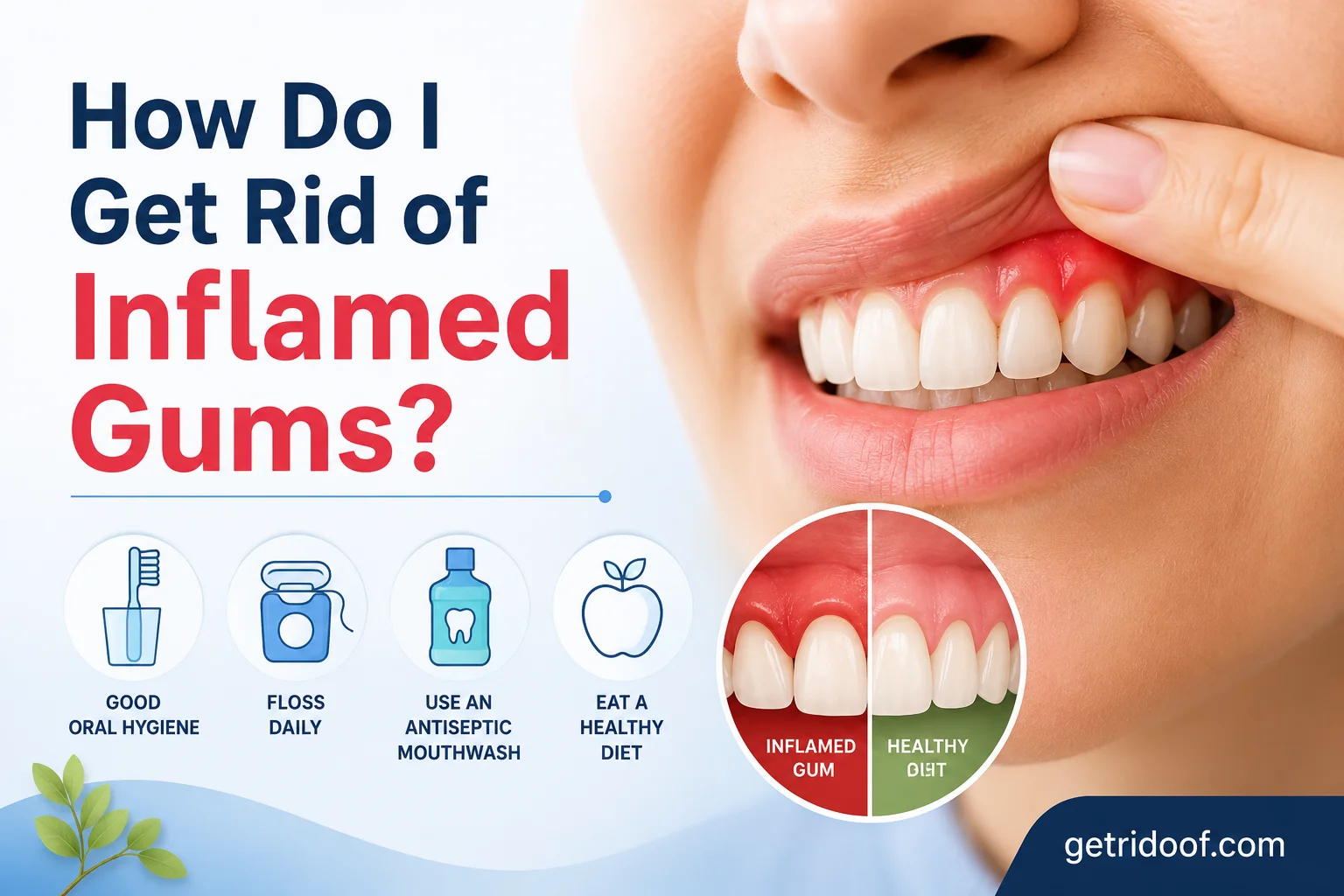
Inflamed gums are a common issue for adults around the world. If you see redness, swelling, or bleeding while brushing, your gums are showing a problem. Gingival inflammation means your body needs attention. If you’re wondering how to get rid of inflamed gums, you’re not alone. The good news? With the right approach, this condition is manageable and often fully reversible.
This guide (How Do I Get Rid of Inflamed Gums?) covers the causes, diagnosis, treatment, and prevention of gingival inflammation. You’ll find everything you need to understand and manage this condition effectively.
What Are Inflamed Gums? Understanding the Basics
Gingival inflammation happens when the soft tissue around your teeth reacts to bacteria. The result is swollen, red, tender gum tissue that may bleed during brushing or probing.
Clinically, there are two primary stages:
- Gingivitis is the early stage of gum inflammation. It’s caused by plaque buildup along the gumline. This condition is reversible.
- Periodontitis is the advanced stage of the disease. It can become irreversible if inflammation spreads to the bone and connective tissue.
Epidemiological data shows that most adults will experience gingivitis at some point. Catching it early is crucial. Periodontitis can lead to gum recession, deep pockets, and tooth loss if untreated.
Why Are My Gums Inflamed? Common Causes
Before answering how do I get rid of inflamed gums, it’s important to identify the root cause. Gingival inflammation often has multiple causes. It’s usually a mix of local and systemic factors.
Bacterial Plaque Biofilm
The main reason for gum inflammation is dental plaque. This sticky film of bacteria builds up on teeth and along the gumline. Plaque buildup happens when you don’t brush or clean between your teeth. The bacteria then release toxins. This triggers your immune system. It causes inflammation, redness, and bleeding when you touch your gums (BOP).
Hormonal Changes
Hormonal fluctuations during puberty, pregnancy, menstruation, or menopause can increase gingival sensitivity. Even small amounts of plaque can trigger noticeable swelling during these periods. Pregnancy gingivitis, for example, is a well-documented clinical entity.
Systemic Conditions and Medications
Certain systemic diseases significantly affect periodontal tissues. Uncontrolled diabetes weakens the immune system. This makes patients more prone to gum inflammation and slows healing. HIV/AIDS, leukemia, and other immunosuppressive conditions also alter gingival health.
Drug-induced gingival overgrowth is another important consideration.
Some medications can cause gingival hyperplasia. These include:
- Phenytoin (an anticonvulsant)
- Calcium channel blockers like nifedipine
- Cyclosporine (an immunosuppressant)
This condition shows up as swollen, overgrown gum tissue.
Smoking and Tobacco Use
Smoking is the single most significant modifiable risk factor for periodontal disease. It hides signs of inflammation by lowering bleeding when probing. This creates a false sense of gingival health. Smoking also impairs healing and reduces the effectiveness of periodontal treatment.
Poor-Fitting Dental Appliances
Ill-fitting dentures, orthodontic appliances, or retainers can create mechanical irritation along the gumline. Repeated trauma can cause gum swelling. This won’t go away until the fit issue is fixed.
Nutritional Deficiencies
Low levels of Vitamin C can lead to scurvy and gingivitis. Also, a lack of Vitamin D can weaken the immune system. Both deficiencies harm gum health. A nutrient-rich diet plays a supporting role in periodontal outcomes.
How Do I Know If My Gums Are Inflamed? Signs and Symptoms
Recognizing the signs early is essential. The most common clinical indicators include:
- Redness and erythema — healthy gums are pale pink; inflamed gums appear deep red or purple
- Swelling and edema — gum tissue appears puffy or enlarged
- Bleeding on probing (BOP) occurs when gums bleed. This can happen when using a periodontal probe or while brushing.
- Increased probing depth — pockets deeper than 3 mm indicate pathological change
- Tenderness or pain — especially when eating, brushing, or applying pressure
- Halitosis — persistent bad breath linked to bacterial activity in the sulcus
- Gingival recession — gums pulling away from the tooth surface, exposing the root
If multiple signs are present, a comprehensive periodontal assessment is warranted.
How Do I Get Rid of Inflamed Gums? Clinical Diagnosis and Assessment
Before treatment, a thorough clinical evaluation is essential. The 2017 AAP/EFP World Workshop Classification outlines how to diagnose gingival and periodontal issues.
A complete periodontal assessment includes:
- Full-mouth periodontal charting includes:
- Documenting probing depths
- Measuring bleeding on probing (BOP)
- Assessing recession
- Checking furcation involvement
- Evaluating tooth mobility
- Radiographic evaluation — periapical and bitewing radiographs to assess alveolar bone levels
- Risk factor assessment — including smoking history, diabetes control, medications, and oral hygiene practices
- Differentiate disease types by telling plaque-induced gingivitis apart from non-plaque-induced lesions. These non-plaque types include immune-mediated, hereditary, or drug-related conditions.
Accurate diagnosis directly guides the treatment plan. A patient with periodontitis and lingering gum inflammation needs a different treatment plan. This is not the same as someone with simple plaque-induced gingivitis on healthy gums.
How Do I Get Rid of Inflamed Gums? Non-Surgical Treatment Strategies
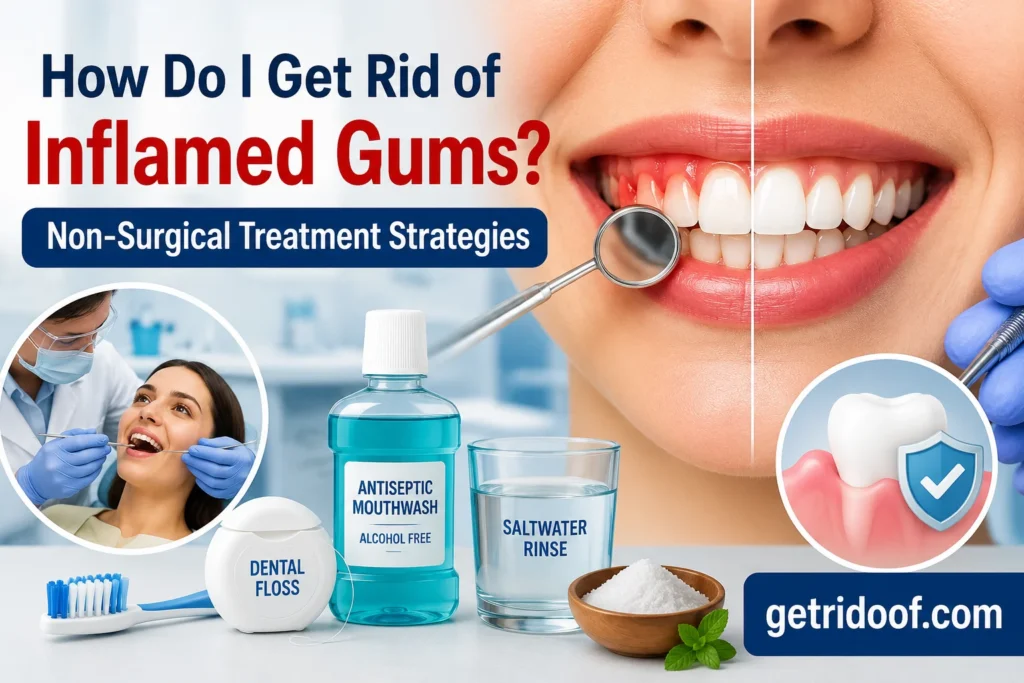
For most patients, non-surgical periodontal therapy is the first choice for treatment. It works very well when done right.
Oral Hygiene Instruction
Effective plaque control remains the cornerstone of gingival inflammation management. Oral hygiene instruction (OHI) should be personalized and evidence-based:
- Tooth brushing is important. The modified Bass technique is often recommended. Use soft-bristled toothbrushes, either manual or powered, to reduce gum damage.
- Interdental cleaning is important. Use floss, interdental brushes, or water flossers every day. This helps break up biofilm between your teeth.
- Tongue cleaning — often overlooked, it reduces bacterial load and helps manage halitosis
- Antibacterial mouthwash is important. Essential oil rinses and chlorhexidine gluconate (0.12%–0.2%) effectively reduce plaque and gingivitis.
Behavioral modification strategies, like motivational interviewing, can boost patient adherence. They also improve long-term oral hygiene results.
Scaling and Root Planing (SRP)
Scaling and root planing is the top non-surgical treatment for periodontitis patients. It involves removing plaque, calculus, and bacterial toxins from root surfaces. This includes both supragingival and subgingival areas.
Both ultrasonic and hand instrumentation are effective. Full-mouth debridement within 24 hours is a studied alternative to quadrant-by-quadrant SRP. In many cases, the clinical outcomes are similar.
The ADA guidelines say that SRP alone is the best treatment for periodontitis patients.
Antimicrobial Adjuncts
In cases where SRP alone is insufficient, antimicrobial agents can be used as adjuncts:
- Local drug delivery—minocycline microspheres or doxycycline gel can go right into periodontal pockets. This targets bacteria effectively.
- Systemic antibiotics like metronidazole or amoxicillin, or a combination, may help in aggressive or generalized periodontitis. It’s important to always follow antibiotic stewardship principles.
- Antiseptic rinses—chlorhexidine gluconate rinses—are the best-supported option for gingival inflammation.
Laser Therapy
Laser therapy, like diode or Nd:YAG lasers, aids in cleaning below the gumline and managing soft tissue. It doesn’t replace SRP, but it can help lower bacterial load and aid healing in certain cases.
When Is Surgery Needed? Surgical Interventions for Inflamed Gums
Non-surgical therapy is highly effective, but some cases require surgical intervention:
- Gingivectomy — removal of hyperplastic or overgrown gum tissue, particularly in drug-induced gingival overgrowth
- Periodontal flap surgery (Modified Widman Flap) gives access to deeper subgingival deposits. These deposits are hard to reach with non-surgical debridement.
- Osseous surgery and bone grafting fix bony defects. They help restore the shape of the alveolar bone.
- Guided tissue regeneration (GTR) uses barrier membranes. These help regenerate periodontal structures like bone, cementum, and the periodontal ligament.
Surgical treatment is usually needed if pocketing (≥5–6 mm) remains after non-surgical therapy. It’s also required when anatomical issues stop proper debridement.
Systemic and Lifestyle Factors That Affect Gingival Healing
Getting rid of inflamed gums isn’t just about local treatment. Systemic factors play a major role in outcomes.
- Diabetes management — better glycemic control (HbA1c) leads to improved periodontal treatment outcomes. This relationship goes both ways.
- Quitting smoking greatly helps gum healing and lowers the chance of disease progression.
- Stress reduction is important. High cortisol levels weaken the immune system. They are also linked to worse gum health.
- Nutritional support is important. Adequate Vitamin C, Vitamin D, and omega-3 fatty acids help with tissue repair and boost the immune system.
- Medication Review If there is drug-induced gingival overgrowth, consult a doctor. They may suggest switching the problematic medication if possible.
How Do I Get Rid of Inflamed Gums at Home? Patient Care Tips
Alongside professional treatment, patients can actively support their recovery at home:
- Brush your teeth twice a day with a soft-bristled toothbrush. Use fluoride toothpaste, as stannous fluoride provides extra anti-inflammatory benefits.
- Floss or use interdental brushes every day to clear plaque between teeth
- Saltwater rinse — a warm saline rinse reduces swelling and makes it hard for bacteria to thrive.
- Aloe vera gel has shown anti-inflammatory effects in clinical studies. You can apply it to irritated skin.
- Green tea has antioxidants called catechins. Drinking it regularly may help reduce gum inflammation.
- Avoid sugary foods and beverages that feed plaque-forming bacteria
- Stay hydrated — dry mouth increases bacterial concentration and worsens gum irritation
Over-the-counter anti-inflammatory meds, like ibuprofen, can help with pain and swelling. However, they shouldn’t take the place of professional care.
Long-Term Maintenance: Keeping Inflamed Gums From Coming Back
Treating gingival inflammation is only half the equation. Without ongoing maintenance, the condition is likely to return.
Supportive Periodontal Therapy (SPT)
After active treatment, patients should be enrolled in a structured maintenance program:
- 3-month recall intervals for high-risk patients (smokers, diabetics, history of periodontitis)
- 6-month recall intervals for low-risk or successfully treated gingivitis patients
- At each visit, check probing depths, bleeding on probing (BOP), and oral hygiene. Also, do professional debridement if needed.
Re-evaluation and Prognosis
A formal re-evaluation should occur 6–8 weeks after completing non-surgical therapy. Residual pockets, ongoing BOP, and furcation involvement are checked to see if a surgical referral is needed.
Prognosis classification—good, fair, poor, questionable, or hopeless—helps determine if a tooth can be saved long-term. It should be checked regularly.
Patient Education and Motivation
Long-term outcomes depend heavily on patient compliance.
To keep your gums healthy, remember to:
- Reinforce oral hygiene tips.
- Change lifestyle habits.
- Visit the dentist regularly.
Frequently Asked Questions
Q: Can inflamed gums heal on their own?
Mild gingivitis can get better with good oral hygiene. But without a dentist’s help, it often stays the same or worsens. Self-care is supportive — not a substitute for treatment.
Q: How long does it take to get rid of inflamed gums?
Regular brushing and dental cleanings can help patients see improvements in just 2 to 4 weeks. More advanced cases may take several months of active treatment.
Q: Are swollen gums a sign of something serious?
They can be. Gingivitis is common and reversible. However, swollen gums can also mean periodontitis, a dental abscess, or a health issue. Contact a dental professional if symptoms persist for more than two weeks.
Q: Can poor diet cause inflamed gums?
Yes. High-sugar diets boost bacterial growth. Also, low Vitamin C and D can weaken gum health and immune defense.
Q: Is bleeding on probing always a sign of active disease?
Bleeding on probing is a primary diagnostic indicator of active gingival inflammation. It should always be documented and investigated — even in the absence of pain.
Conclusion
Understanding how do I get rid of inflamed gums requires both professional expertise and patient commitment. Every step in management is important. It starts with accurate diagnosis using evidence-based classification systems.
Then, treatment options, both non-surgical and surgical, are driven by evidence. Long-term supportive periodontal therapy is also key. So is controlling systemic risk factors and providing steady patient education.
Gingival inflammation isn’t just a dental issue; it shows a patient’s overall health. Early intervention, clinical assessment, and personalized care plans are key for healthy gums. If you or your patients have swollen gums, begin with a complete periodontal check. Then, focus on evidence-based, patient-centered care.
About the Author