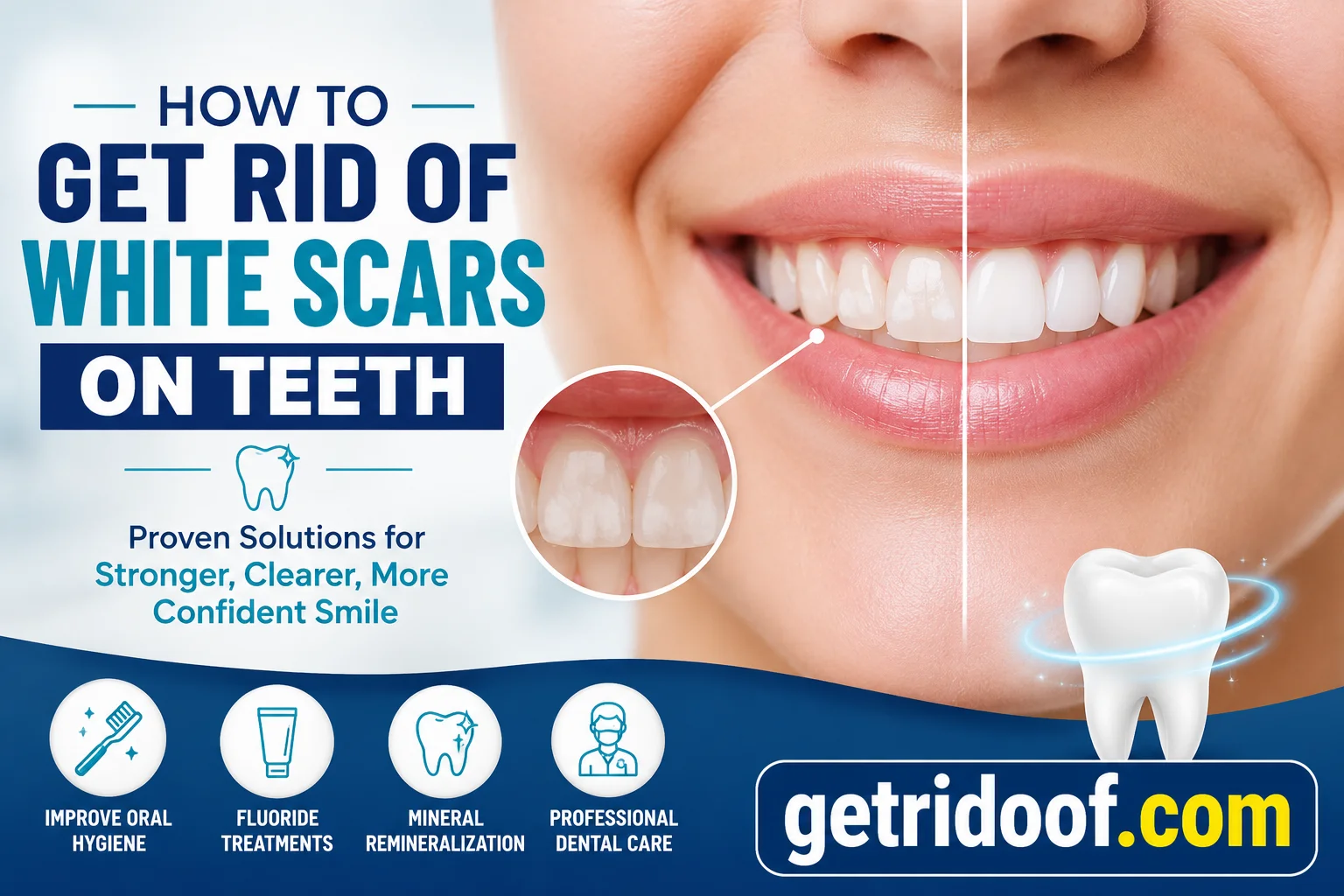
Do you notice chalky or milky white patches on your teeth when you smile? You are not alone. Millions of people deal with white spots or white scars on their teeth every day. The good news is that there are proven ways to treat and even remove them.
This guide explains how to get rid of white scars on teeth. You’ll learn about the causes, the best dental treatments, and helpful home remedies.
What Are White Spots on Teeth?
White spots on teeth are areas where the tooth enamel has lost its normal mineral content. The enamel gets porous and reflects light differently. This is why it looks whiter or chalky than the rest of the tooth.
These spots are also called white lesions, enamel hypomineralization, or decalcification spots. They can appear on one tooth or several teeth at once.
In some cases, white spots are harmless and cosmetic. In other cases, they can be early signs of tooth decay. Either way, it is important to understand what is causing them before you choose a treatment.
What Causes White Spots on Teeth?
Understanding the cause of white spots helps you pick the right solution. Here are the most common reasons they form:
1. Dental Fluorosis
Dental fluorosis happens when kids receive too much fluoride while their teeth are still developing under the gums. This causes the enamel to form unevenly, creating white streaks or spots. It is one of the most common causes of white marks on permanent teeth.
2. Enamel Hypoplasia
Enamel hypoplasia is a condition where the enamel does not develop properly. It can happen due to poor nutrition, childhood illness, premature birth, or some medications. The result is thin or pitted enamel that appears lighter in color.
3. Plaque Buildup and Poor Oral Hygiene
When plaque sits on the surface of teeth for too long, it produces acids that strip minerals from the enamel. This process, called demineralization, creates white spots. It’s common for people with braces. Food and plaque often get stuck around the brackets.
4. Acidic and Sugary Foods
Eating too many acidic fruits, like lemons, oranges, and limes, can harm your enamel. Regularly drinking sodas and sports drinks does the same. Over time, this can wear down your teeth. This creates the same mineral loss that leads to white spots.
5. Dry Mouth During Sleep
If you sleep with your mouth open, the surface of your teeth can dry out overnight. This can cause white spots in the morning. They fade when you hydrate. These are usually harmless and not permanent.
6. Wearing Braces
Parents often ask how to get rid of white scars on teeth that appeared after braces. This is very common. Plaque can form around orthodontic brackets. This buildup leads to decalcification and white spots once the braces are removed.
What Are the Dental Treatments for White Spots on Teeth?
If home care is not enough, your dentist can offer several professional treatments. Here are the most effective options available today:
Resin Infiltration (Icon Treatment)
Resin infiltration is a top method to remove white scars on teeth. It’s advanced and minimally invasive. A special resin material is applied to the white spot to fill in the porous enamel. This makes the spot blend in with the surrounding tooth color.
- Best for: White spots caused by demineralization or early decay
- Time required: Usually just one dental visit
- Pain level: Painless and non-invasive
Enamel Microabrasion
Microabrasion is a dental procedure. The dentist gently removes a thin layer of enamel from the tooth’s surface. This smooths out the texture and reduces or eliminates the appearance of white spots.
- Best for: Mild to moderate surface-level white spots
- Results: Often visible after just one session
- Limitation: Only works for superficial spots, not deep enamel damage
Professional Fluoride Therapy
You can get high-strength fluoride treatments applied directly to your teeth at the dental office. Fluoride helps restore enamel. It also lessens the contrast between white spots and healthy teeth. It is especially useful as both a treatment and a preventive measure.
Professional Teeth Whitening
Professional teeth whitening will not remove white spots directly. It can help even out your teeth’s color. It also makes white spots less noticeable by reducing contrast with the rest of your teeth.
Dental Veneers
Porcelain veneers are thin custom shells that are bonded to the front of teeth. They completely cover white spots and give your teeth a uniform, white appearance. Veneers are a great option if white spots do not respond to other treatments or if you want instant results.
- Best for: Severe or stubborn white spots
- Durability: Porcelain veneers can last 10–15 years
- Cost: This is the most expensive option but delivers the most dramatic transformation
Composite Resin Bonding
Composite resin bonding is a more affordable alternative to porcelain veneers. A tooth-colored resin is placed over the white spot. It’s then shaped to match the tooth. The results are immediate but may not last as long as porcelain veneers.
You Can Also Read
- How to Get Rid of Double Chin Naturally: 10 Proven Methods
- How to Get Rid of Double Chin Faster
- How to Get Rid of a Headache
Home Remedies for How to Get Rid of White Scars on Teeth
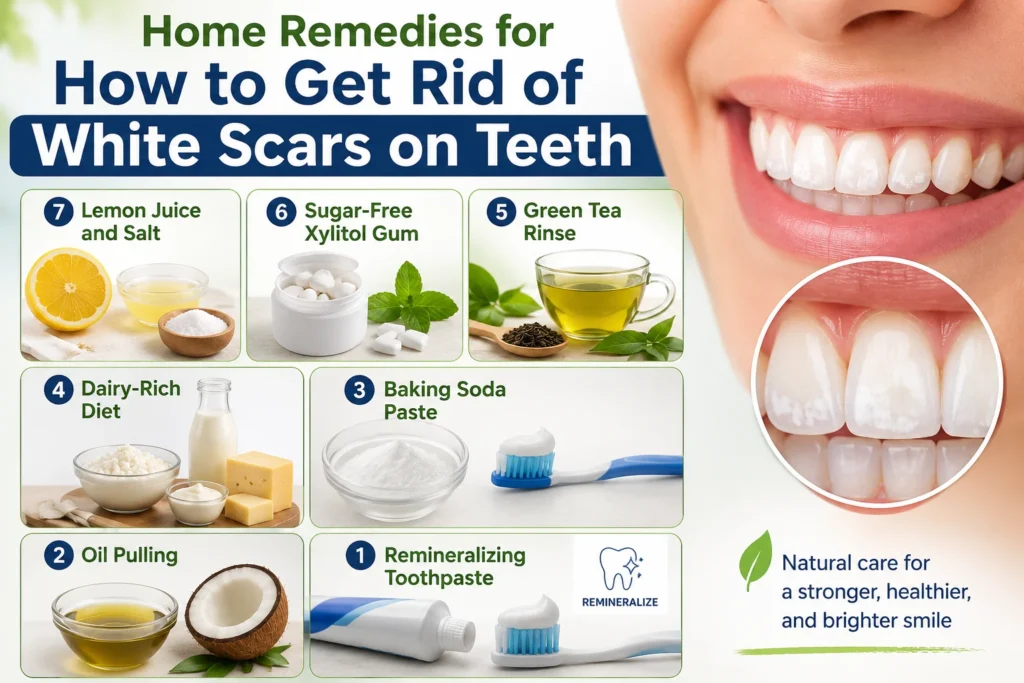
Not everyone needs to visit a dentist right away. For mild white spots, you can try some home remedies. They may help improve their look and support enamel health.
1. Remineralizing Toothpaste
Fluoride, calcium phosphate, and hydroxyapatite in toothpaste can help restore minerals in enamel. Using remineralizing toothpaste for a few weeks can help reduce mild white spots.
How to use: Brush twice a day and avoid rinsing immediately after. Let the minerals sit on the teeth a little longer for better absorption.
2. Oil Pulling
Oil pulling is an old Ayurvedic practice. It involves swishing oil in your mouth for 10 to 20 minutes. Coconut oil is the most popular choice because of its antimicrobial properties. It won’t get rid of deep white spots, but it can lower bacteria and boost enamel health.
How to use: Swish one tablespoon of coconut oil for 15 to 20 minutes in the morning before brushing.
3. Baking Soda Paste
Baking soda is a mild abrasive that can help gently polish the surface of your teeth. It also creates a slightly alkaline environment in the mouth, which supports remineralization. A baking soda paste can lessen surface stains and make white spots less noticeable.
How to use: Mix a small amount of baking soda with water to create a paste. Brush gently once or twice a week. Do not overuse it, as it can wear down enamel over time.
4. Dairy-Rich Diet
Calcium and phosphorus are the building blocks of healthy enamel. Eating foods high in calcium, like cheese, yogurt, and milk, helps remineralize your teeth naturally. Cheese boosts saliva production. This helps protect enamel from acid damage.
5. Green Tea Rinse
Green tea contains antioxidants and trace minerals that promote enamel health. Rinsing your mouth with cooled green tea may slowly reduce white spots over time.
6. Sugar-Free Xylitol Gum
Chewing sugar-free gum that contains xylitol helps boost saliva flow. Saliva naturally washes away acid and delivers calcium and phosphate to enamel surfaces. Xylitol also helps reduce harmful bacteria in the mouth.
7. Lemon Juice and Salt
Lemon juice and salt is a classic remedy for improving the look of white spots on teeth. Salt is a gentle scrub that removes surface buildup. Lemon juice has natural bleaching power, which can lighten discoloration over time.
How it works:
- Salt gently polishes the enamel surface and removes plaque or surface stains
- Lemon juice is acidic. It can help lighten white marks when used carefully.
- Together, they create a simple paste that many people use as a quick at-home whitening method
How to use:
Mix a small pinch of salt with a few drops of fresh lemon juice to form a thin paste. Apply it gently to the affected teeth using your fingertip or a soft toothbrush. Leave it on for no more than one to two minutes, then rinse thoroughly with water.
Important warning:
Use this remedy with extreme caution and no more than once a week. Lemon juice is very acidic. Using it often can wear down your enamel and worsen white spots over time. Always rinse your mouth well with plain water after using this method. Skip this remedy if you have sensitive teeth or enamel damage. Choose a gentler option, like remineralizing toothpaste, instead.
Pro Tip: Never brush your teeth immediately after applying lemon juice. The acid temporarily softens enamel, and brushing right away can cause enamel wear. Wait at least 30 minutes before brushing.
How To Prevent White Spots on Teeth
The best strategy is to stop white spots from forming in the first place. Here are the most important prevention habits:
- Brush your teeth twice a day with fluoride toothpaste. Be sure to clean around the gum line and all surfaces of your teeth.
- Floss daily to remove plaque and food particles from between teeth
- Visit your dentist every 6 months for professional cleaning and checkups
- Drink more water instead of sodas, sports drinks, and acidic juices
- Monitor children’s fluoride intake. Use only a pea-sized amount of toothpaste for kids. Also, avoid fluoride supplements unless a dentist prescribes them.
- Use a night guard if you grind your teeth or breathe through your mouth while sleeping
- Clean around braces carefully. Use interdental brushes and water flossers. This helps prevent plaque buildup around brackets.
What To Avoid If You Have White Spots on Teeth
Certain habits can make white spots worse or cause new ones to form. Here is what to avoid:
- Avoid acidic drinks like soda, citrus juices, sports drinks, and flavored sparkling water
- Avoid excessive sugar — sugar feeds bacteria that produce acids, accelerating enamel loss
- Do not use apple cider vinegar as a mouth rinse — its high acidity can erode enamel and worsen white spots
- Do not overuse baking soda — while useful in small amounts, excessive use can strip away enamel
- Skip whitening strips on active white spots. They can make spots look more noticeable for a while.
- Don’t ignore white spots. Early-stage spots are easier to treat than those that turn into decay.
Frequently Asked Questions
Can white spots come back after treatment?
Yes, white spots can return if the underlying cause is not addressed. If poor oral hygiene caused the spots, they might come back after treatment. So, it’s important to improve your brushing habits. Maintaining good oral care after treatment is essential.
Are white spots on children’s teeth normal?
White spots in kids are quite common. They often happen because of dental fluorosis or enamel hypoplasia. Mention any white spots to your child’s dentist at their next visit. Early treatment works better.
Is resin infiltration painful?
No, resin infiltration (Icon treatment) is painless. It doesn’t need drilling or anesthesia. It is one of the most comfortable ways to treat white spots on teeth.
Does insurance cover white spot treatment?
Coverage depends on your insurance plan. Treatments deemed cosmetic, like veneers and composite bonding, are typically not covered. However, medically necessary treatments like fluoride therapy may be partially covered. Always check with your provider before booking treatment.
Conclusion
White spots on teeth are more common than most people realize. They can be frustrating. The good news is there are many effective solutions. You can try simple home remedies or go for advanced professional treatments.
If you want to know how to get rid of white scars on teeth, the first step is understanding what caused them. Mild spots may respond well to remineralizing toothpaste and dietary changes. Stubborn or severe spots might need professional treatment. Options include resin infiltration, microabrasion, or veneers.
The most important thing you can do right now is to see your dentist for a proper evaluation. The sooner you address white spots, the easier — and less expensive — they are to treat. Take good care of your enamel daily, and your smile will thank you for it.
Always talk to a qualified dentist before starting any treatment for white spots on your teeth. Home remedies can help, but they aren’t a replacement for professional dental care.
About the Author