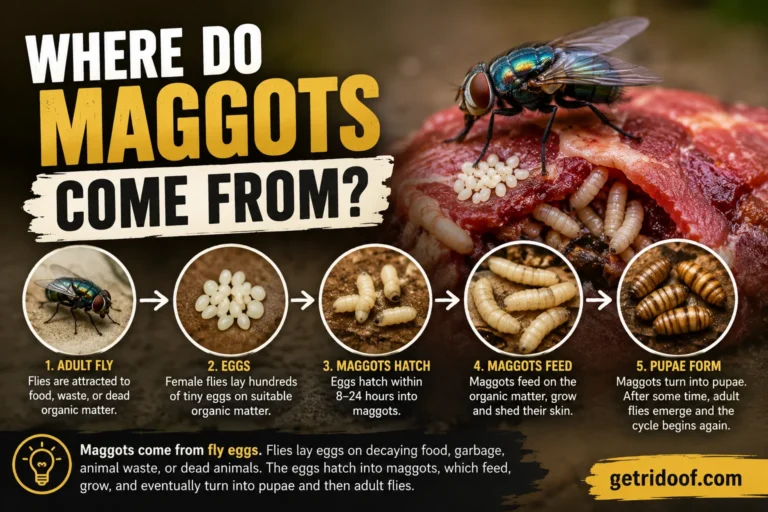
If you see a strange, worm-like creature with a long rat tail in a muddy pond or sewage ditch, you’ve found the rat-tailed maggot. At first glance, it looks like something out of a horror film. But this bizarre little larva has one of the most fascinating life stories in the insect world.
The rat-tailed maggot is more fascinating than its name implies. From its snorkel-like breathing tube to its change into a harmless hoverfly, this creature surprises many. In this article, we’ll explore the basics: its biology, life cycle, habitat, ecological role, and final form.
What Is a Rat Tailed Maggot?
The rat-tailed maggot is the larva of the drone fly. Its scientific name is Eristalis tenax. It belongs to the family Syrphidae, commonly called hoverflies or flower flies.
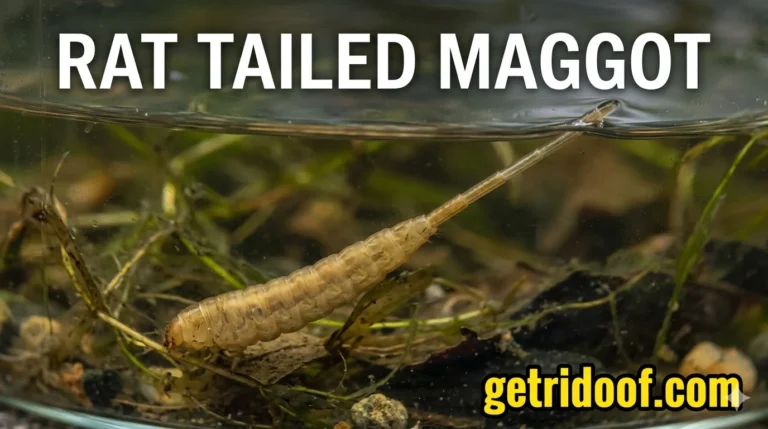
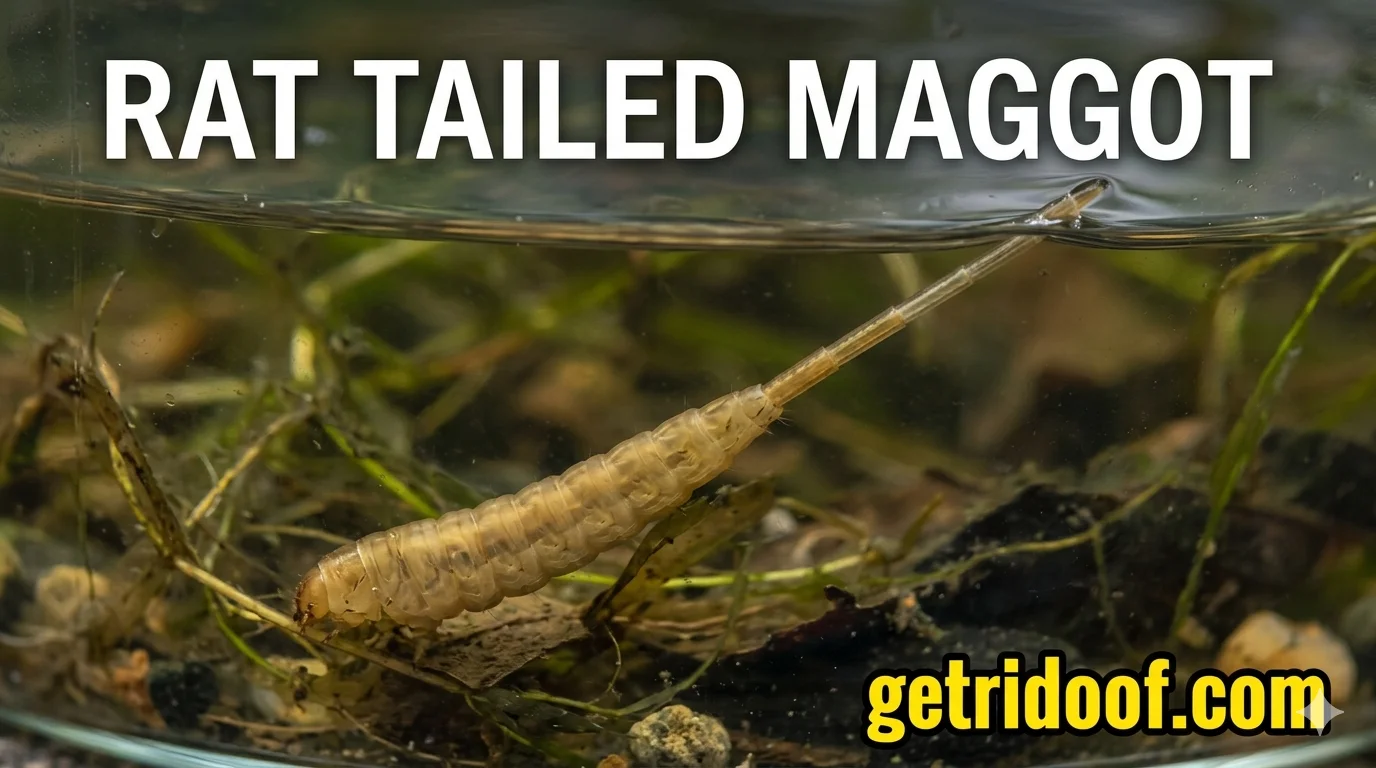
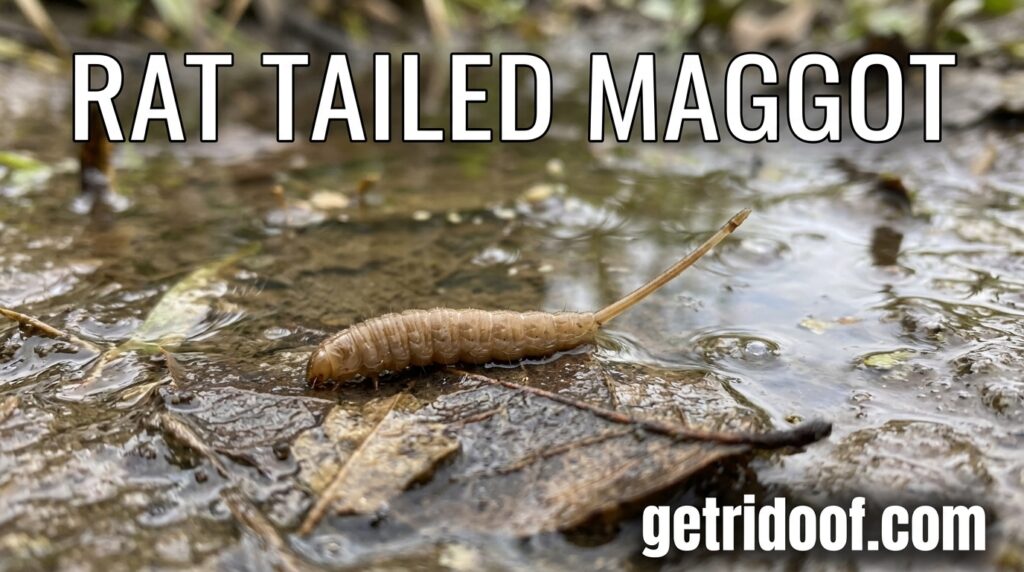
The name comes from a unique feature: a long, thin, tube-like extension at the back. It looks like a rat’s tail. This “tail” is not actually a tail at all. It’s a telescoping breathing siphon, similar to a snorkel. It lets the larva breathe air even when fully underwater.
The siphon can reach 150 mm (about 6 inches) long. In contrast, a fully grown maggot is only about 20 mm long. That’s a great way to survive in places with little oxygen.
Rat Tailed Maggot Identification: What Does It Look Like?
Identifying a rat tailed maggot is fairly straightforward once you know what to look for.
Key physical features include:
- Body: Cylindrical, pale whitish-grey or yellowish-brown in color
- Length: Around 15–20 mm when fully mature
- Texture: Slightly wrinkled with small fleshy bumps (pseudopods) along the underside
- Tail/siphon: Long, retractable breathing tube at the rear — the defining feature
- Head: No distinct head capsule, typical of fly larvae (maggots)
The siphon has three segments and can extend or retract. This lets it adjust to the water depth. The rat-tailed maggot is easy to spot among other aquatic insect larvae.
Where Does the Rat Tailed Maggot Live? (Habitat)
One of the most remarkable things about the rat tailed maggot is where it chooses to live. Most aquatic insects need clean, oxygen-rich water to survive. This creature does the opposite.
Rat tailed maggots thrive in:
- Stagnant, polluted water
- Sewage lagoons and cesspools
- Manure pits and livestock waste pools
- Muddy ditches with high organic content
- Rotting compost and animal carcasses
- Watery sap runs in trees (less common)
The larva breathes through its siphon at the surface. So, it doesn’t need dissolved oxygen in the water. This gives it a massive survival advantage in environments where no other fly larva can live.
The rat tailed maggot is found on every continent except Antarctica. It is especially widespread across North America, Europe, Asia, Africa, and Australia.
How Does the Rat Tailed Maggot Breathe?
This is the question most people ask first — and the answer is genuinely clever.
The rat tailed maggot uses its long posterior breathing siphon like a snorkel. While its body stays submerged in the muck below, the tip of its tail reaches up to the water surface to pull in fresh air. The siphon can stretch to match the water’s depth. This is an amazing biological adaptation.
Because it breathes air directly through this tube, it has no need for gills. This means water quality doesn’t matter much for its survival. It’s one of the most pollution-tolerant insects on Earth.
The Life Cycle of a Rat Tailed Maggot
The life cycle of the rat-tailed maggot shows why this creature exists. Like all flies, it goes through complete metamorphosis — four distinct stages.
Stage 1: Egg
The adult female drone fly lays her eggs in or near stagnant, organic-rich water. She puts small batches of eggs near the waterline. This way, larvae can easily access food and stay submerged.
Stage 2: Larva (The Rat Tailed Maggot Stage)
Once hatched, the larva immediately enters the water and begins feeding. This is the rat tailed maggot phase. The larva develops through three instars (growth stages), each time shedding its skin. The entire larval stage lasts approximately 18 days in warm summer conditions.
It mainly feeds on bacteria, microorganisms, algae, and decaying organic matter.
Stage 3: Pupa
When fully grown, the larva crawls out of the water and moves to a drier location. Its skin hardens into a protective shell called a puparium. This shell is oval-shaped, brownish-grey, and often keeps the dried remnant of the breathing tube. This pupal stage lasts around 10 days.
Inside this casing, the body of the maggot completely reorganizes. Legs, wings, eyes, and antennae form from within.
Stage 4: Adult Drone Fly
The adult drone fly (Eristalis tenax) emerges fully formed. The entire life cycle from egg to adult takes approximately 30 days in summer. In cooler conditions, the process slows significantly.
What Does a Rat Tailed Maggot Turn Into?
This is perhaps the biggest surprise of all.
The rat-tailed maggot changes into a drone fly. This fly is sturdy, furry, and fast. It looks very similar to a honeybee. This resemblance is no accident. It’s a classic case of Batesian mimicry. Here, a harmless species evolves to resemble a dangerous or unpleasant one. This helps it avoid predators.
The adult drone fly:
- Measures 11–16 mm in length
- Has a hairy, bee-like body with orange and black markings
- Can hover almost motionless in the air (hence “hoverfly”)
- Is entirely harmless — it has no sting
- Is a surprisingly effective pollinator, visiting wildflowers, fruit trees, and garden plants
Many people think that the biblical stories about bees from animal carcasses might actually mean drone flies. This is because female drone flies often lay their eggs in decaying animals.
What Do Rat Tailed Maggots Eat?
The feeding behavior of the rat tailed maggot is closely tied to its habitat. It is a filter feeder and decomposer.
Rat tailed maggots feed on:
- Bacteria and microorganisms in polluted water
- Algae and organic particles in the water column
- Decomposing plant and animal matter
- Nutrient-rich sludge at the bottom of ponds and ditches
This feeding activity is genuinely useful. These larvae eat and break down organic waste. This process recycles nutrients back into the ecosystem. They speed up decomposition processes that would otherwise take much longer.
Ecological Importance of the Rat Tailed Maggot
The rat-tailed maggot may look unappealing, but it has key roles in nature.
1. Decomposer and Nutrient Recycler
Rat-tailed maggots eat decaying organic matter in water. This helps break down waste and returns nutrients to the food chain. They are nature’s clean-up crew in some of the most hostile environments imaginable.
2. Food Source for Other Animals
Rat tailed maggots are a food source for fish, frogs, birds, and other aquatic predators. Their abundance in certain habitats makes them an important link in the aquatic food web.
3. Bioindicator of Water Quality
Scientists see rat-tailed maggots as a sign of water quality. Finding many of them in polluted, low-oxygen water shows bad environmental conditions. This is a valuable tool in environmental monitoring and pollution assessments.
4. Fish Bait (Commercial Use)
Rat-tailed maggots, often known as “mousies,” are raised and sold as fish bait. They are especially popular in ice fishing communities throughout North America.
You Can Also Read
Rat Tailed Maggot and Human Health: Are They Dangerous?
This is a fair question, and the honest answer is: rarely, but it can happen.
Gastrointestinal Myiasis
In rare cases, rat-tailed maggots can cause myiasis in humans. This condition happens when fly larvae invade living tissue by mistake. The most common cases are intestinal myiasis. This happens when people accidentally eat larvae from contaminated food or water. Symptoms can include abdominal cramps, nausea, and vomiting.
In 1951, a farm woman in Ohio had intermittent abdominal pain for years. After treatment, rat-tailed maggots were found in her intestines. They likely came from contaminated water.
These cases are extremely rare. The adult drone fly, by contrast, is completely harmless to humans.
Livestock Nuisance
Rat-tailed maggots can sometimes be a problem near livestock buildings. They thrive in areas with manure and wastewater. However, they pose no direct health threat to animals. Good sanitation practices are usually sufficient to manage their presence.
Rat Tailed Maggot in Forensic Science
Forensic entomologists study insects in criminal cases. They find the rat-tailed maggot useful. Drone flies often lay eggs in decaying animal tissue. So, their larvae can sometimes be found on human remains near water. Their presence and growth stage help investigators figure out the time of death or post-mortem interval.
Fun Facts About the Rat Tailed Maggot
Here are some quick, surprising facts worth knowing:
- 🐀 The “tail” can be up to 7.5 times longer than the body itself
- 🌍 Found on every continent except Antarctica
- 🐝 The adult drone fly is one of nature’s best bee impersonators
- 📜 May be behind the biblical story of bees emerging from animal carcasses
- 🧊 Sold as fish bait called “mousies” — particularly popular in ice fishing
- 🌿 The adult is an important pollinator of crops and wildflowers
- ⏱️ Full egg-to-adult life cycle completed in just 30 days in summer
- 🦠 Can survive in water with almost zero dissolved oxygen
How to Get Rid of Rat Tailed Maggots (If Necessary)
In most cases, rat tailed maggots are harmless and beneficial. If you see many around livestock areas or water features, here’s how to handle them:
- Remove standing water or improve drainage to eliminate breeding sites
- Clean manure and organic waste regularly from animal housing areas
- Cover water storage containers to prevent adult flies from laying eggs
- Improve sanitation in areas with decomposing organic material
There is generally no need for chemical pesticides. Simply removing the conditions they need to breed is enough.
Conclusion: The Rat Tailed Maggot Is More Than It Seems
The rat tailed maggot is one of those creatures that challenges you to look past appearances. Yes, it lives in sewage and smells terrible. Yes, its name alone makes most people cringe. This tiny larva is amazing. It breathes through a snorkel and survives in tough places. It cleans organic waste. Later, it becomes a harmless, bee-like pollinator. This pollinator visits the flowers in your garden.
The next time you spot a rat tailed maggot in a muddy ditch or stagnant pond, take a moment to appreciate it. Nature has spent millions of years perfecting this creature — and it is very, very good at what it does.
Whether you’re a student, a nature lover, or a researcher, the rat-tailed maggot shows a clever and often missed survival strategy in nature.
About the Author