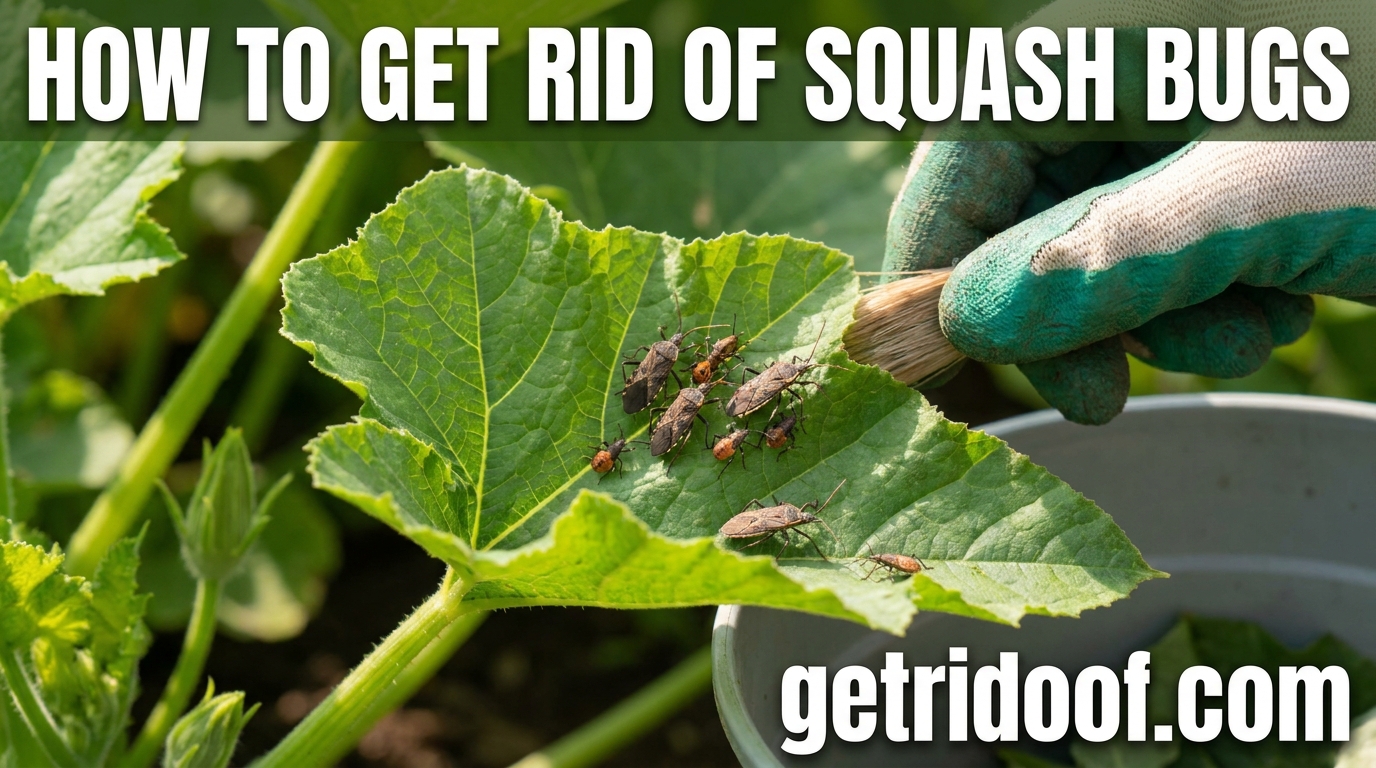
If you grow squash, pumpkins, or zucchini, you’ve likely dealt with squash bugs. Learning how to get rid of squash bugs early can be the difference between a healthy harvest and a dead garden bed. This guide covers everything — identification, treatment, and prevention — in simple, easy steps.
What Are Squash Bugs?
Squash bugs (Anasa tristis) are common pests in gardens. They target plants in the cucurbit family. This includes squash, pumpkins, cucumbers, melons, and gourds.
They damage plants by using piercing mouthparts to suck out sap. This disrupts the flow of water and nutrients, causing leaves to wilt, turn brown, and die.
Squash bugs can spread yellow vine decline. This bacterial disease can kill your plant before harvest.
How to Identify Squash Bugs
Before you can treat the problem, you need to know what you’re looking for. Squash bugs go through three life stages:
Eggs
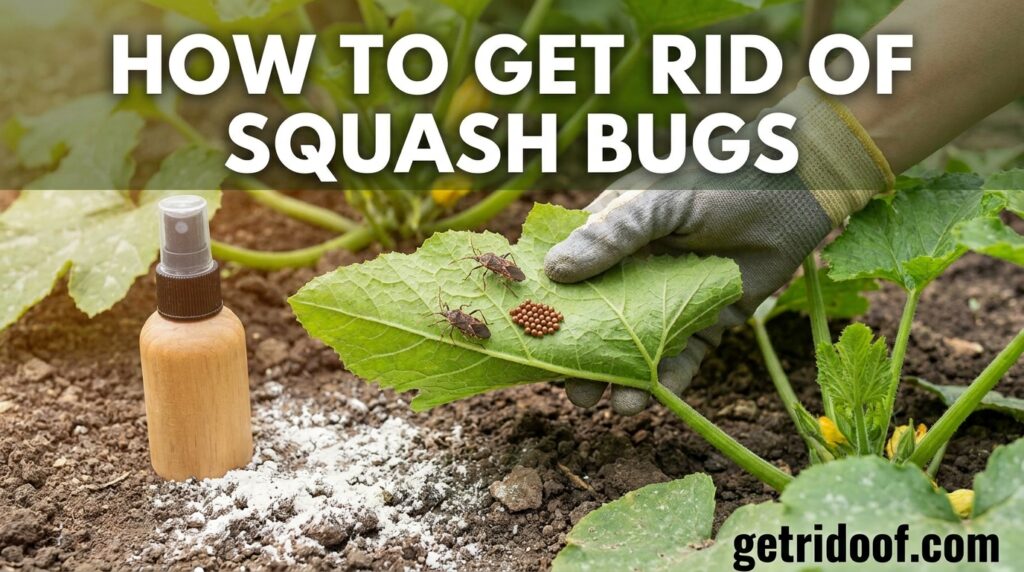
- Small, oval, and copper or reddish-brown in color
- Laid in tight clusters on the undersides of leaves
- Often arranged in a diamond or V-shaped pattern
- Hatch within 7–10 days
Nymphs
- Newly hatched nymphs have a light green body with a red head
- Older nymphs turn light gray with black legs and antennae
- They move in groups and hide under leaves when disturbed
- Take 4–6 weeks to mature into adults
Adult Squash Bugs
- About ½ inch long, flat-backed, brownish-gray
- Wings fold into an X shape on their back
- Both adults and nymphs release a foul odor when crushed
- Adults can fly but mostly crawl and hide under leaves or debris
Signs of a Squash Bug Infestation
Catching squash bug damage early gives you the best chance of saving your plants. Watch out for:
- Yellow or brown spots on leaves that spread quickly
- Wilting vines even when the soil is moist
- Leaves that turn crispy and brittle and eventually collapse
- Bronze egg clusters on the undersides of leaves
- Visible bugs hiding near the base of the plant or under stems
Check your plants every 2 to 3 days in the growing season. This is especially important in early summer when egg-laying starts.
How to Get Rid of Squash Bugs: 7 Proven Methods
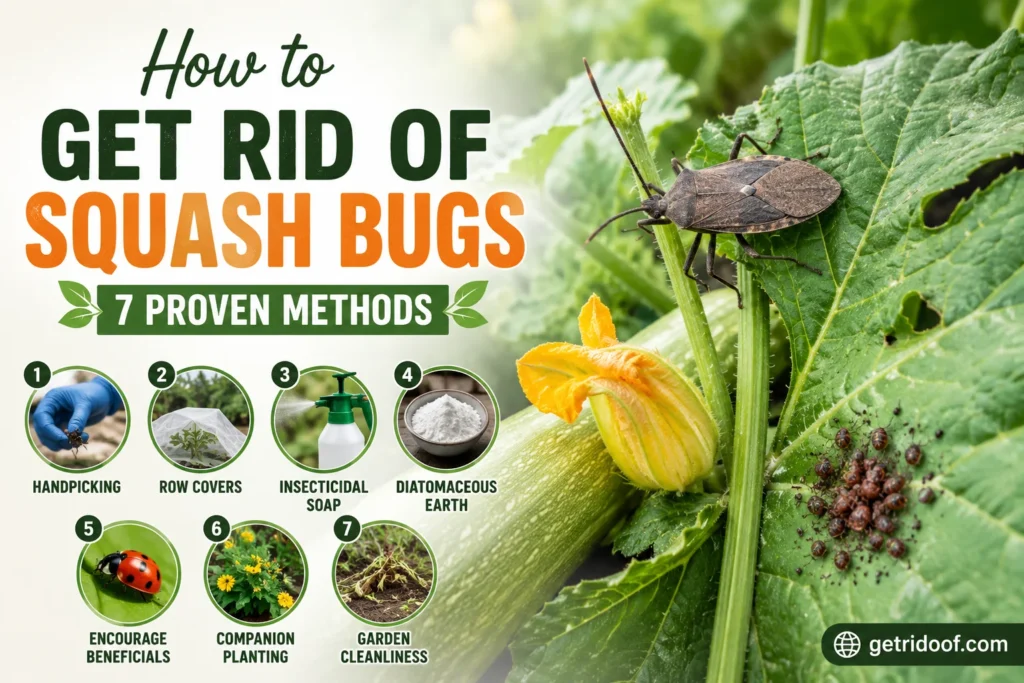
Here are the most effective ways to get rid of squash bugs at every stage of their life cycle.
1. Hand-Pick Eggs, Nymphs, and Adults
This is the most beginner-friendly method and works well for small gardens.
- Check the undersides of leaves for copper-colored egg clusters
- Use duct tape or packing tape rolled sticky-side out to lift eggs off leaves
- Drop nymphs and adults into a bucket of soapy water to kill them
- Do this every 2–3 days for best results
2. Use a Soapy Water Spray
Mix a few drops of dish soap with water in a spray bottle. Spray directly on nymphs and adults. The soap breaks down their outer coating and kills them. This works best on young nymphs before they harden.
3. Apply Neem Oil
Neem oil is a natural, plant-based pesticide that disrupts the life cycle of squash bugs. It’s safe for new gardeners and won’t hurt helpful insects if used right.
- Spray in the early morning or evening to protect pollinators
- Focus on the undersides of leaves where bugs hide
- Reapply every 7 days or after rain
4. Sprinkle Diatomaceous Earth
Diatomaceous earth (DE) is a fine powder made from fossilized algae. It works by damaging the exoskeleton of insects, causing them to dry out.
- Apply around the base of your squash plants
- Reapply after watering or rain
- It is approved for use in certified organic gardening
5. Set a Board Trap
This simple trick is surprisingly effective. Place a wooden board or piece of cardboard near your squash plants before nightfall. Squash bugs will gather underneath overnight. In the morning, flip the board and drop the bugs into soapy water.
Repeat this method every few days during peak season.
6. Use Chemical Insecticides (Last Resort)
If your infestation is severe, a chemical insecticide may be necessary. Look for products containing:
- Carbaryl
- Permethrin
- Esfenvalerate
Apply to the base of the plant and the undersides of leaves. Always spray in the early morning or evening to avoid harming bees and other pollinators. Do not add infected plant material to your home compost pile.
7. Remove and Destroy Heavily Infested Plants
If a plant is overwhelmed and beyond saving, remove it immediately. Bag the entire plant and dispose of it — do not compost it. This prevents bugs from spreading to healthy plants nearby.
How to Prevent Squash Bugs Before They Start
Prevention is the most powerful tool in your garden toolkit. Here’s how to stop squash bugs from showing up in the first place.
Clean Up Garden Debris
Squash bugs overwinter in plant debris, old boards, woodpiles, and weeds. At the end of each season:
- Pull up all old squash vines and dead plants
- Remove weeds around the garden bed
- Clear the area around the base of plants during the growing season
Rotate Your Crops
Don’t plant squash in the same spot two years in a row. Crop rotation helps keep your plants safe from bugs hiding in the soil or nearby debris.
Use Floating Row Covers
Cover young squash plants with floating row covers, like insect netting, early in the season. This physically blocks adult squash bugs from reaching your plants. Remove the covers once flowers appear so pollinators can do their job.
Try Companion Planting
Certain plants naturally repel squash bugs. Plant these around your squash:
- Nasturtiums
- Marigolds
- Catnip
- Tansy
- Radishes
- Mint
These plants confuse squash bugs. They also deter them, so your garden looks less appealing to these pests.
Grow Resistant Squash Varieties
Some squash varieties are naturally more tolerant of squash bug feeding. Consider growing:
- Butternut squash — highly resistant and a great keeper
- Buttercup squash — tolerates feeding damage well
- Sweet cheese pumpkins — a more resilient choice
- Lemon squash — rarely killed by squash bugs or borers
Switching to a C. moschata variety is a smart long-term choice if you’ve had serious infestations.
Use a Trap Crop
Plant Blue Hubbard squash at the edges of your garden two weeks before your main crop. Squash bugs are strongly attracted to it. When the trap plant has eggs and nymphs, destroy it. You can bag it or burn it. This will help draw pests away from your main crop.
You Can Also Read
When Are Squash Bugs Most Active?
Squash bugs become active in late spring when temperatures warm up. Females begin laying eggs in early June and continue through mid-summer. Eggs hatch in 7–10 days, and nymphs mature in 4–6 weeks.
Typically, there is one generation each year. However, warm summers may lead to a partial second generation. The best time to scout is early June. Catching egg masses before they hatch helps you stay ahead of the problem.
Common Mistakes to Avoid
- Skipping inspections — squash bugs multiply fast; check every 2–3 days
- Mulching too close to the base — mulch provides hiding places for squash bugs
- Composting infected plants — this spreads eggs and disease into your garden
- Spraying insecticides midday — always spray in early morning or evening to protect pollinators
- Waiting too long to act — young nymphs are much easier to kill than adults
Frequently Asked Questions
What kills squash bugs instantly?
Dropping them into a bucket of soapy water kills them quickly. Direct spraying with insecticidal soap or neem oil also works fast on nymphs.
Can squash bugs kill my plant?
Yes. A large infestation can kill a young plant within days. They also spread yellow vine decline, a bacterial disease that is lethal to cucurbits.
Do squash bugs affect other vegetables?
Squash bugs mainly target squash and pumpkins. They can also harm cucumbers, melons, and other cucurbit plants.
When should I start checking for squash bugs?
Start scouting in early June. Check the undersides of leaves for copper-colored egg clusters.
Conclusion
Knowing how to get rid of squash bugs is an essential skill for any home gardener. Act quickly. Check your plants often. Remove any eggs you see right away. Also, use the prevention tips above to stop infestations before they begin.
You can use organic methods like neem oil and diatomaceous earth. Or, you can hand-pick pests. There’s a solution for every gardener. Start early and stay consistent. You’ll have a healthy and productive squash harvest all season.
About the Author