If you’ve stepped into your garden and found half your veggies missing, you know how frustrating that is. How to get rid of groundhogs is one of the most common questions homeowners and gardeners ask every spring. Woodchucks, also called whistle pigs, can destroy a garden in just one afternoon. They dig tunnels that may harm your home’s foundation.
The good news? You do not have to live with the damage. This guide has all the info you need. It helps you find the problem and shows how to remove groundhogs for good. You’ll learn about natural deterrents and effective trapping methods.
What Is a Groundhog and Why Is It on Your Property?
Groundhogs (Marmota monax) are large rodents native to North America. They are members of the squirrel family and typically weigh between 4 and 14 pounds. They have stocky bodies and short, strong legs. Their fur is coarse and gray-brown. They also have large, chisel-like teeth for chewing plants.
So why are they in your yard? It comes down to two things: food and shelter.
- Groundhogs are herbivores. They eat vegetables, fruits, flowers, plant seedlings, and twigs.
- An adult groundhog consumes 1 to 1.5 pounds of vegetation daily.
- They love yards with brush piles, wood stacks, and overgrown shrubs. These spots are perfect for hiding burrow entrances.
From spring to fall, they double their body weight. This helps them get ready for winter hibernation. They eat all the time from March to October. This is when your garden grows the most.
How to Tell If You Have a Groundhog Problem
Before you start treating the problem, make sure a groundhog is actually the culprit. Groundhogs are often confused with gophers, moles, and voles.
Signs of a groundhog in your yard:
- A burrow entrance 10 to 12 inches wide, often near a fence, shed, deck, or foundation
- Large mounds of freshly dug dirt around the hole
- Clean, large bites taken out of vegetables and plants
- Claw or teeth marks on wooden structures
- Tunnels running under sheds, driveways, or decks
- Tracks with five toes on the back feet and four on the front
If you spot these signs, it is time to act fast. Groundhogs can dig tunnels that reach 6 feet deep and 25 feet long. These tunnels weaken the soil under buildings, which can lead to structural damage.
When Is the Best Time to Get Rid of Groundhogs?
Timing matters. Groundhogs hibernate from late fall through early spring. The best window to deal with them is early spring, just after they emerge from hibernation — before mating season begins.
- Mating season: February to March
- Babies born: April to May (litters of 2 to 6 pups)
- Most active feeding: May through September
- Hibernation begins: October to November
The best time to remove a woodchuck is mid- to late summer. This way, you won’t separate a mother from her young pups in the burrow.
How to Get Rid of Groundhogs: 7 Proven Methods
1. Remove What Attracts Them First
The first step in any groundhog removal plan is making your yard less inviting. This alone can solve a minor problem and will make every other method more effective.
What to do:
- Harvest vegetables and fruits as soon as they ripen
- Pick up fallen fruit from the ground
- Remove brush piles, wood stacks, and debris that provide cover
- Trim the lowest branches of shrubs to eliminate hidden spaces
- Keep grass mowed and garden beds tidy
Groundhogs need cover to feel safe. A clean, open yard gives them nowhere to hide.
2. Use a Groundhog Repellent
Natural repellents are a popular way to keep woodchucks out of gardens. They work by targeting the groundhog’s sensitive sense of smell and taste.
Most effective groundhog repellents:
- Castor oil: Mix half a cup of castor oil with two cups of water. Spray it around burrow holes and garden borders. Reapply after rain.
- Predator urine: Coyote or fox urine signals danger to groundhogs. Spray it around the yard and near burrow entrances.
- Garlic and pepper: Crush garlic cloves and mix with hot pepper. Sprinkle near burrows and around garden beds. Groundhogs hate strong, spicy smells.
- Epsom salts: Sprinkle around the garden perimeter and near burrow exits.
- Essential oils: Clove, rosemary, lemongrass, and lavender mixed with water make an effective spray.
- Human hair: Ask your barber for hair clippings. Place them in mesh bags near the burrow. The human scent drives groundhogs away.
- Ammonia: Pour it directly into tunnel entrances. This is a strong deterrent that encourages them to abandon the burrow.
Important: Repellents need to be reapplied regularly, especially after rain. They work best as part of a combined approach — not as a standalone fix.
3. Plant Natural Groundhog Deterrents
Certain plants act as natural barriers because groundhogs find their smell offensive. Planting these around your garden border creates a protective wall without chemicals.
Plants that repel groundhogs:
- Lavender
- Basil
- Mint
- Rosemary
- Sage
- Thyme
- Chives
- Lemon balm
- Oregano
These herbs do double duty — they keep woodchucks away and are useful in the kitchen. Plant them along the edges of your vegetable garden for the best results.
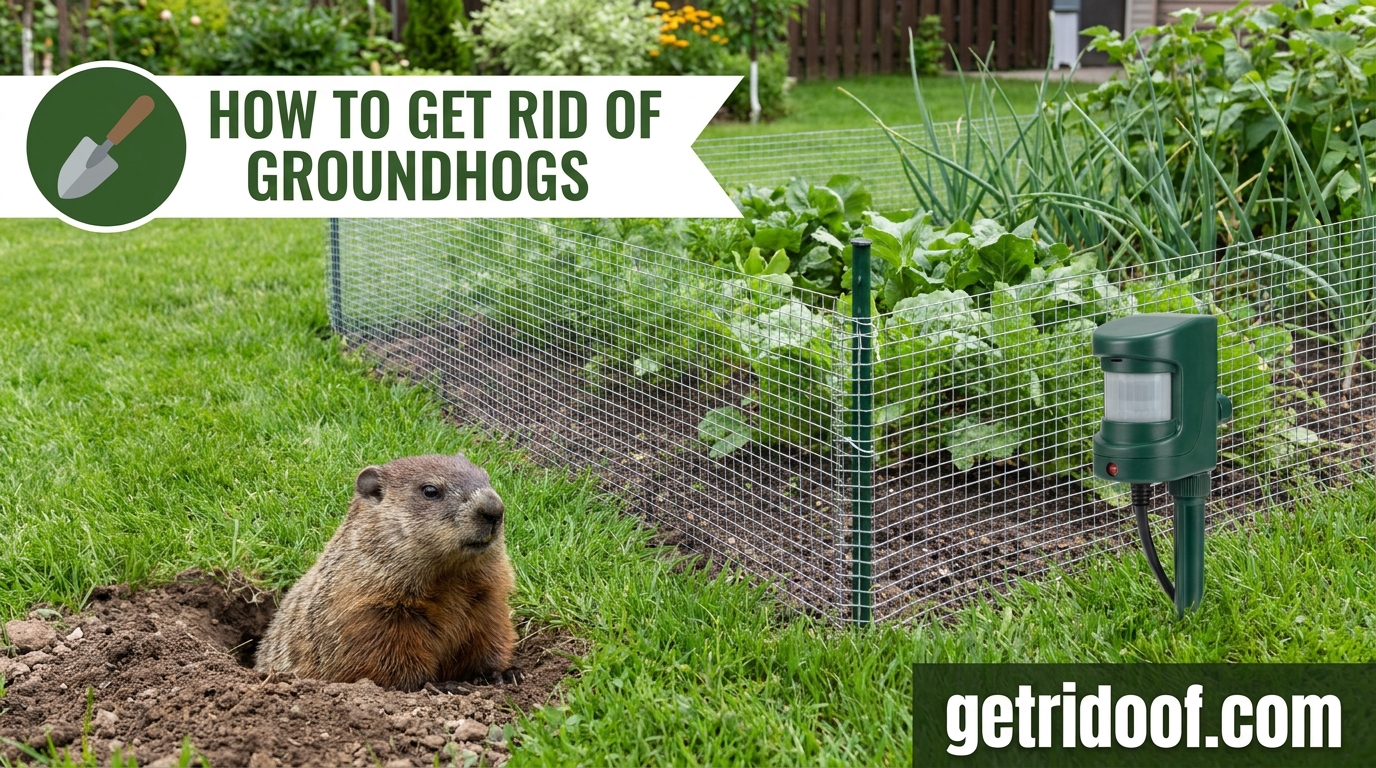
4. Install a Groundhog Fence
A well-installed fence is the best way to keep groundhogs out of your garden for the long run. Because they are excellent diggers and decent climbers, a standard garden fence will not stop them.
How to build a groundhog-proof fence:
- Use heavy-gauge welded wire or 2-inch woven mesh wire
- Make the fence at least 3 feet tall
- Bury the bottom 12 inches underground. Bend the bottom 6 inches outward at a 90-degree angle. This stops them from digging underneath.
- Bend the top 15 inches outward at a 45-degree angle — this stops them from climbing over
- For extra protection, add an electric wire 4 to 5 inches outside the fence and 4 to 5 inches off the ground
Yes, it takes some effort to install. But once it is up, it is the most dependable barrier available.
5. Use Motion-Activated Devices
Electronic deterrents work by startling groundhogs every time they approach a protected area. Over time, they learn to associate your yard with danger and avoid it.
Effective motion-activated options:
- Sprinkler systems: Spray a burst of water when triggered. Works well around garden perimeters.
- Ultrasonic spike stakes: Emit vibrations or sounds through the ground, disturbing groundhogs underground.
- Light emitters: Flash bright light when triggered. Place these near burrow entrances at night.
- Mylar balloons and reflective tape sway in the wind and shine brightly. This makes groundhogs feel uneasy.
Place these devices near burrow entrances and along common pathways. Rotate their positions occasionally so the groundhogs do not get used to them.
6. How to Get Rid of Groundhogs Using Live Traps
Trapping is one of the most direct and effective ways to remove a groundhog from your property. Live traps allow you to catch and relocate the animal without harming it.
Step-by-step live trapping guide:
Step 1 — Choose the right trap Use a live trap at least 10 to 12 inches wide and 32 inches long. Wire cage traps are ideal. Brands like Havahart make traps specifically sized for groundhogs.
Step 2 — Wear gloves Always handle the trap with gloves to avoid leaving your scent on it. Groundhogs are cautious and may avoid a trap that smells like a human.
Step 3 — Bait the trap correctly Use fresh fruits and vegetables as bait. The best options are:
- Cantaloupe or watermelon
- Sweet corn
- Peas or beans
- Peaches or apples
- Lettuce
Place the bait at the very back of the trap so the groundhog must fully enter to reach it.
Step 4 — Place the trap near the burrow Set the trap within 5 feet of the burrow entrance. Position it along the groundhog’s main path. Camouflage it with leaves or grass.
Step 5 — Check the trap frequently Check at least twice a day — morning and evening. Never leave a groundhog in a trap for more than a few hours, especially in heat.
Step 6 — Relocate safely Cover the trap with a towel or tarp before moving it to keep the animal calm. Relocate the groundhog at least 5 miles away in a wooded area with water nearby. Anything less and it may find its way back.
⚠️ Important: Laws about trapping and relocating wildlife vary by state and region. Always check with your local wildlife or conservation department before trapping. In some areas, it is illegal to relocate wildlife.
7. Make the Burrow Uninhabitable
If you want to encourage a groundhog to leave on its own, you can make its current home uncomfortable.
Methods to disrupt a burrow:
- Flood the hole with water using a garden hose. This makes the tunnel wet and unlivable, pushing the groundhog out.
- Pour ammonia into the tunnel openings. The fumes are unbearable to groundhogs and will cause them to abandon the burrow quickly.
- Fill the burrow with dirt or rocks after you are confident the groundhog has left. This prevents re-occupation.
- Block abandoned burrow openings with wire mesh to stop other animals from moving in.
Always confirm the groundhog has left before sealing any holes. You do not want to trap an animal inside.
You Can Also Read
- How to Get Rid of Carpet Beetles
- How to Get Rid of Boxelder Bugs
- How to Get Rid of Wasps
- How to Get Rid of Flies Outside
How to Get Rid of Groundhogs Under a Shed or Deck
A common complaint is groundhogs digging under sheds, decks, and home foundations. This is particularly damaging because it weakens the structural supports beneath these areas.
Solution:
- Install a wire mesh skirt around the base of the shed or deck
- Bury it at least 12 inches deep, with the bottom bent outward
- Use a live trap near the burrow entrance to remove the current resident
- Once removed, fill the burrow with dirt and then install the barrier
- Place repellents around the perimeter as an added deterrent
Act quickly if you spot a burrow under a structure. The longer you wait, the deeper and more damaging the tunnel system becomes.
When to Call a Professional Groundhog Removal Service
Sometimes the problem is bigger than DIY methods can handle. It is time to call a professional wildlife removal service when:
- You have multiple groundhogs or a large colony
- The burrows are damaging your foundation, driveway, or barn
- You are unsure of your local laws around trapping or relocation
- You have tried several methods and the groundhog keeps coming back
- You worry about safety. Groundhogs can scratch or bite, and they might carry rabies in rare cases.
A licensed pest control or wildlife removal expert will check your property. They will use the right traps and methods. Then, they’ll give advice on long-term prevention. They are also familiar with local ordinances, which removes the legal guesswork.
How to Keep Groundhogs Away for Good
Getting rid of groundhogs is only half the battle. The other half is making sure they do not come back.
Long-term prevention tips:
- Keep your yard clean and free of debris year-round
- Maintain your fence and check for damage after winter
- Reapply natural repellents every few weeks during active season
- Fill any abandoned burrows promptly
- Keep an eye on the garden border from March onward
- Plant a full herb border of lavender, mint, and rosemary around your vegetable garden.
Consistency is key. A well-kept yard is much less appealing to woodchucks searching for a safe burrowing spot.
Quick Reference: Best Methods by Situation
| Situation | Best Method |
| Early signs / small problem | Remove attractants + repellents |
| Garden being eaten | Fence + repellent plants |
| Groundhog under shed | Live trap + wire mesh barrier |
| Multiple groundhogs | Live trapping + professional removal |
| Persistent digger | Fence + motion-activated sprinkler |
| Want a long-term fix | Fence + herb border + clean yard |
FAQ’s
What is the fastest way to get rid of groundhogs?
Live trapping and relocating is the fastest method for removing an active groundhog. Combine it with removing food sources and installing a fence to prevent return.
Does castor oil really work on groundhogs?
Yes. Castor oil is a proven natural repellent. Apply it around burrow holes and garden edges. It must be reapplied after rain to stay effective.
How deep do groundhogs burrow?
Groundhogs can dig burrows up to 6 feet deep and 25 feet long, with multiple chambers and exits.
Is it legal to trap and relocate groundhogs?
Laws vary by location. In some states, relocating wildlife is restricted or requires a permit. Always check with your local wildlife agency first.
What time of day are groundhogs most active?
Groundhogs are diurnal. They are active during the day, mostly in the early morning and late afternoon.
Conclusion on How to Get Rid of Groundhogs
Dealing with groundhogs takes patience, but it is absolutely manageable. The best way is to use different methods. Remove attractants, use natural repellents, install proper fencing, and trap when needed.
The key to success is acting early. The moment you spot a burrow or notice damage, take action. Waiting only gives them time to expand their tunnel system and multiply. Using a live trap, castor oil spray, or a fenced garden can help you manage groundhogs. This way, you take control of your yard. Keep your garden work where it belongs — on your plate, not theirs.
About the Author