Cold sores are one of the most common and frustrating skin conditions out there. One day your lip feels a little tingly, and the next — you have a full-blown blister staring back at you in the mirror. If you want to know how to get rid of cold sores quickly and effectively, you’re in the right place.
This guide has everything: causes of outbreaks, fast treatments, and tips to prevent the next one.
What Exactly Is a Cold Sore?
A cold sore, or fever blister, is a small, fluid-filled blister. It typically shows up on or near the lips, under the nose, or around the chin. They are caused by the herpes simplex virus type 1 (HSV-1).
Here’s something that might surprise you: according to the CDC, more than 50% of adults in the United States carry HSV-1. Many never develop visible symptoms. But for those who do, cold sores can be painful, unsightly, and incredibly inconvenient.
Once you contract the virus, it stays in your body permanently. It lives dormant in nerve cells and reactivates when triggered.
The 5 Stages of a Cold Sore
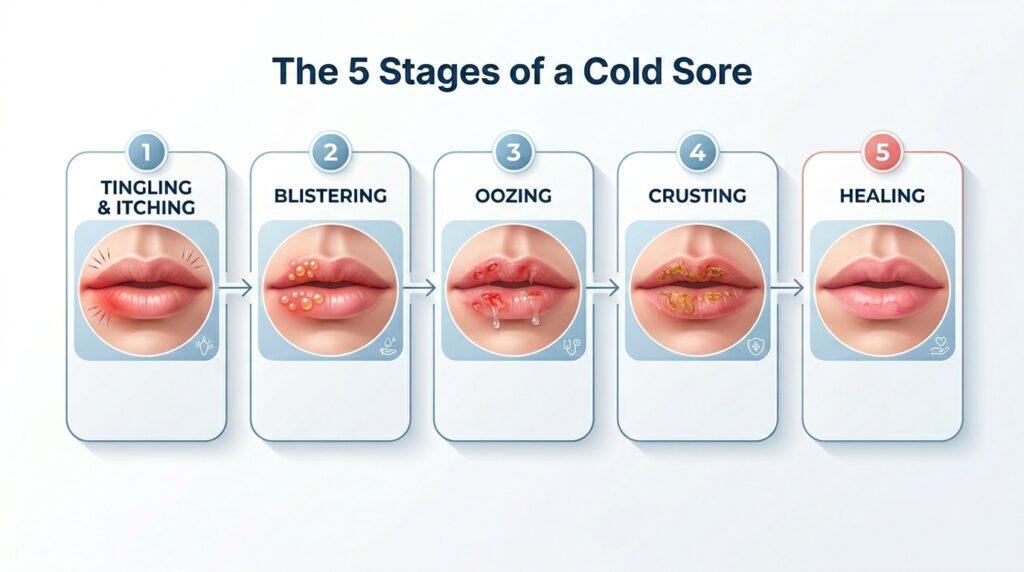
Understanding the stages helps you treat it faster. Here’s what to expect:
- Tingling & Itching — You feel a burning or itching sensation before anything appears. This is the best time to start treatment.
- Blistering — Small, fluid-filled blisters form, usually in clusters.
- Oozing — The blisters burst and release fluid. This stage is the most contagious.
- Crusting — The sore dries out and forms a scab.
- Healing — The scab falls off naturally. Most cold sores heal within 7 to 14 days.
Pro Tip: The earlier you start treatment, the faster you heal. Ideally, act at the first sign of tingling.
How to Get Rid of Cold Sores: Your Best Treatment Options
Prescription Antiviral Medications
The quickest way to eliminate cold sores is with prescription antiviral medicine. These drugs work by stopping the herpes simplex virus from replicating.
Common options include:
- Acyclovir (Zovirax) — Available as a cream or oral pill
- Valacyclovir (Valtrex) — Oral tablet, highly effective
- Famciclovir (Famvir) — Another oral antiviral option
- Penciclovir (Denavir) — A topical cream applied directly to the sore
These medications work best when taken within 24 to 48 hours of your first symptoms. They can shorten the duration of an outbreak by one to two days and reduce pain significantly.
If you often get cold sores, your doctor might suggest daily suppression therapy. This can help prevent future outbreaks.
Over-the-Counter Cold Sore Treatments
Can’t get to the doctor right away? There are several effective OTC options available at your local pharmacy.
Antiviral creams:
- Docosanol (Abreva) — This is the only FDA-approved OTC antiviral for cold sores. Apply it at the first tingle, multiple times a day. Studies show it can shorten healing time similarly to prescription creams.
Pain-relieving creams:
- Creams containing lidocaine or benzocaine numb the area and ease discomfort. Look for them in the dental aisle — they’re often marketed for toothache pain.
- Look for ingredients like benzocaine, lidocaine, or tetracaine on the label.
Cold sore patches:
- Hydrocolloid patches shield the sore. They keep it moist and lower the chance of spreading the virus. They also help hide the sore while it heals.
How to Get Rid of Cold Sores with Home Remedies
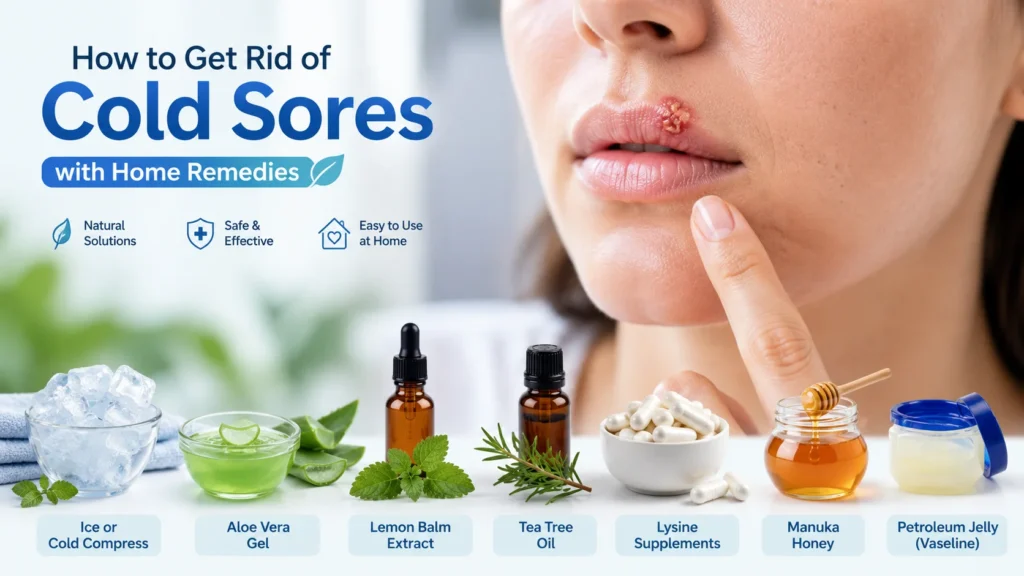
For a natural way to feel better, try these home remedies. They can ease symptoms and help you heal while waiting for medication.
Ice or Cold Compress Apply a cold, damp washcloth to the sore for 5 to 10 minutes several times a day. This reduces redness, swelling, and pain. Never apply ice directly to your skin — wrap it in a cloth first.
Aloe Vera Gel Aloe vera has antiviral and anti-inflammatory properties. Some studies say it may help fight the herpes simplex virus. It can also soothe irritation. Do a patch test on your arm first.
Lemon Balm Extract Research has shown that lemon balm can help cold sores heal faster. It contains compounds that fight HSV-1 and reduce redness and swelling.
Tea Tree Oil Tea tree oil has strong antiviral properties. Dilute it with a carrier oil (like coconut oil) before applying to the sore. Never use it undiluted on skin.
Lysine Supplements Lysine is an amino acid. It may help stop cold sores by blocking arginine. Arginine is what the HSV-1 virus needs to grow. It’s available as both a cream and an oral capsule. Many people who experience frequent outbreaks take it daily.
Manuka Honey A 2021 study found that medical-grade Manuka honey could work as well as some regular cold sore treatments. Apply a thin layer to the sore a few times daily.
Petroleum Jelly (Vaseline) Petroleum jelly won’t speed up healing. However, it helps keep the sore moist. It prevents cracking and protects against bacterial infections.
Pain Relief: How to Feel Better Right Now
Beyond treating the sore itself, managing pain and discomfort is important. Here’s what helps:
- Ibuprofen or acetaminophen — Reduce inflammation and relieve soreness
- Numbing gels — Look for benzocaine or lidocaine-based products
- Avoid acidic or salty foods — These can sting and irritate the sore
- Stay hydrated — Drinking plenty of water supports immune function and healing
You Can Also Read
Should You Pop a Cold Sore?
No. Never pop or squeeze a cold sore.
It might be tempting — but popping a cold sore can:
- Spread the virus to other parts of your face
- Introduce bacteria and cause an infection
- Leave a scar
- Extend the healing time
Let the sore go through its natural stages and heal on its own. Once it scabs over, resist the urge to pick at it too.
How Long Are Cold Sores Contagious?
This is one of the most common questions people have — and the answer is important.
Cold sores are contagious. They spread from the first tingle until they heal completely. The most contagious period is when the blister is oozing and weeping fluid.
You can spread the virus through:
- Kissing or close facial contact
- Sharing lip balm, utensils, razors, or towels
- Touching the sore and then touching another person
Even when no sore is visible, HSV-1 can still be shed and spread. Practice good hygiene and avoid sharing personal items at all times.
Common Cold Sore Triggers to Avoid
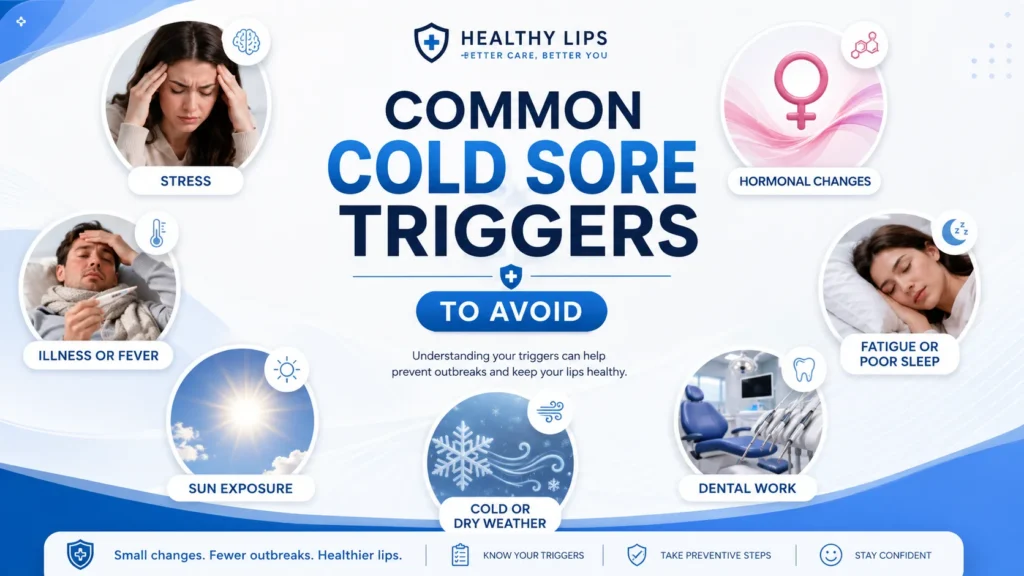
Cold sores don’t appear randomly — they’re usually triggered by something. Knowing your triggers is one of the best ways to prevent future outbreaks.
Common triggers include:
- Stress — Emotional or physical stress weakens the immune system
- Illness or fever — A cold, flu, or infection can activate the virus (hence the name “fever blister”)
- Sun exposure — UV rays are a well-known trigger; always use SPF lip balm
- Hormonal changes — Menstruation, pregnancy, or hormonal shifts
- Fatigue or poor sleep can weaken your immune system. This makes it easier for an outbreak to happen.
- Cold or dry weather — Can crack lips and trigger the virus
- Dental work — Trauma around the mouth can cause a flare-up
How to Prevent Cold Sores From Coming Back
Once you learn how to get rid of cold sores, the next step is keeping them from returning. Here are proven prevention strategies:
Use SPF Lip Balm Daily Apply a lip balm with at least SPF 30 before going outside. Sun exposure often triggers outbreaks, but protection greatly cuts down their frequency.
Manage Stress Try daily stress-reduction techniques. You can use meditation, yoga, deep breathing, or regular exercise. Reducing cortisol levels supports a stronger immune system.
Boost Your Immune System
- Eat a balanced diet rich in vitamins C and E
- Get 7 to 9 hours of sleep each night
- Consider lysine supplements (consult your doctor first)
- Stay physically active
Keep Antivirals on Hand If you often have outbreaks, ask your doctor about having a prescription antiviral at home. Start treatment at the first tingle. This can sometimes prevent a blister and stop the outbreak completely.
Practice Good Hygiene During Outbreaks
- Wash your hands frequently
- Avoid touching the sore
- Replace lip balm and toothbrush after the sore heals
- Don’t share items that touch your mouth
Vitamins and Supplements That May Help
Some vitamins and nutrients may help prevent and heal cold sores.
| Supplement | Potential Benefit |
| Lysine | May reduce frequency and severity of outbreaks |
| Vitamin C | Shown to inactivate the herpes simplex virus in studies |
| Vitamin E | May help heal cold sores faster when applied topically |
| Zinc | Has antiviral properties; may shorten outbreaks |
| Propolis | A bee resin shown to have antiviral effects against HSV-1 |
Always talk to a healthcare provider before starting any new supplement, especially in high doses.
When to See a Doctor About Cold Sores
Most cold sores clear up on their own or with OTC treatment. However, see a doctor if:
- Your cold sores last more than 2 weeks
- Outbreaks happen more than 6 times per year
- The sore spreads to your eyes — this is a medical emergency, as it can cause vision damage
- You have a weakened immune system (due to HIV, chemotherapy, or organ transplant)
- There are signs of a bacterial infection (spreading redness, warmth, pus)
- Cold sores appear on infants or young children
In these cases, a doctor might give stronger antiviral treatment or look into what’s causing the issue.
Frequently Asked Questions
Can I get rid of a cold sore overnight?
Realistically, no — not completely. Starting treatment right away, especially with prescription antivirals, can lessen size and pain in just 24 hours.
Is a cold sore the same as genital herpes?
No. Cold sores are typically caused by HSV-1, while genital herpes is usually caused by HSV-2. That said, both viruses can technically affect either location.
Can I wear makeup over a cold sore?
It’s best to avoid it during active outbreaks. Makeup can irritate the sore and spread the virus to brushes and applicators. If you must, use disposable applicators and throw them away afterward.
Are cold sores a sign of a bad immune system?
Not necessarily. Over half the population carries HSV-1. Outbreaks can affect anyone, but people with weak immune systems may face them more often.
Conclusion: How to Get Rid of Cold Sores for Good
There’s no permanent cure for herpes simplex virus, but you have more control than you think. To get rid of cold sores quickly, act fast. Treat them early, ideally at the first tingle, with the right antiviral medication.
Use a mix of medical care and smart prevention. Protect your lips from the sun. Manage stress. Support your immune system. Also, keep antivirals nearby. Over time, many people find that their outbreaks become less frequent and less severe.
You don’t have to let cold sores control your life. With the right knowledge and tools, you can treat them quickly and minimize how often they come back.
This article is for information only. It’s not a replacement for professional medical advice. Always consult a qualified healthcare provider for diagnosis and treatment.
About the Author