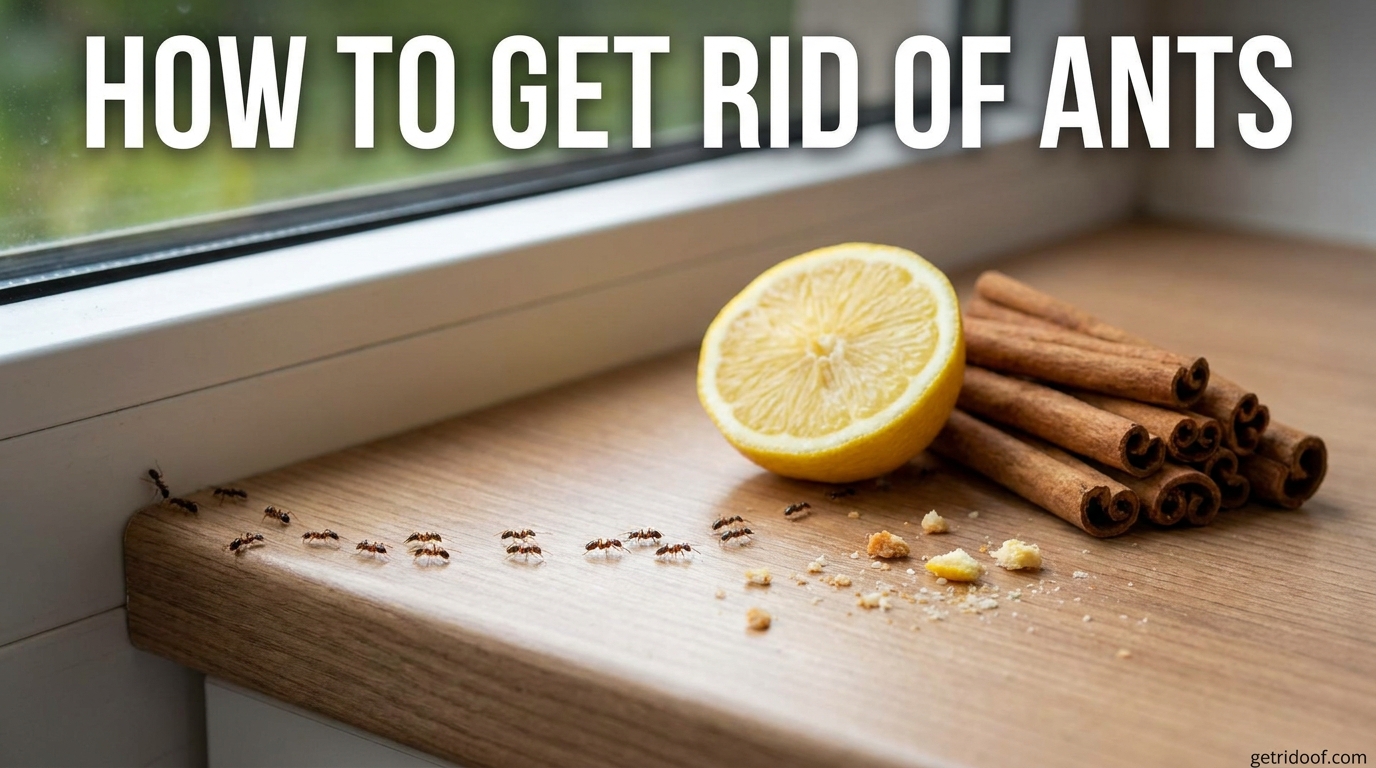
Ants are one of the most common household pests in the world. One day your kitchen is clean, and the next — there’s a trail of tiny invaders marching across your counter. If you’re dealing with this problem, you’re not alone. Millions of homeowners search for how to get rid of ants every single year.
The good news? You don’t always need to call a professional. You can get rid of ants fast, stop them from returning, and protect your home for good with the right approach. This guide covers it all: identifying ant types, natural remedies, chemical treatments, and long-term prevention.
Why Do Ants Invade Your Home?
Before you can solve the problem, it helps to understand why ants come inside in the first place.
Ants are always searching for three things: food, water, and shelter. Your home provides all three. Experts at Orkin say poor sanitation causes most ant infestations. Unwashed dishes, food crumbs on the floor, and open trash attract foraging ants.
But it’s not just food. Ants also enter homes during:
- Heavy rain — they seek dry, warm shelter
- Droughts and dry heat — they look for water indoors
- Nearby construction — disturbed nests push colonies to find new territory
Once a scout ant finds food or water, it leaves a chemical pheromone trail for others to follow. That’s why you never see just one ant — you see dozens, all marching along the same invisible path.
How to Identify Your Ant Problem
Not all ants are the same. Knowing the type of ant you have helps you pick the best treatment to eliminate them for good.
Common ant types include:
- Sugar ants — attracted to sweet foods, common in kitchens
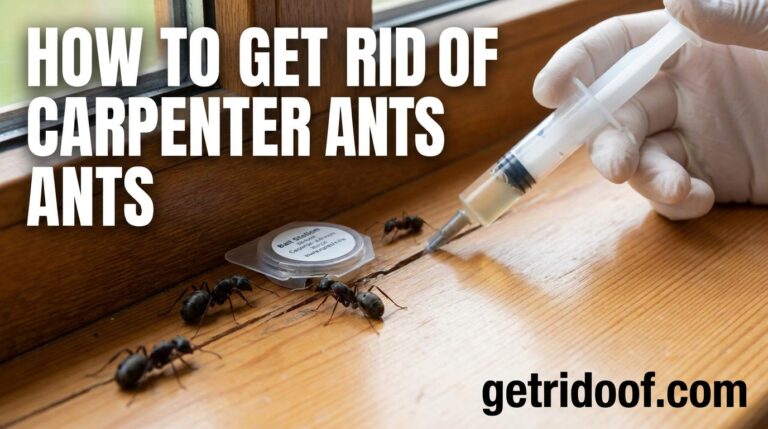
- Carpenter ants — live inside wood and can cause structural damage
- Fire ants — aggressive, found in gardens and yards, painful if they sting
- Black garden ants — very common household species, mostly harmless
- Odorous house ants — smell like rotten coconut when crushed
If you spot large ants near wood in your home, act fast. They might be carpenter ants that can cause serious damage.
How to Get Rid of Ants: Step-by-Step
Step 1 — Find the Ant Trail and Entry Points
The most important thing you can do first is follow the ants. Watch where they come from and where they go. Look for:
- Cracks in baseboards, walls, or floors
- Gaps around window frames and doors
- Openings around pipes and electrical wiring
- Potted plants indoors (a hidden nesting spot)
Tracing the trail leads you to the entry point — and fixing that is half the battle.
Step 2 — Remove What’s Attracting Them
You won’t get rid of ants permanently if you leave the food and moisture sources in place. Clean up the root cause first:
- Wipe down counters and stovetops after every meal
- Store sugar, honey, and syrup in sealed containers
- Sweep floors regularly to remove crumbs
- Fix leaky faucets and pipes (ants need water too)
- Empty the trash daily
- Keep pet food bowls clean and don’t leave them out overnight
This alone can dramatically reduce ant activity within a few days.
How to Get Rid of Ants Naturally (DIY Methods)
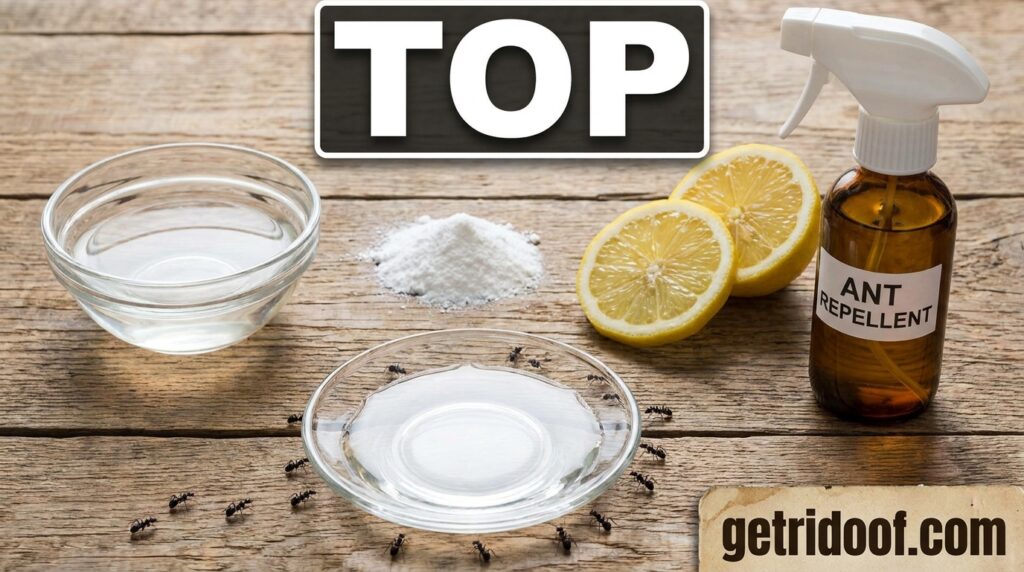
Many homeowners like to begin with natural, chemical-free methods. This is especially true for families with children or pets. Here are the most effective options.
White Vinegar Spray
White vinegar disrupts the pheromone trails ants use to navigate. Mix equal parts white vinegar and water in a spray bottle. Spray directly on ants and wipe down surfaces where you’ve seen them. Repeat daily until activity stops.
It won’t kill ants but will confuse them and remove their scent trails.
Diatomaceous Earth (DE)
Food-grade diatomaceous earth is one of the most effective natural ant killers. It’s made from the fossilized remains of tiny aquatic organisms. When ants walk on it, the fine powder soaks up oils from their exoskeleton. This dehydrates and kills them.
Sprinkle it along entry points, baseboards, and anywhere ants travel. Keep it dry to maintain effectiveness. Avoid breathing it in — it’s harmless to swallow but irritating to the lungs.
Boric Acid + Sugar Bait
This is one of the most powerful DIY methods for how to get rid of ants inside the home. Mix:
- 1/2 teaspoon boric acid
- 8 teaspoons sugar
- 1 cup warm water
Soak cotton balls in the mixture and place them near ant trails. Ants carry the bait back to the colony, eventually killing the queen and wiping out the nest. Keep away from pets and children.
Peppermint Essential Oil
A 2020 study found that peppermint oil effectively repels several ant species. Mix 10–20 drops of peppermint oil with 2 cups of water and spray around baseboards, windows, and entry points. Reapply every few days.
Note: Keep peppermint oil away from cats, as it can make them very ill.
Cinnamon, Cayenne Pepper, and Coffee Grounds
These act as natural repellents. Sprinkle them around entry points and baseboards. Ants dislike the strong smell and tend to avoid areas where these are present. While not a permanent solution, they work well as a barrier alongside other methods.
Glass Cleaner and Dish Soap
Mix liquid dish soap with glass cleaner. Spray the mixture on ant paths. This removes pheromone trails and may kill ants on contact. Wipe down surfaces after spraying to leave a light residue.
Cinnamon Leaf Essential Oil
Cinnamon leaf essential oil is a strong natural ant repellent. The strong scent disrupts the pheromone trails ants use to communicate and navigate.
How to use it:
- Add 10–15 drops of cinnamon leaf essential oil to a spray bottle filled with water
- Spray along ant trails, entry points, windowsills, and baseboards
- Repeat daily for best results
You can also place cinnamon sticks near doorways or kitchen corners as a natural barrier. Sprinkling ground cinnamon powder at entry points helps too. The scent masks pheromone trails, so it keeps ants from coming in.
Cornstarch
Cornstarch is an effective and safe method to eliminate ants. Ants cannot digest cornstarch properly, making it fatal when consumed.
How to use it:
- Place small piles of cornstarch near visible ant trails or suspected nesting areas
- Alternatively, pour cornstarch over a group of ants. Then, add water. This traps and kills them.
- Clean up the residue with a vacuum or damp cloth
This method is very safe for homes with children and pets. Cornstarch is harmless to humans.
Chalk
Drawing chalk lines near entry points is an old but surprisingly useful method to get rid of ants. The calcium carbonate in chalk is believed to interfere with ant pheromone trails.
How to use it:
- Draw thick lines across doorways, windowsills, and cracks where ants enter
- Reapply the chalk lines every few days, especially after rain
- Use chalk powder instead of lines for longer-lasting coverage
Chalk is not a permanent solution, but it works well as a quick and easy short-term deterrent. Seal cracks with adhesive barriers. This blocks entry points and stops ants from getting in.
Neem Oil
Neem oil is a natural pesticide derived from the neem tree. It’s a great ant repellent. It also disrupts insect reproduction over time.
How to use it:
- Mix 10–15 drops of pure neem oil with water and a few drops of dish soap
- Spray the solution along ant trails, entry points, and garden areas
- Use it around plant bases in the garden to protect crops from ant damage
Neem oil is safe for plants, humans, and pets when used correctly. It is an especially popular choice in organic gardens and eco-friendly homes.
Lemon Eucalyptus Oil
Lemon eucalyptus oil is a powerful natural insect repellent. It has compounds that irritate ants, making it a top essential oil for naturally getting rid of them.
How to use it:
- Mix 20 drops of lemon eucalyptus oil with water in a spray bottle
- Spray around ant entry points, kitchen counters, and baseboards
- Reapply every 2–3 days for ongoing protection
The fresh citrus scent also leaves your home smelling clean and pleasant. Lemon juice is a cheap option. Mix one part lemon juice with three parts water. Spray it where ants gather.
Oil of Lemon Eucalyptus (OLE)
Oil of Lemon Eucalyptus (OLE) is not the same as lemon eucalyptus essential oil. OLE is a stronger extract that has been studied for its effectiveness against insects.
Key benefits of OLE:
- Works as a strong contact deterrent against ants
- Disrupts pheromone communication between ant colonies
- Safe to use indoors and outdoors
Spray OLE-based products around your home, garden, and outdoor areas. Focus on spots where ants are most active. It is widely available in natural pest control products.
Relocating Ant Nests
If you have an ant nest near your home but do not want to kill the ants, relocating the nest is an ethical and humane option. This method is popular with people who want to handle ants gently.
How to relocate an ant nest:
- Locate the nest carefully
- Place a container filled with wool or straw directly on top of the nest
- Wait a day or two for the ants to move into the container
- Carefully carry the container to a wide open space far from your home
- Gently release the ants in a suitable location away from buildings
This method works best for smaller nests. It requires patience but is the most humane way to get rid of ants without killing them.
Baking Soda
Baking soda is one of the most popular and budget-friendly natural ways to get rid of ants. It reacts with the acid in an ant’s digestive system, ultimately killing them.
How to use it:
- Mix equal parts baking soda and sugar together
- Place the mixture in shallow dishes near ant trails and entry points
- The sugar attracts the ants, and the baking soda does the work
This bait method works well because ants take the mixture back to their colony. This kills even more ants at the source. It is completely non-toxic, safe for children, and inexpensive to make at home.
Copper Coins
Ants have a natural aversion to copper. Putting copper coins or wire near ant entry points makes a barrier. This keeps ants from crossing.
How to use it:
- Lay copper coins near the areas where ants regularly enter your home
- Fasten a copper wire along the floor at entry points
- Place coins near ant nests to discourage the colony from spreading
Copper coins are a completely non-toxic, chemical-free deterrent. They aren’t a complete solution alone, but they fit well in a bigger ant-prevention plan.
You Can Also Read
How to Get Rid of Ants with Chemical Methods
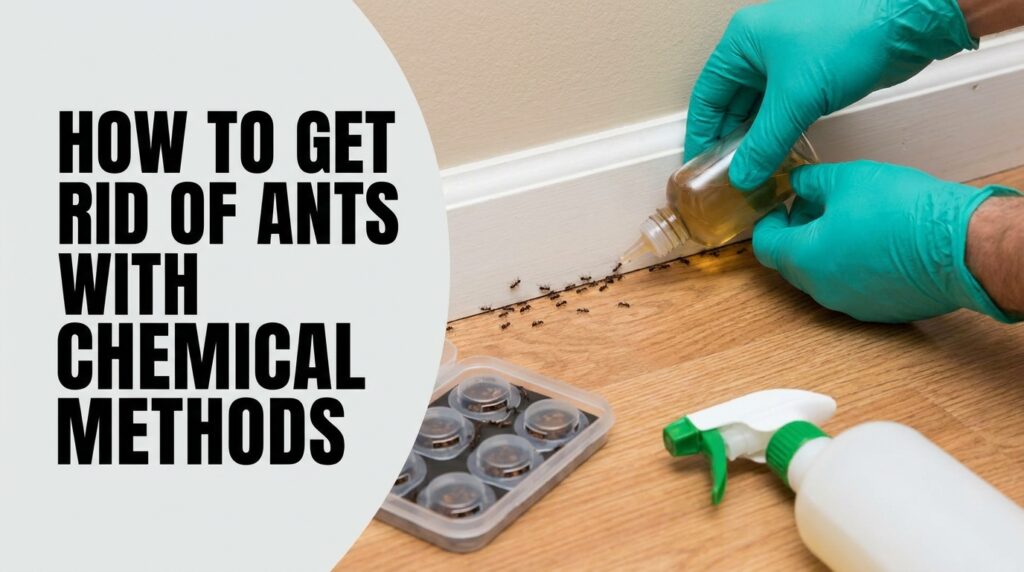
When natural methods fail, chemical treatments can quickly and effectively eliminate infestations.
Ant Bait Stations
Bait stations are considered the most effective way to get rid of ants for most infestations. Products like Terro Liquid Ant Bait work by attracting ants with a sweet gel. The ants take the toxic bait to their colony. They share it, which kills the queen and the whole nest.
Important tips when using bait stations:
- Place them near ant trails, not directly on them
- Don’t spray insecticide near the bait — it will repel ants from using it
- Be patient — it takes 3–7 days to see full results
- At first, you may see more ants. This is normal — they’re feeding on the bait
Insecticide Sprays
Contact sprays kill ants on the spot but don’t reach the colony. They’re useful for:
- Knocking down large visible infestations quickly
- Treating entry points as a barrier
- Outdoor perimeter treatment around the home’s foundation
Choose sprays specifically labeled for ants and always follow safety instructions. Keep people and pets away from treated areas until dry.
Ant Granules for Outdoor Use
For yard and garden infestations, ant granules work well. Scatter them around mounds, garden beds, and the perimeter of your home. Water lightly after application to activate the granules. They work over several days and are especially effective for fire ants.
Safety Tips for Chemical Methods
- Always read the label before use
- Store chemicals out of reach of children and pets
- Never apply indoor sprays near food preparation surfaces
- Wear gloves when handling concentrated products
- Ventilate the area during and after indoor application
When to Call a Professional Exterminator
Sometimes DIY methods aren’t enough. Call a pest control professional if:
- The infestation is large — ants are in multiple rooms or throughout the home
- You suspect carpenter ants — structural damage is a risk
- You have pharaoh ants. They need special treatment because regular sprays make them split and spread more.
- DIY methods have failed after 2–3 weeks
- You have a sensitive home with young kids, elderly family, or pets. This makes DIY with chemicals risky.
A licensed exterminator will find the species, locate the nest, and use targeted treatments. They may also offer a prevention plan to stop reinfestations.
How to Prevent Ants from Coming Back
Getting rid of ants is only half the job. Keeping them out long-term requires consistent habits.
Seal Entry Points
- Use caulk to seal cracks in walls, baseboards, and around window frames
- Install door sweeps on exterior doors
- Check where pipes and cables enter the home and seal gaps
Maintain a Clean Home
- Clean up food spills immediately
- Don’t leave dirty dishes in the sink overnight
- Store pantry items in sealed glass or plastic containers
- Take out garbage regularly
Remove Outdoor Attractions
- Keep firewood stored away from the home’s exterior
- Trim tree branches and shrubs that touch the house — these act as ant highways
- Fix drainage issues that create standing water near the foundation
Seasonal Checks
Spring is peak ant season. As temperatures rise, ant colonies become active and start expanding. Walk around your home every spring and check for new entry points, cracks, or signs of nesting. Catching the problem early saves a lot of effort later.
Quick Reference: Natural vs. Chemical Methods
| Method | Best For | Speed | Pet/Child Safe |
| Vinegar Spray | Disrupting trails | Immediate | Yes |
| Diatomaceous Earth | Entry points | 1–3 days | Yes (when dry) |
| Boric Acid Bait | Colony elimination | 3–7 days | No |
| Peppermint Oil | Repelling ants | Immediate | Not for cats |
| Ant Bait Stations | Full colony kill | 3–7 days | Check label |
| Insecticide Spray | Quick knockdown | Immediate | No |
| Ant Granules | Outdoor colonies | 3–5 days | Check label |
How to Get Rid of Ants the Islamic Way
For Muslim households, getting rid of ants involves more than just a practical issue. It touches on faith, ethics, and respect for all creation. Islam teaches that all living beings, even insects, are part of Allah’s creation. They should not be harmed without a good reason.
What Does Islam Say About Killing Ants?
Islamic teachings and hadith (sayings of Prophet Muhammad ﷺ) generally discourage killing ants. You should only do it if they cause harm. A famous hadith from Abu Hurayrah (may Allah be pleased with him) tells us that a Prophet was stung by an ant. He ordered the burning of the whole ant colony. Allah gently rebuked him for this, as the colony contained creatures that praised Him.
For Muslim households, a key question arises: Is it allowed to kill ants in Islam?
Islamic scholars say it is disliked (makruh) to kill ants without a good reason. If ants are harming you or your property, it’s okay to remove or kill them.
Key Islamic guidelines on dealing with ants:
- Relocate if you can. Moving ants away from your home without harming them is the best option.
- Only kill if needed. If ants damage property or pose health risks, removal is okay.
- Avoid painful methods. Causing prolonged suffering to any creature is not accepted in Islam. The Prophet ﷺ said: “Allah has prescribed excellence for everything. So when you kill, kill well.” (Muslim)
- Do not use fire. Burning ants is not allowed because the Prophet ﷺ banned punishment with fire.
- Recite Surah An-Naml (27:18). Many scholars say this verse can help keep ants away without harming them.
The best Islamic approach is to start with natural deterrents. Seal entry points and keep food sealed. Use copper coins and move nests when you can. If the infestation gets bad and hard to deal with, you can try humane pest control methods. Killing ants using fire or burning is strictly forbidden in Islam under all circumstances.
Frequently Asked Questions
Why do I suddenly have so many ants?
An ant surge often means a scout found food or water in your home. It leaves a pheromone trail for the colony to follow. Weather changes — heavy rain or heat — can also drive ants inside.
Does killing ants attract more ants?
Yes. Dead ants release pheromones that can attract other ants. Always clean up dead ants and wipe the surface to remove scent signals.
How long does it take to get rid of ants?
DIY methods typically take 3–14 days to show full results, depending on colony size. Bait stations take longer but are more thorough. Professional treatments can work in 24–72 hours.
Can ants come back after treatment? .
Yes, if entry points remain unsealed or food sources are not removed. Prevention is just as important as treatment.
Are ants dangerous?
Most household ants are harmless nuisance pests. Carpenter ants can harm structures. Fire ants can sting and cause pain. Pharaoh ants may lead to rare bacterial contamination.
Concolusion on How to Get Rid of Ants
Dealing with ants is frustrating — but it’s a very solvable problem. The key is acting on multiple fronts at once: remove the attraction, disrupt the trail, kill the colony, and seal entry points.
Start with natural methods if you have children or pets. Move to bait stations for stubborn infestations. And don’t hesitate to call a professional if the problem persists. With the right approach, you can get rid of ants for good — and keep your home ant-free season after season.
The sooner you act, the easier it is. By the time you spot ants inside, a large colony may already be nearby. Take action today and take back your home.
About the Author