Have you ever walked into your kitchen and found tiny flies swarming around your fruit bowl? Or noticed little black bugs hovering over your houseplants? If so, you already know how frustrating it is to deal with a gnat problem. The good news is that knowing how to get rid of gnats in house does not require an exterminator or expensive products. With the right approach, you can eliminate them fast — and stop them from coming back.
In this guide, you’ll discover what draws gnats inside. You’ll also find effective home remedies, natural solutions, and long-term prevention habits.
What Are Gnats and Why Are They in Your Home?
Gnats are tiny flying insects, usually around 1–2 mm in size. They often get confused with fruit flies or baby mosquitoes, but they are a different pest.
There are three main types you are likely to find inside your home:
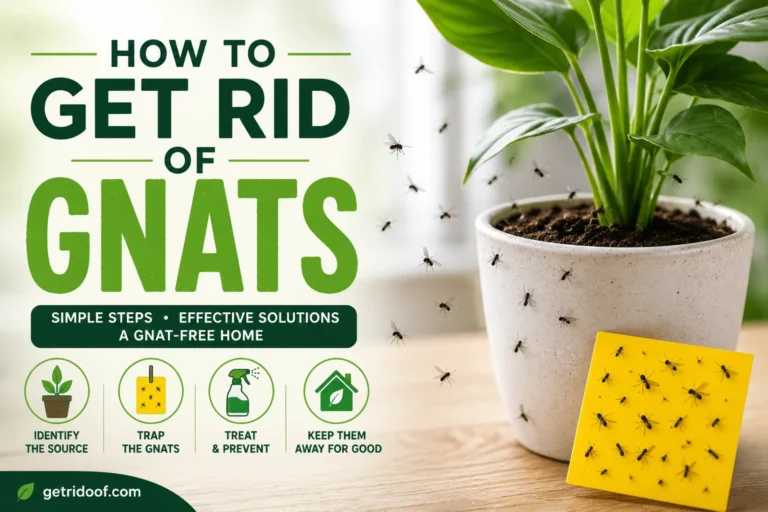
- Fungus gnats — dark, long-legged flies found near the damp soil of houseplants. Their larvae feed on plant roots, which can damage young or sensitive plants.
- Fruit flies are tiny, round, brownish flies. They are drawn to overripe or rotting fruit, sugary spills, and garbage.
- Drain flies are tiny, moth-like insects. They breed in the moist, organic buildup found in your kitchen or bathroom drains.
Knowing which type you are dealing with is the first step toward getting rid of them effectively. Each type needs a slightly different fix.
What Causes Gnats in the House?
Before you can solve a gnat problem, you need to understand what is inviting them in. Gnats thrive in warm, moist environments with access to organic material.
The most common causes include:
- Overwatered houseplants — wet, soggy soil is a favorite breeding ground for fungus gnats
- Rotting or overripe fruit left on the counter
- Standing water in sinks, drip trays, or leaky pipes
- Dirty kitchen drains lined with food residue and scum
- Damp garbage cans or compost bins left uncovered
- New potting soil from a garden center can sometimes have gnat eggs in it.
Once gnats find a food or moisture source, they multiply quickly. A single female can lay 200–300 eggs at once. So, a small issue can quickly become a full infestation in just days.
How to Get Rid of Gnats in House: 7 Proven Methods
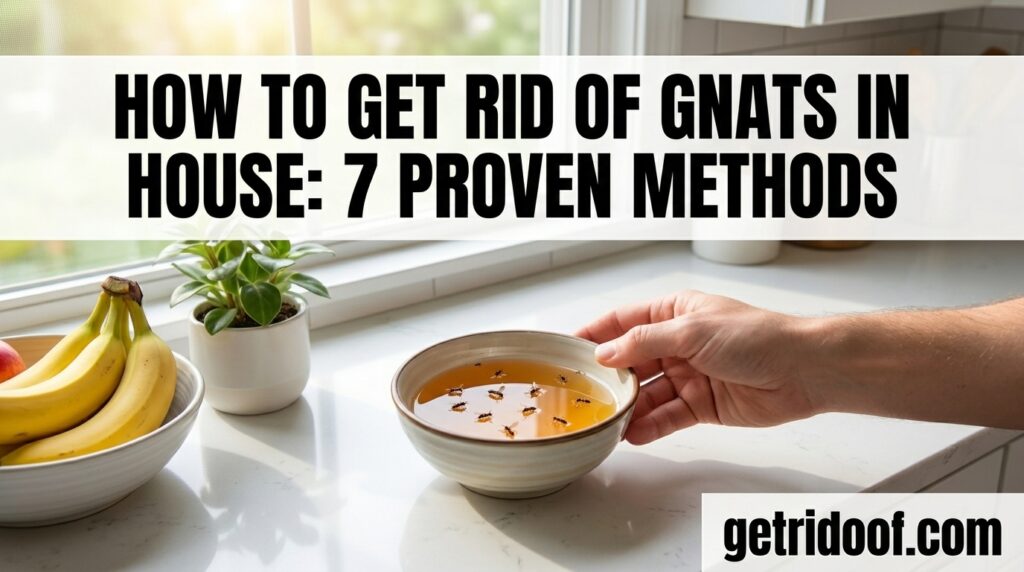
You do not need toxic sprays or expensive equipment to deal with gnats. Most solutions use everyday household items and take just minutes to set up.
1. Apple Cider Vinegar Trap (Most Popular Method)
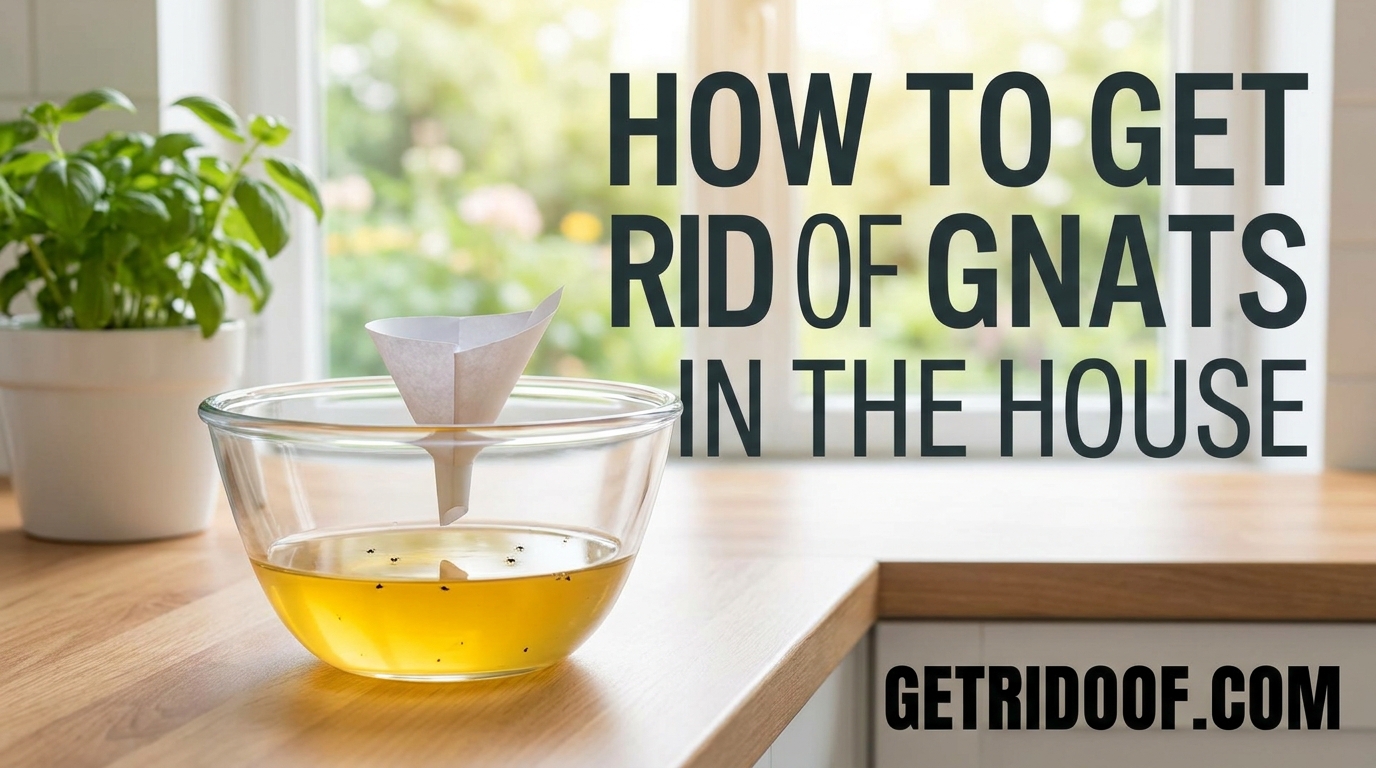
The apple cider vinegar trap is the go-to solution for getting rid of gnats in the house — and for good reason. It is cheap, simple, and highly effective.
Here is how to make one:
- Pour 2–3 tablespoons of apple cider vinegar into a small bowl or jar
- Add 1 tablespoon of sugar
- Add 2–3 drops of dish soap (this breaks the surface tension so gnats cannot escape)
- Cover with plastic wrap and poke small holes in the top
- Place near your sink, fruit bowl, or any gnat hotspot
Gnats are drawn to the sweet, fermented smell. Once inside, the dish soap traps them and they drown. Replace the trap every 2–3 days for best results.
2. How to Get Rid of Gnats in Houseplants
Fungus gnats in houseplants are one of the most common indoor gnat problems. They breed in the top layer of moist soil and are surprisingly hard to kill with surface traps alone.
Try these targeted solutions:
Let the soil dry out
Allow the top 1–2 inches of soil to dry completely before watering again. Gnats cannot survive without moisture.
Red Wine Trap
Don’t throw out that near-empty wine bottle. Leave it uncorked near your kitchen drain or fruit bowl. Gnats are drawn to the fermented smell and alcohol. They’ll crawl in but won’t be able to escape.
Sticky Yellow Traps
Gnats are naturally attracted to the color yellow. Yellow sticky traps are a simple way to check and cut down gnat infestations. They work well for fungus gnats near houseplants.
Cut larger traps into smaller squares and push them into your plant pots on wooden skewers. Replace them when full.
Diatomaceous Earth (DE)
Diatomaceous earth is a natural powder made from fossilized algae. It damages the exoskeleton of insects, causing them to dehydrate and die.
How to use it:
Let the top layer of soil dry out completely first
Sprinkle a thin, even layer of DE over the dry soil surface
Reapply after watering
This is especially effective for fungus gnats living in houseplant soil.
Hydrogen Peroxide Soil Drench
For a bad fungus gnat problem in potted plants, use a hydrogen peroxide drench. It will kill larvae and eggs immediately.
Mix 1 part 3% hydrogen peroxide with 4 parts water. Let the top 2 inches of soil dry first, then water your plants with this solution. It fizzes for a moment, then safely turns into oxygen and water. This process is completely harmless to your plants.
BTI (Bacillus thuringiensis israelensis)
BTI is a natural soil bacterium. It kills gnat larvae but does not harm people, pets, or plants. It’s available as a soil drench or granules under brand names like Gnatrol.
Pour a BTI drench over all your potted plants and repeat every 5–7 days. This biopesticide is a top choice for many pest controllers. It’s popular and widely used.
Cinnamon and Chamomile Treatment
Both cinnamon and chamomile are natural antifungals. Fungus gnats eat soil fungi. If you remove their food, the soil becomes a bad place for them.
Sprinkle ground cinnamon over the top of your plant soil. Brew a strong chamomile tea, let it cool, and use it to water your plants instead of plain water. Repeat for several days to see results.
Potato Chunks for Fungus Gnat Larvae
This surprisingly effective trick reduces larvae in potted plants. Raw potato is irresistible to fungus gnat larvae.
Place small chunks of raw potato cut-side down on the soil surface. After 2–3 days, remove them — they’ll be covered in larvae. Take them outside right away. Replace them with fresh pieces until the infestation is gone.
Replace Outdoor Lights
This is one of the most overlooked methods for getting rid of gnats in your house — and it makes a big difference.
Standard white or yellow incandescent bulbs near doors and windows attract gnats and other flying insects. Once they’re drawn to your lights, entering your home is just one step away.
Simple fix: Swap outdoor bulbs for warm amber or orange LED bulbs. You can also use lights labeled as insect-deterrent. Gnats and most flying insects are attracted to UV and blue-spectrum light. Removing that attraction at your entry points keeps more gnats outside.
Motion-activated lights are a great choice. They stay off most of the time, so insects have less reason to come near your doors.
For a severe infestation, repot the plant entirely. Remove the old soil, wash the roots gently, and replant in fresh, well-draining potting mix.
3. How to Get Rid of Gnats in Kitchen
The kitchen is the number one room where gnat infestations start. Food smells, moisture, and accessible garbage make it the perfect environment.
Here is what works:
- Store all ripe fruit in the refrigerator immediately
- Wipe down counters and clean up spills right away — especially anything sugary
- Keep your trash can sealed with a lid and take it out regularly
- Wash dishes promptly instead of letting them soak in standing water
- Clean under appliances and inside cabinets where crumbs accumulate
- Use the apple cider vinegar trap near the fruit bowl or sink for active infestations
A red wine bottle trick also works well — leave a nearly empty bottle of red wine near the drain. Gnats crawl in but cannot get out.
4. How to Get Rid of Gnats in Drains
Drain flies and fungus gnats often breed in the organic buildup found in kitchen and bathroom drains. If you see tiny flies hovering near your sink, your drain could be the source.
Try this simple drain cleaning method:
- Pour half a cup of baking soda into the drain
- Follow with half a cup of white vinegar
- Let it fizz for 10–15 minutes
- Flush with a full kettle of boiling water
For a more thorough clean, use an enzyme-based drain gel product. These contain microbes that eat through the organic scum that gnats breed in. Repeat the treatment every 2–3 days for one week to break the breeding cycle.
Quick test: Tape a piece of clear tape over the drain at night. If you find gnats stuck to it in the morning, the drain is your source.
5. Essential Oils as Natural Gnat Repellents
Several essential oils act as natural deterrents that gnats strongly dislike. Peppermint, eucalyptus, and tea tree oil are among the most effective.
How to use them:
- Add 10 drops of peppermint or eucalyptus oil to a spray bottle filled with water. Spray around windows, entry points, and areas where gnats gather.
- Use an essential oil diffuser in the kitchen or bathroom as a passive repellent
- Mix a few drops into water and wipe down counters for a dual-purpose clean and repel
This approach is most effective as a preventive step after you’ve removed an active infestation.
6. Commercial Products Worth Using
If natural methods fail, these commercial treatments can tackle tough infestations.
Insecticide Sprays
Products like Raid Flying Insect Killer kill adult gnats on contact and work fast. Always ventilate the room well after spraying and keep away from food surfaces.
Enzyme Drain Cleaners
Enzyme-based drain products have live microbes. These microbes digest the organic scum in pipes. This is where drain flies breed. Unlike bleach, which only flushes buildup temporarily, enzyme cleaners break it down completely. Pour into drains weekly and let sit overnight.
Electric Bug Zappers
Indoor bug zappers use UV light to attract and kill gnats around the clock. Put one in the kitchen or close to your infested houseplants for easy, chemical-free control.
Insecticidal Soil Sprays
For severe houseplant infestations, look for indoor insecticidal sprays containing spinosad or pyrethrin. These are lower-toxicity options that can be applied directly to the soil.
7. Fungus Gnats vs Fruit Flies: Know the Difference
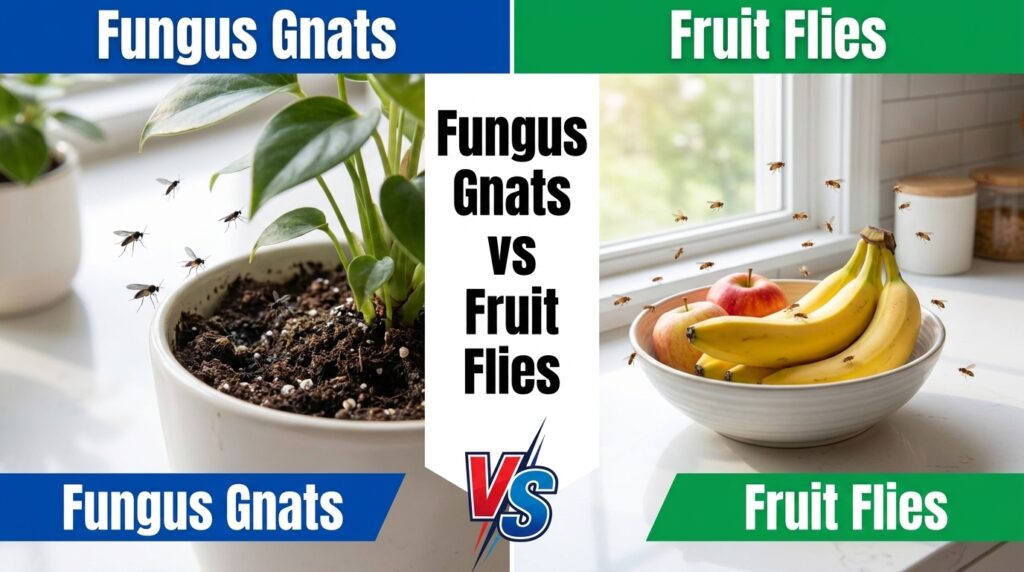
Many people use fungus gnat solutions for fruit fly problems. They often wonder why these methods fail. The two insects are different and need different treatments.
| Feature | Fungus Gnats | Fruit Flies |
| Size | 2–3 mm, dark, long legs | 3–4 mm, round, brownish-red eyes |
| Where found | Near houseplants, damp soil | Near fruit, garbage, drains |
| Breeding site | Moist plant soil | Rotting produce, sugary liquids |
| Best fix | Let soil dry, BTI drench | Vinegar trap, clean surfaces |
Identifying the correct pest saves you time, money, and frustration.
You Can Also Read
- How to Get Rid of Fruit Flies
- How to Get Rid of Carpet Beetles
- How to Get Rid of Drain Flies
- How to Get Rid of Ants
How to Prevent Gnats From Coming Back
Eliminating gnats is only half the battle. If the conditions that attracted them remain, they will return. Prevention is easier than treatment — and most of it takes less than five minutes a day.
Daily habits to keep gnats away:
- Do not overwater houseplants — this is the single biggest cause of indoor fungus gnats. Water only when the top inch or two of soil is dry.
- Store fruit in the fridge as soon as it starts to ripen
- Take out the trash daily or keep the bin tightly sealed
- Clean drains weekly with the baking soda and vinegar method
- Fix leaky pipes and faucets — even a slow drip creates enough moisture for gnats to breed
- Empty water trays under plant pots after every watering
- Use well-draining potting soil and add perlite to improve drainage if needed
- Seal gaps around windows and doors to reduce entry points
Add these habits to your weekly routine. This is the best way to eliminate gnats from your home for good.
Why Do I Still Have Gnats Even After Cleaning?
One of the most common questions people ask is: why do gnats keep coming back even after I clean everything?
The answer is almost always one of these reasons:
- You’re still overwatering your plants. The larvae can survive in the soil, even after the adult gnats are gone.
- The drain has not been treated — adults are being eliminated but eggs keep hatching in the pipe lining
- Look for hidden food sources. Check under appliances, in cabinet corners, or behind the fridge.
- Gnats are entering from outside — damaged window screens or gaps near doors let them back in regularly
Track where you see gnats most often. That location is your breeding source. Treat the source, not just the adults flying around.
When Should You Call a Professional?
Most gnat problems can be solved with DIY methods within 1–2 weeks. However, there are situations where professional pest control makes sense.
Consider calling a pro if:
- The infestation continues after 2–3 weeks of consistent treatment
- You suspect a hidden moisture problem such as a leaking pipe inside a wall
- Gnats are appearing from multiple rooms simultaneously
- You have a large number of houseplants and cannot identify which ones are affected
A one-time gnat treatment costs about $150. The price may vary based on how bad the problem is and where you live.
Frequently Asked Questions
How long does it take to get rid of gnats?
With consistent treatment, most infestations clear up within 1–2 weeks. Fungus gnats in soil may take up to 3 weeks because of the larval life cycle.
Do gnats bite?
Most indoor gnats — including fungus gnats and fruit flies — do not bite. Most outdoor species can be harmful. However, those in your kitchen or near houseplants are safe for people and pets.
Can gnats damage my plants?
Yes. Fungus gnat larvae eat plant roots. This can cause wilting, yellow leaves, and slow growth. This is common in young seedlings and delicate plants.
Why do I have gnats in winter?
Gnats do not disappear in cold weather if they are living indoors. Overwatered houseplants and warm kitchen environments keep them alive year-round. Indoor central heating actually creates an ideal warm, humid habitat.
What smell do gnats hate?
Gnats strongly dislike the scent of peppermint, eucalyptus, cinnamon, vanilla, and lemon. Using these as natural sprays or in diffusers can help repel them from specific areas.
Conclusion: How to Get Rid of Gnats in House for Good
Dealing with a gnat infestation is annoying — but it is absolutely fixable. The key is to treat both the adult gnats you can see and the breeding sources you cannot.
Start with the apple cider vinegar trap for immediate results. Address houseplant soil with a BTI drench or hydrogen peroxide mix. Clean your drains every week. Also, develop daily habits to reduce moisture and food sources.
To get rid of gnats in your house, focus on the source. Don’t just swat the adults. Once you do this, you’ll see quick results and keep them away for good.
Have a question about a specific type of gnat problem? Drop it in the comments below and we will help you find the right solution.
About the Author