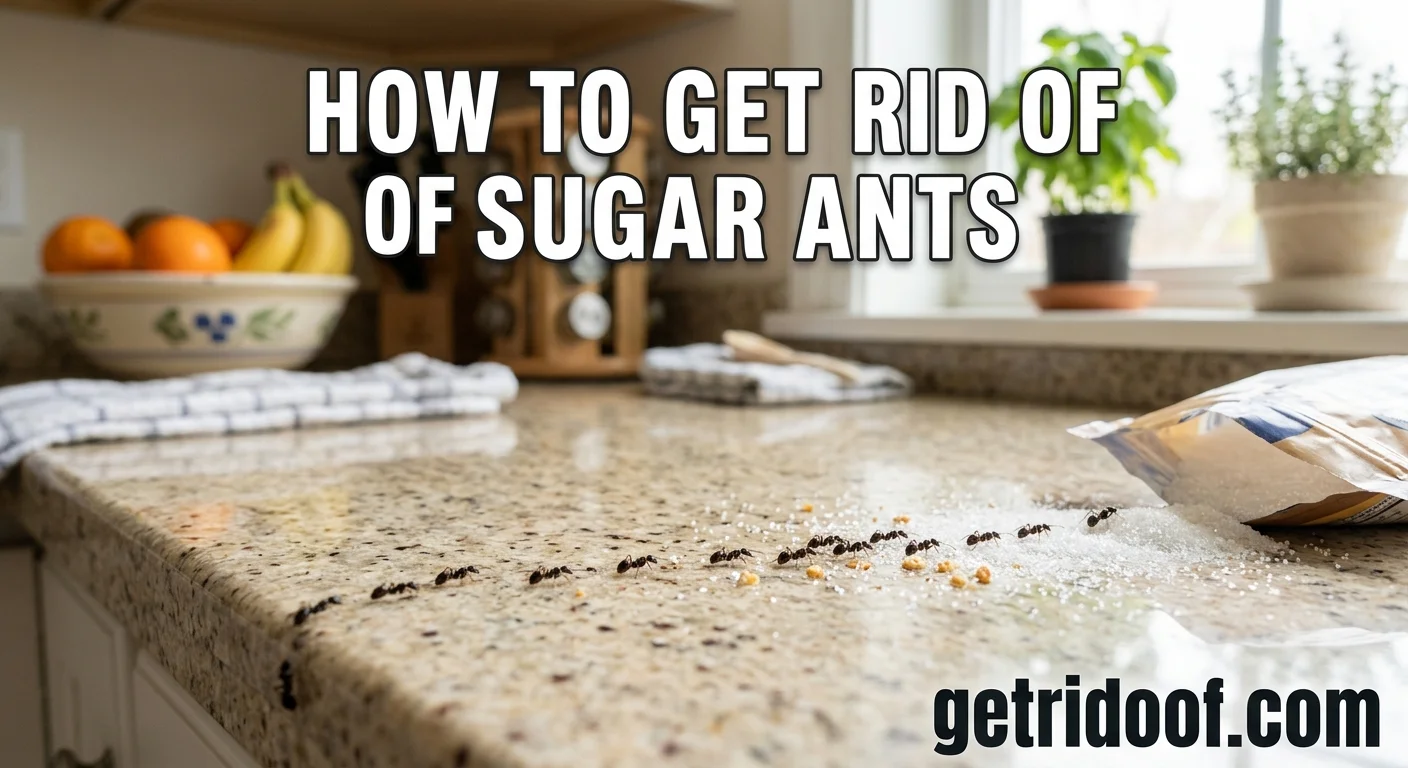
Have you ever entered your kitchen in the morning and spotted tiny ants on your counter? If so, you already know how frustrating sugar ants can be. These tiny pests can invade even the cleanest homes.
They sneak in through the smallest cracks to get to your food. The good news? Learning how to get rid of sugar ants is easier than you think — if you know the right steps.
In this guide, you’ll find everything you need:
- Natural home remedies
- Commercial treatments
- Prevention tips
- Expert advice on when to seek professional help
This guide has everything you need, whether you have a few scouts or a full infestation.
What Exactly Are Sugar Ants?
Before you can effectively get rid of sugar ants, it helps to understand what you’re dealing with.
“Sugar ant” isn’t just one species. It describes any small ant that loves sweet foods. In Australia, there is a specific species called the banded sugar ant. In North America and much of the world, the term describes several common ant species. They all share one main trait: they love sugar.
These ants are usually tiny, measuring 1.5mm to 3mm. They follow chemical trails, known as pheromones, to find their way from the nest to food. When one ant finds food, it lays a scent trail back to the colony so hundreds more can follow.
That is why a small problem can quickly turn into a massive invasion overnight. Sugar ants are not dangerous to humans. They don’t sting, and they don’t cause structural damage the way termites or carpenter ants do. But they are a serious hygiene nuisance and can contaminate food very quickly.
Types of “Sugar Ants”
Not all the small ants you see at home are the same. Identifying the type you’re dealing with helps you choose the most effective treatment.
Outdoor “Sugar Ants” Include:
- Pavement ants – Dark brown or black, commonly found under sidewalks and driveways. They often enter homes through foundation cracks.
- Cornfield ants – Light brown, commonly found nesting in soil and under rocks outdoors.
- False honey ants – Yellow or light orange, often found under logs and in gardens.
- Acrobat ants – Named for their ability to raise their abdomen over their head. They nest in moist wood and foam insulation.
Indoor “Sugar Ants” Include:
- Odorous house ants – One of the most common indoor pests. They release a foul, rotten coconut-like smell when crushed.
- Pharaoh ants – Tiny, pale yellow ants that are notoriously hard to eliminate. They are especially common in apartments and large buildings.
- Little black ants – Jet black and very tiny. They nest in wall voids and woodwork inside homes.
- Argentine ants – Light to dark brown. They form massive supercolonies and are very difficult to control once established.
Knowing which type you have makes your treatment more targeted and effective.
How to Get Rid of Sugar Ants Indoors
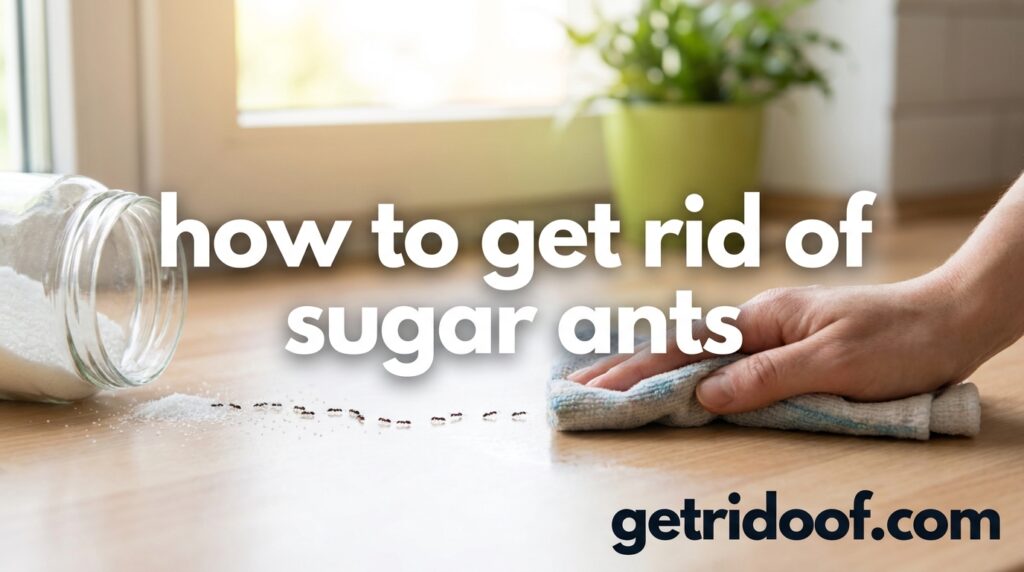
You’ll often find sugar ants in your home. They like the kitchen, bathroom, and pantry the most. Here’s a complete list of effective methods. We’ll start with easy home remedies and then go to stronger commercial options.
1. White Vinegar Spray
White vinegar is one of the fastest and easiest ways to disrupt sugar ant activity. It destroys the pheromone trails ants use to talk and find their way.
How to use it:
- Mix equal parts white vinegar and water in a spray bottle.
- Spray directly on ant trails, entry points, windowsills, and countertops.
- Wipe down the area with a cloth after spraying.
- Repeat daily until you no longer see trails.
The smell of vinegar fades quickly as it dries, so don’t worry about the odor lingering. This is one of the safest methods if you have children or pets at home.
2. Baking Soda and Powdered Sugar Bait
This is a simple but clever DIY trap. Ants are drawn to sugar. They unknowingly eat the baking soda. This reacts with acid in their stomachs and kills them.
How to make it:
- Mix equal parts baking soda and powdered sugar.
- Place small amounts in bottle caps or shallow lids near ant trails.
- Refresh the bait every few days.
This method is slow-acting but very effective for wiping out large numbers of ants over time. It’s also completely non-toxic to humans and pets.
3. Glass Cleaner and Liquid Detergent
This combo works great for getting rid of sugar ants already in your home.
How to use it:
- Mix a small amount of liquid dish soap with glass cleaner in a spray bottle.
- Spray directly on visible ants and on the surfaces they’re traveling along.
- Wipe the surface clean after spraying.
The glass cleaner breaks the ant’s pheromone trail. Meanwhile, the soap covers their bodies and suffocates them. This method works best as a quick-response treatment when you spot a fresh trail.
4. Ground Black or Red Pepper
Ants hate pepper. The strong smell of black or cayenne pepper makes it hard for them to find food. It also disrupts their ability to follow chemical trails.
How to use it:
- Sprinkle ground pepper in these spots:
- near baseboards
- behind the refrigerator
- under appliances
- along entry points
- Mix pepper with water and spray it around doors and window frames for broader coverage.
This is a safe and very affordable repellent. It’s especially useful in kitchens where you don’t want to use chemicals near food.
5. Diatomaceous Earth (Food-Grade)
Diatomaceous earth (DE) is a natural powder made from fossilized algae. It damages the ants’ exoskeletons. This leads to dehydration and death. It’s one of the most trusted natural pest control methods available.
How to use it:
- Use only food-grade diatomaceous earth — not the kind used in pool filters.
- Sprinkle a thin layer along ant trails, entry points, and under appliances.
- Reapply after mopping or if the area gets wet, as moisture reduces its effectiveness.
DE is safe for humans and pets but should not be inhaled in large amounts. Wear a dust mask when applying.
6. Boric Acid Bait
Boric acid is a natural compound. When ants eat it, it harms their digestive system and kills them. It’s slow-acting by design — ants carry it back to the colony, killing others including the queen.
How to make a boric acid bait:
- Mix 1 teaspoon of boric acid with 1 cup of sugar water.
- Soak cotton balls in the mixture and place them on small pieces of wax paper near ant trails.
- Keep away from children and pets.
Boric acid is a strong home remedy. It can completely eliminate a colony from the inside out.
7. Commercial Ant Bait Stations
Commercial ant bait stations, such as Terro Liquid Ant Bait, work well to get rid of sugar ants. They work like boric acid bait. Ants carry the slow poison back to their nest. This poison eventually kills the whole colony, even the queen.
How to use them:
- Place stations near ant trails, but NOT directly on the trail — you want ants to find it naturally.
- Be patient. You may see more ants at first as they flock to the bait. This is actually a good sign.
- Replace bait stations when empty or every 3 months.
Bait stations are safe and mess-free. They effectively handle ongoing infestations at home.
8. Oil of Lemon Eucalyptus (OLE)
Oil of lemon eucalyptus is a natural repellent. It’s gaining popularity because it’s safe and works well to keep insects away, like ants.
How to use it:
- Mix 10–15 drops of OLE with water in a spray bottle.
- Spray along baseboards, entry points, windowsills, and any area where ants are active.
- Reapply every few days for best results.
OLE has a fresh, pleasant scent. It’s a great choice for homes that want to avoid harsh chemicals.
9. Essential Oils as Repellents
Certain essential oils are natural ant deterrents. Ants rely heavily on scent, and strong oils overpower their chemical trails.
Most effective options:
- Peppermint oil – mix 10–15 drops with water and spray around windows and doors
- Clove oil – apply along baseboards and entry gaps
- Tea tree oil – wipe down countertops and cabinet edges
- Lemon eucalyptus oil – effective at masking entry-point scent trails
Peppermint oil is a well-known natural ant repellent. Ants use scent to talk to each other. The strong smell of peppermint overwhelms their senses and disrupts their communication.
How to use peppermint oil:
- Add 10–15 drops of pure peppermint oil to a spray bottle filled with water.
- Spray around doors, windows, sinks, and countertops.
- Soak cotton balls in peppermint oil. Then, put them in cabinets or under the sink. This helps protect your space longer.
Peppermint oil repels various household insects. This makes it a versatile choice.
10. Insecticide Sprays (Commercial)
For more severe indoor infestations, insecticide sprays can provide fast, effective results. Products with cypermethrin, bifenthrin, or deltamethrin kill ants on contact. They also leave a barrier to keep ants from coming back.
Tips for using insecticide sprays indoors:
- Apply along baseboards, under sinks, behind appliances, and in cracks and crevices.
- Keep children and pets away from treated areas until completely dry.
- Do NOT spray directly on countertops or food preparation surfaces.
- Use only in well-ventilated areas.
Always read and follow label instructions carefully when using any chemical pesticide indoors.
11. Seal Entry Points
One of the most overlooked yet most effective steps in getting rid of sugar ants is blocking their way in. Sugar ants are tiny and can squeeze through the smallest gap or crack.
What to look for and fix:
- Cracks in walls, baseboards, and window frames
- Gaps around pipes, utility lines, and electrical outlets
- Spaces under doors
- Torn or poorly fitted window screens
Use caulk to seal cracks. Apply weatherstripping under exterior doors. Replace damaged screens. This physical barrier is one of the most long-lasting prevention strategies available.
12. Cinnamon Leaf Essential Oil
Ground cinnamon can help keep pests away. However, cinnamon leaf essential oil is much stronger. It contains a compound called eugenol, which is toxic to ants on contact.
How to use it:
- Mix 5–10 drops of cinnamon leaf essential oil with water in a spray bottle.
- Spray liberally around entry points, ant trails, and the perimeter of your kitchen.
- For a dry application, sprinkle ground cinnamon along baseboards and in corners.
Cinnamon stands out among essential oils. It has a warm, pleasant smell. This makes it a favorite natural remedy in the kitchen.
13. Cinnamon Barrier
Ground cinnamon or cinnamon essential oil acts as a natural repellent. Sprinkle it along windowsills, doorways, and anywhere you’ve seen ant activity.
It won’t kill ants, but it creates a barrier they consistently avoid.
You Can Also Read
Check Your Houseplants
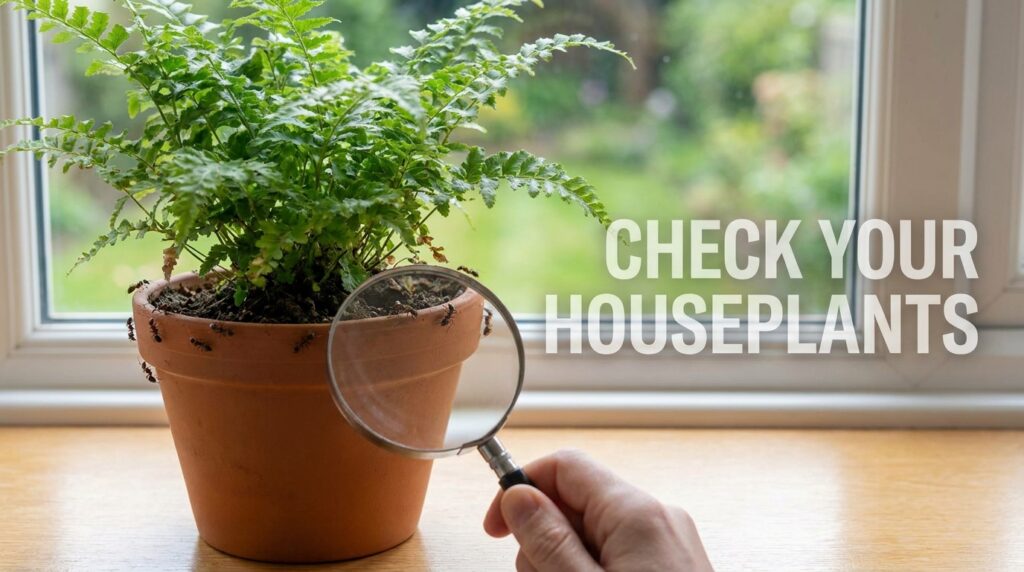
Many people overlook their houseplants as a possible source of ant activity. Ants are drawn to plants for honeydew. This sticky, sweet substance comes from pests like aphids, mealybugs, and scale insects.
What to do:
- Inspect your houseplants regularly for signs of aphids or mealybugs.
- Treat infested plants with neem oil or insecticidal soap spray.
- If a plant has ants nesting in the soil, repot it using fresh, clean soil.
- Keep potted plants away from walls and windows where ants can use them as an access highway.
Removing the honeydew source gets rid of a major ant attractant in many homes.
Lemons as a Natural Repellent
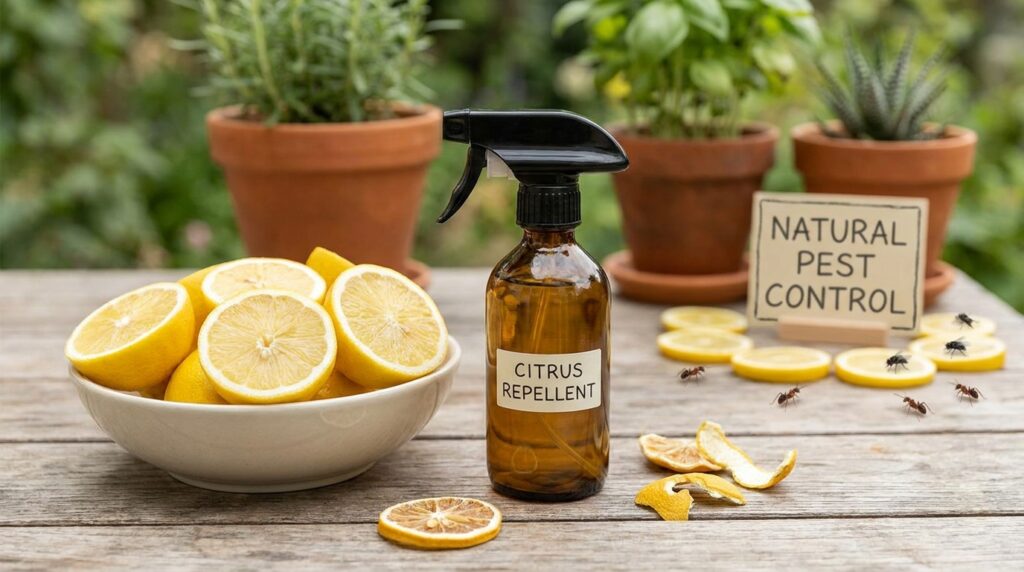
Lemons make a simple and cheap ant repellent. Most people already have them in their kitchen. Ants dislike the strong acidity and sharp citrus scent intensely.
How to use lemons:
- Squeeze fresh lemon juice on door frames, windowsills, and cracks where ants get in.
- Rub fresh lemon peel directly on surfaces and entry points.
- Place dried lemon peels on pantry shelves and inside cabinets.
This isn’t a complete solution alone, but it works great as part of a layered approach to ant control.
How to Get Rid of Sugar Ants with Commercial Products
When natural methods fail or the infestation is big, commercial products work better. They offer faster and more targeted results.
Ant Bait Stations (Most Recommended)
Bait stations are considered the gold standard for eliminating ant colonies. Worker ants take the poison bait to their nest. This eventually kills the queen and the whole colony.
Top picks:
- Terro Liquid Ant Baits – borax-based, extremely effective against sweet-eating ants
- Raid Ant Baits – widely available, easy to place discreetly
- Advion Ant Bait Gel – professional-grade formula used by exterminators
Pro tip: Don’t kill ants you see near bait stations. You want them to carry the bait back to the colony.
Ant Gel Baits
Gel baits function like bait stations. They fit into tight spaces—behind appliances, in cabinet hinges, and along baseboards.
Best for: Hard-to-reach areas where bait stations won’t fit.
Insecticide Sprays
Contact sprays kill ants on the spot but don’t affect the colony.
When to use them:
- As a quick knockdown while waiting for bait to work
- Along the perimeter of your home outdoors
- Around entry points as a temporary barrier
Popular options: Ortho Home Defense, Raid Ant Killer, Spectracide Ant Shield
Important: Do not spray near bait stations. The repellent chemicals will stop ants from reaching the bait.
Ant Granules (Outdoor Use)
Granular ant killers work well for your yard, garden, and home’s edges. They are great if nests are outside, close to the foundation.
Spread them around the outside of your home every 2–4 weeks during peak ant season (spring and summer).
Prevention: How to Keep Sugar Ants Away for Good
Getting rid of sugar ants is only half the battle. To stop them from returning, stick to good habits and make some specific changes at home.
Clean Counters and Sink
Dirty counters and a food-residue-filled sink are like an open invitation for ants. Even the smallest crumbs or drops of juice are enough to attract a scout, who will then summon hundreds more.
Good habits to adopt:
- Wipe down countertops after every meal.
- Rinse the sink after washing dishes each time.
- Don’t leave standing water in the sink overnight.
- Clean up spills immediately — never leave it for later.
Making this a consistent daily routine dramatically reduces ant activity in the kitchen.
Sponge with Texture
A textured sponge is better than a flat cloth. It removes food particles and sticky residues from counters and appliances more effectively. Sugary residues, such as jam, honey, or fruit juice, may be hard to see. But they are very appealing to ants.
Use a damp sponge with texture to scrub kitchen surfaces. Clean stovetops and the edges of appliances regularly. Rinse the sponge well after each use. Let it dry completely. A damp, dirty sponge can attract pests by itself.
Cleaning Rags and Elbow Grease (Manual Labor)
There is no substitute for a deep clean when dealing with a persistent ant problem. Often, the real issue isn’t just visible crumbs. It’s the hidden grime behind and under appliances that you don’t clean every day.
Deep cleaning tasks to tackle:
- Pull out the refrigerator and stove and clean underneath them thoroughly.
- Wipe down the inside of all cabinets and pantry shelves.
- Scrub behind the trash can and under the kitchen sink.
- Clean inside and around the microwave, toaster, and other countertop appliances.
A thorough deep clean removes hidden food sources that no spray or bait can fully compensate for. Sometimes, a dedicated manual effort is all it takes to stop a recurring infestation.
Store Food Properly
Open food containers are one of the top reasons sugar ants keep coming back into homes. Store all dry goods like sugar, flour, cereal, rice, crackers, and pet food in airtight containers. Hard plastic or glass containers with tight lids work best.
Don’t leave fruit sitting out on the counter for extended periods. Keep honey and syrup bottles clean and tightly sealed after each use. Even crumbs at the bottom of a cereal bag can attract ants if the bag is left loosely folded.
Fix Moisture Problems
Ants don’t just come in for food — they’re also searching for water. Leaky faucets, pipes under the sink, and damp areas in the bathroom are all attractive to ant colonies.
- Fix dripping faucets and leaking pipes as soon as you notice them.
- Use a dehumidifier in damp basements or crawl spaces.
- Ensure proper ventilation in bathrooms and kitchens to reduce humidity.
Lowering moisture makes your home less inviting to ants and other pests.
Natural vs. Commercial: Which Method Works Best?
| Method | Speed | Kills Colony | Safe for Kids/Pets | Cost |
| Vinegar spray | Fast | No | Yes | Very low |
| Baking soda bait | Moderate | Yes | Yes | Very low |
| Diatomaceous earth | Slow | Partial | Yes (food-grade) | Low |
| Essential oils | Fast | No | Yes | Low–Medium |
| Terro bait stations | Slow (3–7 days) | Yes | Use with caution | Low |
| Insecticide spray | Instant | No | No | Low–Medium |
| Ant gel bait | Moderate | Yes | Use with caution | Medium |
Bottom line: Natural methods work well for small, early-stage infestations. Commercial baits are more reliable for large or persistent colonies. Combining both gives you the fastest and most lasting results.
When to Call a Professional Exterminator
Sometimes the problem is bigger than DIY can handle. Consider calling a pest control professional if:
- Ants are returning despite 2+ weeks of consistent treatment
- You’re seeing multiple large trails throughout the home
- You find nests inside walls, under flooring, or in insulation
- You have a Pharaoh ant infestation. This needs special treatment. DIY baits can spread the colony and make the problem worse.
A licensed exterminator can spot the species, find hidden nests, and use treatments not available in stores.
Frequently Asked Questions
How long does it take to get rid of sugar ants?
With bait stations, expect results within 3–10 days. Natural methods may take 2–3 weeks for full effect. Severe infestations can take up to a month.
Are sugar ants dangerous?
No, they don’t bite or sting in most cases. But they contaminate food and can be a sign of moisture issues in your home.
Can sugar ants damage my home?
Unlike carpenter ants, most sugar ant species don’t chew through wood. However, large colonies nesting inside walls can cause issues over time.
What kills sugar ants instantly?
Contact insecticide sprays kill on contact. However, they don’t solve the underlying problem. Use bait for long-term elimination.
Do sugar ants go away on their own?
Rarely. Once they find a food source, they send more workers. The colony will keep sending scouts until the food source is removed or the colony is eliminated.
Conclusion
Now you know exactly how to get rid of sugar ants — whether you prefer natural home remedies or fast-acting commercial solutions.
Act on several fronts at once:
- Eliminate food sources.
- Apply bait to target the colony.
- Seal entry points to stop them from coming back.
Start with the simple steps today. Clean up, place a few bait stations, and spray vinegar along the trails. With a little consistency, your home will be ant-free within a week or two. With the right prevention habits, you won’t face these tiny invaders again soon.
About the Author