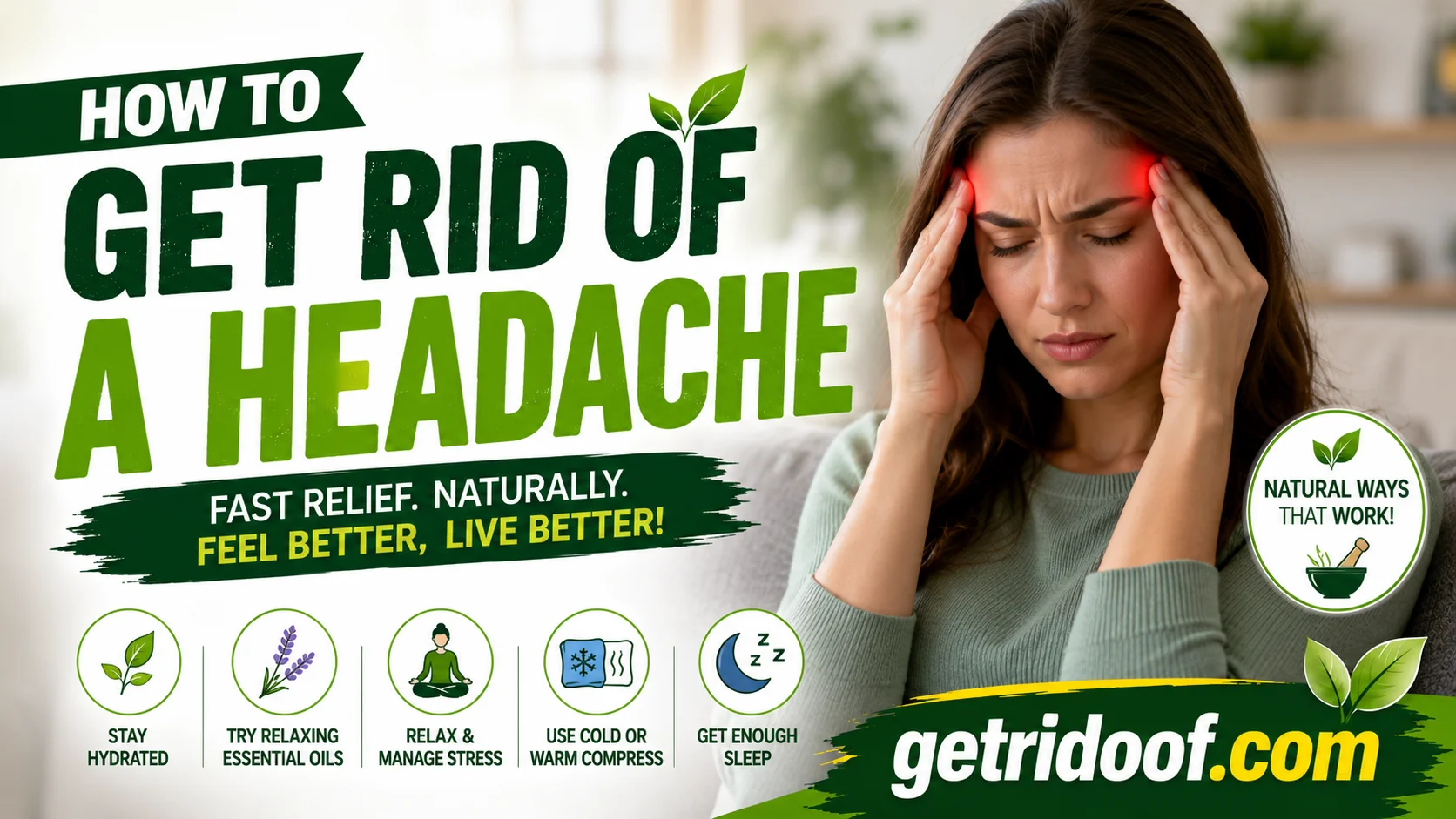
Headaches are one of the most common health problems in the world. Almost everyone has dealt with that dull, throbbing, or pounding pain at some point. Whether it hits during a busy workday or wakes you up at night, knowing how to get rid of a headache quickly can make a big difference.
In this guide, you’ll find all you need. It has quick home remedies, medications, lifestyle tips, and key warning signs to notice. By the end, you will know exactly what to do the next time a headache strikes.
What Causes a Headache? (And Why It Matters)
Before you can treat a headache, it helps to understand why it happens. Headaches are not all the same. They have different causes and need different solutions.
Common headache triggers include:
- Dehydration – Not drinking enough water is one of the top causes
- Stress and anxiety – Muscle tension builds up and causes pain
- Poor posture – Slouching strains your neck and upper back
- Screen time – Long hours in front of a phone or computer
- Skipping meals – Low blood sugar can bring on a headache
- Lack of sleep – Poor sleep disrupts your body’s natural balance
- Caffeine changes – Too much or sudden withdrawal
- Bright lights or loud sounds – Common migraine triggers
- Hormonal changes – Especially in women before or during periods
Knowing your trigger is the first step to getting lasting relief.
Types of Headaches You Should Know
Not every headache feels the same, and that is because they are not the same. Here are the most common types:
Tension Headache
This is the most common type. It feels like a tight band or pressure around your head. It usually affects both sides and can last from 30 minutes to several hours. Stress, bad posture, and eye strain are the main causes.
Migraine
A migraine is much more intense. It often causes throbbing pain on one side of the head. You may also feel nausea, sensitivity to light and sound, or see flashing lights before it starts. Migraines can last from 4 to 72 hours.
Cluster Headache
These are intense, sharp headaches that happen in “clusters.” This means they can occur several times a day for weeks or months. The pain is usually around one eye. They are less common but very painful.
Sinus Headache
This happens when your sinuses are inflamed, often due to allergies or infection. You feel pressure behind your eyes, cheeks, and forehead.
Medication Overuse Headache
This is also called a “rebound headache.” It happens when you take pain relievers too often. The medication itself starts causing more frequent headaches.
How to Get Rid of a Headache Fast at Home
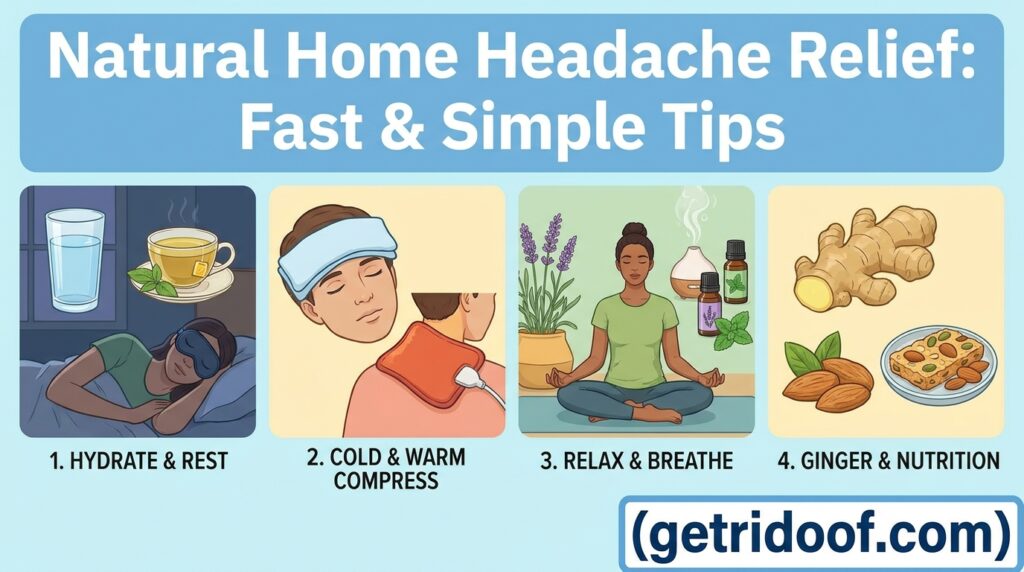
Good news — you do not always need medication. Here are the most effective home remedies that work quickly.
1. Drink Water Right Away
Dehydration is one of the most overlooked causes of headaches. When your body loses more fluid than it takes in, your brain can temporarily shrink, creating pain.
The fix is simple: drink a large glass of water as soon as a headache starts. Then continue sipping throughout the day. Drinking more fluids can help reduce headaches. People who stay hydrated recover faster when they do have one.
2. Use a Cold or Warm Compress
A cold pack placed on your forehead or neck can reduce inflammation and numb the pain. This works especially well for migraines. Wrap ice in a cloth and apply for 15 minutes, then take a 15-minute break.
For tension headaches, a warm compress on the neck or shoulders works better. The heat relaxes tight muscles that are pressing on nerves.
3. Massage Your Pressure Points
Gently massaging certain areas can relieve headache pain surprisingly well. Try these spots:
- Temples – Use circular motions with your fingertips
- Base of the skull – Press firmly with your thumbs
- Between your eyebrows – Gentle pressure for 1–2 minutes
- The webbing between your thumb and index finger – Press and hold for 1–2 minutes
This technique helps relax muscles and boosts blood flow to the head.
4. Find a Dark, Quiet Room
Light and noise can make headaches — especially migraines — much worse. Closing your eyes in a dark, quiet room gives your brain a break from overstimulation.
Even a short rest of 20–30 minutes can significantly reduce pain. If possible, sleep it off. Quality sleep allows your body to heal naturally.
5. Try Peppermint or Lavender Oil
Essential oils are a simple natural remedy for headache relief. Peppermint oil has menthol. It relaxes muscles and gives a cool feeling on the skin. Apply a small amount to your temples and forehead.
Lavender oil has calming properties that help reduce stress-related headaches. You can inhale it directly or mix it with a carrier oil and apply it to your skin.
6. Drink a Small Amount of Caffeine
A small cup of coffee or tea can help relieve a headache, especially if you catch it early. Caffeine reduces inflammation and can boost the effectiveness of pain relievers.
However, be careful. Too much caffeine — or stopping it suddenly — can actually cause headaches. Keep it to one small cup.
7. Stretch Your Neck and Shoulders
Tight muscles in your neck and upper back are a major cause of tension headaches. Simple stretches can provide quick relief:
- Chin to chest – Slowly lower your head down and hold for 10 seconds
- Ear to shoulder – Tilt your head to each side and hold
- Shoulder rolls – Roll your shoulders forward and backward slowly
Doing these stretches several times a day can prevent headaches from coming back.
8. Eat a Nutritious Snack
Skipping meals drops your blood sugar, which triggers headaches. If you feel a craving, grab a small snack. Try something with protein and complex carbs, like a banana, some nuts, or whole grain crackers.
Certain foods are also linked to headache prevention. These include:
- Magnesium-rich foods – Spinach, almonds, dark chocolate
- Omega-3 fatty acids – Salmon, walnuts, flaxseeds
- Potassium-rich foods – Bananas, potatoes, avocados
How to Get Rid of a Headache with Over-the-Counter Medication
When home remedies are not enough, OTC medications are a reliable option.
Common Pain Relievers
| Medication | Best For | Notes |
| Ibuprofen (Advil, Motrin) | Tension & migraine | Anti-inflammatory, works well |
| Acetaminophen (Tylenol) | Mild headaches | Gentle on the stomach |
| Aspirin | General pain | Avoid for children |
| Naproxen (Aleve) | Strong headaches | Longer-lasting relief |
Key tips for using medication:
- Take it early — as soon as the headache starts
- Follow the dosage on the label
- Do not take OTC pain relievers more than 2–3 times per week
- Overuse can lead to rebound headaches (medication overuse headache)
Magnesium Supplements
Research shows that people with frequent headaches, such as migraines, often have low magnesium levels. Taking a magnesium supplement each day may lower headache frequency and severity. Magnesium oxide and magnesium glycinate are commonly recommended forms.
You Can Also Read
- How to Get Rid of Double Chin
- How to Get Rid of Post Nasal Drip
- How Can I Get Rid of a Sore Throat Overnight?
Natural and Alternative Remedies for Headache Relief
Many people prefer natural solutions. Here are some that have scientific backing:
Ginger Tea
Ginger has strong anti-inflammatory properties. Some studies show it might help reduce migraine pain as much as some medications. Boil fresh ginger slices in water for 5 minutes and drink warm.
Herbal Teas
Several herbs are known to help with headaches:
- Feverfew – Reduces blood vessel constriction and muscle spasms
- Peppermint tea – Relaxes tense muscles
- Willow bark – Contains a compound similar to aspirin
Acupressure and Acupuncture
Applying pressure to certain body points, called acupressure, can help relieve headache pain. Acupuncture, done by a trained expert, often reduces migraine frequency. Studies show consistent results with this method.
Meditation and Deep Breathing
Stress is a major headache trigger. Meditation and breathing exercises lower cortisol levels, relax muscles, and improve blood flow. Even 10 minutes of slow, deep breathing can interrupt a stress-induced headache.
How to Get Rid of a Headache Through Lifestyle Changes
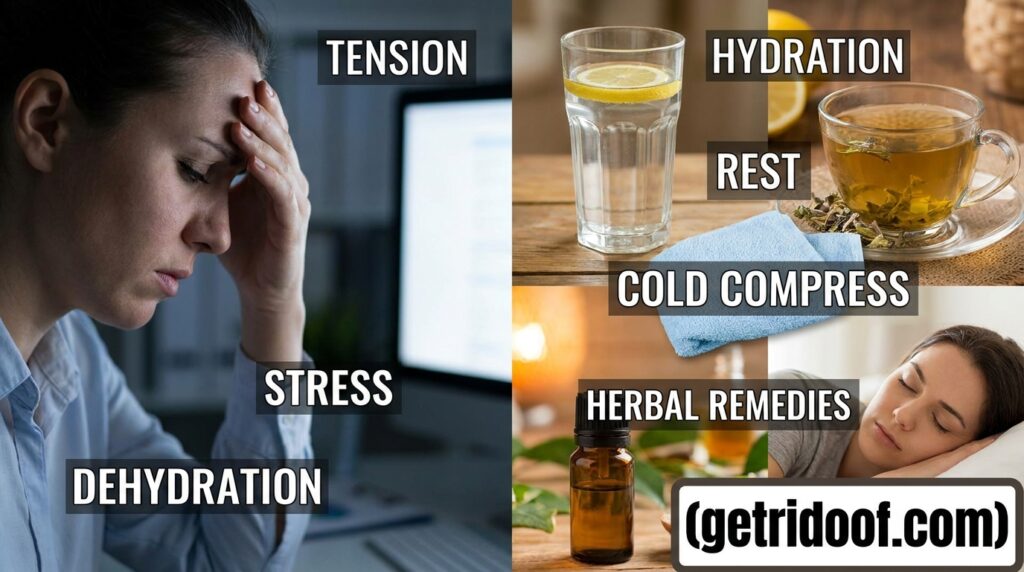
If you get headaches regularly, your daily habits may be to blame. These changes can reduce headache frequency dramatically.
Stay Hydrated All Day
Keep a water bottle with you at all times. Aim for at least 6–8 glasses of water daily. Eat water-rich foods like fruits, soups, and smoothies.
Improve Your Posture
Poor posture strains your neck, shoulders, and upper back — all common headache sources. Sit with your feet flat on the floor, screen at eye level, and avoid looking down at your phone for long periods.
Get Consistent Sleep
Sleeping too little or too much can trigger headaches. Aim for 7–9 hours per night. Try to go to bed and wake up at the same time every day, even on weekends.
Exercise Regularly
Regular aerobic exercise, like walking, cycling, or swimming, can lower how often and how intensely headaches occur. Exercise releases endorphins, your body’s natural pain-relieving chemicals. Even 20–30 minutes, three times a week, makes a measurable difference.
Manage Stress
Chronic stress keeps your muscles tense and your nervous system overactive. Good stress management habits include:
- Regular exercise
- Journaling or talking to someone
- Spending time outdoors
- Setting boundaries at work
Limit Screens Before Bed
Blue light from phones and computers can disrupt your sleep. It may also strain your eyes, leading to headaches. Use blue light glasses or enable night mode on your devices after sunset.
Headache During Pregnancy: What You Need to Know
Headaches are common during pregnancy, especially in the first trimester. They are usually caused by hormonal changes, increased blood volume, stress, or dehydration.
Safe options during pregnancy include:
- Drinking more water
- Rest in a dark, quiet room
- Cold or warm compresses
- Gentle neck stretches
- Acetaminophen (Tylenol) — only as directed by your doctor
Avoid ibuprofen and aspirin during pregnancy unless prescribed by your doctor. Always consult your healthcare provider before taking any medication while pregnant.
When to See a Doctor About a Headache
Most headaches are not dangerous. However, some headaches are warning signs of a serious condition. See a doctor immediately if your headache:
- Comes on suddenly and is the worst headache of your life
- Is followed by fever, stiff neck, or rash
- Causes confusion, weakness, or trouble speaking
- Occurs after a head injury
- Is accompanied by vision changes or numbness
- Gets progressively worse over days
- Does not respond to any treatment
These could be signs of meningitis, stroke, or other serious conditions. Do not wait — seek medical attention right away.
Also see a doctor if:
- You get headaches 15 or more days per month
- Headaches are interrupting daily life
- You are relying on OTC medication more than 2–3 times per week
How to Get Rid of a Headache: Quick Summary
Here is a quick reference of the most effective methods:
For immediate relief:
- Drink water
- Apply a cold or warm compress
- Massage temples and pressure points
- Rest in a dark, quiet room
- Take OTC medication early
For natural relief:
- Peppermint or lavender essential oils
- Ginger or peppermint tea
- Stretch your neck and shoulders
- Deep breathing or meditation
For prevention:
- Stay consistently hydrated
- Exercise regularly
- Improve posture
- Manage stress
- Get quality sleep
FAQ’s
Q1: What is the fastest way to get rid of a headache?
Drink water, rest in a dark room, and use a cold compress. These are the quickest natural ways to ease headache pain.
Q2: Can dehydration really cause a headache?
Even mild dehydration can make your brain shrink a bit. This can lead to headaches, but they go away once you drink water.
Q3: Is it safe to take painkillers every time I get a headache?
No, using OTC pain relievers over 2–3 times a week can cause medication overuse headaches. This can make headaches happen more often.
Q4: What pressure point gets rid of a headache fast?
Pressing firmly on the webbing between your thumb and index finger for 1–2 minutes can quickly ease headaches.
Q5: When should I see a doctor for a headache?
See a doctor right away if your headache is sudden and severe. Also, go if it follows a head injury or comes with fever, confusion, or vision changes.
Conclusion
Learning how to get rid of a headache does not have to be complicated. Many headaches improve with easy solutions. Try drinking water, resting, using a cold compress, or taking an OTC pain reliever.
The key is to find your triggers and make small daily changes. This helps reduce how often headaches occur. You can find a good solution, whether you prefer natural remedies or medication.
Try a few of these tips next time a headache starts — you may be surprised how quickly the pain fades. If your headaches are frequent, severe, or unusual, talk to a healthcare professional.
Always consult a qualified medical professional for persistent or severe headache symptoms. This article is intended for informational purposes only.
About the Author