You went for a walk, did yard work, or hiked in the woods. Now you have an itchy, red, blistering rash. If you’re desperately searching for how to get rid of poison ivy rash overnight, you’re in the right place.
The good news? You don’t need a trip to the pharmacy. Most of the best remedies are already sitting in your kitchen or bathroom cabinet. This guide shares natural treatments that work, what to avoid, and an easy overnight routine to help your skin heal fast.
What Causes Poison Ivy Rash in the First Place?
Before jumping to remedies, it helps to understand what you’re actually dealing with.
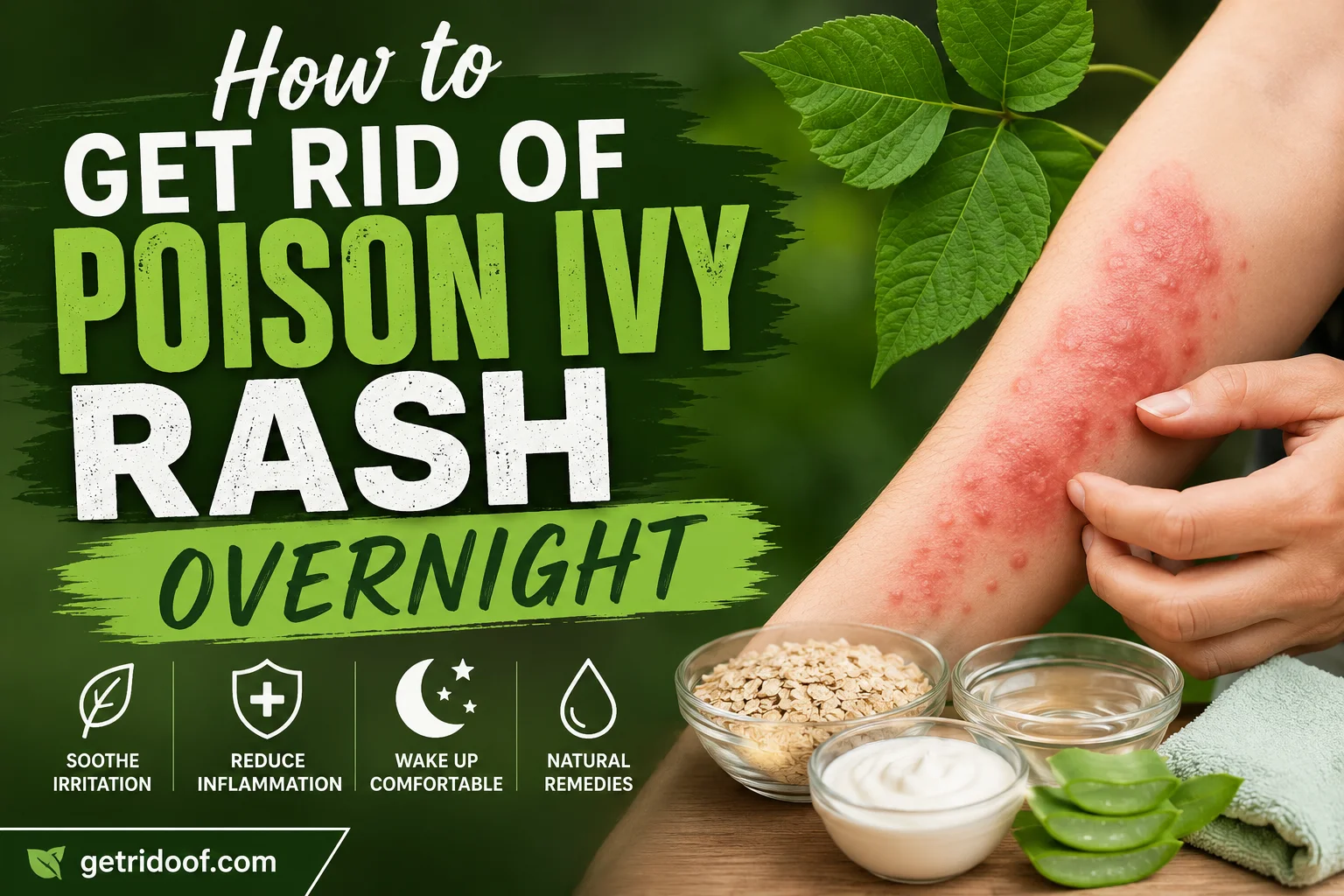
Poison ivy contains an oily resin called urushiol. When this oil touches your skin, your immune system sees it as an invader. Then, it triggers an allergic reaction. That reaction shows up as redness, itching, swelling, and fluid-filled blisters.
Here are a few key facts that surprise most people:
- It’s not contagious. You can’t spread the rash to another person or to other parts of your body by scratching.
- The rash appears 12 to 72 hours after contact — which is why many people don’t realize what happened.
- Urushiol oil can stay on surfaces for years. It can be found on gloves, garden tools, pet fur, and clothing. Even after that long, it can still cause a reaction.
- Nearly 85% of people will develop a reaction if they come into contact with urushiol.
Step One: Stop the Spread Before You Treat
The most important thing to do first is remove the oil from your skin quickly.
Do this immediately:
- Wash the exposed area with cool water and gentle soap (dish soap works well).
- Clean under your fingernails thoroughly to avoid spreading the oil.
- Remove and wash all clothing, gloves, shoes, and anything else that may have touched the plant.
- If your pet was near poison ivy, wear rubber gloves and rinse their fur before you touch them again.
The faster you remove urushiol, the less severe your reaction will be. Washing within the first 10 minutes can greatly reduce how bad the rash gets.
How to Get Rid of Poison Ivy Rash Overnight: 12 Natural Remedies
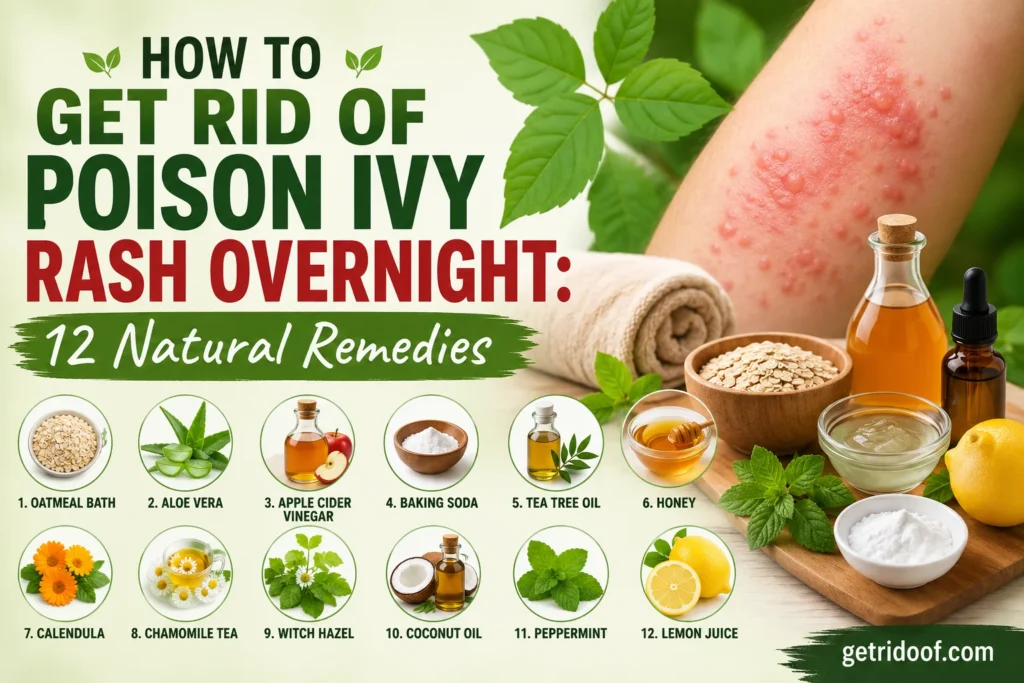
Now let’s get into the treatments. These are all natural and easy to use. They help reduce itching, dry blisters, and soothe inflamed skin.
1. Cold Compress — Instant Itch and Swelling Relief
A cold compress is the fastest first-response remedy for poison ivy.
The cold temperature numbs the nerve endings responsible for that maddening itch. It also constricts blood vessels, which reduces swelling and redness quickly.
How to use it: Wrap ice in a clean cloth or soak a washcloth in cold water. Apply to the rash for 15–20 minutes, several times a day. Never put ice directly on skin — it can cause frostbite.
2. Calamine Lotion — The Classic That Really Works
Calamine lotion has been a trusted skin remedy for generations — and for good reason.
It has zinc oxide, which helps dry out weeping blisters. It also forms a protective barrier over irritated skin. It also offers a cool, soothing feeling that brings hours of relief from itching.
How to use it: Shake the bottle well. Then, dab it onto the rash with a cotton ball. Let it dry completely before covering with clothing. Reapply as often as needed throughout the day and before bed.
⚠️ Tip: Check the label — some calamine products contain diphenhydramine (Benadryl). These combination products are not safe for young kids or people with certain health problems.
3. Baking Soda Paste — Neutralize Irritation Naturally
Baking soda is a top natural remedy for contact dermatitis and poison ivy rash.
It works by neutralizing skin pH, reducing inflammation, and drying out oozing blisters. It’s inexpensive, safe, and found in virtually every kitchen.
How to use it: Mix 3 teaspoons of baking soda with 1 teaspoon of water to form a thick paste. Apply directly to the rash, let it dry fully, then rinse with cool water. Repeat 2–3 times daily.
4. Colloidal Oatmeal Bath — Full-Body Itch Relief
If the rash covers a large area of your body, an oatmeal bath is one of the most soothing treatments available.
Oatmeal contains natural compounds called avenanthramides, which have powerful anti-inflammatory and antihistamine properties. The FDA has approved colloidal oatmeal for relieving minor skin irritation and itching.
How to use it: Add 1–2 cups of colloidal oatmeal (finely ground oats) to a lukewarm bath. Soak for 15–20 minutes. Pat — don’t rub — your skin dry afterward. Avoid hot water, which makes itching significantly worse.
5. Aloe Vera Gel — Cool, Heal, and Soothe
Fresh aloe vera is one of nature’s best gifts for irritated skin. It’s cooling, anti-inflammatory, and speeds up the skin’s natural healing process.
Aloe vera contains compounds called polysaccharides that help repair damaged skin cells. It also forms a light protective layer over the rash to shield it from bacteria.
How to use it: Cut a fresh aloe vera leaf and apply the clear gel directly to the rash. Fresh gel from the plant is more potent than store-bought versions. Apply 3–4 times daily, especially before bed to let it work overnight.
6. Apple Cider Vinegar — Dry Up Blisters Faster
Apple cider vinegar has a long history as a folk remedy for poison ivy rash. As a mild acid, it’s believed to help neutralize and dry out the urushiol oil on the skin’s surface.
Many people say it provides quick relief, even if the scientific evidence is limited. It’s especially helpful for drying blistered areas.
How to use it: Dilute apple cider vinegar with equal parts water. Apply to the rash using a cotton ball. Leave it on for a few minutes, then rinse off. Use once or twice daily. Do not use it on broken or raw skin, as it can sting and irritate.
7. Witch Hazel — Nature’s Anti-Itch Astringent
Witch hazel is a liquid plant extract that has been used medicinally for centuries. It acts as a natural astringent. It shrinks inflamed tissue and lessens the urge to scratch.
It’s particularly good for weeping rashes where the skin is oozing fluid. Witch hazel helps dry and tighten the skin while easing burning and itching.
How to use it: Apply witch hazel directly to the rash with a cotton ball. Let it air dry. Repeat several times throughout the day. Look for alcohol-free versions to avoid additional drying or irritation.
8. Bentonite Clay Mask — An Underrated Powerhouse
Bentonite clay is a great but often overlooked remedy for poison ivy rash. Sadly, few home remedy sites discuss it well.
Clay draws toxins and oils from the skin through a natural binding process. Quaternium-18 bentonite is a modified bentonite clay. It has been studied for preventing and managing contact dermatitis caused by urushiol.
How to use it: Mix bentonite clay powder with enough water to form a thick paste. Apply to the rash, leave it on for 20–30 minutes until dry, then rinse off with cool water. Use once daily.
9. Jewelweed — Nature’s Own Antidote
If you spend a lot of time outdoors, jewelweed is worth knowing about. This wild plant — also called touch-me-not — commonly grows in the same wooded areas as poison ivy.
Jewelweed has long been used as a traditional folk remedy for poison ivy. It’s believed to counteract urushiol’s effects directly. Crush a handful of stems and leaves. Then, rub the juice on the affected skin right after exposure.
10. Cucumber Slices — Simple and Cooling
Cucumber is a gentle, natural anti-inflammatory. It can help ease the burning pain from poison ivy rash.
Place fresh cucumber slices straight from the refrigerator onto the rash. The coolness and natural compounds in cucumber help calm the skin and reduce redness. It’s especially soothing on facial rashes.
11. Lemon Juice — Cut Through the Oil
Lemon juice acts as a natural astringent and antibacterial agent. Its acidity helps remove leftover urushiol oil from the skin. This also lowers the risk of infection from scratching.
How to use it: Apply fresh lemon juice to the rash using a cotton ball as soon as possible after exposure. Rinse off after a few minutes. Avoid using in direct sunlight, as lemon juice can make skin more sensitive to UV rays.
12. Hydrocortisone Cream (OTC) — When You Need Extra Help
For intense itching, a 1% hydrocortisone cream is a top choice. You can buy it without a prescription.
It’s a mild steroid. It helps reduce skin inflammation, swelling, and allergic reactions. Follow the label instructions carefully regarding application area and duration of use.
Over-the-Counter Antihistamines for Poison Ivy Itch
Natural remedies can help, but they might not be enough. This is especially true for nighttime itching that disrupts your sleep.
Oral antihistamines are a safe, effective addition to your treatment plan:
- Daytime use: Cetirizine (Zyrtec), loratadine (Claritin), or fexofenadine (Allegra) — these are non-drowsy options.
- Nighttime use: Diphenhydramine (Benadryl) makes you drowsy. This helps you sleep better despite the itch.
⚠️ Important: Never apply antihistamine creams directly to the rash. Topical antihistamines can make itching worse. They also raise your chances of having another allergic reaction.
Your Overnight Routine: How to Get Rid of Poison Ivy Rash While You Sleep
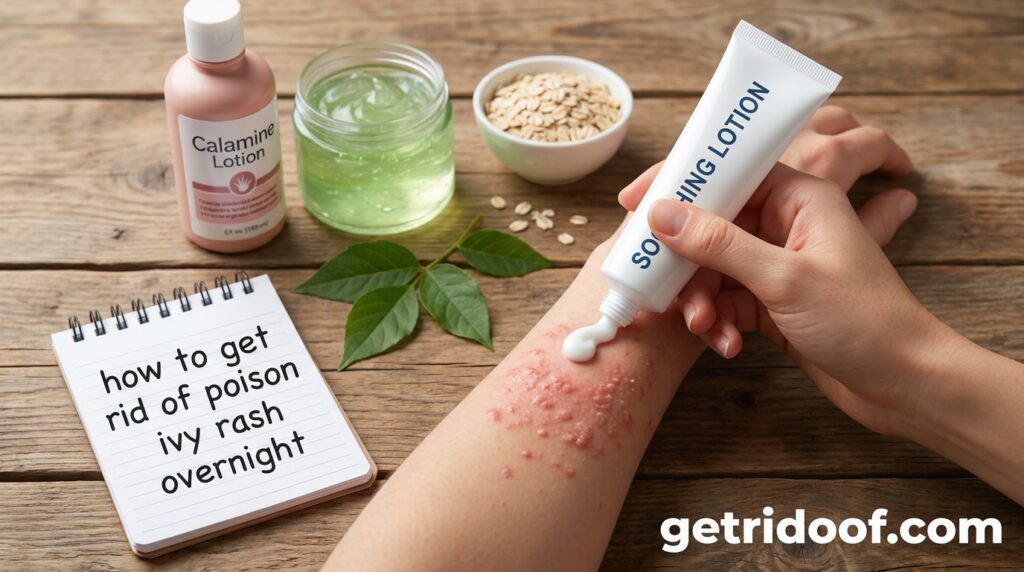
Here’s a simple, step-by-step bedtime routine to maximize overnight healing:
Step 1 — Cleanse: Wash the rash gently with cool water and mild soap. Pat dry with a soft, clean towel.
Step 2 — Apply your remedy: Use calamine lotion, aloe vera gel, or hydrocortisone cream. For large rash areas, try a bentonite clay mask or oatmeal soak before bed.
Step 3 — Take an antihistamine: Diphenhydramine (Benadryl) can help with itching. It’s best to take it before sleep to help you rest.
Step 4 — Protect the rash: Cover the area loosely with a clean bandage or soft gauze. This helps prevent scratching while you sleep.
Step 5 — Sleep cool: Wear light, breathable clothing and keep your room cool. Heat worsens itching significantly.
Sticking to this routine for 2–3 nights really helps the rash heal faster.
You Can Also Read
- How to Get Rid of a Headache
- How to Get Rid of Post Nasal Drip
- How to Get Rid of Cold Sores
- How Can I Get Rid of a Sore Throat Overnight?
What to Avoid When Treating Poison Ivy Rash
Just as important as knowing what works is knowing what makes things worse:
- ❌ Hot showers or baths — heat opens pores and intensifies itching dramatically.
- ❌ Scratching — breaks the skin, introduces bacteria, and significantly increases infection risk.
- ❌ Don’t pop or drain blisters. The fluid isn’t contagious, but open blisters can easily get infected.
- ❌ Bleach on skin — a common myth. Bleach is extremely harsh and will damage your skin without helping.
- ❌ Dermatologists warn that using topical Benadryl cream on a rash can make itching worse.
- ❌ Tight clothing over the rash — traps heat and bacteria against the skin.
How Long Does Poison Ivy Rash Last?
This is one of the most common questions people ask — and the honest answer is that there’s no overnight cure.
Even with the best treatment, a typical poison ivy rash takes 1 to 3 weeks to fully heal. Here’s a general timeline:
| Days 1–3 | Rash appears, itching and swelling peak |
| Days 4–7 | Blisters form, begin to ooze |
| Days 8–14 | Blisters dry up and crust over |
| Days 14–21 | Skin heals, rash fades completely |
The goal of overnight treatment isn’t to make the rash vanish overnight. Instead, it aims to reduce discomfort, stop spreading, and speed up healing.
When to See a Doctor
Most cases of poison ivy rash can be treated effectively at home. But you should seek medical attention if:
- The rash covers a large area of your body or keeps spreading after a week
- The rash is on your face, eyes, mouth, or genitals
- You develop a fever over 100°F (38°C)
- Blisters are oozing pus (sign of bacterial infection)
- Itching is severe and not relieved by any home treatment
- You have difficulty breathing (call 911 immediately — this is a medical emergency)
A doctor may prescribe oral corticosteroids, such as prednisone, for severe cases. These medications quickly reduce allergic reactions in the body.
How to Prevent Poison Ivy Rash in the Future
The best treatment is the one you never need. Here are practical prevention tips:
- Learn to identify poison ivy — the classic rule: “Leaves of three, let it be.” Poison ivy leaves are shiny, pointed, and may have slightly toothed edges.
- Cover up outdoors — wear long sleeves, long pants tucked into boots, and gloves when working in areas where poison ivy may grow.
- Use barrier towelettes before and after outdoor exposure. Products like Ivy X pre-exposure wipes leave an invisible protective barrier on the skin.
- Wash tools and gear after every outdoor session — urushiol oil can remain active on surfaces for years.
- Check your pets after hikes — dogs and cats can carry urushiol on their fur without any reaction themselves.
Frequently Asked Questions
Does poison ivy rash spread from scratching?
No. The rash only appears where urushiol oil touched the skin. Scratching doesn’t spread the rash — but it does break the skin and increase the risk of infection.
Can I use essential oils on poison ivy rash?
Some people find lavender oil calming. Always dilute essential oils with a carrier oil before applying them to irritated skin. They are not a primary treatment.
Is poison ivy rash contagious?
No. Poison ivy rash is an allergic reaction — it cannot be passed from person to person. Even direct contact with another person’s blisters will not spread the rash.
Can I get a rash from burning poison ivy?
Yes, and this is especially dangerous. Burning poison ivy releases urushiol particles into the air. Inhaling these can cause a severe reaction in the lungs and airways. Never burn poison ivy.
Conclusion: The Fastest Way to Get Rid of Poison Ivy Rash
There’s no magic cure for a poison ivy rash that makes it disappear overnight. However, knowing how to manage it can make the experience much easier.
Start by washing off the urushiol oil immediately. Use natural remedies such as calamine lotion, baking soda paste, aloe vera, or bentonite clay. Stick to a nightly routine. Take an antihistamine before sleep. Also, avoid anything that makes the itch worse. Most importantly, resist the urge to scratch.
Follow this plan for less swelling, drier blisters, and real relief. You might still need a week or two for full healing. Your skin is doing its job. Help it along with the right tools.
See a healthcare provider if your rash is severe, spreading, or looks infected.
About the Author