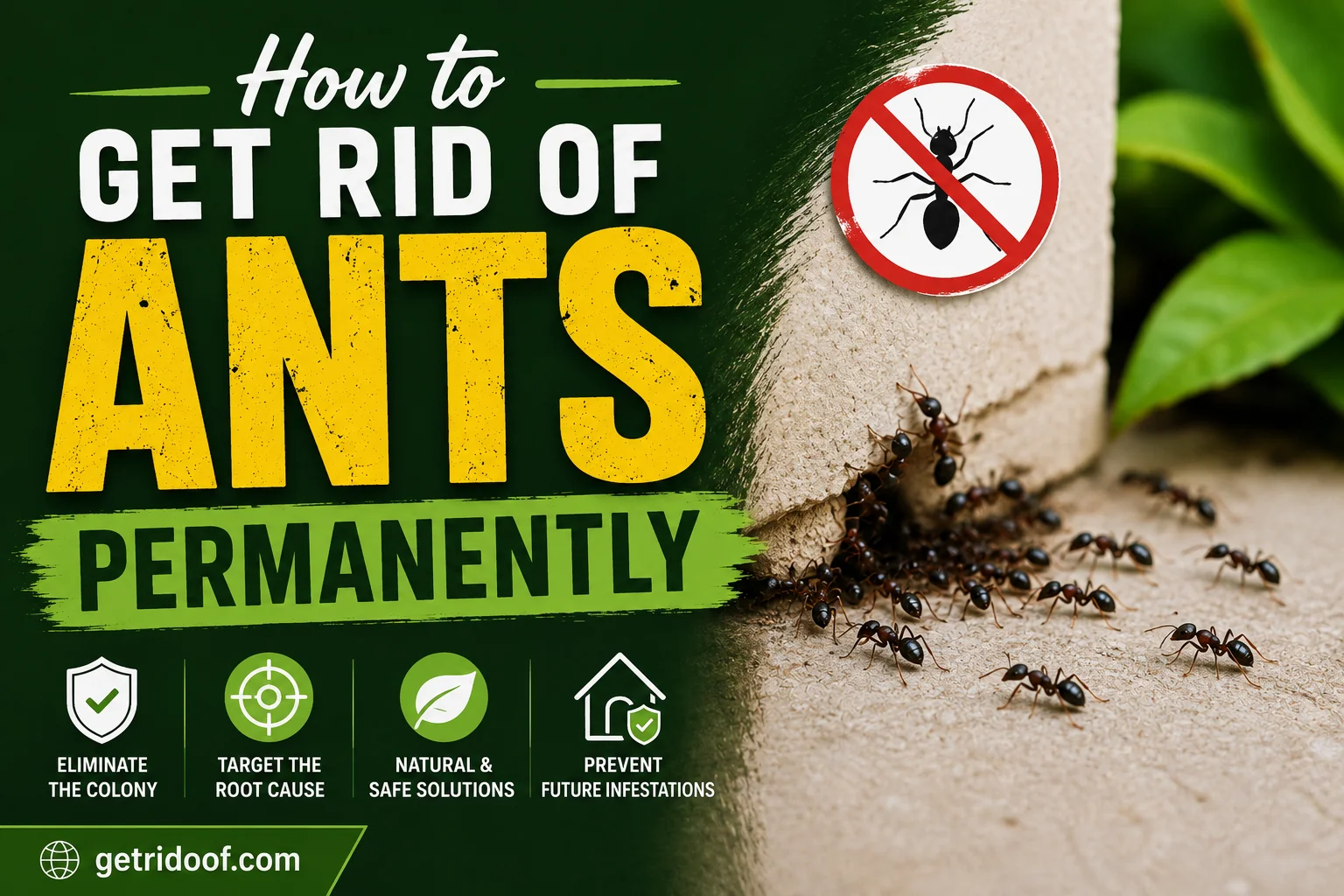
Ants are one of the most stubborn household pests in the world. You spray them, they come back. You clean up, they find another way in. If you want to know how to get rid of ants permanently, you are in the right place.
This guide gives you all the info you need. It explains why ants come into your home. You’ll discover top natural remedies, outdoor treatments, and effective professional solutions for lasting results.
How Do Ants Come Into the House?
Understanding how ants get inside is the first step toward keeping them out for good.
Ants enter homes primarily in search of food, water, and shelter. They love sugary foods and greasy things. They also seek moisture from leaky pipes or damp spots.
Ant colonies send out scout ants first. When a scout finds food or water, it leaves a chemical scent trail. This trail is called a pheromone trail. The rest of the colony can then follow it. This is why you see ants walking in a neat line.
Common entry points include:
- Cracks in walls and foundations
- Gaps around windows and doors
- Plumbing and electrical openings
- Under door frames and baseboards
One ant can lead to a big problem. If you ignore the scout’s trail, it might turn into an infestation.
The Habits of Ants
To permanently eliminate ants, you must understand how they live and behave.
Ants are social insects. They live in big underground colonies. These colonies can have thousands or even millions of workers. Most ants you see at home are wingless female workers. Their main job is to find food and take care of the colony.
Key habits to know:
- Scout ants explore new areas looking for resources
- Worker ants carry food back to feed the queen and larvae
- The queen is the heart of the colony — she can live for years and lays hundreds of eggs daily
- Ants are most active in spring and summer, but can enter indoors during cold weather too
- They are attracted to crumbs, pet food, standing water, and open trash
As long as the queen stays alive, the colony keeps growing. This is why surface sprays alone almost never work permanently.
How to Repel Ants: Simple First Steps
Before reaching for heavy chemicals, try these effective repelling strategies.
Seal entry points — Use caulk to seal cracks in walls, around window frames, and along baseboards. This physically blocks the most common ant highways into your home.
Remove food sources — Store food in airtight containers, wipe down countertops daily, and never leave dirty dishes in the sink overnight. Pay special attention to sugar, honey, and fruit.
Eliminate moisture — Fix leaky pipes, dry out damp areas under sinks, and ensure good drainage around your home’s foundation. Moisture is a major attractant for many ant species.
Disrupt scent trails — Wipe down surfaces where you have seen ants with a vinegar-and-water solution. This breaks their pheromone communication lines and confuses incoming ants.
How to Get Rid of Ants Indoors Using Natural Methods
Many homeowners want safe, non-toxic solutions — especially in homes with kids or pets. Here are the most effective natural methods to get rid of ants inside the house.
Diatomaceous Earth (Food Grade)
Diatomaceous earth (DE) is a powder made from fossilized algae. It damages the ant’s exoskeleton. This leads to dehydration and death. Sprinkle a thin layer along baseboards, windowsills, and entry points. It is completely safe for humans and pets.
White Vinegar Spray
Mix equal parts white vinegar and water in a spray bottle. Spray along ant trails, countertops, and entry points. Vinegar contains acetic acid, which kills ants on contact. It also disrupts their scent trails for communication. This is one of the easiest and cheapest home remedies available.
Peppermint or Tea Tree Essential Oil
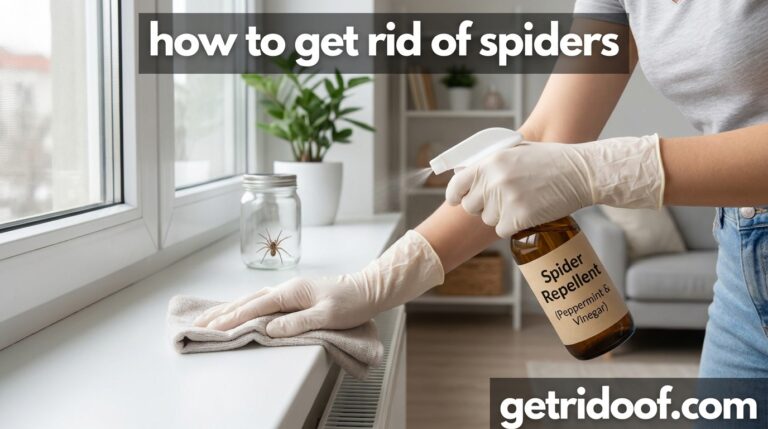
Ants hate strong smells. Add 15–20 drops of peppermint or tea tree essential oil to a spray bottle filled with water. Spray around windows, door frames, and any area where ants are active. This acts as a strong natural deterrent.
Baking Soda and Powdered Sugar
Mix equal parts baking soda and powdered sugar. Place this mixture near ant trails. Ants are attracted to the sugar but will also carry the baking soda back to the colony. When they ingest baking soda, it reacts with the acids in their bodies. This reaction kills them from the inside out. This is a slow but effective method.
Boric Acid (Borax) Bait
Mix borax with sugar water or peanut butter to create a homemade bait. Worker ants carry it back to the queen, poisoning the entire colony over time. This is one of the most effective natural ways to get rid of ants permanently indoors.
Coffee Grounds
Sprinkle used coffee grounds near entry points and around pet bowls and trash cans. Ants dislike the strong smell and will avoid the area. Important: Keep coffee grounds away from pets, as they are toxic to dogs and cats.
How to Get Rid of Ants Outdoors Using Natural Methods
Treating the outside of your home is just as important as treating the inside. If you only focus indoors, ants will keep coming back.
Boiling Water
If you can locate an ant nest in your yard, pour boiling water directly into the opening. This kills a large portion of the colony instantly. You may need to repeat this 2–3 times over several days for full effectiveness.
Lemon Juice Spray
Mix one part lemon juice with three parts water. Spray this mix around your home, garden, and any visible ant trails. Lemon juice disrupts scent trails and acts as a natural barrier.
Cinnamon and Cayenne Pepper
Sprinkle ground cinnamon or cayenne pepper around your home. Focus on areas near the foundation. Ants avoid both of these strongly scented spices. This is a great outdoor perimeter barrier.
Outdoor Borax Bait Stations
Put borax bait stations close to ant trails in your garden or around your home’s foundation. Worker ants will carry the bait back to the colony. This method goes straight to the source of the colony. This is key for getting rid of ants for good outdoors.
How to Get Rid of Ants Permanently by Targeting the Colony
Surface-level treatments only provide temporary relief. To permanently get rid of ants, you must destroy the colony — and most importantly, kill the queen.
Here is the most effective step-by-step approach:
Step 1: Find the Ant Trails
Follow the line of ants back to their entry point or nest. Do not kill the worker ants you see — they are your guides to the colony.
Step 2: Use Slow-Acting Ant Bait
Slow-acting bait, like borax-based gel or commercial bait stations, is the best way to eliminate colonies. Worker ants pick up the bait, carry it back to the queen and larvae, and the entire colony is poisoned over 3–7 days. Pest control experts say ant bait stations are the best way to handle an infestation.
Step 3: Be Patient — Don’t Spray the Ants You See
It is tempting to spray the ant trail directly. Resist that urge. If you kill the workers before they bring the bait back, you will never reach the queen.
Step 4: Apply a Non-Repellent Insecticide to Entry Points
After baiting, apply a non-repellent spray or dust around entry points and in wall voids. Non-repellent insecticides work differently from repellent sprays. Ants can walk through treated areas, pick up the chemical, and take it back to their nest.
Step 5: Repeat Treatments as Needed
Large colonies may require multiple bait applications over 2–4 weeks. Consistency is the key to permanent elimination.
A Quick Note on Flying Ants and Wings
If you have ever spotted winged ants in your home, it is worth paying close attention.
Flying ants are ready to reproduce. They leave their colony to mate and begin new ones. If you see flying ants indoors, it usually means a colony is nearby or even inside your walls.
Flying ants are commonly confused with termites. Here is a quick way to tell them apart:
- Flying ants have a pinched waist and uneven-sized wings
- Termites have a straight, thick body and wings of equal length
If you see flying ants inside often, especially carpenter ants, take it seriously. Carpenter ants can cause serious structural damage to wood in your home. Seal entry points right away. Place bait near active areas. Also, think about using professional pest control.
Tips for Preventing Further Ant Infestations
Once you have dealt with an ant problem, the last thing you want is a repeat visit. Here are proven prevention tips to keep ants away permanently.
Inside the home:
- Store all food — especially sugar, flour, and cereals — in sealed airtight containers
- Empty trash cans regularly and use bins with tight-fitting lids
- Clean up food spills and crumbs immediately, every single day
- Fix leaking taps and pipes, and eliminate any areas of standing water
- Wipe down counters and kitchen surfaces after every meal
Outside the home:
- Trim tree branches and shrubs so they do not touch your home’s walls or roof
- Keep firewood stored well away from the house
- Clear leaf litter and debris from around the foundation
- Check for and seal any cracks in your home’s exterior walls and foundation
- Maintain proper drainage to avoid moisture buildup near your foundation
Daily habits are the best way to keep ants from coming back after treatment.
Pesticides and Commercial Products That Eliminate or Repel Ants
When natural methods are not enough, commercial products can provide stronger, faster relief.
Ant Bait Stations (e.g., Terro, Advion) are filled with slow-acting insecticide and attractants. They are highly effective at eliminating entire colonies. Place them along ant trails and near entry points. Do not disturb the trails while bait is active.
Non-Repellent Insecticide Sprays (e.g., Taurus SC, Phantom) These sprays are clear to ants. They walk through treated areas, pick up the chemical, and take it back to their colony. They are far more effective than standard repellent sprays for permanent control.
Granular Ant Bait (e.g., Amdro Fire Ant Bait) Ideal for outdoor use. Scatter granules around the perimeter of your home or directly onto ant mounds. Worker ants carry them into the colony.
Ant Gel Bait (e.g., Advion Ant Gel) Apply small amounts along trails and cracks. Gel baits work well in kitchens, bathrooms, and wall voids. They’re great where sprays can’t be used.
Boric Acid Dust Apply in wall voids, under appliances, and in cracks where ants nest. It works as a slow-acting stomach poison and is effective against many common ant species.
Always read product labels closely. Follow all safety instructions, especially if you have kids or pets.
When to Hire an Exterminator
DIY methods work well for minor infestations, but sometimes professional help is the smarter and faster solution.
Consider calling a pest control professional if:
- You have tried multiple treatments for 4+ weeks with no improvement
- You see flying ants indoors repeatedly, suggesting an in-wall colony
- You suspect carpenter ant damage to the wooden structure of your home
- The infestation is large, widespread, or rapidly spreading
- You are unable to locate the nest despite following ant trails
Professional exterminators follow a multi-step approach. First, they identify the ant species. Then, they locate the colony. Next, they treat the source. Finally, they apply long-lasting residual treatments. They also offer follow-up visits to ensure the infestation does not return.
The cost of professional ant control is often worth it. This is especially true if there’s a risk of structural damage or if DIY methods have failed multiple times.
Frequently Asked Questions About Getting Rid of Ants
1. What kills ants permanently?
The only way to get rid of ants permanently is to destroy the entire colony, including the queen. Slow-acting baits, like borax-based or gel baits, work best. Worker ants take the poison back to their nest. Surface sprays only kill the ants you see, while the colony survives and sends more.
2. What is the fastest way to get rid of ants in the house?
For quick relief, spray a vinegar-water mix on visible ants. Then, wipe away the scent trail. Then place ant bait stations right away. The bait takes 3–7 days to reach the colony, but it delivers results that last.
3. Why do ants keep coming back even after treatment?
If ants keep returning, the queen has not been eliminated. Repellent sprays scatter the colony but do not kill it. Switch to a slow-acting bait so worker ants can carry the poison back to the source of the problem.
4. Are natural methods effective for getting rid of ants permanently?
Natural methods such as borax bait, diatomaceous earth, and vinegar sprays work well for mild to moderate infestations. For large or established colonies, you may need commercial bait products or professional extermination for complete removal.
5. How long does it take to get rid of an ant infestation completely?
With consistent treatment, most infestations can be eliminated in 2–4 weeks. Large colonies or in-wall infestations may take longer. Be patient. Let the bait work. Don’t spray visible ants while they carry bait back to the colony.
Conclusion
Handling an ant infestation can be frustrating, but it’s entirely manageable with the right steps. The most important lesson is this: to get rid of ants permanently, you must target the colony at its source, not just the ants you see crawling on the surface.
Start by sealing entry points and removing food and moisture. Then use slow-acting bait to reach and eliminate the queen. Combine this with consistent prevention habits, and you will keep ants out of your home for good.
No matter if you pick natural remedies or store-bought products, consistency and patience are key. For severe cases, do not hesitate to call a licensed exterminator. A small investment in professional treatment can save time and protect your home from serious damage.
Use this guide as your go-to resource every time you need to know how to get rid of ants permanently — for real, this time.
About the Author