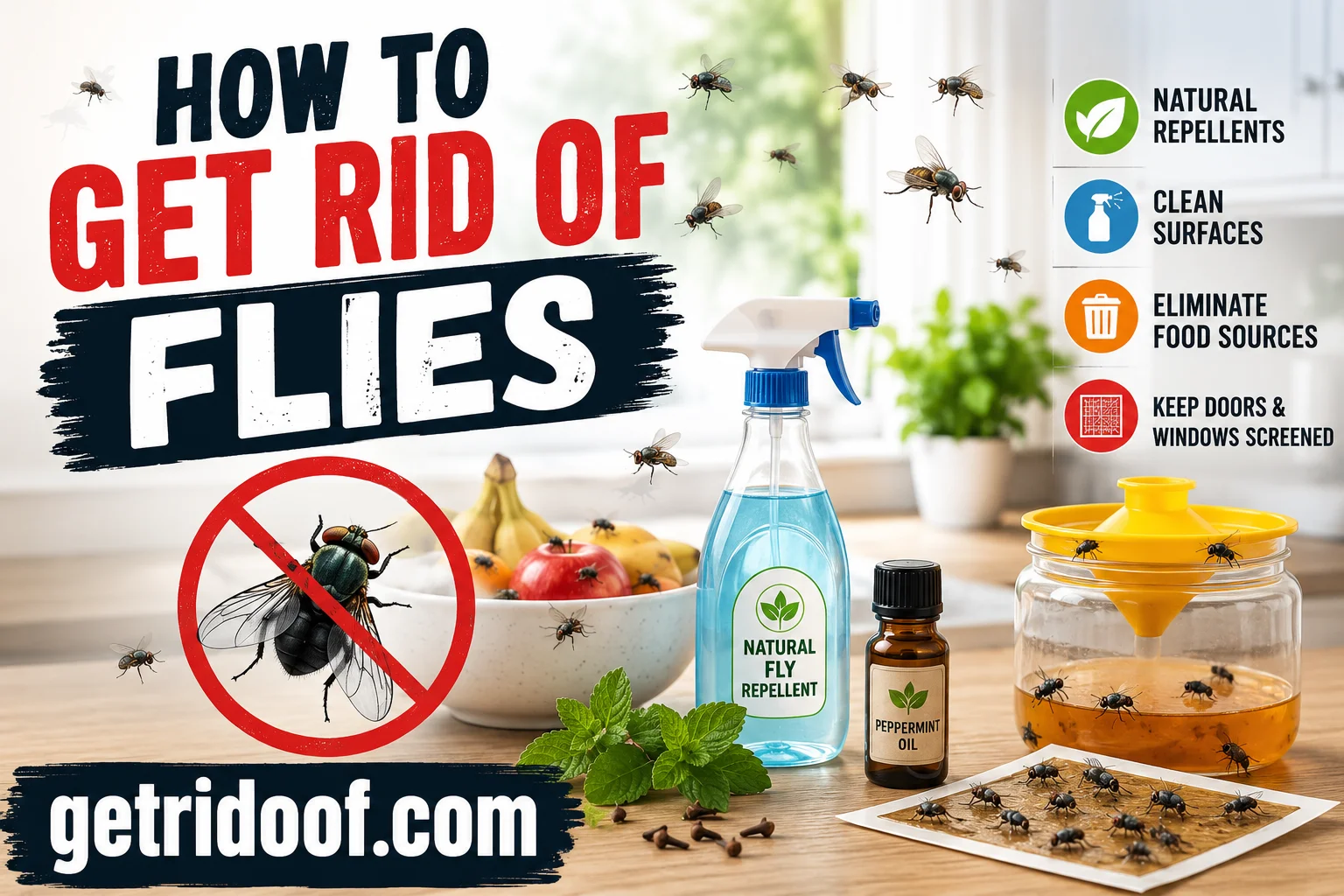
Flies are more than just an annoyance. They carry bacteria, spread diseases, and contaminate the food in your home. If you have a fly problem, you’re not alone. Many homeowners deal with this issue each season. The good news? There are proven ways on how to get rid of flies quickly, whether you prefer natural methods or chemical solutions.
This guide has all you need to know. It explains why flies come into your home and shares the best traps, sprays, and tips to keep them away for good.
Why Do Flies Keep Coming Into Your Home?
Before you can solve the problem, you need to understand what’s attracting them. Flies don’t show up randomly. They’re looking for specific things.
Common fly attractants include:
- Rotting food, overripe fruit, and uncovered garbage
- Pet waste, animal droppings, and dirty litter boxes
- Standing water, clogged drains, and damp areas
- Bright lights left on at night near open windows
- Unwashed dishes left in the sink
Take away what’s drawing them in. Then, it’s easier to get rid of the rest of the flies.
Common Types of House Flies You Should Know
Not every fly is the same, and identifying the type helps you choose the right solution.
House Fly (Musca domestica) The most common type. Grey in color, about 6–7mm long. They breed in garbage, manure, and decaying organic matter.
Fruit Fly (Drosophila melanogaster) These tiny, tan flies enjoy overripe fruit, drains, and fermented liquids.
They reproduce incredibly fast.
Drain Fly Also called moth flies. They breed inside drains and pipes where organic matter builds up.
Blow Fly Metallic blue or green. Usually a sign of a dead animal nearby or exposed meat.
Knowing the fly helps you find the right breeding spot and pick the best treatment.
How to Get Rid of Flies Fast: Prevention First
The most effective way to deal with flies is to stop them before they move in. A clean home gives flies no reason to stay.
Follow these prevention steps:
- Store all food in airtight containers or in the fridge
- Empty trash cans daily and use bins with tight-fitting lids
- Clean up pet food and water bowls after every use
- Fix torn window screens and seal any gaps around doors
- Turn off outdoor lights at night, or switch to yellow bug-light bulbs
- Remove grass clippings, leaf piles, and decaying plant matter near your home
- Clean kitchen drains weekly to prevent drain fly breeding
Consistency is key. Doing these things regularly makes your home far less appealing to flies year-round.
How to Get Rid of Flies Naturally: 8 Home Remedies That Work
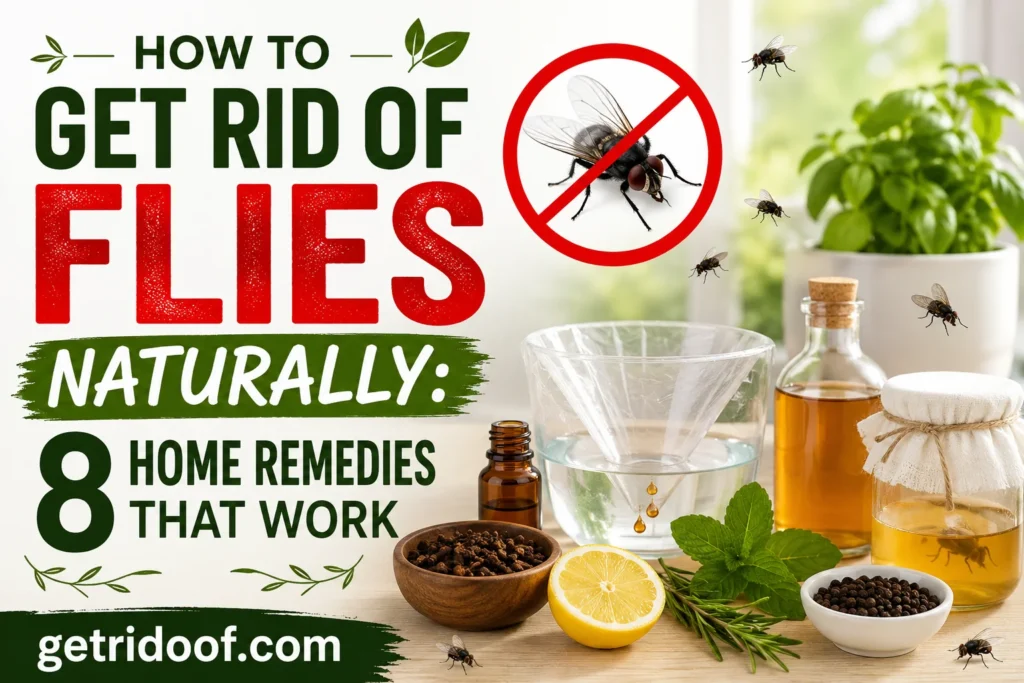
Many homeowners like to use natural methods first, especially if they have kids or pets. Here are eight effective home remedies to get rid of flies without harsh chemicals.
1. Apple Cider Vinegar Trap
This is one of the most popular and effective DIY fly traps, especially for fruit flies.
How to make it:
- Pour apple cider vinegar into a glass or jar
- Add a few drops of dish soap
- Cover with plastic wrap and poke small holes in it
The vinegar attracts the flies, and the dish soap breaks the surface tension so they sink and drown. Replace the trap every few days for best results.
2. Dish Soap and Vinegar Spray
Mix equal parts water and white vinegar in a spray bottle. Add 5–7 drops of dish soap. Shake well and spray directly on flies. This kills them on contact.
3. Essential Oil Repellents
Flies hate strong smells. Essential oils are a great natural repellent.
Best essential oils to repel flies:
- Lavender
- Eucalyptus
- Peppermint
- Lemongrass
- Clove
Put a few drops in a diffuser. You can also mix it with water in a spray bottle. Then, spray around windows, doorways, and kitchen counters.
4. Herbs and Plants That Repel Flies
Keeping certain plants in or around your home naturally deters flies. Flies dislike the strong scent of:
- Basil — place pots near windows and on countertops
- Lavender — plant near doorways and patios
- Mint — grow in pots indoors or near entry points
- Marigolds — plant around the garden perimeter
- Bay leaves — place dried leaves in kitchen cupboards
These plants look great and double as natural fly deterrents.
5. Cloves and Lemon
Slice a lemon in half and press whole cloves into the flesh. Place it on a plate near your dining table or kitchen. Flies avoid both cloves and citrus. This is a traditional remedy that still works well.
6. Flypaper Strips
Flypaper is one of the simplest non-toxic solutions. Hang sticky strips near windows, garbage cans, and over the sink. Flies are attracted to the sweet scent and get stuck. They’re cheap, disposable, and highly effective.
7. DIY Bottle Trap
Cut the top third off a plastic bottle. Pour sweet liquid (sugar water, juice, or rotting fruit) into the bottom. Flip the top upside down and insert it like a funnel. Flies enter easily but can’t get out. This trap can catch large numbers of flies overnight.
8. Bag of Water and Pennies
This old trick works well for outdoor spaces. Fill a resealable bag with water until it’s three-quarters full. Add a few copper pennies. Then, hang it near your patio or entrance. The reflection and refraction of light is believed to disorient flies and keep them away.
How to Get Rid of Flies with Chemical and Commercial Solutions
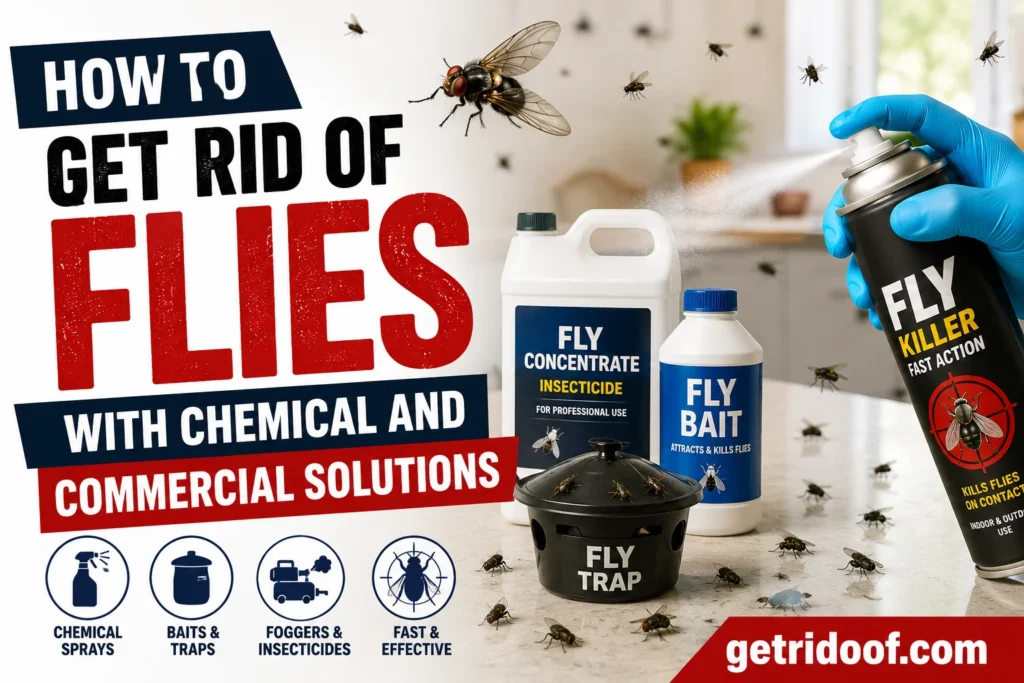
When natural methods fail or if there’s a serious infestation, chemical solutions act faster and work better.
Pyrethrin-Based Insecticide Sprays
Pyrethrin is one of the most widely used and trusted chemicals for fly control. It works fast and is derived from chrysanthemum flowers.
Tips for safe use:
- Always buy sprays labeled specifically for indoor use
- Ventilate the room well before and after spraying
- Keep children and pets out of the area until the spray dries
- Follow label directions exactly
Note: Flies can build resistance to insecticides over time. So, don’t depend on sprays alone for long-term control.
Electric UV Light Traps
UV light traps attract flies using ultraviolet light. They either zap the flies with electricity or catch them on a sticky pad. They work silently, 24/7, and are very effective for kitchens, garages, and food prep areas.
Best placement tips:
- Mount away from windows so they don’t attract outdoor flies inside
- Keep at a height of 4–6 feet for maximum effectiveness
- Clean the trap regularly to maintain performance
Fly Bait Stations
Fly bait uses an attractant mixed with a pesticide. Flies feed on the bait and die. Bait stations are excellent for garages, patios, and areas near garbage bins. Keep them away from food areas and out of reach of children and pets.
Aerosol Foggers
For big indoor infestations, aerosol foggers, or “bug bombs,” fill the room with insecticide mist. They kill flies on contact and reach areas sprays can’t. Always follow the manufacturer’s instructions. Leave the room for the recommended time.
Residual Perimeter Spray
For outdoor fly control, spray a residual pesticide around your home. Focus on walls, window frames, and entry points. Residual sprays last longer than indoor sprays. They form a barrier that flies avoid.
How to Get Rid of Flies Outside: Patio and Yard Solutions
Flies in your outdoor spaces can ruin meals and BBQs. Here’s how to take back your patio.
Outdoor fly control tips:
- Use outdoor fly traps — hang them at the edges of your property, away from where you sit. Most use a putrescent bait that smells awful to humans but is irresistible to flies.
- Set up a fan — flies are weak fliers. A simple box fan on your patio blows them away and keeps the area comfortable.
- Plant fly-repelling herbs — basil, mint, and elderberry around seating areas naturally deter flies.
- Use citronella candles — citronella repels many flying insects, including flies. Place candles around your table when eating outdoors.
- Pine oil cleaner — flies hate the smell of pine. Cleaning your patio with a pine-based cleaner can help keep them away.
- Remove pet waste and standing water — these are the #1 attractants for outdoor flies.
How to Get Rid of Flies in Specific Areas of Your Home
Kitchen
Kitchens are the most common breeding ground for flies. Keep counters clean, store fruit in the fridge, and clean drains weekly. Use an apple cider vinegar trap near the fruit bowl and a UV light trap mounted near the ceiling.
Bathroom and Drains
If you notice small, moth-like flies near sinks or showers, you likely have drain flies. Pour boiling water or a baking soda and vinegar solution down the drain weekly. Follow with a commercial drain gel treatment like Invade Bio Gel for a thorough clean.
Garbage Area
Keep bin lids sealed at all times. Rinse bins with a bleach solution monthly. Place fly bait or sticky traps nearby but away from food preparation areas.
Bedroom
Flies in bedrooms are usually drawn in through open windows at night by light. Install proper fly screens and switch to yellow-tinted bulbs outdoors. A peppermint essential oil diffuser also helps repel them naturally.
When to Call a Professional Pest Control Service
Most fly infestations can be handled with DIY methods. But sometimes, the problem is bigger than it looks.
Call a professional if you notice:
- Large numbers of flies appearing daily despite your efforts
- Flies coming from inside walls, ceilings, or under floorboards
- A strong, unpleasant odor (possible hidden dead animal breeding site)
- Recurring infestations that keep coming back season after season
Professional pest control experts find hidden breeding sites. They apply targeted treatments and give long-term prevention advice. DIY methods can’t compete with their expertise.
Quick-Reference: Best Methods to Get Rid of Flies
| Method | Best For | Speed | Cost |
| Apple cider vinegar trap | Fruit flies | Medium | Very Low |
| Essential oil spray | Repelling flies | Slow | Low |
| Flypaper strips | General flies | Medium | Very Low |
| UV light trap | Kitchen/indoor | Fast (ongoing) | Medium |
| Pyrethrin spray | Large infestations | Fast | Low–Medium |
| Fly bait station | Outdoor/garage | Medium | Low |
| Aerosol fogger | Severe infestations | Very Fast | Medium |
| Professional pest control | Persistent infestations | Fast | High |
Frequently Asked Questions About Getting Rid of Flies
How long does it take to get rid of flies?
Most infestations can be controlled within 1–2 weeks. Just put in consistent effort by removing attractants, setting traps, and using repellents.
What smell do flies hate the most?
Flies strongly dislike lavender, eucalyptus, peppermint, clove, and pine. Using these scents as sprays or diffusers helps repel them naturally.
Can flies make you sick?
Yes. House flies can carry more than 100 germs. These include bacteria that cause food poisoning, dysentery, and salmonella. This is why quick action matters.
Why do I suddenly have so many flies in my house?
A sudden increase often signals a hidden breeding source. This could be rotting food, a dead animal, or a dirty drain. Check these areas first before applying treatments.
Do flies go away in winter?
Most house flies become less active in cold weather, but they don’t disappear entirely. They can overwinter inside walls and return in spring. Sealing entry points in autumn is the best prevention.
Conclusion: How to Get Rid of Flies for Good
Getting rid of flies isn’t just about swatting them or spraying insecticide. The most effective approach combines prevention, natural remedies, and targeted treatments. Start by removing what attracts flies — food waste, standing water, and pet mess. Then use traps and repellents to eliminate any remaining flies. For tough infestations, consider using chemical solutions or getting professional help.
A fly-free home is completely achievable. Take action today, stay consistent, and you’ll notice a dramatic difference within days.
About the Author