If you’ve ever spotted a spider crawling across your wall, you know that sinking feeling. Most homeowners want to know how to get rid of spiders quickly, safely, and for good. The good news? You don’t need to be an expert or spend a fortune on exterminators. This guide covers it all. You’ll learn why spiders come into your home. Plus, discover the best natural and chemical ways to keep them away for good.
Why Do Spiders Come Inside Your Home?
Before you can solve the problem, it helps to understand it. Spiders don’t randomly wander in. They’re looking for three things: food, warmth, and shelter.
- Food: If your home has flies, gnats, mosquitoes, or other insects, spiders will follow. They are natural hunters and your home is their buffet.
- Warmth: As temperatures drop in late summer and fall, spiders seek warm spots to survive and mate.
- Entry points: Cracks in walls, gaps by windows, torn screens, and open vents invite trouble.
Understanding these root causes is the first step toward effective spider control.
How to Identify Common House Spiders
Not all spiders are the same. Knowing what you’re dealing with helps you decide how urgently to act.
Common House Spider
Small, yellowish-brown, and mostly harmless. They spin messy webs in corners and basements. These are the most common spiders homeowners encounter.
Wolf Spider
Large, fast, and intimidating — but not dangerous. Wolf spiders don’t spin webs. They hunt insects on the floor, especially in garages and basements.
Brown Recluse Spider
This one requires immediate attention. It has a violin-shaped mark on its back and six eyes arranged in three pairs. Brown recluse bites can cause painful skin lesions and need medical treatment.
Black Widow Spider
Identified by its shiny black body and red hourglass shape on its abdomen. Black widows are venomous spiders. You can often find them in dark, quiet places like garages, sheds, and woodpiles.
Important: If you see a brown recluse or black widow in your home, skip DIY methods. Call a professional pest control company right away.
How to Get Rid of Spiders Naturally
Many homeowners choose natural spider repellents first. They often use these methods before trying chemicals. These are safe for kids and pets and surprisingly effective.
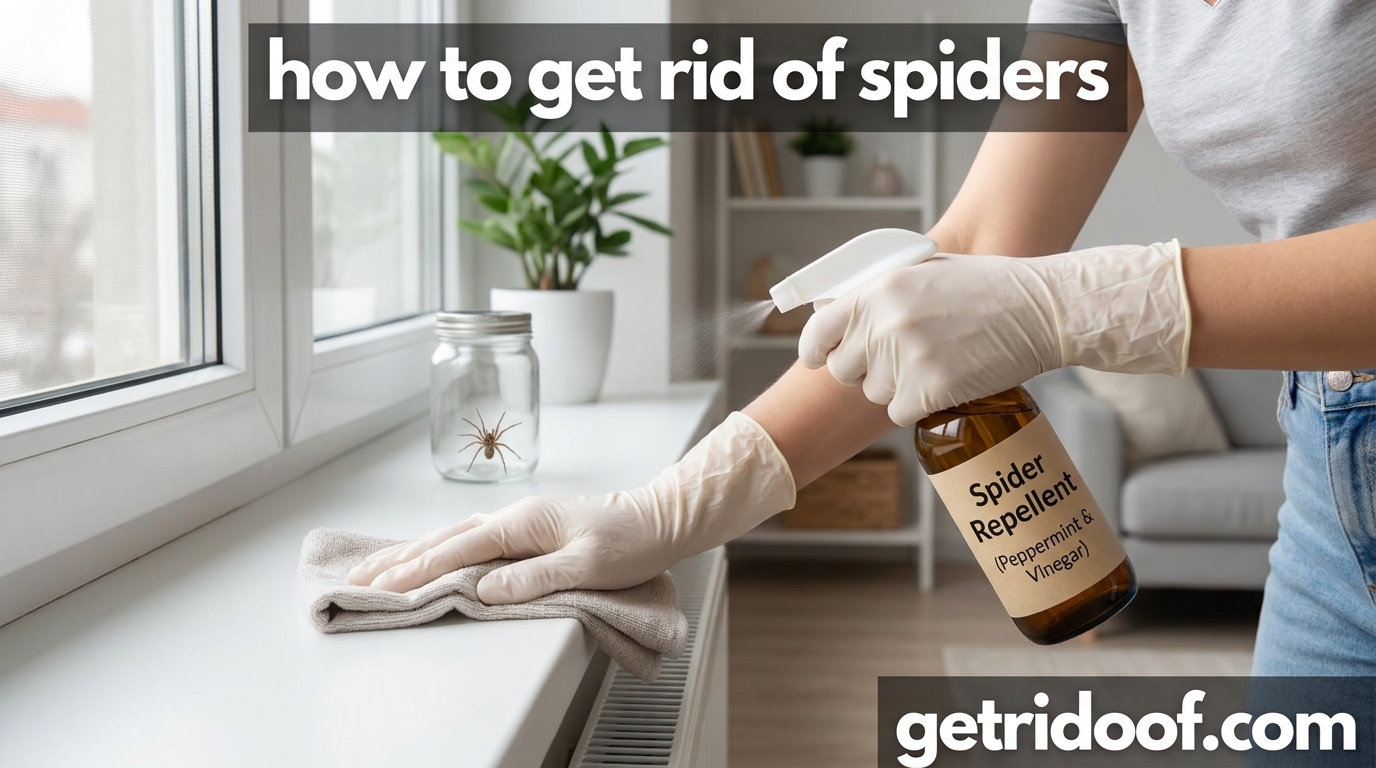
1. Peppermint Oil Spray
Spiders hate strong scents. Peppermint oil is one of the most popular and proven natural remedies.
- Mix 15–20 drops of peppermint essential oil with 2 cups of water in a spray bottle.
- Spray along baseboards, window sills, doorways, and corners.
- Reapply every 1–2 weeks for best results.
You can also use lavender, eucalyptus, tea tree, or citrus oils as alternatives.
2. White Vinegar Solution
White vinegar contains acetic acid, which irritates spiders on contact.
- Mix equal parts white vinegar and water.
- Spray directly on spiders or in areas where you frequently see webs.
- It won’t kill spiders from a distance, but it works well as a contact spray.
3. Diatomaceous Earth
This powder is made from fossilized algae and is deadly to spiders but safe for humans and pets.
- Sprinkle it along baseboards, under appliances, and in corners.
- It damages the spider’s exoskeleton, causing dehydration.
- Use food-grade diatomaceous earth for indoor application.
4. Cedar Wood
Spiders strongly dislike the scent of cedar. Place cedar blocks or chips in closets, drawers, and storage boxes. Cedar mulch around the outside of your home also helps deter spiders from entering.
5. Salt Water Spray
Salt acts as a natural spider poison. Mix 1/8 cup (about an ounce) of salt in a gallon of warm water. Spray this solution directly on spiders or their egg sacs to kill them instantly.
Clean and Declutter Your Home
To get rid of spiders for good, start by cleaning and decluttering. Spiders enjoy hiding in messy, quiet spots. There, they can build webs without interruption.
Start by clearing out areas like closets, garages, attics, and basements. Get rid of old cardboard boxes, newspapers, and clothes you haven’t used in months. These items provide perfect hiding spots for spiders and their egg sacs.
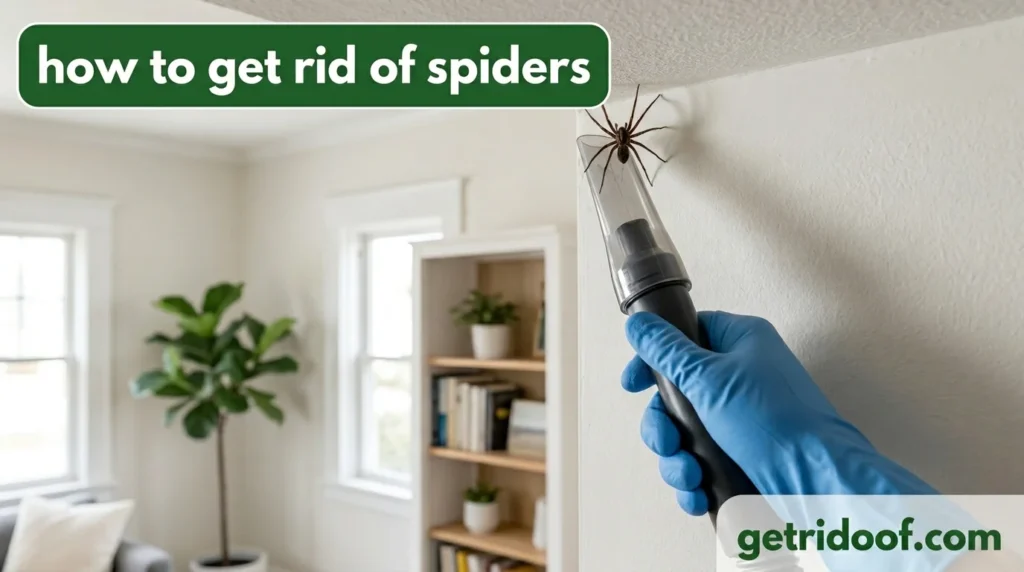
Vacuum regularly, paying close attention to corners, ceiling edges, and under furniture. A vacuum is one of the most effective tools for removing spiders, webs, and egg sacs all at once. Don’t forget to check behind picture frames, curtains, and large appliances too.
In the kitchen, keep counters wiped down and avoid leaving dirty dishes in the sink overnight. Crumbs and food residue attract insects, which in turn attract spiders. A clean kitchen makes your home far less appealing to unwanted guests.
Install Insect Screens to Windows and Doors
A smart way to get rid of spiders is to seal your windows and doors. Insect screens block spiders and their prey from getting into your home.
Check all existing screens for tears, holes, or gaps along the edges. Even a small tear can be an open invitation for spiders to slip through. Replace damaged screens or use screen repair tape. It’s cheap and simple to apply.
If your doors lack screens, think about adding them. This is especially important for doors leading to gardens, patios, or porches. Door sweeps are also helpful, as they seal the gap at the bottom of the door where spiders often sneak in. Combining screens with sealed entry points creates a strong first line of defense.
Keep the Water Moving
One simple way to get rid of spiders is to manage moisture in your home. Standing water attracts insects, and insects attract spiders. Stagnant water in birdbaths, gutters, and drainage areas is a great spot for bugs. These bugs are perfect for spiders to eat.
Keep gutters clear and ensure water drains properly away from your foundation. If you have outdoor water features, think about adding a small pump. It will keep the water flowing. Moving water is far less attractive to mosquitoes and other insects than still water.
Inside your home, fix any leaky pipes or faucets promptly. Damp basements and bathrooms are popular spider homes. They provide moisture and a steady food supply. Cutting down on indoor moisture helps make your home less inviting to spiders.
Be Wary of What You Bring Inside
Sometimes, spiders don’t sneak in on their own. They hitch a ride on items you bring into your home. This is an important consideration when thinking about how to get rid of spiders for the long term.
Firewood is one of the biggest culprits. Inspect firewood carefully before bringing it indoors. Spiders and other insects often nest in stacked wood. It’s a good idea to store firewood away from your house and only bring in what you need for immediate use.
Cardboard boxes, especially those stored in garages, basements, or sheds, can hold spiders. Before bringing boxes in from storage, shake them out and inspect them for webs or egg sacs.
Outdoor furniture cushions, gardening tools, and grocery bags left outside can attract spiders. A quick check before bringing these items inside can save you from surprises later.
Keep the Cool Temperature Inside the House
It might seem surprising, but temperature plays a role in how to get rid of spiders effectively. Many house spiders like warm, cozy places. They seek shelter from the cold, especially in winter.
Keep your home cooler, especially in attics, basements, and garages. This makes these areas less inviting for spiders. You don’t have to keep your whole house cold. But keeping storage areas from getting too warm can help.
Proper ventilation also makes a difference. Spiders tend to favor warm, humid, and stagnant air. Using fans or dehumidifiers in problem areas can lower both temperature and moisture. This tackles two factors that attract spiders at once.
Spider Prevention Tips: How to Keep Spiders Away for Good
The best way to get rid of spiders is to stop them from getting in the first place. These prevention habits make a big difference.
Seal Entry Points
This is the single most effective long-term strategy.
- Use caulk to seal cracks around windows, doors, and the home’s foundation.
- Fix or replace torn window and door screens.
- Place mesh screens behind vents — spiders can squeeze through very small gaps.
- Seal holes where utility cables enter the home from outside.
Reduce Outdoor Lighting
Bright outdoor lights attract moths, flies, and other insects. Spiders follow those insects. Use yellow sodium vapor bulbs or motion-sensor lights by entry doors. This helps cut down on insect activity.
Keep a Clean, Clutter-Free Home
Spiders love clutter. It gives them places to hide and build webs undisturbed.
- Get rid of old newspapers, magazines, and cardboard boxes.
- Vacuum regularly, including ceiling corners, under furniture, and behind appliances.
- Wipe down countertops and clean food crumbs right away. They attract insects, which in turn attract spiders.
- Store fruit in the refrigerator rather than on the counter, as aging fruit attracts gnats.
Trim Vegetation Around Your Home
Overgrown bushes, shrubs, and ivy near your home’s exterior act as a bridge for spiders.
- Keep plants trimmed back at least 12 inches from the walls.
- Move wood piles, mulch, and garden debris away from doorways and the home’s foundation.
- Sweep away cobwebs from outdoor eaves and corners often. This helps keep spiders from settling in.
Chemical Solutions: When Natural Remedies Aren’t Enough
For a bigger infestation, chemical treatments work better and last longer.
Over-the-Counter Spider Sprays
Choose sprays with pyrethroids (synthetic insecticides) or pyrethrin (natural insecticide from chrysanthemum flowers). These disrupt the spider’s nervous system.
- Apply around the home’s foundation, doors, windows, and garage eaves.
- Treat corners, baseboards, and anywhere spiders build webs.
- Always follow the manufacturer’s instructions for safe application.
Residual Insecticides
These sprays create a chemical barrier. This barrier continues to kill spiders for weeks after you apply it.
- Apply along baseboards, window frames, and door thresholds.
- Reapply every 4–6 weeks or after heavy rain outdoors.
- Keep children and pets out of treated areas until fully dry.
Glue Traps
Glue traps are a non-toxic way to monitor and reduce spider populations.
- Place them in corners, under furniture, and along walls.
- Check and replace them every 2–4 weeks.
- They’re especially effective in garages, basements, and storage rooms.
Safety tip: When using any chemical pesticide, ensure good ventilation. Keep pets and children away from treated areas. Pyrethrin breaks down quickly in sunlight. It’s also seen as safer for homes than synthetic alternatives.
You Can Also Read
When to Call a Professional Exterminator for Spiders
Sometimes the situation calls for professional help. Here’s when to make that call.
Signs you need a professional:
- You have identified venomous spiders like brown recluse or black widow.
- You’re seeing large numbers of spiders throughout multiple rooms.
- DIY treatments have failed after several weeks.
- You’ve found spider egg sacs in multiple locations.
A pest management company will inspect your property. They’ll identify the pest species and apply specific treatments. They can also provide long-term prevention plans to keep spiders from returning.
What to expect: Most spider treatments spray the outside of your home. They also treat problem areas inside and seal entry points. Costs vary, but many companies offer follow-up visits as part of their packages.
Quick Action Checklist: How to Get Rid of Spiders Step by Step
Use this checklist to tackle your spider problem systematically:
- [ ] Inspect your home for spider hiding spots, webs, and egg sacs
- [ ] Vacuum all webs, egg sacs, and visible spiders immediately
- [ ] Seal cracks, gaps, and entry points with caulk or weatherstripping
- [ ] Declutter storage areas — basements, garages, closets
- [ ] Apply natural repellents (peppermint oil, diatomaceous earth, cedar)
- [ ] Set glue traps in corners and high-activity areas
- [ ] Spray a residual insecticide around the perimeter if needed
- [ ] Trim outdoor vegetation away from the home
- [ ] Switch outdoor lighting to yellow bulbs to reduce insect attraction
- [ ] Call a professional if venomous spiders or large infestations are found
Frequently Asked Questions
What smell keeps spiders away?
Spiders strongly dislike peppermint, lavender, eucalyptus, citrus, and cedar. You can use essential oil sprays or put cedar chips in problem areas. These methods are popular and effective.
Does vinegar kill spiders?
White vinegar can kill spiders on direct contact due to its acetic acid content. It won’t repel them from a distance, but it’s a useful, chemical-free option for spot treatment.
Why do I suddenly have so many spiders in my house?
A sudden rise in spider numbers often signals the arrival of late summer or fall. That’s their mating season. It can also mean you have an abundance of insects inside your home that are attracting them.
Are spiders dangerous?
Most common house spiders are completely harmless. Only a few species, mainly the brown recluse and black widow in the US, are truly dangerous to humans.
How do I get rid of spider eggs?
Use a vacuum to remove egg sacs directly. Seal and dispose of the vacuum bag immediately. You can also apply a contact insecticide directly to the sac. Check dark corners, behind furniture, and in storage areas.
Conclusion
You don’t need training or pricey products to get rid of spiders. Seal entry points first. Then, reduce clutter. Finally, get rid of the insects they feed on. Try natural remedies first. Use peppermint oil, diatomaceous earth, and cedar for defense. Turn to chemical solutions or professional pest control when needed.
The key is consistency. A clean, well-sealed, and regularly maintained home is one spiders simply won’t want to live in. Start with the checklist above, and you’ll notice a real difference within just a few weeks.
About the Author