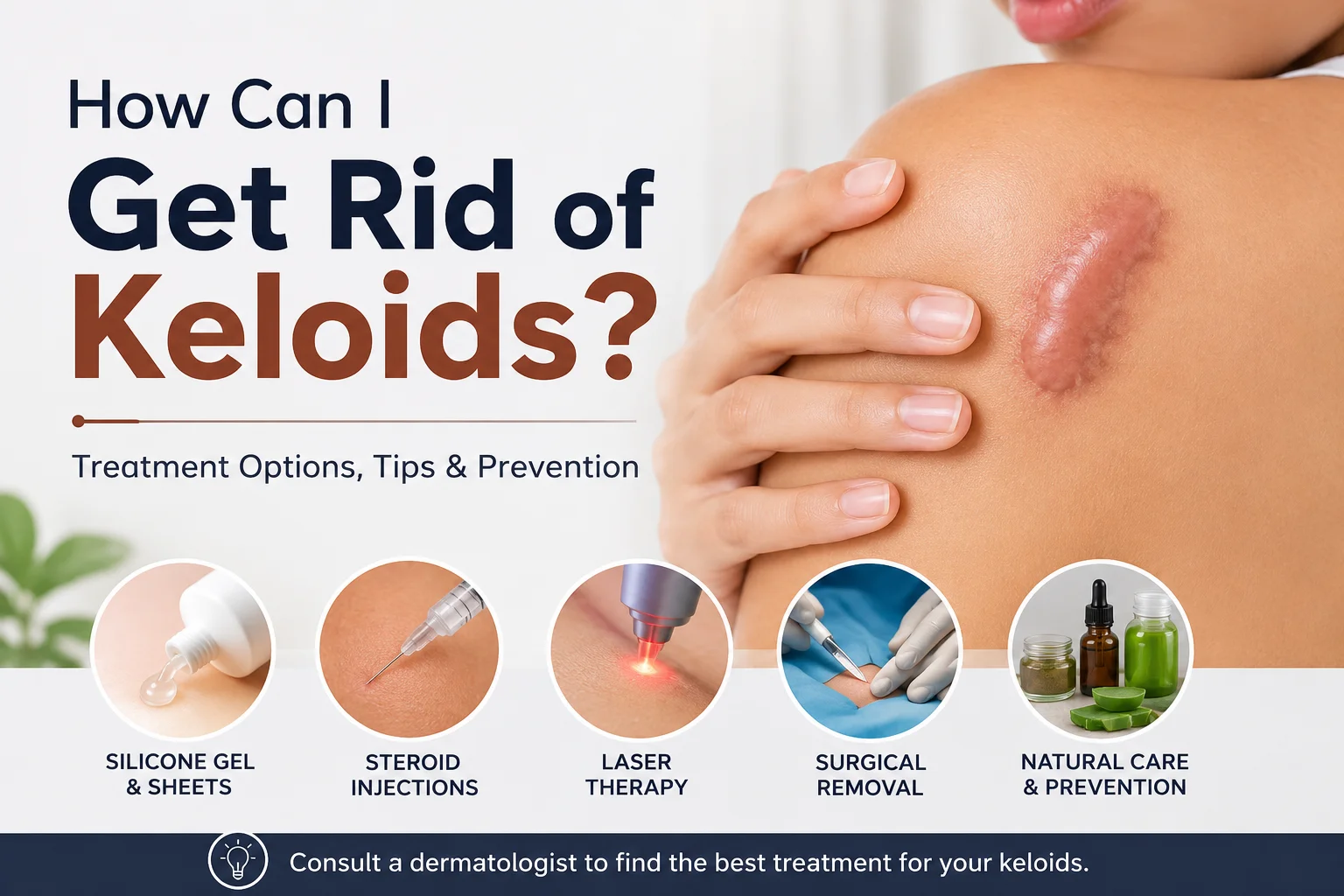
If you have a thick, raised scar that just won’t go away — you’re not alone. Millions of people ask the same question every day: how can I get rid of keloids? Keloids can be frustrating and uncomfortable. They may appear after a piercing, surgery, or even a small cut. Treating them can be tough.
The good news? There are real, proven options available — both medical and at home. This guide explains what keloids are and the best treatments available.
What Is a Keloid? Understanding the Basics
A keloid is a type of raised scar that grows beyond the boundaries of the original wound. Unlike a normal scar that fades over time, a keloid keeps growing — sometimes for months or even years.
Keloids form from extra collagen that your body creates while healing. Your skin goes into overdrive. It doesn’t know when to stop repairing itself.
Common characteristics of a keloid scar include:
- Raised, rubbery, or firm texture
- Larger than the original wound
- Pink, red, purple, or darker than your natural skin tone
- Itchy, tender, or occasionally painful
- Shiny or smooth surface
Keloids are not dangerous — they are benign and non-contagious. But they can affect your self-confidence and quality of life, which is why so many people want to remove them.
Keloid vs. Hypertrophic Scar: What’s the Difference?
Many people confuse keloids with hypertrophic scars. Both are raised, but they are not the same thing.
| Feature | Keloid | Hypertrophic Scar |
| Size | Grows beyond the wound | Stays within the wound |
| Timeline | Can grow for years | Usually settles within a year |
| Goes away on its own? | Rarely | Often fades over time |
| Treatment difficulty | More challenging | Easier to treat |
This distinction matters because the treatment approach differs. If you’re unsure which one you have, a dermatologist can diagnose it in a single visit.
What Causes Keloids to Form?
Keloids form when the skin’s natural healing process goes into overdrive. The body doesn’t just make enough collagen to heal a wound. It keeps making extra, which leads to too much scar tissue.
Common triggers include:
- Ear or body piercings
- Surgical incisions
- Acne scars (especially cystic acne)
- Burns or cuts
- Chickenpox or varicella scars
- Insect bites
- Tattoos
Risk factors that make keloids more likely:
- Family history — keloids run in families and have a genetic component
- Darker skin tones, like those of many African, Asian, and Hispanic people, are more at risk. The rates can be as much as 15 times higher in those with deep pigmentation.
- Age — people between 10 and 30 years old are most susceptible
- Location — chest, shoulders, upper arms, earlobes, and jaw are high-risk areas
Some keloids can form without any skin injury. They may appear suddenly or even years after a wound has healed.
Do Keloids Go Away on Their Own?
This is one of the most common questions people have, and the honest answer is: almost never.
Unlike hypertrophic scars, keloids do not regress naturally over time. Without treatment, they often grow slowly for months or even years. Then, they usually stabilize. Some may shrink a bit in old age, but they rarely vanish entirely without help.
The earlier you treat a forming keloid, the better your results will be. Early treatment works much better than waiting for the keloid to mature.
How Can I Get Rid of Keloids? Medical Treatments That Work

To get rid of keloids effectively, medical treatments provide the best results. Here’s a breakdown of the most common options a dermatologist may recommend:
1. Corticosteroid Injections
Steroid injections are considered the first-line treatment for most keloids. The injections contain triamcinolone, which suppresses inflammation and breaks down excess collagen.
- Sessions are usually repeated every 4 to 8 weeks
- Between 50% and 80% of keloids shrink after treatment
- Works best when combined with other therapies
- Side effects may include skin lightening or slight skin thinning
2. Cryotherapy (Freezing)
Cryotherapy uses liquid nitrogen to freeze the keloid tissue. It’s best for smaller, newer keloids. It’s also one of the safer choices, with less chance of coming back.
- Can be done in a dermatologist’s office
- Multiple sessions are usually needed
- May cause temporary discoloration, especially in darker skin tones
3. Laser Therapy
Laser treatment can reduce the redness, flatten the scar, and improve texture. Pulsed-dye laser (PDL) and fractional laser are the most commonly used types.
- Works best for surface-level or smaller keloids
- Multiple sessions may be required
- Often combined with steroid injections for better results
4. Surgical Removal (Keloid Excision)
Surgery can take out the keloid, but there’s a big catch: keloids can come back 45–100% of the time after just surgery. This is because the incision itself can trigger a new keloid to form.
So, surgical removal usually goes hand in hand with another treatment, like:
- Post-surgical steroid injections
- Radiation therapy
- Silicone gel sheets applied immediately after healing
5. Radiation Therapy
Low-dose radiation is applied after surgery. It helps stop the keloid from returning. It is generally reserved for large, recurring, or high-risk keloids.
- Not a standalone treatment
- Reduces recurrence when used alongside surgery
- Not recommended for children
6. Pressure Garments and Compression Therapy
Pressure garments apply steady pressure to scars. This reduces blood flow and slows collagen production. They’re especially effective for ear lobe keloids.
- Must be worn up to 20–24 hours per day
- May need to be used for several months
- Custom-made for the patient’s specific area
How Can I Get Rid of Keloids at Home? Remedies and OTC Options
No home remedy can completely remove a keloid. However, some options can help. They may reduce itching, soften the scar, or slow its growth. This is especially true for mild or early-stage keloids.
Silicone Gel Sheets and Silicone Gel
Silicone is the most evidence-backed over-the-counter option for keloid management. It works by hydrating the scar and reducing collagen production.
- Apply daily for at least 12 hours
- Results may take 3 to 6 months
- Available without a prescription
Onion Extract (Mederma)
Onion extract gel contains quercetin, a flavonoid with antioxidant properties. Research shows it can lower pigmentation, scar height, and fibroblast activity. These are the cells that make scar tissue.
How to use: Apply directly to the keloid 3–4 times a day until you see improvement.
Aloe Vera
Aloe vera has anti-inflammatory and soothing properties. It won’t eliminate a keloid, but it can reduce redness, itching, and discomfort around the scar.
How to use: Apply fresh aloe vera gel directly on the keloid and leave overnight. Repeat twice daily.
Garlic
Garlic blocks certain enzymes that contribute to tissue buildup. A 2011 dermatology report found that garlic might help lower pigmentation and scar growth over time.
How to use: Crush 2–3 fresh garlic cloves, apply to the keloid for 15 minutes, then rinse. Discontinue if it causes burning.
Honey
Honey has anti-inflammatory compounds that support wound healing. Apply directly to the keloid 2–3 times daily.
Apple Cider Vinegar
ACV acts as a mild chemical exfoliant and astringent. Some people say it makes keloids smaller and less red, but there’s not much scientific proof.
⚠️ Important: Always do a patch test before applying anything directly to your skin. Home remedies work best as a complement to medical treatment, not a replacement.
You Can Also Reda
- How to Get Rid of Acne Scars
- How to Get Rid of Razor Bumps
- How to Get Rid of Back Acne
- How to Get Rid of Sebaceous Filaments
Keloid Scar Treatment for Dark Skin: Special Considerations
People with darker skin tones are more likely to get keloids. Also, treatments like cryotherapy can lead to unwanted changes in pigmentation. This is an important consideration when choosing a treatment plan.
Best options for darker skin tones:
- Corticosteroid injections (low risk of pigment change)
- Silicone gel sheets
- Laser therapy (with careful settings to avoid hyperpigmentation)
- Surgical excision with steroid follow-up
Before starting any treatment, talk to your dermatologist about your skin tone and history.
How to Prevent Keloids From Forming
If you’re prone to keloids, prevention is truly your best strategy. Once a keloid forms, it’s much harder to treat than to prevent in the first place.
Practical prevention tips:
- Avoid unnecessary piercings or tattoos if you have a history of keloids
- Treat wounds properly — keep them clean, moisturized, and out of direct sunlight
- Apply silicone sheets early on any new scar, starting as soon as the wound closes
- Tell your surgeon about your keloid history before any elective procedure
- Don’t pick at acne or skin injuries — even minor trauma can trigger keloid formation
- Use pressure earrings immediately if you notice thickening around an ear piercing
- Protect skin from insect bites by using repellent when outdoors
When Should You See a Dermatologist?
Not all raised scars need immediate care, but some signs indicate it’s time to see a doctor:
- The keloid is growing rapidly
- It causes significant pain, burning, or itching
- It limits your movement (especially near joints)
- It’s located on your face, neck, or another visible area
- Home remedies haven’t helped after several months
- It’s affecting your mental health or self-confidence
A board-certified dermatologist can confirm the diagnosis. They rule out other conditions and create a personalized treatment plan.
Frequently Asked Questions About Keloids
Q: Are keloids dangerous or cancerous?
No. Keloids are benign growths. They don’t turn into cancer and aren’t serious health risks. However, they can cause physical discomfort and emotional distress.
Q: Do keloids come back after removal?
Yes, they can. Keloids have a high recurrence rate — especially after surgery alone. Combining treatments significantly reduces the chance of regrowth.
Q: Can children get keloids?
Children under 10 are less likely to develop keloids, even from piercings. However, certain treatments like radiation and corticosteroids are not recommended for young children.
Q: How long does keloid treatment take?
It depends on the treatment and the size of the keloid. Steroid injections may require monthly sessions for several months. Silicone gel can take 3–6 months of daily use. There’s no overnight fix.
Q: Is there a permanent cure for keloids?
Currently, there is no single guaranteed cure. The best way to treat your keloid is with a mix of methods. These should be customized just for you. Ongoing follow-up with a dermatologist is key.
Conclusion
How Can I Get Rid of Keloids?
The solution depends on the size and location of your keloid, as well as your skin type. There are effective options out there. You have many options for clearer, smoother skin. Consider corticosteroid injections, laser therapy, silicone gel, or home remedies. Knowing these choices is the first step.
If you want to know how to get rid of keloids, talk to a dermatologist. Early treatment leads to better outcomes. Don’t wait for the scar to grow larger before seeking help.
You don’t have to live with a keloid forever. With the right treatment plan and some patience, you can see real improvement.
Disclaimer: This article is for information only. It is not medical advice. Always consult a qualified dermatologist or healthcare professional before starting any keloid treatment.
About the Author